
Following the widely discussed debate about an eight-month-old boy who was allegedly going to be deported alone, the Migration Agency’s Director General Maria Mindhammar stresses the need for clearer communication. The background is extensive media coverage and political accusations that, according to the authority, contributed to a misleading picture of what the decisions actually meant.
The case involving the deportation order against the eight-month-old boy Emanuel quickly spread and came to be used as a weapon against the Tidö parties in the migration policy debate. Headlines claiming an infant was to be deported without his parents sparked strong reactions—even though there was no enforcement order, nor was it, in practice, enforceable.
In hindsight, it is clear that crucial aspects of the legal process did not reach the reporting or were deliberately misunderstood. The parents’ residence permits were also about to expire, and if any deportation were to be enforced, it would, in that case, apply to the whole family.
‘Great Misunderstanding in Sweden’
The Migration Agency’s Director General Maria Mindhammar believes that the image established in public was based on a conflation of several types of decisions.
– It becomes a great misunderstanding in Sweden, people believe that we do that. And so it’s my responsibility as Director General to be a bit clearer in our decisions, she says in a comment to SR.
Sveriges Radio was one of the media outlets that received the harshest criticism for spreading false information about the so-called baby deportation.
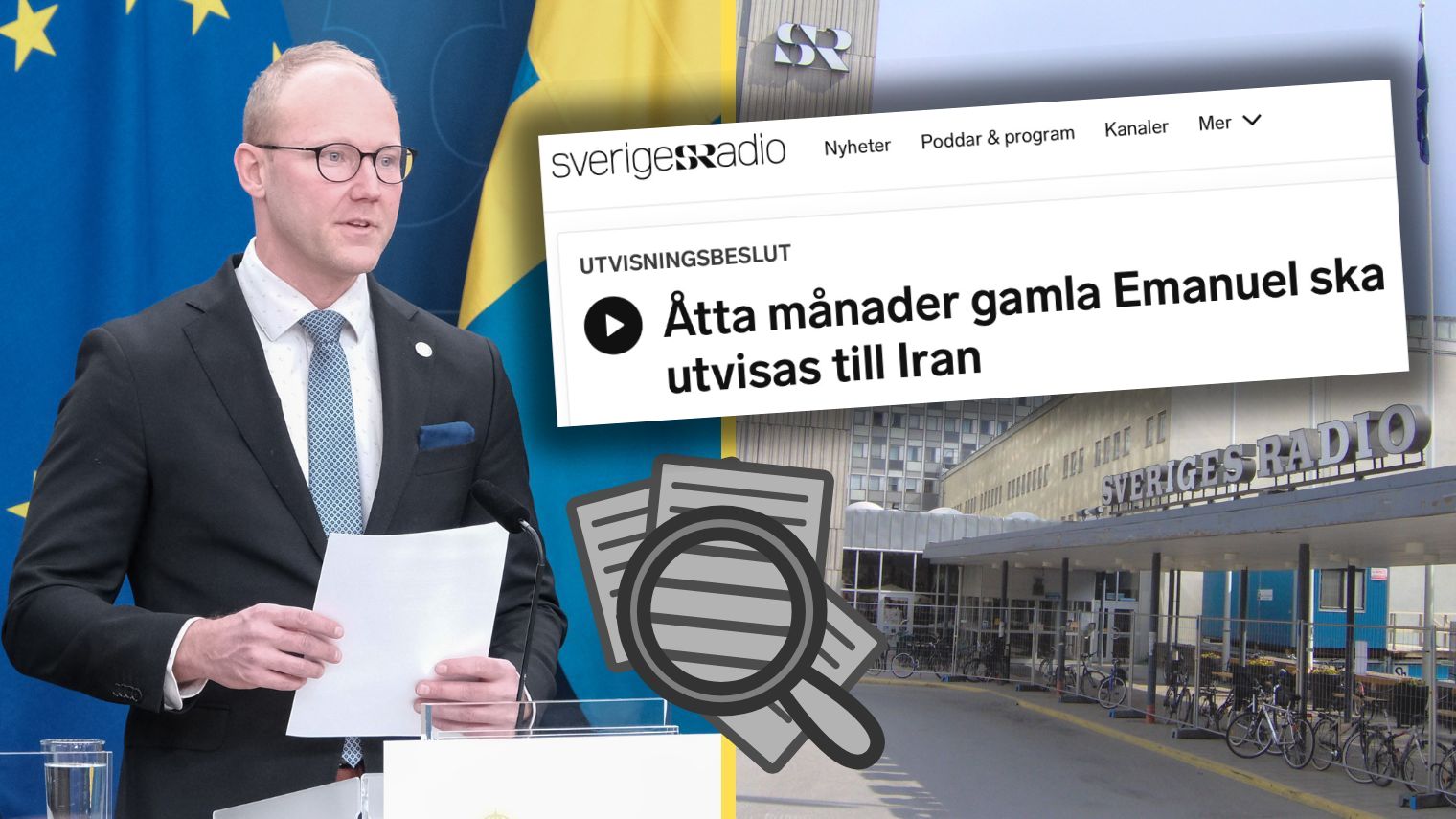
READ MORE: SR spreads disinformation about baby deportation
She emphasizes that the agency of course does not carry out deportations where small children are sent away alone.
– The Migration Agency does not enforce deportations where we send small children alone abroad. One must distinguish between deportation decisions and enforcement decisions.
Wants to Avoid Similar Debates in the Future
According to Mindhammar, the lesson is that the agency needs to be more pedagogical in how decisions are communicated—especially in complex cases where several processes are running in parallel.
She also points to the need for better coordination within the agency, for example when children and parents are in different residence permit processes.
Focus on Clarity
Although Mindhammar formally states the agency could have been clearer in communication, the thrust of her message is about how the decisions have been interpreted by media and opposition politicians, rather than how they have been made.
READ MORE: Dagerlind: ‘The baby deportation’—agency and media activism that threatens democracy
The case shows how a formal decision—with no immediate practical significance—can have great impact when crucial legal nuances are lost in communication. The ambition going forward is therefore to limit the space for such misinterpretations.
With clearer and better-coordinated information, the Migration Agency’s Director General now wants to prevent similar misunderstandings from taking root again in public debate.
READ MORE: Ekeroth: ‘The baby deportation’ is an influence operation ahead of the election