
DEBATE • The media’s fascination with Ramadan is as endless as its never-ending stream of reports. Just imagine, how exotic that people don’t eat for several hours during the day … only to binge when the sun goes down. What a sacrifice.
Anyone who has tried fasting knows that it’s not at all difficult to combine it with studies or a modern job. Maybe it’s a bit more challenging if you’re a lumberjack than a student.

Thanks to schools and the media, Swedes are constantly fed exotic customs rather than our own traditions. They know more about Ramadan than about our own Christian fast. You have probably sung about the fast without thinking about what it means:
||: Now it’s Christmas again
And now it’s Christmas again
And Christmas lasts until Easter :||
||: But that’s not true
And that’s not true
Because in between comes fasting :||
40 Days of Christian Fasting
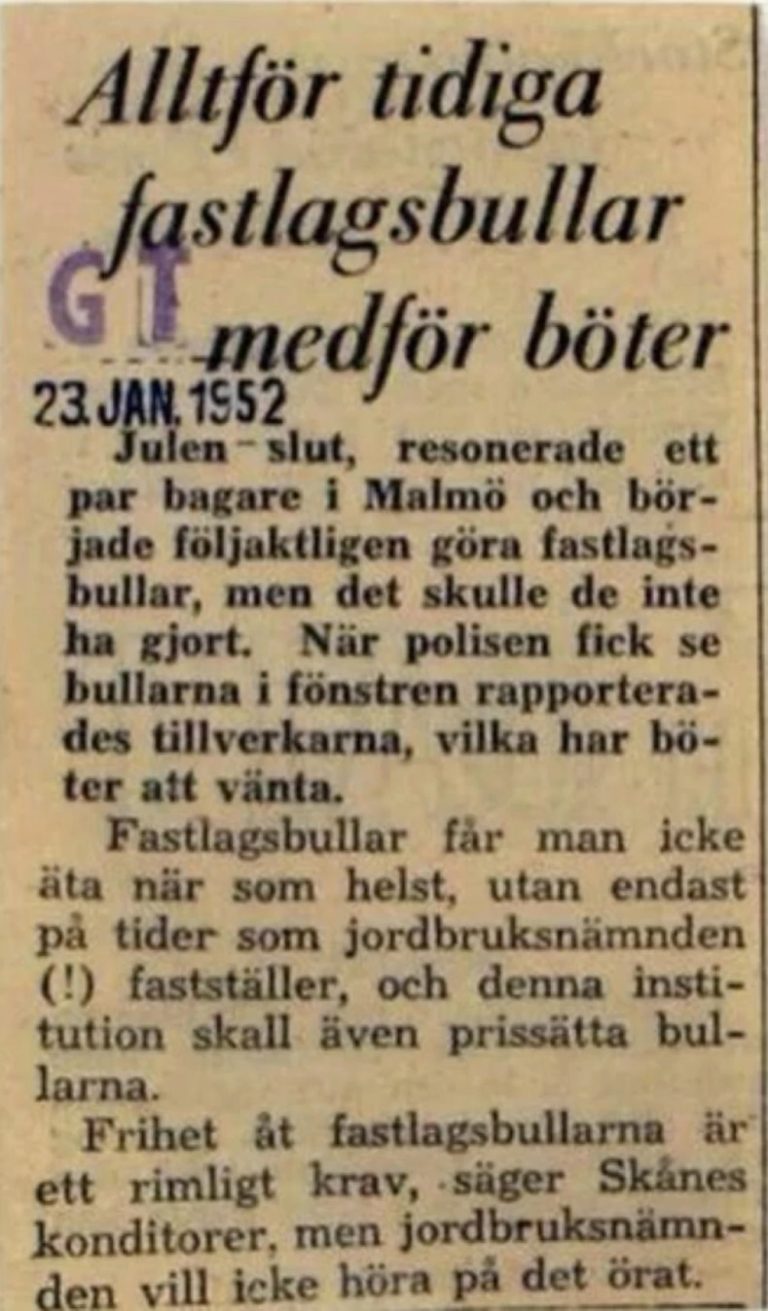
The Christian fast lasts for 40 days. It begins on Ash Wednesday, the day after Shrove Tuesday, when you’ve stuffed yourself with semla buns to survive for 40 days. Eating semla buns after Shrove Tuesday is, of course, uncivilized. When Sweden was a Christian country, it was even illegal to sell semla buns too early.
All world religions practice fasting. It means abstaining from physical pleasure in order to focus on mental and spiritual growth. Fasting trains discipline. It teaches the mind to control the body and shows that you need not be a slave to your desires. There are also many health benefits, and new ones are still being discovered. For example, it promotes apoptosis, exchanging old, bad cells for new ones.
Jesus Tempted by the Devil
The Christian fast is a reminder of when Jesus fasted for 40 days in the desert. At the end of his fast, when he was at his weakest, he was tempted by the devil with power, glory, and riches. The strength gained from fasting helped him resist, even though he was physically weakened. Not a bad skill to have if, for instance, you want to lead a country.
What do you do during the Christian fast? Fasting obviously means abstaining from food, especially meat. Before the fast came Shrovetide, from Sunday to Shrove Tuesday. That was a time of feasting. In the Catholic tradition, it was Carnival, from the Latin caro+vale, which literally means “farewell to meat.” In modern times, we’ve lowered the bar so much that it’s now considered enough to “abstain from something.” The Swedish Church informs us that “each person can choose for themselves what to abstain from. It could be TV, sweets, alcohol, or meat, for example.”
Not So Hard
However, I recommend trying proper fasting. It’s easier than it sounds. We’re so trained for breakfast, lunch, dinner (or breakfast, dinner, and supper, as it’s called in Swedish), the civilization-critical school lunch, 6–8 slices of bread with margarine, and so on, that we find it hard to think outside the program.
Many people get scared if they feel a little hunger and think they’ll starve. The easiest way to fast is to skip breakfast, a completely unnecessary meal for desk workers. If you skip breakfast, you don’t wake up your stomach and you won’t be hungry for the rest of the day, maybe just a little weak. Then, it becomes easy to skip the other two meals. In this way, you get a real 24-hour fast, instead of that halfway Ramadan fast with feasting in the evenings.
Meaningful Fasting
I myself usually fast for 24 hours once a month. A couple of times, I have done a three-week fast on just water, burning about half a kilo of body weight per day. But fasting is not just about abstaining, it’s about what you do instead.
By doing meaningful things, preferably for others, you distract yourself from thoughts of food. It’s a time to get closer to yourself, your family, and your creator. Finally, there is also a private dimension to fasting; you don’t need to showcase your suffering or your diligence in the Swedish media:
“When you fast, do not look somber as the hypocrites do, for they disfigure their faces to show others they are fasting. Truly I tell you, they have received their reward in full. But when you fast, anoint your head and wash your face, so that it will not be obvious to others that you are fasting, but only to your Father, who is unseen. And your Father, who sees what is done in secret, will reward you.” (From Jesus’ Sermon on the Mount)
Klaus Bernpaintner
(This article was previously published on Folkungen.se)