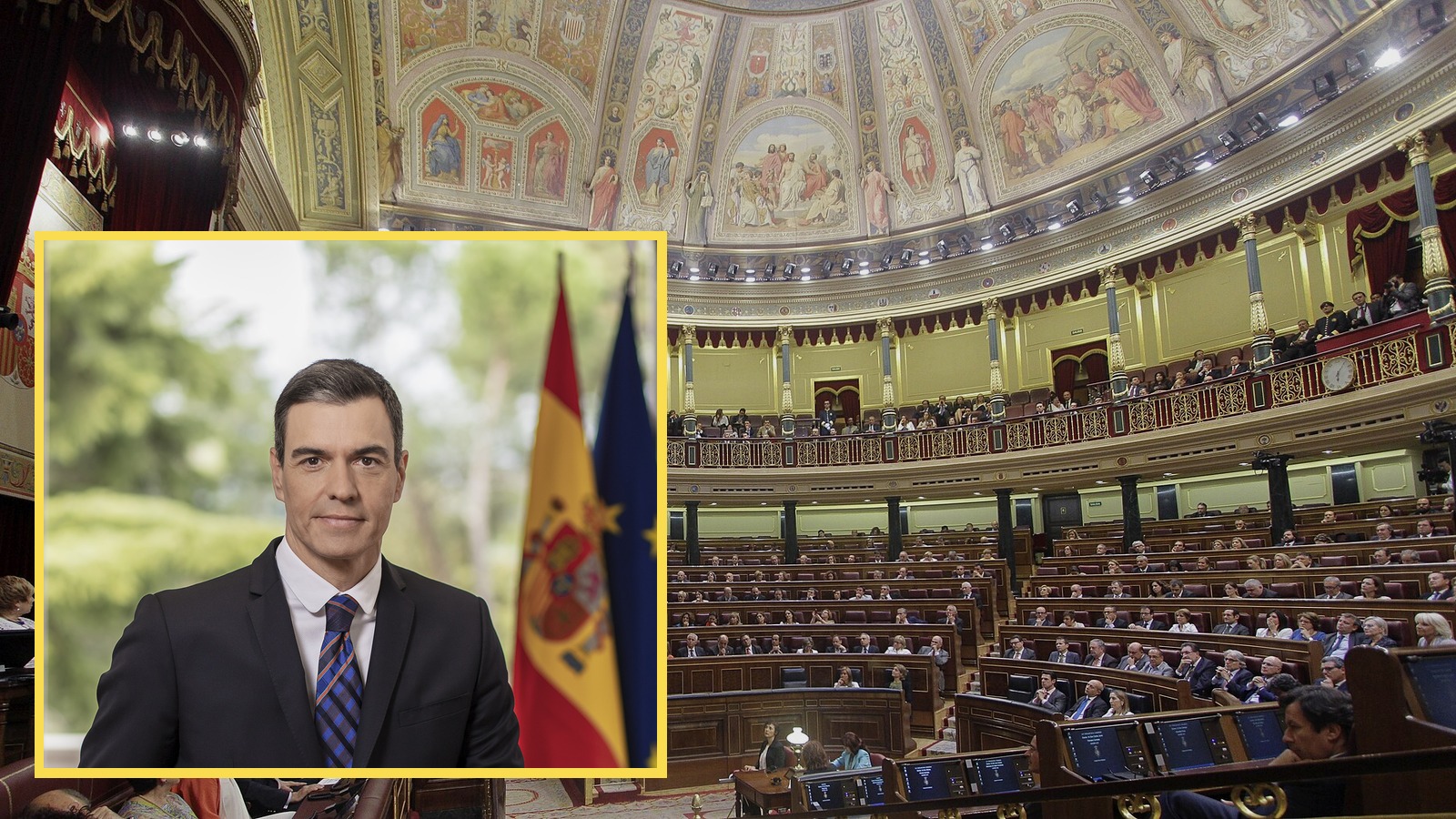
Spain’s Prime Minister Pedro Sánchez announced a snap election on Monday for November 29. The parliament will be dissolved after his left-wing coalition split as a result of the country’s deep housing crisis.
It’s not a vote of no confidence that brings down the government. Sánchez is dissolving parliament himself after losing support in congress. The trigger was Friday’s vote when two housing decrees failed.
The liberal-conservative People’s Party, the national-conservative Vox, and the Catalan Junts voted no. The decrees were meant, among other things, to halt evictions of vulnerable tenants until 2030, automatically extend rental contracts, and increase taxes on holiday rentals.
When they failed, it became clear that the government lacks a majority even for urgent housing measures, according to Spanish public broadcaster RTVE.
Sánchez leads the social democratic PSOE and a fragile left-wing coalition. Throughout the whole term, he has depended on Catalan and Basque parties, including Junts, to pass legislation.
The housing crisis is one of Spain’s major political issues, and when Junts on Friday voted with the right, after having negotiated parts of the decrees’ content, the last illusion of a functioning majority vanished.
SEE ALSO: Spanish Electricity Crisis: Warning for Renewable Energy
In a statement, Sánchez admitted mistakes and called for broader support. In order to do more, a more comprehensive progressive majority is needed in parliament, he said according to El País. He did not take questions from the press.
The main conservative alternative is the People’s Party, led by Alberto Núñez Feijóo. Vox is further to the right. Polls have long suggested the right could win, but the election on November 29 will decide whether Spaniards want to give Sánchez another chance or change course.
BREAKING:
???????? Spain’s far-left PM Pedro Sánchez’s government has collapsed
Sánchez has dissolved parliament and called a snap election for November 29, 2026, pulling forward the vote originally set for 2027.
The trigger was a major defeat on October 2, when right-wing opposition parties joined to reject two emergency housing decrees from his minority coalition. https://t.co/6P516pNj6m
— Visegrád 24 (@visegrad24) October 5, 2026
Criticism of the Major Amnesty
Spain has recently received much attention for the government’s large migrant amnesty. This spring, the Sánchez government launched a major legalization for people who are staying illegally in Spain. The government expected 400,000 to 500,000 applicants.
When the application period closed on June 30, nearly 1.18 million applications had been received. In other words, more than twice as many.
SEE ALSO: How Portugal Changed in Just a Few Years of Massive Immigration
Spain’s largest police union, Jupol, has warned that this is only the beginning. Anyone granted a residence permit can subsequently bring family members.
In the longer term, the union estimates that about four million people could come to Spain, and ultimately the entire EU. Secretary General Aarón Rivero has called the process much too fast and said that it creates a strong incentive for more immigration.
The government defends the reform citing labor needs and an aging population. The opposition has been strongly critical, arguing that the mass amnesty rewards illegal immigration, burdens the authorities, and raises security concerns.
SEE ALSO: Sanchez’s Migrant Amnesty Grows – Police Warn of Four Million