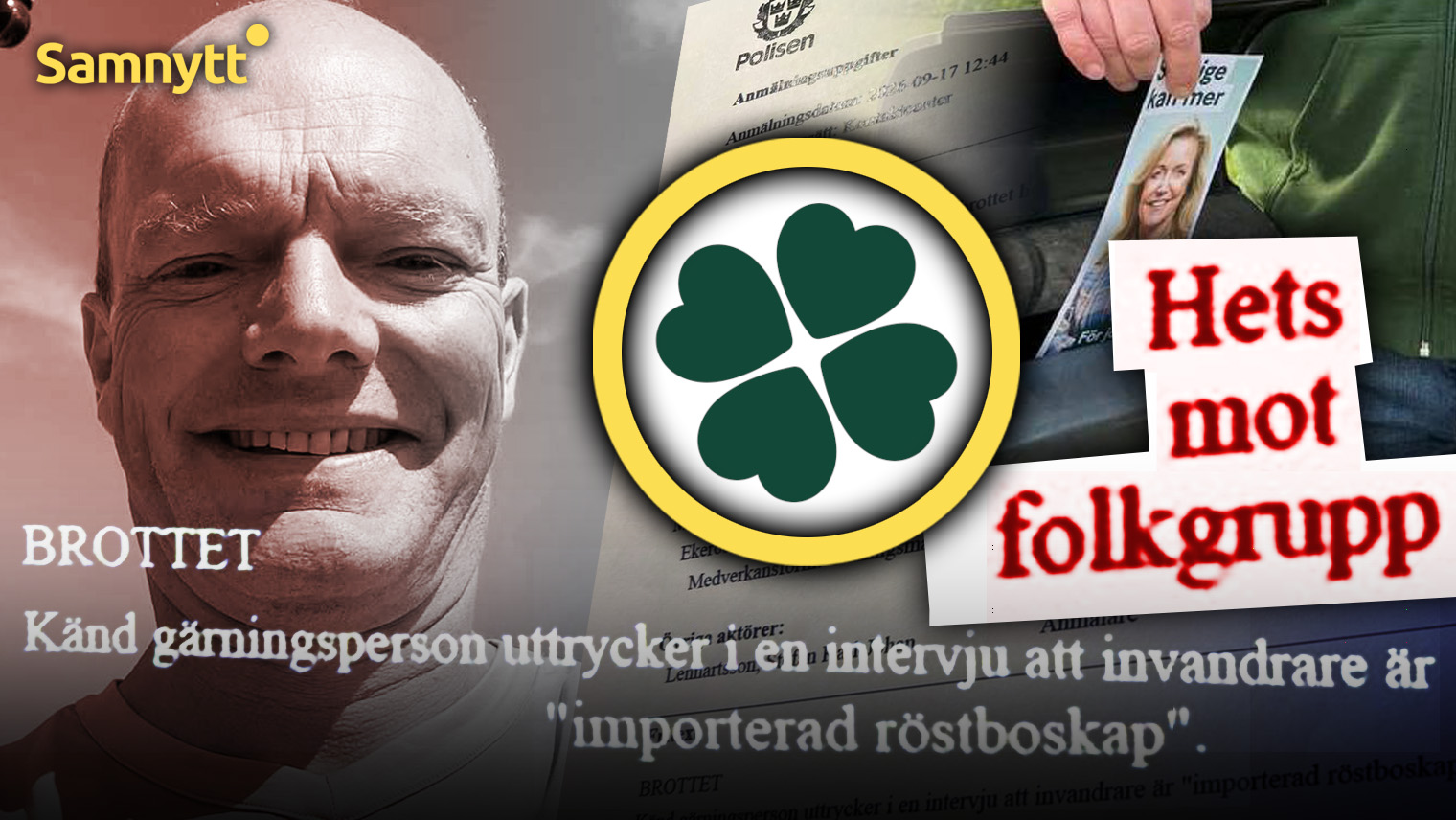
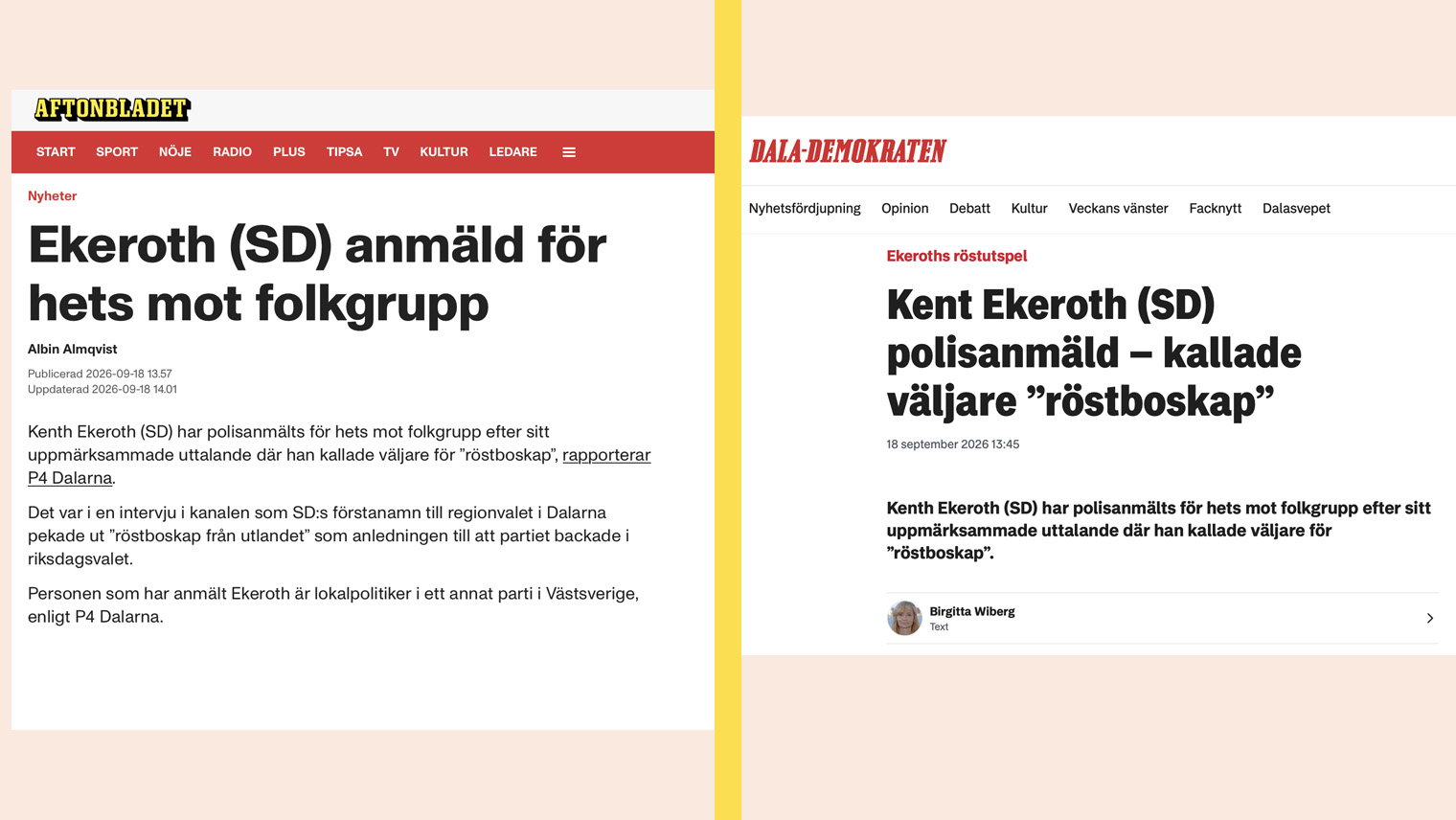
Stefan Lennartsson, a Centre Party politician in Falköping, reported Kent Ekeroth (Sweden Democrats) to the police for the opinion crime of incitement against an ethnic group after Ekeroth used the term “voting cattle” in an interview with Swedish Radio. When Samnytt confronted him with the fact that the term has a long political history—and is even used by the Centre Party itself—he admitted that he hadn’t looked into it. At the same time, the politician filing the report appealed to Samnytt not to publish his name and labeled the newspaper as “far-right.”
– It was also a statement from me, he says of the report.
Stefan Lennartsson, a Centre Party politician in Falköping, is the person behind the police report against Kent Ekeroth after his widely discussed interview on Sweden’s public radio, Sveriges Radio.
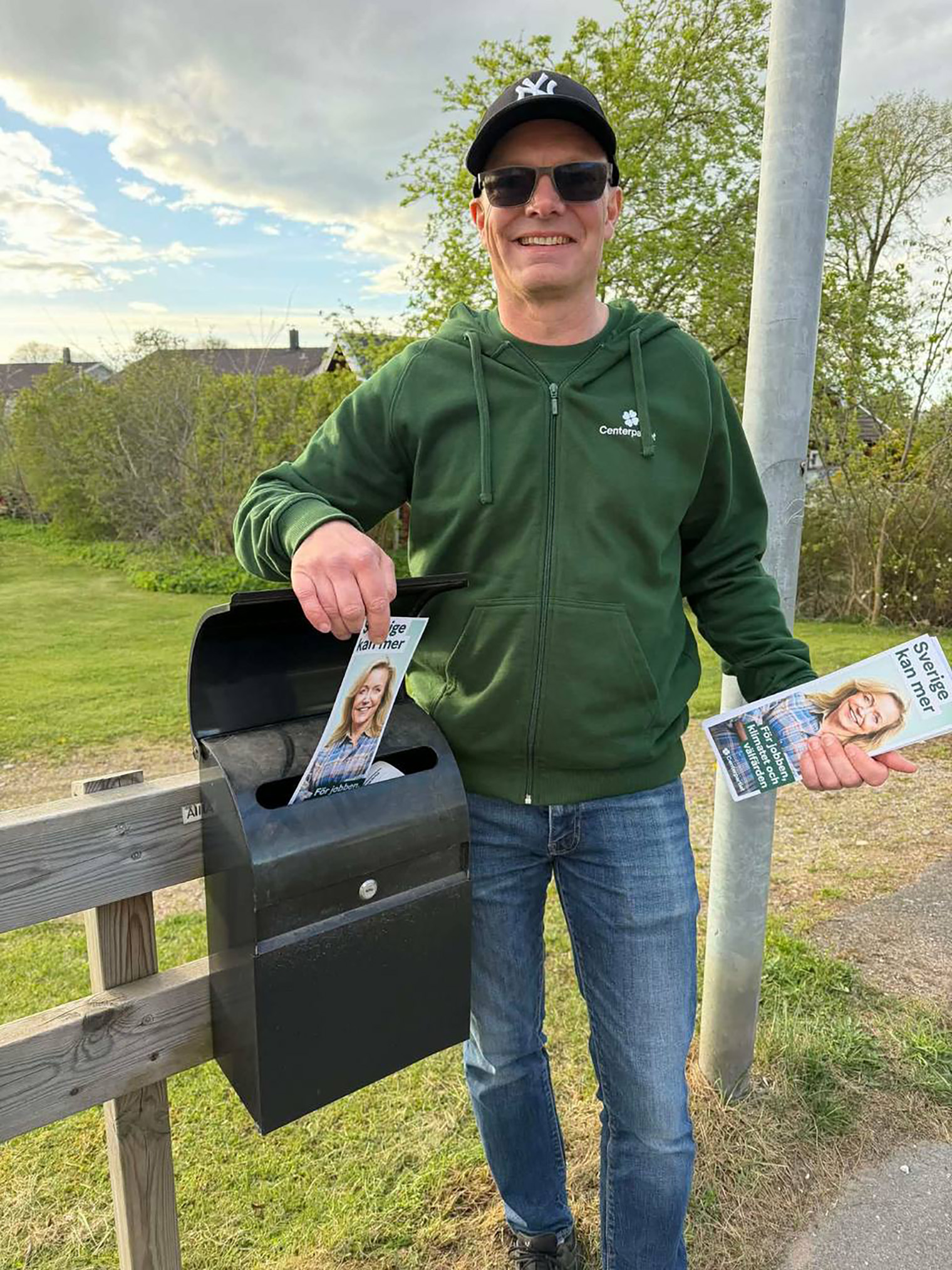
Stefan Lennartsson, 52, is a farmer from Luttra outside Falköping and an established local representative of the Centre Party. He is chairman of the Centre Party’s Falköping branch and was listed as number two on the party’s city council list in the 2026 election.
Lennartsson has had political assignments for the party for about seven years, including work in Falköping’s city council and various municipal committees and boards.
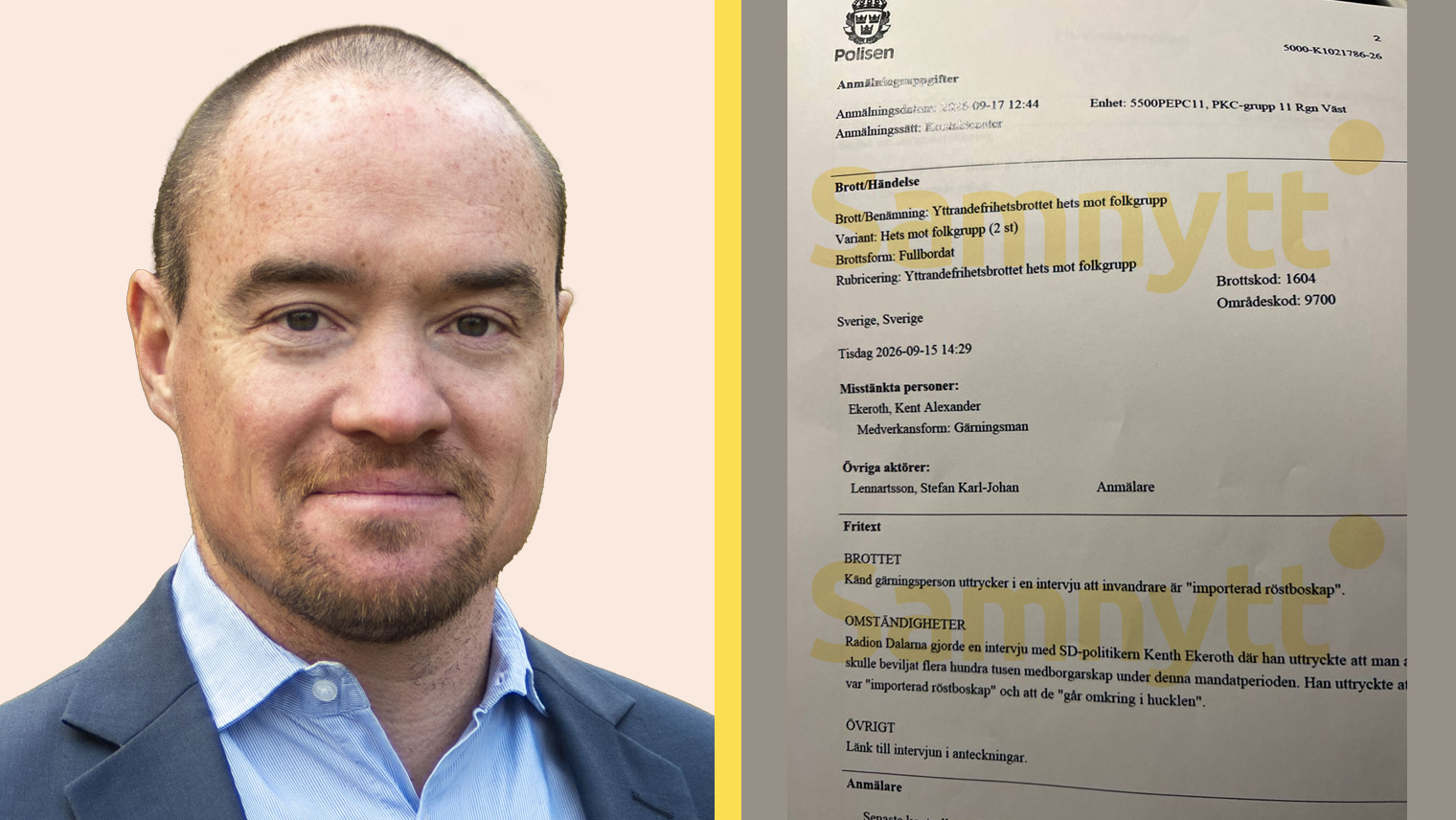
In the police report, Ekeroth is named as suspected of the freedom of speech crime, incitement against an ethnic group. The report is not based on Ekeroth’s reasoning about demographics and the voting patterns of different groups.
It is his use of the term “voting cattle from abroad” that prompted Lennartsson to report him for incitement against an ethnic group.
Ekeroth later explained that he does not use the term literally, but as an old polemic expression for a voter group perceived as strongly mobilized for a particular political option.
When Samnytt interviews Lennartsson, however, it becomes clear that the elected Centre Party politician did not research how the term had previously been used before going to the police.
His Own Party Uses “Voting Cattle”
“Voting cattle” is far from a new term in the Swedish political debate. It has appeared both in parliament and in public inquiries and has been used for entirely different groups than immigrants.
No, I didn’t know that. I haven’t really dug into the history of the usage of that expression. But I thought it was very harsh. If my own party has used it before, then I also think that’s reprehensible.
Stefan Lennartsson (C), Falköping
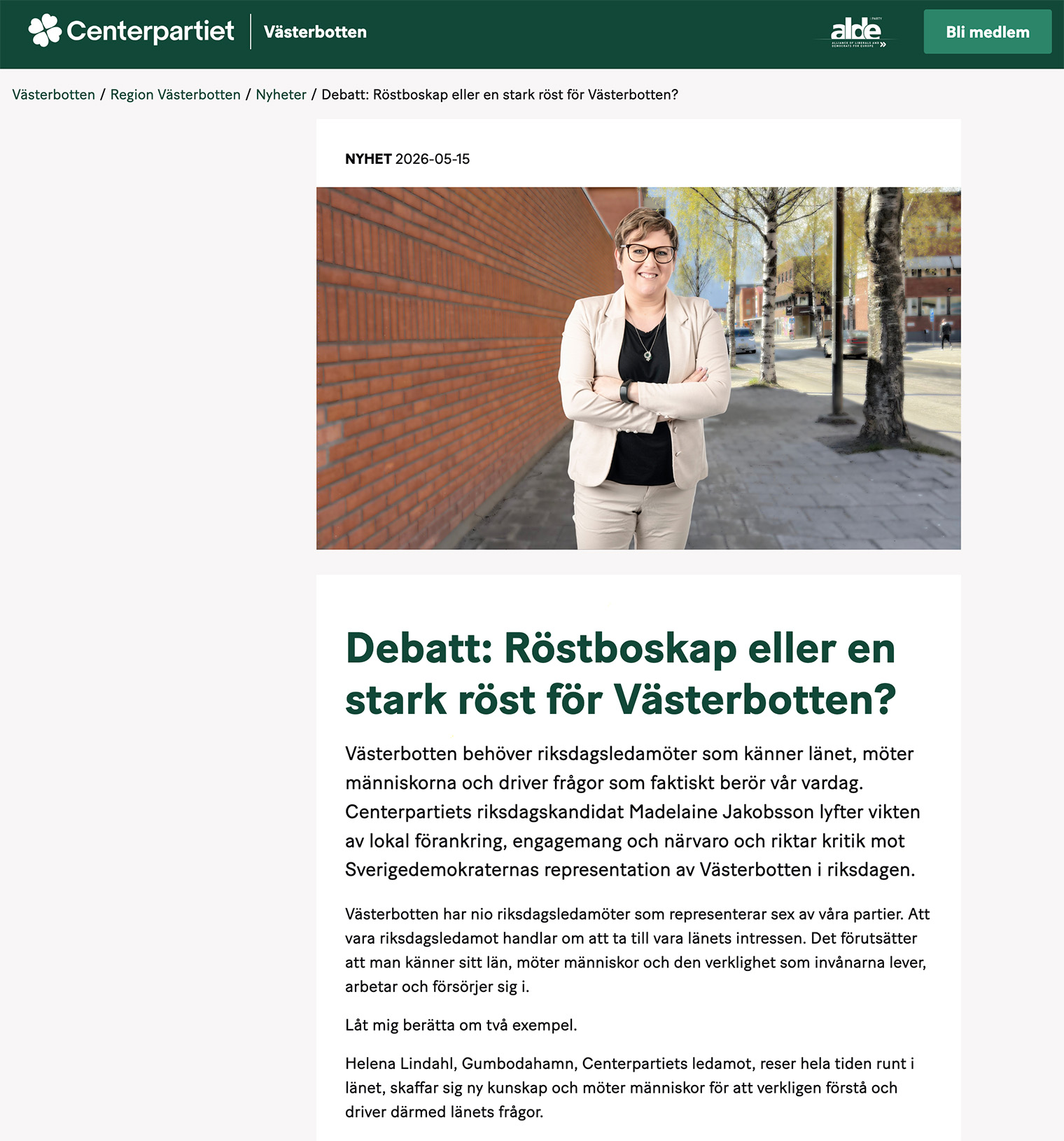
For example, Left Party leader Nooshi Dadgostar has used the term about her own party’s relationship to other parties. But most notably, Lennartsson’s own party has used it. As recently as May 15, 2026, the Centre Party in Västerbotten published a text titled “Voting Cattle or a Strong Voice for Västerbotten?”
“‘Voting cattle’ is an old political term. It has been used in parliament and by other politicians, and as recently as May the Centre Party used the headline ‘Voting Cattle or a Strong Voice for Västerbotten.’ Were you aware of that history?”
– No, I didn’t know that. I haven’t really dug into the history of the usage of the term. But I thought it was very harsh.
When he learns that his own party used the term, he also distances himself from that.
– If my own party has done it before, then I also think it’s reprehensible.
Given this, do you think it should be punishable then, even for the Centre Party?
When asked whether the Centre Party’s use of “voting cattle” should also constitute a crime, Lennartsson does not answer directly. Instead, he refers to political scientist Zeth Isaksson, who had described Ekeroth’s statements as dehumanizing in Sveriges Radio.
However, Samnytt itself interviewed Isaksson after Swedish Radio’s reporting. It turned out that Isaksson’s judgment that Ekeroth’s reasoning was anti-democratic was based on the way the issue had been presented to him—as if Ekeroth advocated stripping certain citizens of their voting rights.
READ ALSO: Bishop furious at Kent Ekeroth (SD): Threat to democracy – unacceptable to say ‘voting cattle’
When Samnytt subsequently asked Ekeroth whether he had suggested such a thing, he answered no.
Lennartsson thus refers to Isaksson’s criticism as an explanation for the police report, while Samnytt’s own follow-up of the researcher’s statements shows that at least the allegation of “anti-democracy” rested on a premise Ekeroth himself rejects.
You could discuss that. But I would never call a group of people cattle. I’m not the one who decides what’s right or wrong. I just thought it was deeply inappropriate.
Stefan Lennartsson (C), Falköping
Samnytt later returns to the subject:
But now that you know—do you regret making this a police matter?
– No, I don’t think I need to regret it for that reason. I just didn’t know the term was used in different contexts.
READ ALSO: Ekeroth: “The establishment is just as anxious as in 2010”
Lennartsson also describes the Centre Party’s usage of the term as “deeply inappropriate.” When Samnytt points out that the term has also occurred in public inquiries and in parliament, he responds:
– I hear what you’re saying, that it’s been used in that context in several ways. I wouldn’t say it’s widely accepted, but okay then.
“It Was a Statement From Me”
At the same time, Lennartsson says he has no problem with the questions behind Ekeroth’s reasoning being discussed.
Do you think it’s permissible to discuss how immigration and new citizenships change the composition of the electorate, for example?
– You could discuss that. But I would never call a group of people cattle.
Lennartsson also says he’s not the one who determines whether a crime has been committed.
– I’m not the one who decides what’s right or wrong. I just thought it was deeply inappropriate.
Samnytt therefore asks why, as an elected official, he chose to involve the legal system instead of debating politically.
Isn’t it better, as a politician, to go out in a debate instead of going behind the scenes and filing a police report?
– Yes, I could have done that.
Lennartsson says that a public debate in social media would have triggered a “hate storm.”
– Then I would have gotten a hate storm against me. You know how it works. He continues:
– And especially from Kent Ekeroth’s party. I have a lot of experience with that, I can tell you.
When Lennartsson talks about his “broad experience” with hate storms from Sweden Democrats’ supporters, he elaborates with an incident after the January Agreement.
He says he entered a comment thread on social media to ask other participants if they had actually read the agreement, after which he claims he was met with “terrible abuse.”
He particularly singles out people on the political fringe, saying, in his experience, Sweden Democrat supporters “lead the league by a mile.” He clarifies that he’s referring to supporters, not the party’s elected representatives.
All politicians today are aware that sometimes anonymous, half-crazy people show up in comment threads. Isn’t that something you, as a politician, have to be aware of?
– Yes, but I don’t know what it is. I can’t defend it in any way. I don’t understand what’s so tempting about writing in that way.
Is there a risk when politicians start reporting each other to police over words they’ve used, that political debate gets suppressed? Because this is about trying to legally punish someone. Or?
– Yes.
Is there such a risk?
– That risk does exist. But then we politicians must act more respectfully and express ourselves more correctly.
READ ALSO: Nathatsgranskaren reports Jomshof’s criticism of Islam for opinion crime: “Dehumanizing”
Lennartsson then describes another purpose for the report:
– It was a statement from me, too. I think it crossed a line, at least for me.
I also thought—it could be an election decided by middle-aged white men from Värmland, or whatever. I don’t divide people up. The “us vs them” mentality is what the Sweden Democrats do.
Stefan Lennartsson (C), Falköping
However, Lennartsson does not elaborate on what a “more correct” political tone entails or who should decide where that boundary lies. In this case, he chose to let the legal system review Ekeroth’s word choice, while admitting that there is a risk in politicians reporting each other over their language. He adds:
– That might be a misjudgment on my part then.
“I Don’t Divide People”
Lennartsson himself brings up Jimmie Åkesson’s statement that an election could be decided by Muslim voters.
– I also thought—it could be an election decided by middle-aged white men from Värmland, or whatever. The Centre politician continues:
– I don’t divide people up. The “us vs them” mindset, that’s what the Sweden Democrats do.
READ ALSO: DN and Aftonbladet let columnists attack Ekeroth—but block his reply
He then connects this reasoning directly to his report:
– And that’s what I want to highlight with this.
The conversation then turns to Samnytt’s reporting on alleged undue influence during voting in Borlänge and Mohamed Abdukadir Ali. When Samnytt describes the circumstances of the more than 600 personal votes and reports of cars shuttling between polling stations and ATMs, Lennartsson reacts:
– I honestly don’t understand how that could happen, and of course it looks odd.
When told about people allegedly handing out money, he responds:
– That shouldn’t happen. It’s very frightening, I think.
Samnytt then returns to the meaning of “voting cattle”—that the term can also apply to people organized or mobilized to vote a certain way.
Lennartsson objects that the Borlänge case was not known when Ekeroth made his statement. Samnytt points out that the editorial staff was aware of such organized voting even before the election, even if the current police investigation and details that later emerged were not yet public.
Lennartsson replies that he was unaware of this.
READ ALSO: Ekeroth’s warning about demography receives unexpected support from a left-wing researcher
Tried to Influence Publication – Called Samnytt “Far-Right”
Toward the end of the interview, the conversation shifts from the police report itself to whether Samnytt should identify Lennartsson and publish the interview. The Centre politician refers to how P4 Dalarna handled him and raises the issue of source protection.
P4 wanted to interview Lennartsson, but he declined. The radio then described the complainant only as a politician from western Sweden.
I just scrolled a bit on your site. There was a very consistent theme, so now I understand who you are. // It was just about crimes committed by immigrants. It was nothing else, really. // And AI says you are far-right, by the way.
Stefan Lennartsson (C), Falköping
Samnytt points out that the situation here is different. Lennartsson is not an anonymous source who provided information under source protection; rather, he is an elected official who himself filed a police complaint against another politician’s public statements. The report is also a public document.
Lennartsson also wants Samnytt’s editor-in-chief to contact him before publication and asks if he can read the interview in advance. He is not given such a promise. Samnytt stresses once again that this is about an elected official and a public police report.
But after the conversation is over, Lennartsson calls Samnytt again and again asks about the possibility of reading the interview before it’s published. In the meantime, he visited Samnytt’s homepage.
– I just scrolled a bit on your site. There was a very consistent theme there, so now I understand who you are.
He says he looked at about 10–15 articles and reacted to the content:
– It was just about crimes committed by immigrants. Nothing else, really.
Then he offers yet another argument against the newspaper:
– And AI says you’re far-right, by the way.
When Samnytt objects to the label, Lennartsson replies:
– No, you usually don’t admit that.
He again returns to the desire to read the text before publication:
– But of course I want to read it before you publish, if possible. I’m asking again.
Samnytt does not relinquish editorial control to the Centre Party politician. By then, in two conversations, Lennartsson had returned to the editorial staff to oppose having his name published, wanted to read the article before publication, and sought contact with the editor-in-chief. This, while labeling the newspaper as “far-right,” according to what his “AI says.”
In the midst of the discussion, he himself expressed the principle that also closes the interview:
– I have to stand by it. I realize that.
investigations?
Do you appreciate Samnytt? Show it by subscribing or donating.
DONATE VIA SWISH
123 083 33 50