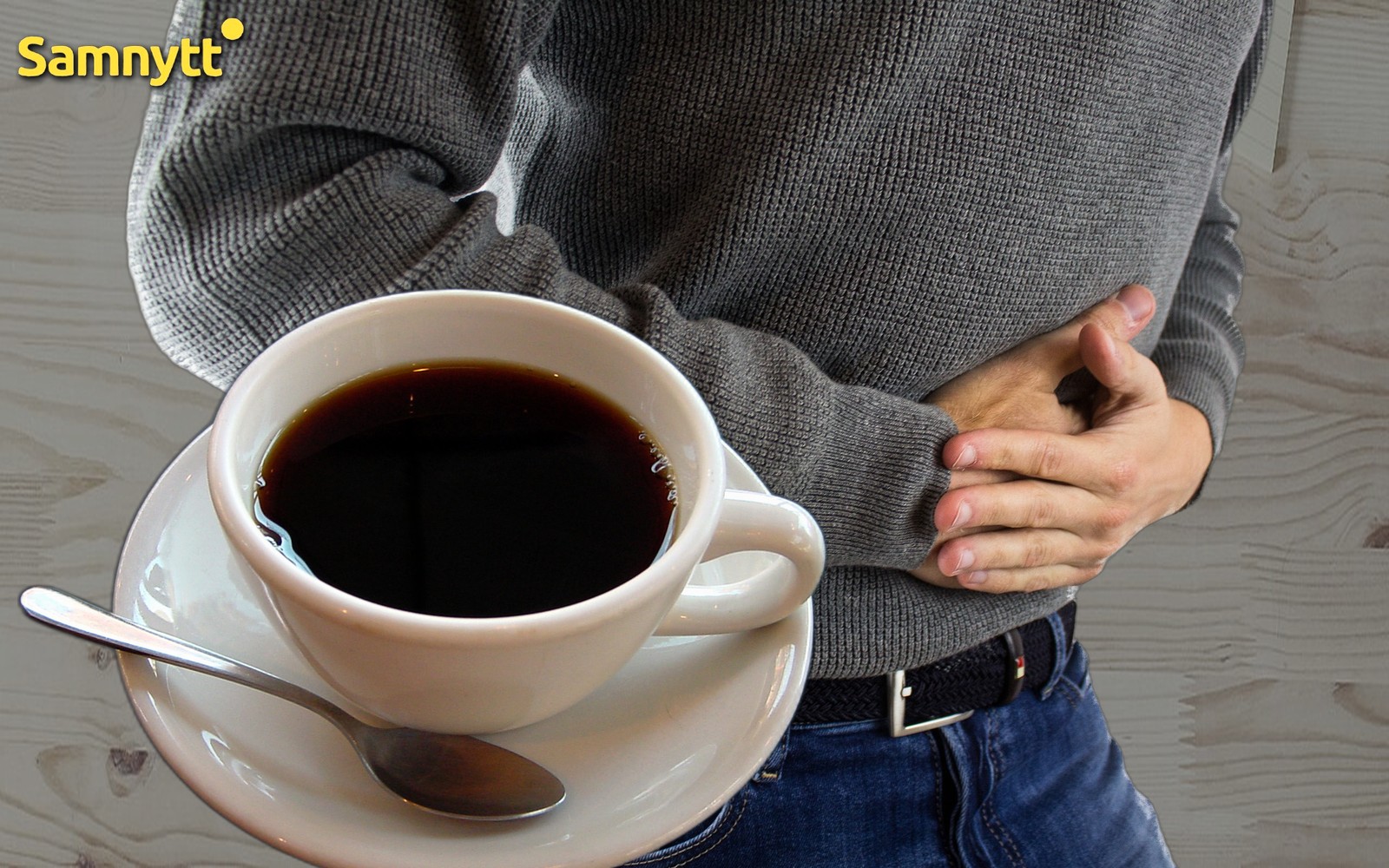
Why does your stomach get going when you drink coffee? Researchers who gave coffee to rats for three days saw that the lower intestine and colon contracted and that fewer bacteria grew when feces were mixed with coffee. The effect also occurred without caffeine.
A study in the journal Gut from 1990 followed 92 people aged 17 to 27. Of them, 29 percent said coffee made them want to go to the bathroom. Both regular and decaffeinated coffee stimulated the colon.
Caffeine has long been blamed for this. But the researchers in Texas argue that this is the wrong track. The beverage affected the muscles in the intestines as well as the bacteria there, and decaffeinated coffee had the same effect. So it was something else in the cup.
The researchers examined the feces, mixed bacteria from it with coffee, and studied the small intestine and colon.
Coffee caused the lower intestine and colon to contract. The same thing happened when they applied coffee directly to tissue from the small intestine and colon.
READ ALSO: Research: Coffee May Offer Unexpected Health Benefits
When feces was mixed with coffee, fewer microbes grew, and the effect became stronger the higher the dose. After three days, the rats also had fewer bacteria in their feces.
Which bacteria were eliminated remains unclear. The researchers later want to investigate whether those considered beneficial are affected, or whether it’s the family that can cause stomach illness and meningitis.
It’s Not the Caffeine
The study was led by Xuan-Zheng Shi, a researcher in internal medicine at the University of Texas Medical Branch.
“After the rats received coffee for three days, the contractions of the small intestine increased compared to those who didn’t get any,” he told Newsweek, and continued:
“The effect on digestion largely does not depend on the caffeine. It’s also reasonable to believe that both regular and decaffeinated coffee could have similar effects on bacteria in the human gut microbiome.”
Coffee contains many substances, and Shi says it has not been determined which one made the rats need to empty their bowels. The team hopes to identify it.
“We now know that coffee can have a general antibacterial effect on gut bacteria. It would be good to study further how it affects individual species, and the mix of bacteria in the intestines.”
The findings were presented at a medical meeting about digestive diseases and have not been peer-reviewed in a journal. Studies on rats can show how a substance behaves, but they do not necessarily apply to humans.
READ ALSO: Here’s What Coffee Can Do to the Aging Process in the Body