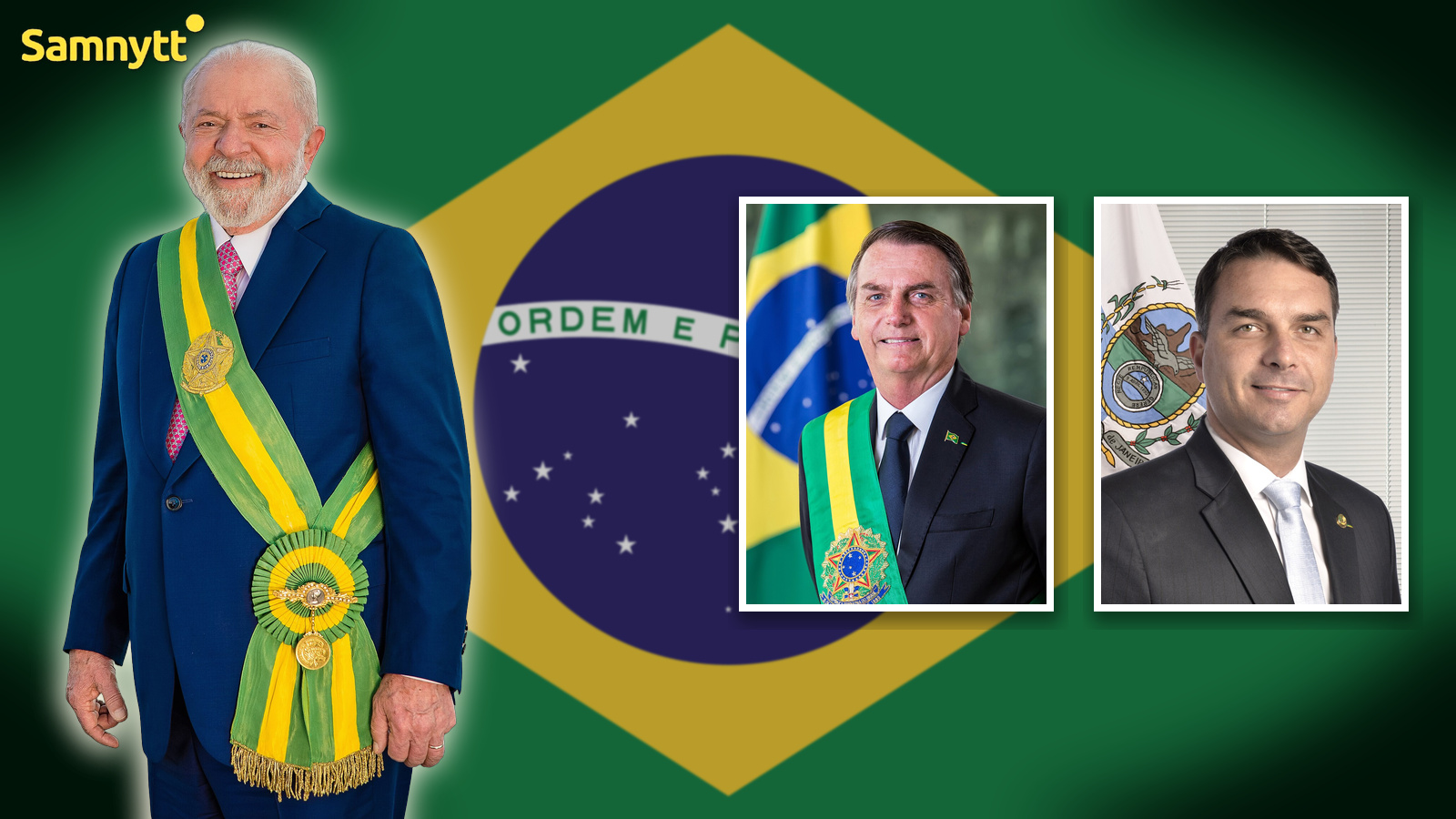
On Sunday, 160 million eligible Brazilians went to the polls. On one side stood the socialist president Lula, 80, previously convicted and imprisoned for corruption. On the other, right-wing candidate Flávio Bolsonaro, 45, son of former president Jair Bolsonaro, who is now serving a prison sentence after being convicted of allegedly planning to overturn the 2022 election results. Flávio Bolsonaro emerged victorious in the first round. But now a second and decisive round of voting awaits on October 25.
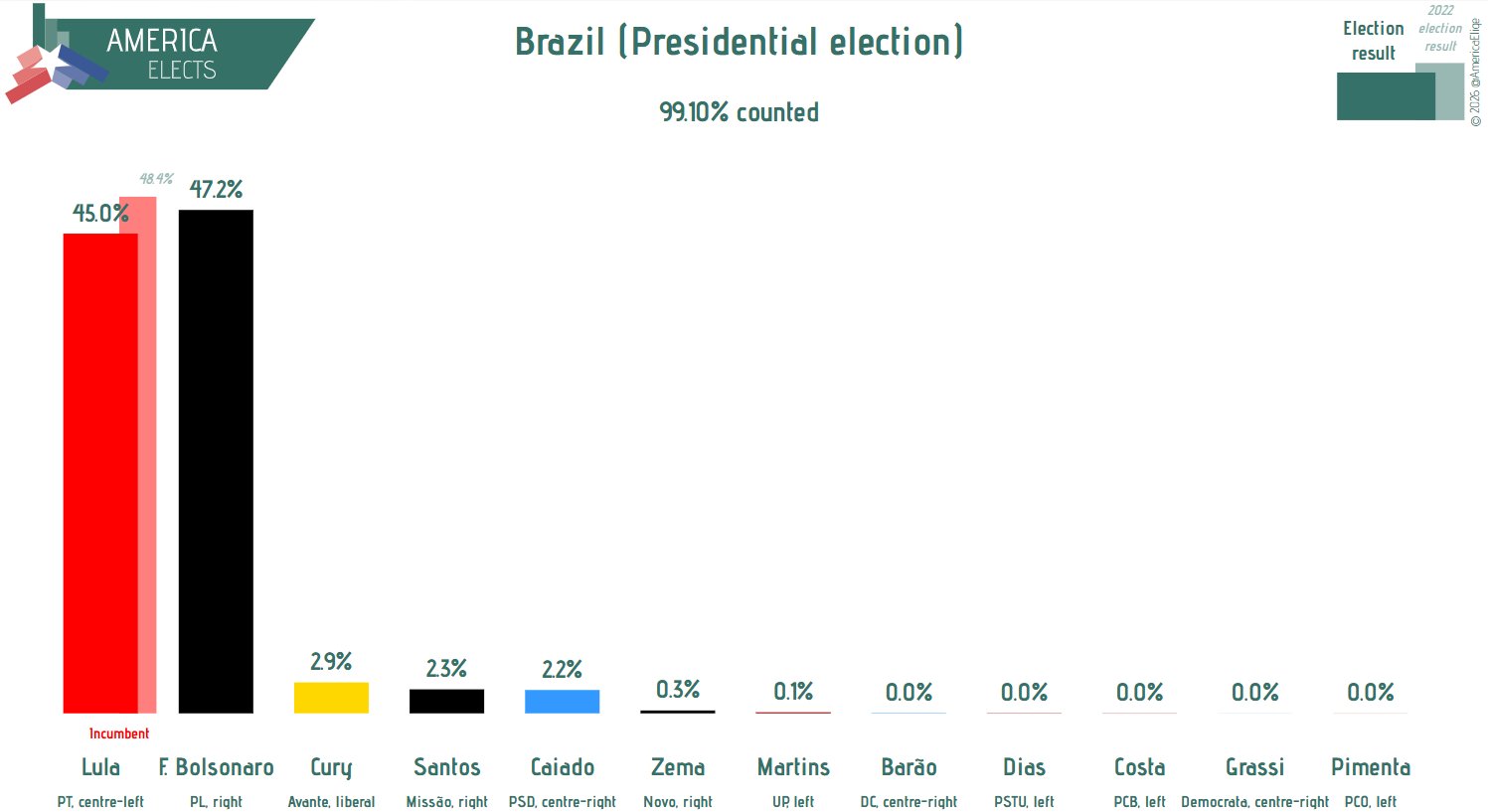
Flávio Bolsonaro received the most votes in Brazil’s presidential election, but not the more than 50 percent of valid votes required for outright victory in the first round. With over 99 percent of votes counted, the senator had 47.2 percent, compared to 45 percent for President Lula.
Flávio’s father is serving a 27-year prison sentence after being convicted of planning an alleged coup against the socialist Lula to keep power following the 2022 election loss.
Jair Bolsonaro denies any crime, and his defense has argued that there is no evidence he actually attempted a coup.
The defense has pointed out, among other things, that Bolsonaro allowed the transfer of power to Lula and claimed that discussions and plans never materialized into action. Bolsonaro himself has said he never acted against the Brazilian constitution.
Conservative family
Like his father, Flávio is conservative and has made his father’s release a central issue in the campaign. He wants an amnesty for his father Jair Bolsonaro and others convicted after the events at the government buildings in Brasília on January 8, 2023.
READ ALSO: Brazil’s presidential election on Sunday – Lula meets Bolsonaro’s son Flávio
If Congress says no, Flávio has declared that he himself plans to pardon his father and the others convicted. So it is an election about two things at once: Should Lula remain in office or should the Bolsonaro family return to power with a promise to open the prison doors for the former president?
The socialist: “Democracy or barbarism”
The socialist veteran Luiz Inácio Lula da Silva is 80 years old and leader of the Workers’ Party. He was first elected Brazil’s president in 2002 and re-elected in 2006.
After leaving office in 2010, he was later imprisoned, convicted of corruption, and spent 580 days behind bars. The convictions were later overturned by Brazil’s Supreme Court, which ruled that the cases had been handled by the wrong court.
READ ALSO: Brazil’s former president Jair Bolsonaro, 70, sentenced to 27 years in prison
This paved the way for his political comeback. In 2022, Lula returned to the presidency after a narrow victory over Jair Bolsonaro—who was later jailed after his electoral loss.
Now, at age 80, Lula is seeking a historic fourth, non-consecutive term. If he wins, it will be his third term as Brazil’s president. When he voted on Sunday, the socialist described the election as a choice between “strengthening democracy” and “barbarism.”
Bolsonaro expected to gain more votes
Flávio Bolsonaro heads into the second round after receiving the most votes in the first. A key question now is where the votes from the smaller right-wing candidates will go.
A large portion is expected to go to Bolsonaro, which gives him a position that analysts consider favorable—even despite the narrow lead over Lula.

The family wields strong influence
Meanwhile, the Bolsonaro family has strengthened its position in politics, especially in Congress. Flávio’s stepmother and Jair Bolsonaro’s wife, Michelle Bolsonaro, was elected to the Senate for the Federal District, while his brother Carlos Bolsonaro took one of the Senate seats for the state of Santa Catarina.
The youngest son, Jair Renan Bolsonaro, who has to date been most politically active at the local level, was elected to the lower house. Jair Bolsonaro’s brother Renato Bolsonaro also won a seat in the lower house for São Paulo.
In São Paulo, Brazil’s most populous and economically important state, Tarcísio de Freitas was simultaneously re-elected as governor. He was infrastructure minister under Jair Bolsonaro and has in recent years been one of the most prominent right-wing politicians outside the Bolsonaro family itself.
Overall, this means the Bolsonaro family will have a stronger presence in federal politics, regardless of the result of the presidential election’s second round at the end of the month.
READ ALSO: Lula government’s witch hunt against Bolsonaro – ankle monitor, censorship, and house search