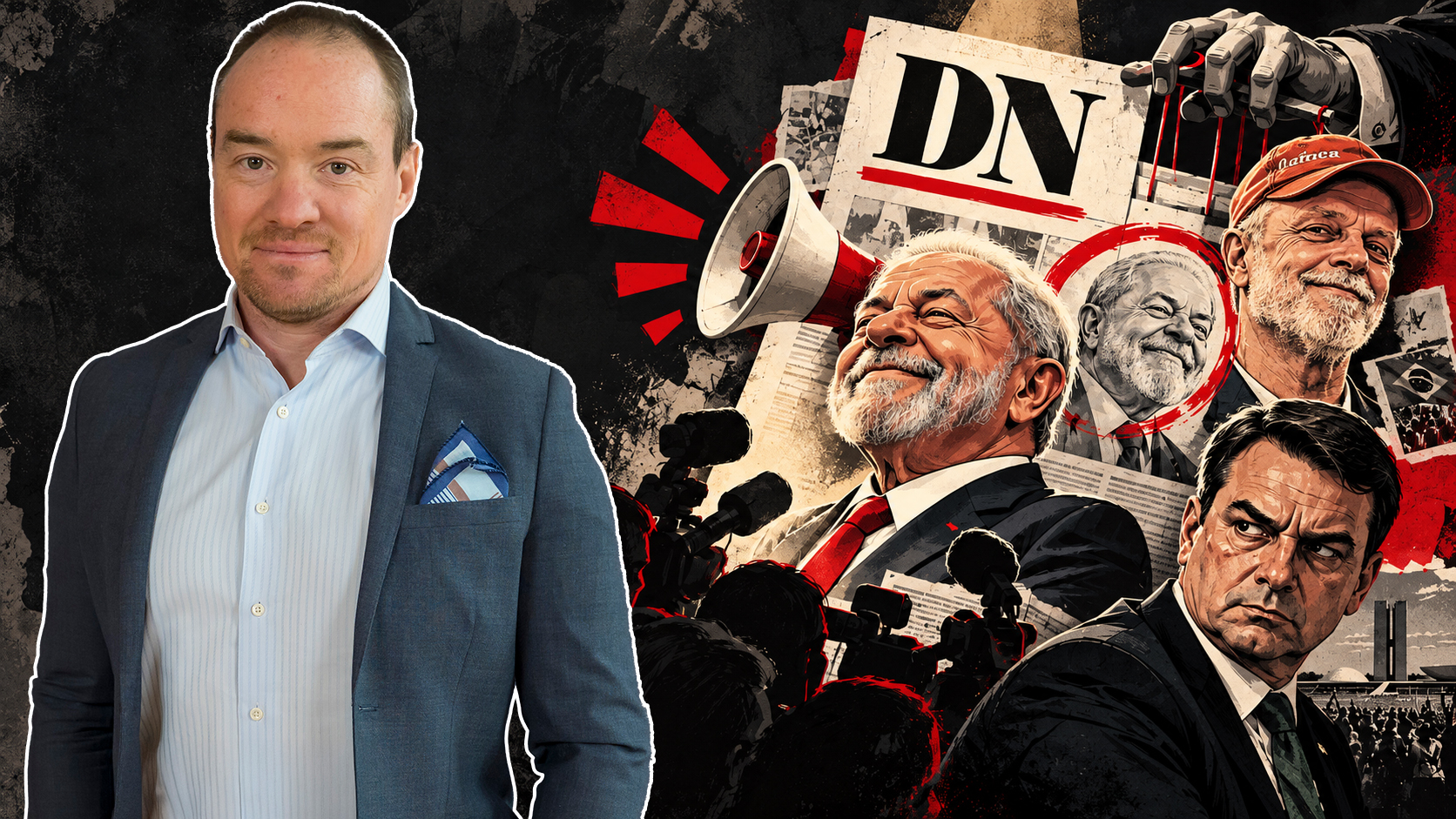
Henrik Brandão Jönsson writes in DN about the “orange wave” sweeping over Brazil after Flávio Bolsonaro’s unexpectedly strong performance in the first round of the presidential election. That very term betrays his propaganda. In Jönsson’s and DN’s world, it isn’t millions of Brazilians looking at their country, making political judgments, and voting accordingly. It’s a “wave” that comes rolling in, preferably with Donald Trump lurking in the background, and DN naturally needs to help its readers understand what dangerous forces have been unleashed. Classic DN propaganda.
The problem is what Brandão Jönsson has to omit in order to craft that agenda-setting narrative.
Lula da Silva is by no means a flawless democratic father figure suddenly threatened by irrational right-wing voters. He was convicted of corruption and money laundering following the massive Lava Jato scandal and spent 580 days in prison. The verdicts were later annulled on legal grounds, and Lula was able to return to politics.
In an article that tries to explain why such a large portion of Brazil votes against him, this should reasonably be quite a central part of the background. But then, of course, the story becomes far less convenient for DN to manage.
Even more troublesome for the DN narrative is what has happened to freedom of expression and the judiciary in Brazil since the left came to power. Supreme Court Judge Alexandre de Moraes has for several years become the symbol of a brutally harsh exercise of power against his political opponents on the Bolsonaro side and its media.
Accounts have been closed, content banned, and X was blocked throughout Brazil. Anyone who used a VPN to circumvent the blocking could be threatened with fines of 50,000 reais, around 100,000 Swedish kronor, per day! President Lula openly backed Moraes in the fight with Elon Musk.
Great anger
This has, of course, provoked anger. Large demonstrations have been held against Moraes and what the protesters see as censorship and political persecution.
Meanwhile, Jair Bolsonaro has been subjected to a series of legal actions, had his passport confiscated, been banned from running for office, and was ultimately convicted in the coup case. The Bolsonaro side has consistently claimed that the judiciary is being used as a political weapon against the opposition.

READ ALSO: Brazil: Huge protests against shrinking freedom of speech
And here, at least, a small journalistic warning light should start blinking, since the Brazilian Supreme Court is hardly in a state of untouchable credibility. Alexandre de Moraes once again became the center of controversy in 2026, this time around the Banco Master scandal, while the political role of the court continues to be a contentious issue.
But none of this fits particularly well into DN’s dramaturgy. If readers find out that Lula himself has a huge corruption baggage, that millions of Brazilians perceive the legal system as politicized, and that the same power apparatus that let Lula out of prison later used extraordinarily harsh methods against Bolsonaro, then that simple story of “democracy” versus the “orange wave” is no longer so simple.
Classic DN propaganda
And this is exactly the kind of propaganda that is so effective, because DN doesn’t have to invent much. They just need to select. Bolsonaro’s baggage is included, Lula’s disappears. The right is accused of authoritarian tendencies, while the left’s actual dictatorial exercise of power is ignored. Distrust of Bolsonaro is blown up, while distrust of the courts, Moraes, and Lula is reduced to something the reader hardly needs to bother with.
The result is almost a parody for a newspaper calling itself liberal. Had a right-wing government had a judge who closed social media, threatened VPN users with huge fines, and simultaneously played a central role in legal proceedings against the country’s most important opposition movement, DN would probably have produced a forest’s worth of articles on the death of democracy. In Brazil, the target is Bolsonaro, and then the liberal principles suddenly seem just as limp as boiled spaghetti.
At the same time, this year’s elections show the issues that Brazilians actually worry about: cost of living, crime, and corruption are among the key issues, and Lula faces discontent both with the economy and with his party.
Flávio Bolsonaro’s 47 percent in the first round did not come out of thin air, nor because Donald Trump was standing somewhere in Florida and manipulating Brazilian minds in some election influence campaign.
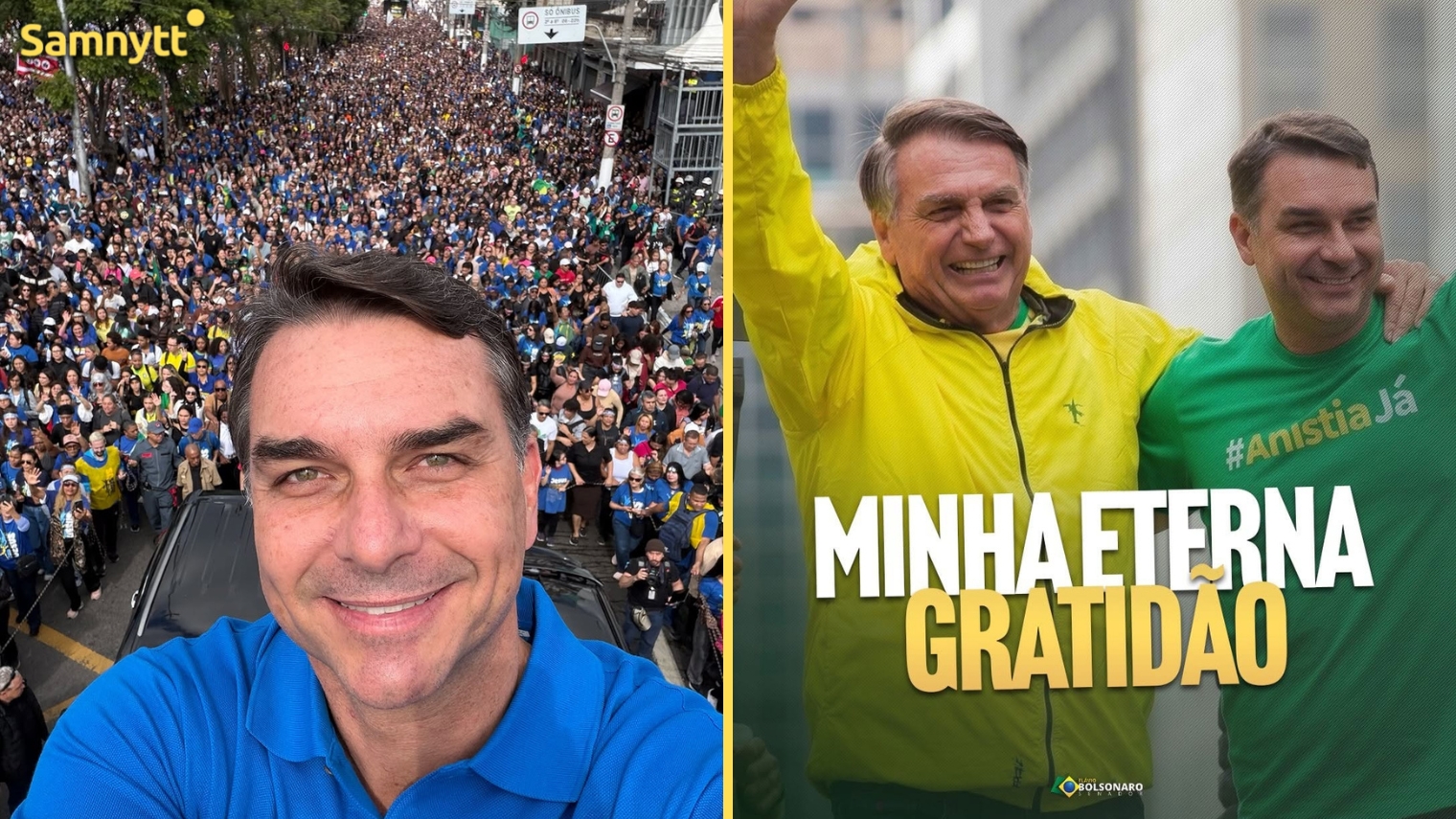
And unsurprisingly, Brazilians themselves become extras in their own democracy when reading Brandão Jönsson and DN. When they vote for the alternative DN dislikes, their behavior has to be explained as an international “wave,” while the real reasons right in front of them — Lula’s history, corruption, crime, the censorship struggle, and distrust of an increasingly politicized judiciary — are completely ignored.
DN not only informs the reader about Brazil but sorts reality for the reader, ensuring that precisely those facts that might make the actions of Bolsonaro voters understandable are left out of the narrative.
This is a classic way of conducting propaganda, which DN unfortunately has made its signature for a long time.
Go Bolsonaro.
READ ALSO: DN spread uncritical fantasy report about profit from immigration in Sandviken