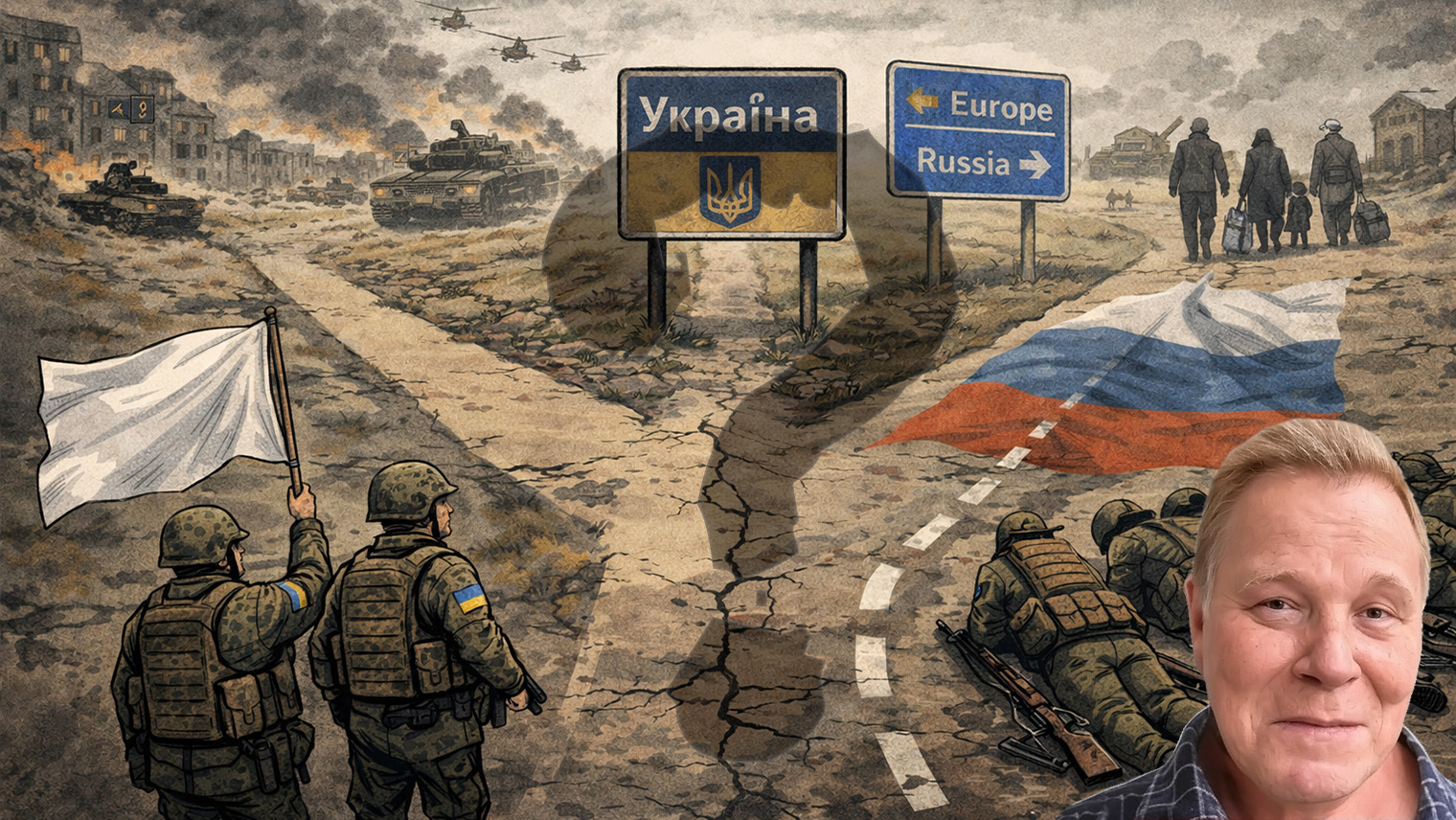
LEADER • The war in Ukraine is entering its fifth year. The loss of human life is enormous. Entire regions have been devastated. The equivalent of thousands of billions in taxpayer funds have been mobilized from the USA and Europe, while Russia has poured vast resources into its war effort. This is money, production capacity, infrastructure, and human lives that could have built prosperity but are now spent on its opposite. Many are now talking about negotiations and compromise, but the uncomfortable forbidden question that needs to be asked is whether capitulation from the outset would have been the utilitarian better alternative.
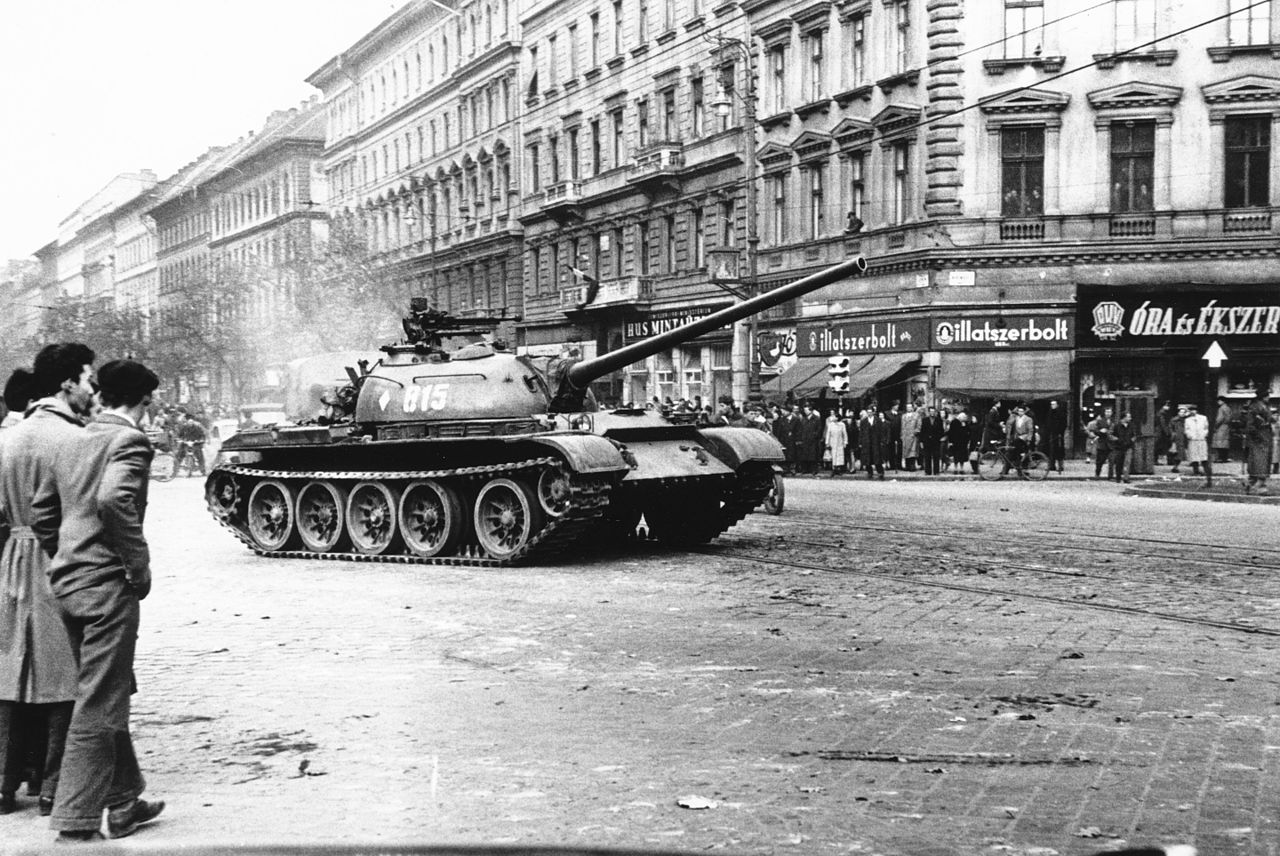
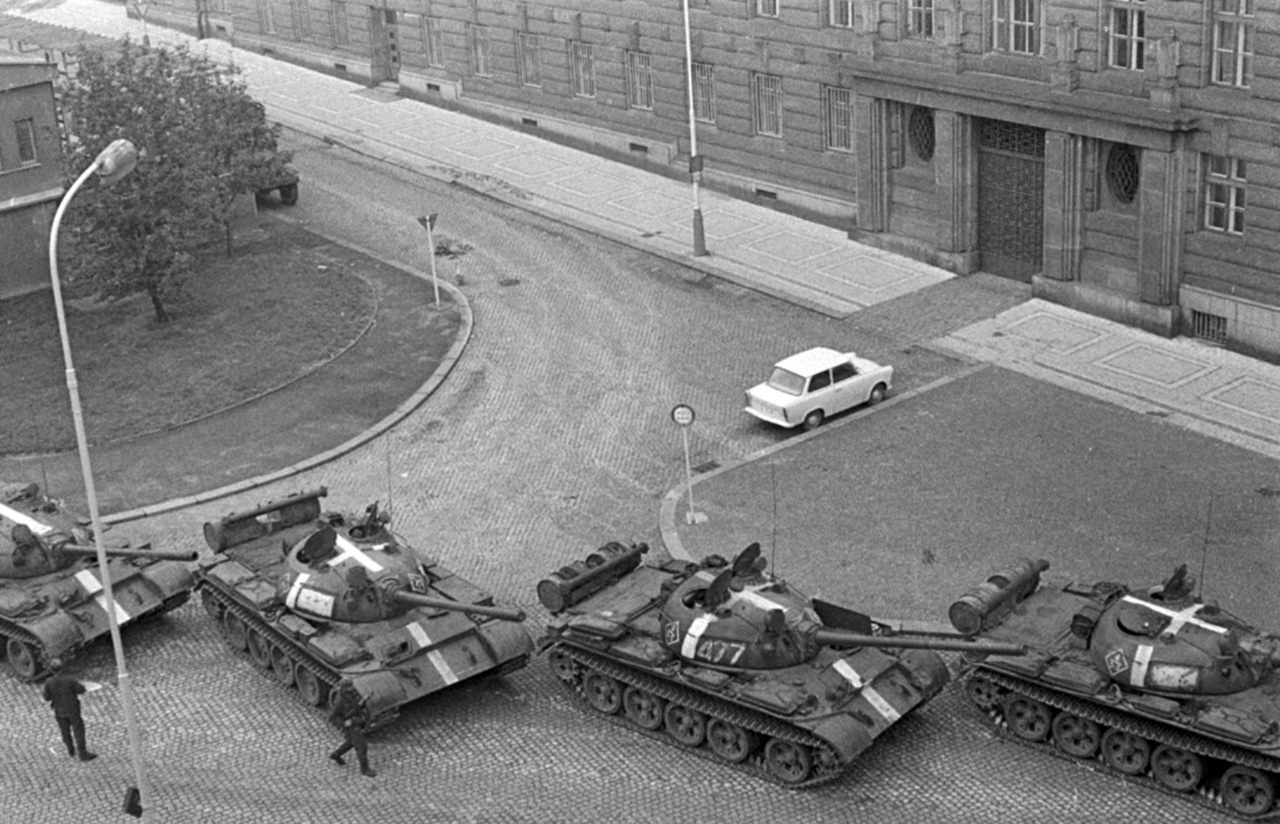
In 1956, the Soviet Union invaded Hungary. In 1968, it did the same in Czechoslovakia. The world protested, but did not go to war. The countries remained under Soviet influence for decades, with repression, limited freedoms, and great human suffering. But Europe at the same time avoided a large-scale war between superpowers.
The similarity with Ukraine is obvious in one respect – in all three cases it is about a great power using military force to ensure control over a neighboring country it considers to be within its sphere of interest.
Hungary and Czechoslovakia, after the dubious Yalta and Potsdam agreements following World War II, had undoubtedly been handed over to Soviet control, but at the same time were still sovereign states covered by fundamental principles of international law. Nor did they have any close historical ties to the communist federation before that. On the contrary, there was a strong anti-communist attitude in both countries.
Ukraine is today an internationally recognized, sovereign state that has been attacked in violation of fundamental principles of international law. But until 1991, the country was part of the Soviet Union, and the ties to Russia – demographically, politically, economically, and linguistically – have been deep.
Moreover, in the largely Russian-speaking eastern Ukraine, there was already a low-intensity conflict in the years before 2022 comprising elements of a bloody civil war, where Russian support for separatists and Ukrainian countermeasures created an unstable situation, and Kyiv cannot be said to have had full territorial control over certain parts of the east where part of the population leaned in another direction.
The invasion is not legitimate – but the question
This does not make the Russian invasion legitimate. But it shows that the background is complex, and the question is not entirely unreasonable as to why the world let the Soviet Union be in 1956 and 1968 but not Russia in 2022. Why was avoiding the horrors of large-scale war such a priority in decision-making then but not today?
Was it war fatigue after World War II that tipped the scales then, and now people feel more rested and more keen on a great war again? There are certainly a number of other differences between then and now to point to, but the question is whether they outweigh the unyielding similarity that war brings death, suffering, and destruction on a scale that is almost incomprehensible.
The cost that shifts the perspective
The war of attrition in Ukraine has become precisely what military strategists have long warned about – one where advances are measured in single kilometers and where every increment costs numerous lives. At the same time, the international political goals have been shifting, sometimes vague or even hidden.
READ ALSO: Dagerlind: The room for reforms didn’t just end by itself – follow the money to Ukraine
Is it about defending Ukraine’s independence, or is the country just a pawn in a proxy war and a geopolitical showdown between East and West? How many tens of thousands, hundreds of thousands, or millions of lives is reasonable to sacrifice for the one or the other?
For Ukraine, the war is an existential struggle, but also an ongoing destruction of society, economy, and population. Even before the war, the country was a fragile democracy with extensive corruption problems and weak institutions. Today, millions of Ukrainian women and children have also fled the country – many to the EU – and it is unclear if they will ever return. During the war, core democratic processes, such as elections, have had to be postponed. Recovery, regardless of the outcome of the war, will take a very long time, likely several decades.
A different background – a different light
Against this background, the uncomfortable question appears in a different light. Would a quick Russian takeover of all or parts of Ukraine as an alternative to war have spared the population – and, for that matter, the Russian population as well – human suffering on a scale that would make the alternative reasonable to consider from a humanitarian perspective?
Immediate capitulation would, without doubt, in the short term have meant far fewer deaths and almost no material destruction. What we cannot say for sure is what would have happened thereafter.
It could have become an unfree but stable order, as in some Eastern states during the Cold War or as in Russia today and, at best, a slow development back toward democracy. But it could also have resulted in a situation with protracted low-intensity violence in a dynamic between nationalist resistance movements and Kremlin repression, and perhaps, later, a different kind of war.
History offers examples of both outcomes. But even a worst-case scenario must be weighed against the mass death and destruction we have witnessed over the past four years and can expect for several more years to come if the war continues as it has.
The – not so – rules-based world order
The strongest argument against contemplating the alternative of capitulation is principled. Accepting a military conquest of a sovereign country undermines the rules-based world order. But in two previous editorials, I have argued that it is reasonable to say no such order exists. The latest piece of evidence for that is the US and Israeli attacks on Iran.
READ ALSO: Dagerlind: Whose rules, whose order?
An admittedly important but in reality barely existent principle of world order should be weighed against another – the humanitarian utilitarian principle of seeking the least possible human suffering. If the rules-based world order is a facade for geopolitical power struggles and prestige, it may be hard to argue that utilitarianism should not weigh more heavily.
A high price to avoid an even higher one
For the peoples of Hungary and Czechoslovakia, capitulation came at a high price that they had to live with for decades. But five, ten, or even more years of war would also have cost much. And had it escalated into something resembling a new world war, the cost would have been even greater for even more people.
Historians often like to depict events as a struggle between good and evil. More often than not, it is instead a struggle between principles and pragmatism.
Geopolitics above (and before) all else
From the Russian perspective, NATO’s expansion and the Western integration of former Soviet areas have been perceived as a threat, a provocation, and a violation of previous promises. From the Western perspective, the same process has been described as an expression of sovereign states’ right to choose their own path.
But, as a blunt aside, it can be objected that this right to independent choice only seems to apply when it leads westward. Other choices are not respected in the same way. The clearest example is the Hungarian people’s choice of Viktor Orbán and his party Fidesz.
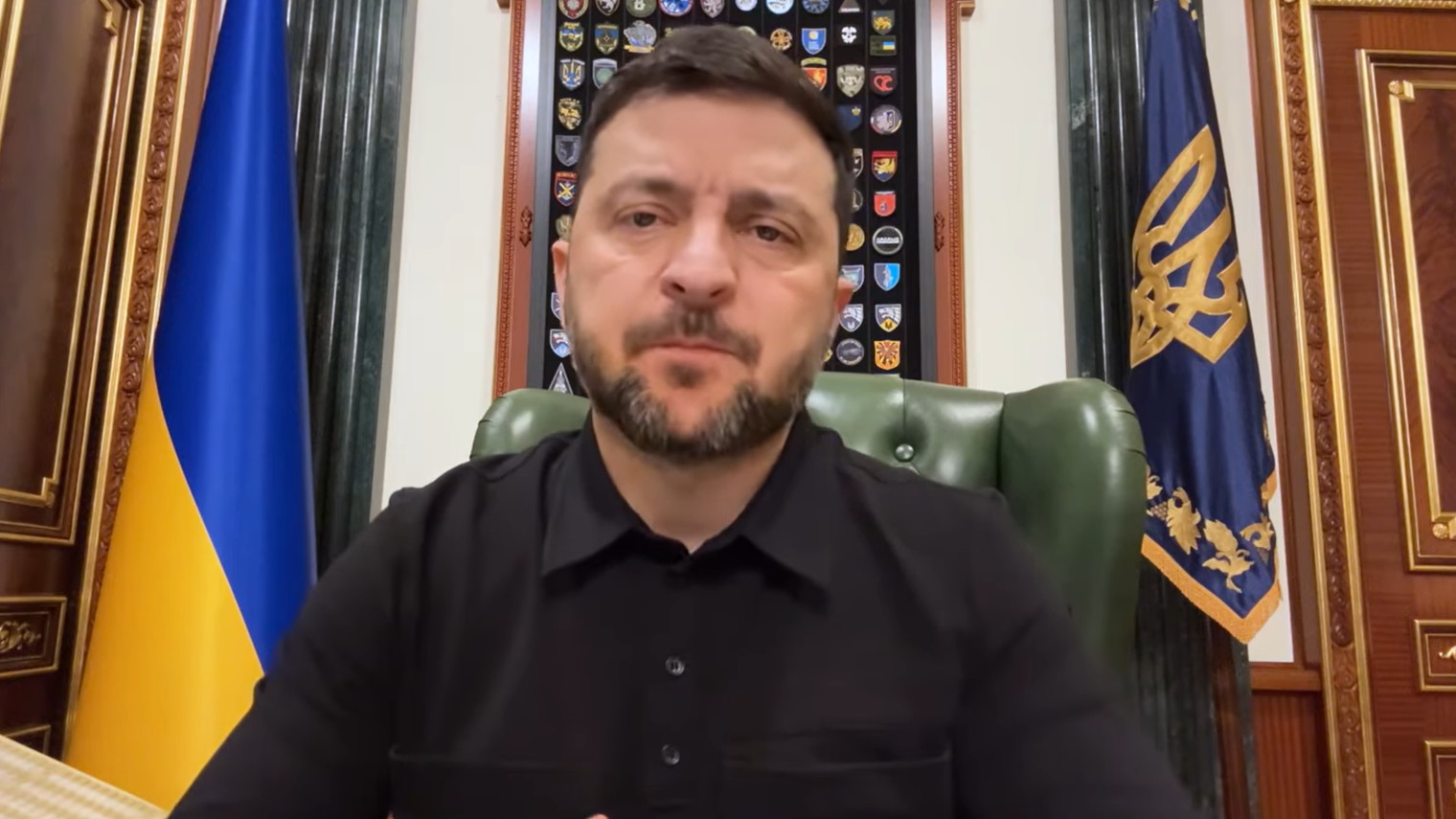
The war in Ukraine probably could have been avoided even before it became a matter of fighting or capitulation in the way this text discusses. Russia’s president, Vladimir Putin, naturally bears by far the greatest responsibility for the suffering and destruction witnessed in Ukraine in recent years.
But that does not mean the other actors involved are completely blameless – those who could have made Putin think otherwise, those who placed political prestige and geopolitical power above human lives, and those who have economic interests in keeping the killing and destruction of war going.
Let future historians decide
Beyond naïve optimism and mendacious propaganda, everything indicates that the war in Ukraine will end with Kyiv having to give up the eastern parts of the country – unless NATO and the EU are prepared to escalate the ongoing proxy war into a full-scale world war.
The ‘only’ difference compared to having capitulated from the very start on those terms is a couple of million wasted human lives, large parts of the country in ruins, and a few thousand billions SEK lost.
Personally, I think that is enough to legitimize the question of whether Ukraine and the outside world in 2022 should have done as Hungary and the outside world in 1956 and as Czechoslovakia and the outside world in 1968. At the same time, I realize that for those who made the other choice, that question will meet with smearing rather than answers. Any admission that a dreadfully wrong choice was made will instead be left to future historians.