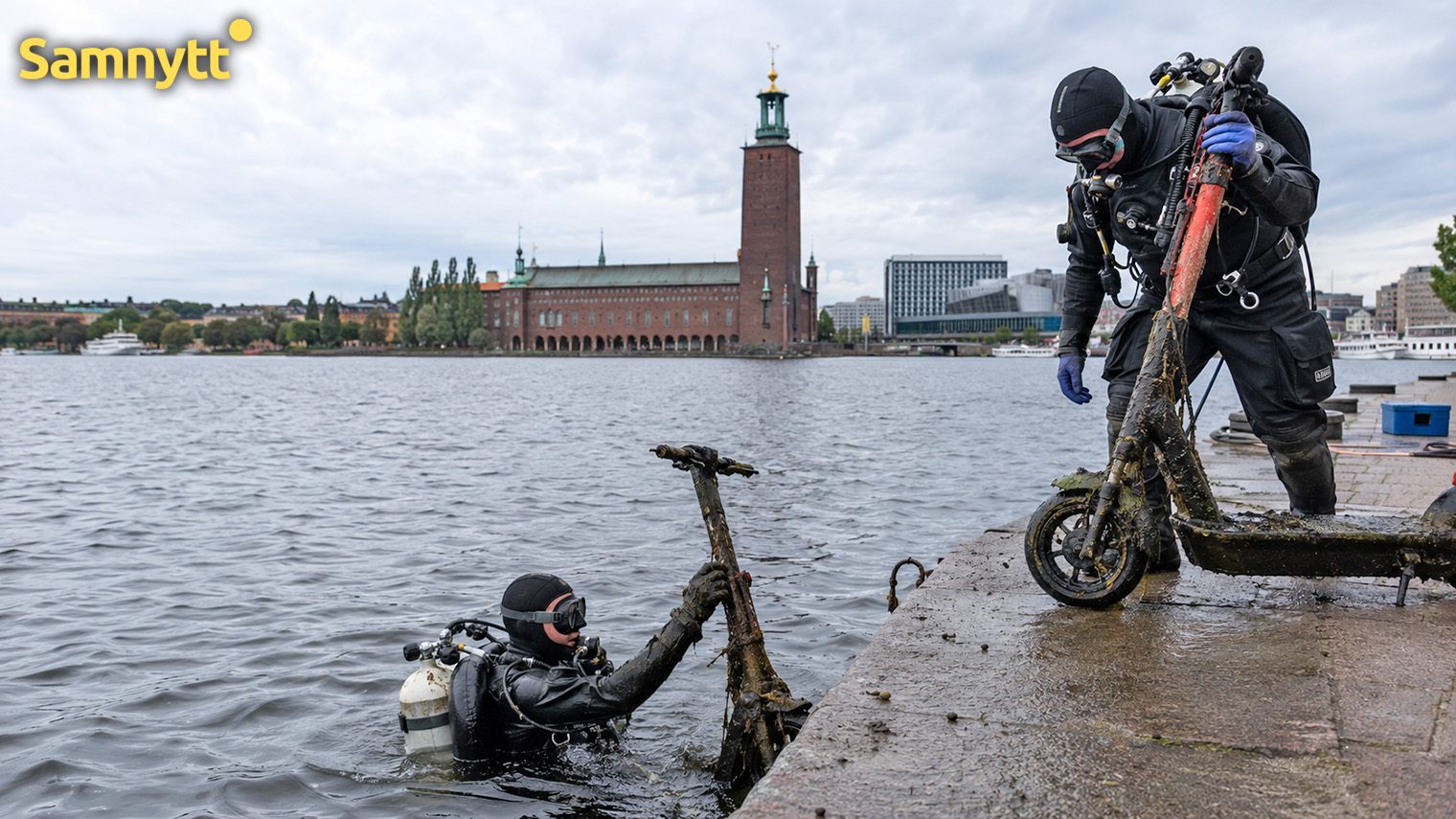
What was marketed as a climate-smart transport alternative has in many cases developed into an unexpected environmental problem. In Stockholm’s waters, thousands of dumped e-scooters lie at the bottom, their batteries at risk of leaking environmentally hazardous substances. Volunteer trash divers testify that these modern vehicles today make up one of the largest sources of litter on lake and sea floors.
When e-scooters were introduced, they were promoted as a sustainable complement to public transport and a way to reduce car traffic in cities. But beneath the surface, another reality has emerged. In addition to now being gang criminals’ most common getaway vehicle, they have also become a serious environmental problem.
The organization Hands 2 Ocean, which has been conducting regular trash dives in the Stockholm area since 2018, has seen how e-scooters have quickly become an increasingly common sight on the bottom of the city’s waters. According to the organization, around 48 tons of e-scooters – equivalent to about 1,800 vehicles – have been salvaged from lakes and waterways. This is reported by, among others, DN.
Weekly Dives Reveal the Extent
During a cleanup operation in Liljeholmen, divers and volunteers participated in clearing the bottom of debris. In addition to bikes, electronics, scrap metal, and other items, several e-scooters were found within the first few hours.
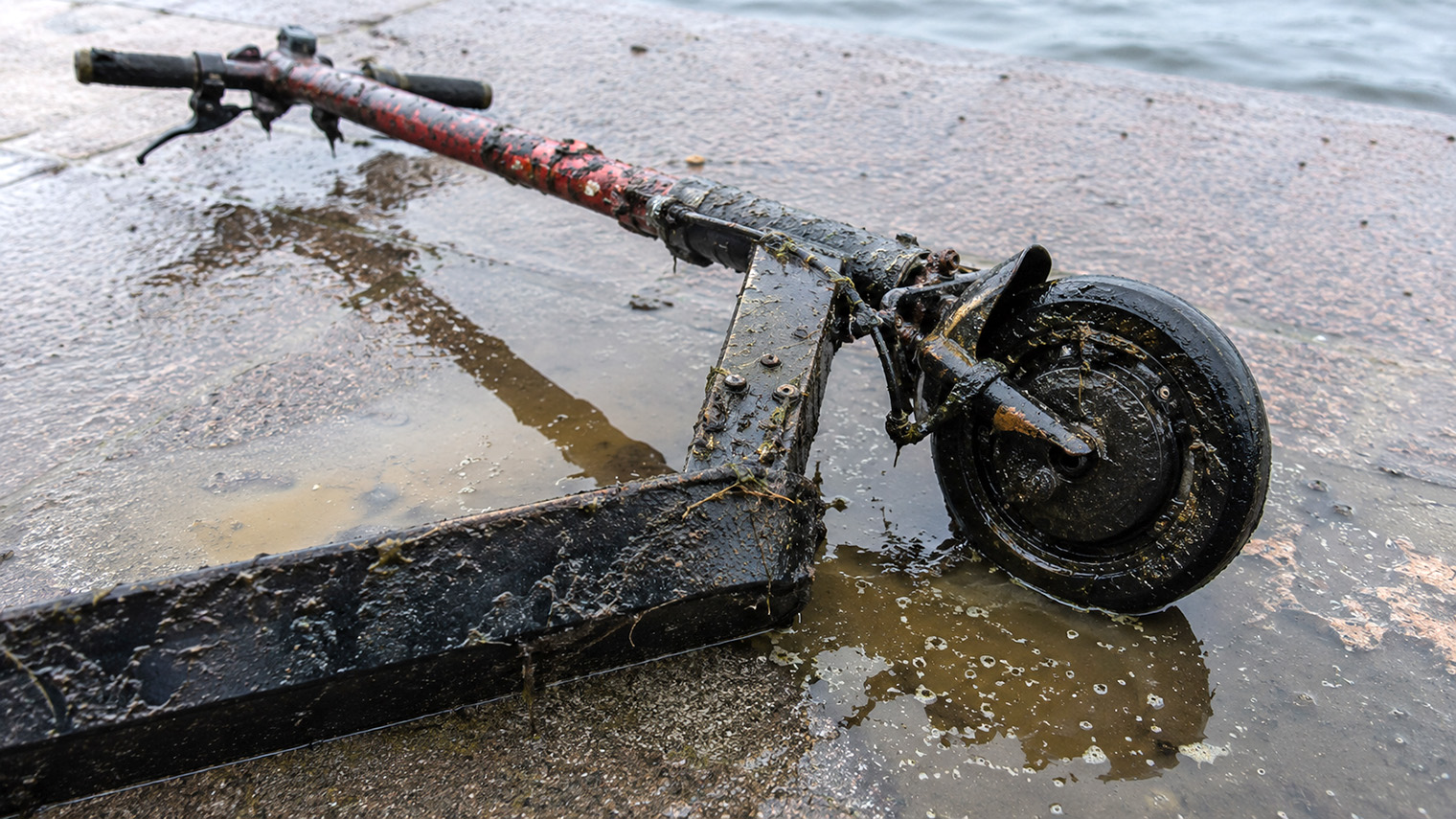
The volunteers describe how the type of trash found has changed over time. Previously, finds were dominated by things like old lead batteries and other waste from boating activities. Today, it is e-scooters that repeatedly turn up.
Toxic Batteries on the Lakebed
The problem is not just littering. E-scooters contain batteries with metals and chemicals that do not belong in aquatic environments. When the vehicles lie at the bottom for a long time, corrosion and chemical reactions can occur, risking the spread of harmful substances into the surroundings.
SEE ALSO: E-scooters are increasingly used in crime
Several of the recovered e-scooters have changed color after a long time in the water, which, according to trash divers, is a sign of chemical processes occurring in the batteries. Such discharges can negatively affect both water quality and wildlife.
A Growing Environmental Problem Beneath the Surface
For the volunteers who search the bottoms every week, these finds are a reminder of the scale of the problem. At the same time, they say that the work is also about raising public awareness of what is actually lurking beneath the water’s surface.
What was meant to symbolize the sustainable mobility of the future has revealed an unexpected downside. When thousands of e-scooters end up in lakes and streams, the green narrative literally risks sinking to the bottom.