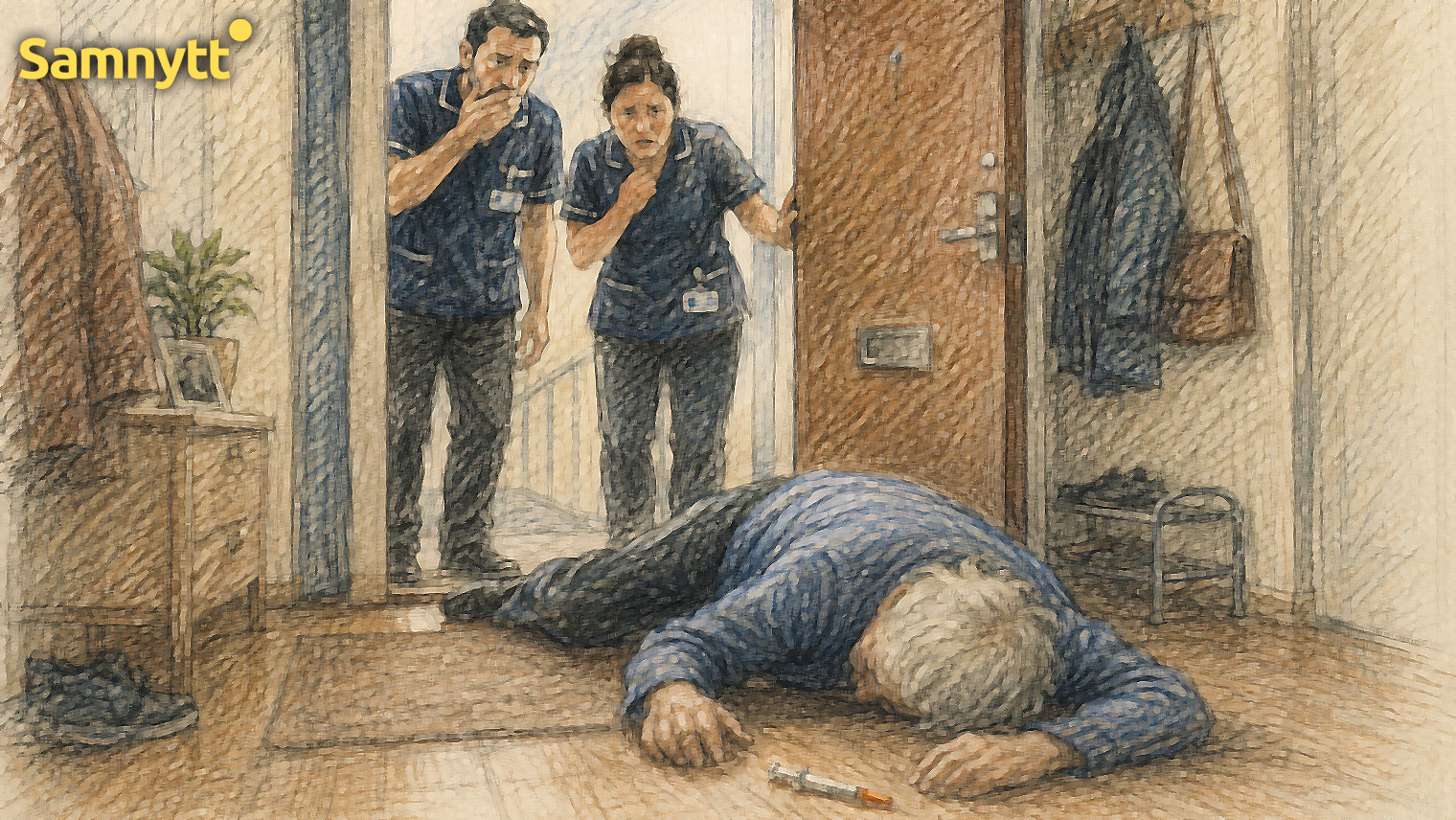
A person with diabetes and dementia in Norrköping has died following serious shortcomings in the home care service’s handling of insulin. The person was left to inject the medication themselves after an employee without proper authorization handed over the syringe. Later that evening, low blood sugar was discovered – but no nurse was contacted. The following day, the person was found dead at home. The incident has now been reported to the Health and Social Care Inspectorate (Ivo).
The recent fatality occurred within the home care service in Norrköping and involved a person suffering from both diabetes and dementia. According to the report made to Ivo, the person was allowed to self-administer insulin despite their medical condition.
The syringe was reportedly handed over by home care staff who lacked authorization to handle medication. This is not the first time an elderly person in home care has died in this manner due to what has been described as a “system failure” in care provision.
Low Blood Sugar – Nurse Was Not Contacted
Later that evening, home care staff noticed that the person had dangerously low blood sugar. Despite this, no nurse was contacted and no medical follow-up was carried out. The next day, the person was found dead in their home.
The municipality has reported the incident to the Health and Social Care Inspectorate. According to the municipality’s report, it cannot be conclusively established that the failings in insulin management caused the death. At the same time, it is noted that the handling posed a risk of a life-threatening drop in blood sugar.
Insulin is a medication where incorrect dosing or poor follow-up can have very serious consequences. Too much insulin can lead to hypoglycemia, a severe drop in blood sugar that can, in serious cases, cause unconsciousness and be life-threatening.
Another Serious Insulin Case in Norrköping
The current death is particularly significant as similar shortcomings in Norrköping’s home care service have been highlighted previously. In March, another fatality was reported after incorrect insulin treatment. In that case, the treatment was performed by a substitute lacking valid delegation.
The municipality’s investigation at the time pointed to several underlying problems. Issues with IT support and the consequences of a reorganization were highlighted as possible contributing factors.
After that death, the municipality stated that procedures would be tightened and new programs introduced to reduce the risk of similar mistakes occurring again. However, now another person has died after an incident of serious shortcomings in insulin management within home care.
Several Notable Incidents
The fatality comes as several serious incidents in Swedish elder care have received significant attention.
ALSO READ: Resident Given Detergent to Drink – Died After Breakfast Routine
As recently as August, a person at a municipal care home in Mjölby died after ingesting a liquid suspected to be liquid laundry detergent. According to the municipality, the incident occurred during morning routines. The person was taken to hospital but died later the same day.
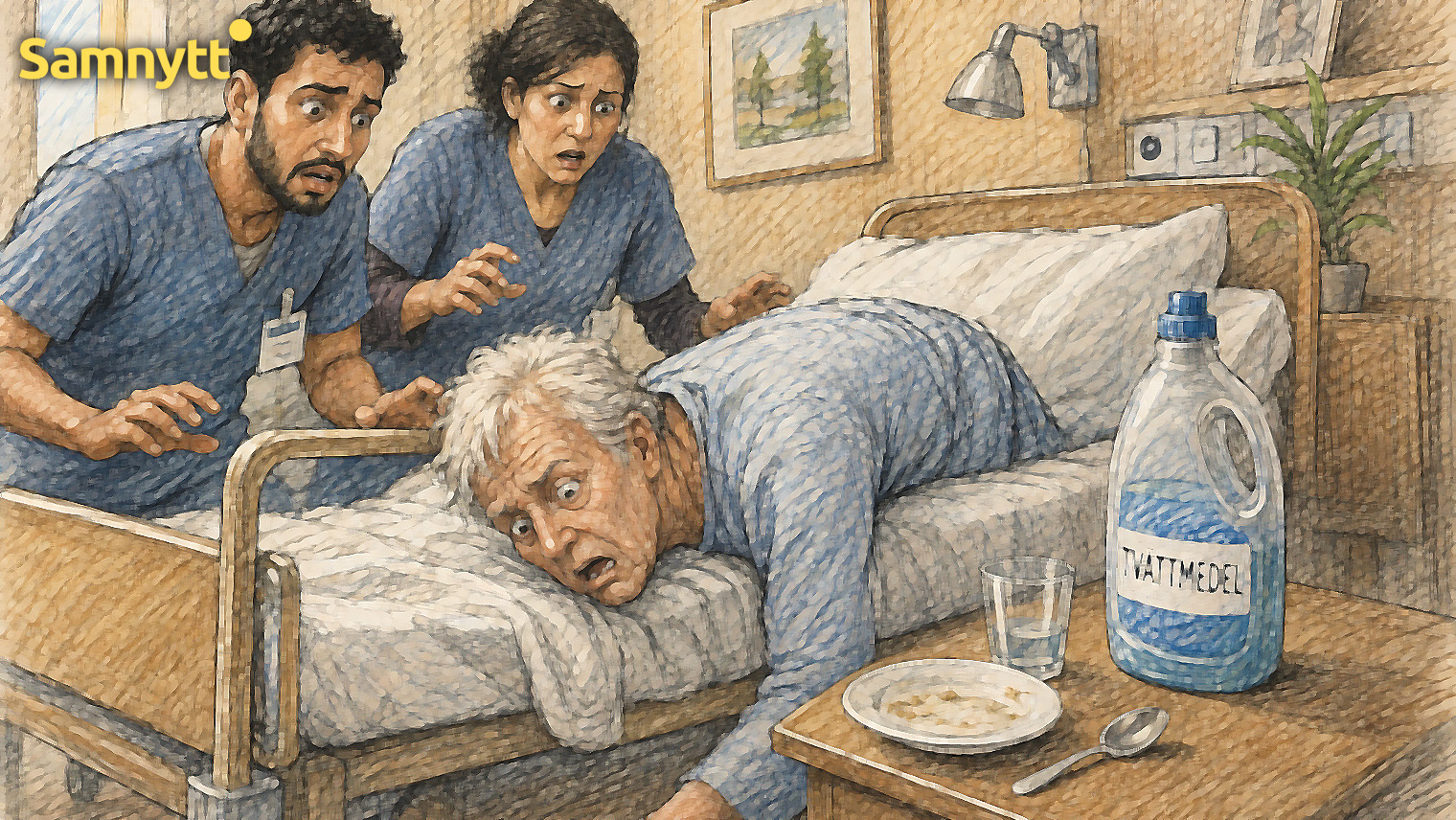
The municipality launched investigations under both lex Sarah and lex Maria to determine how the dangerous liquid ended up with the resident.
ALSO READ: Senior Given Vinegar Instead of Juice by Home Care – Several Similar Cases
Other serious mix-ups have also occurred. In Kils municipality, an elderly person receiving home care was given vinegar instead of juice in connection with medication. In Gothenburg, an elderly woman was given 24% vinegar instead of water while taking her evening medication. She suffered chemical burns and needed hospital care.
Cat Food Served to Elderly Woman
Norrköping’s home care service has also previously been highlighted for other types of mistakes. In the summer of 2025, 79-year-old Eva Andersson reported that she had requested fruit compote and milk for breakfast but instead received a bowl of cat food.
She discovered the mistake herself and tried to explain to the employee that the food was intended for the cat. Andersson stated that there were significant language difficulties in communication and that she had to use a photograph to show what product she actually wanted.
ALSO READ: 79-year-old Eva Served Cat Food by Home Care: “Language Difficulties”
Norrköping municipality described the incident as an “unfortunate mistake” and said the employee had misunderstood the instruction. The municipality also emphasized that sufficient knowledge of Swedish is a basic requirement for the job.
Education and Language as a Safety Issue
Competence within elder care has been debated for a long time, with both education level and knowledge of Swedish raised as important safety issues.
The work involves more than just personal care. Staff may need to understand medication orders, document changes in a care recipient’s condition, follow instructions from nurses, and respond to symptoms requiring medical assessment.
Lack of training, unclear responsibilities, or insufficient language skills can therefore pose risks when tasks involve sick and frail individuals.