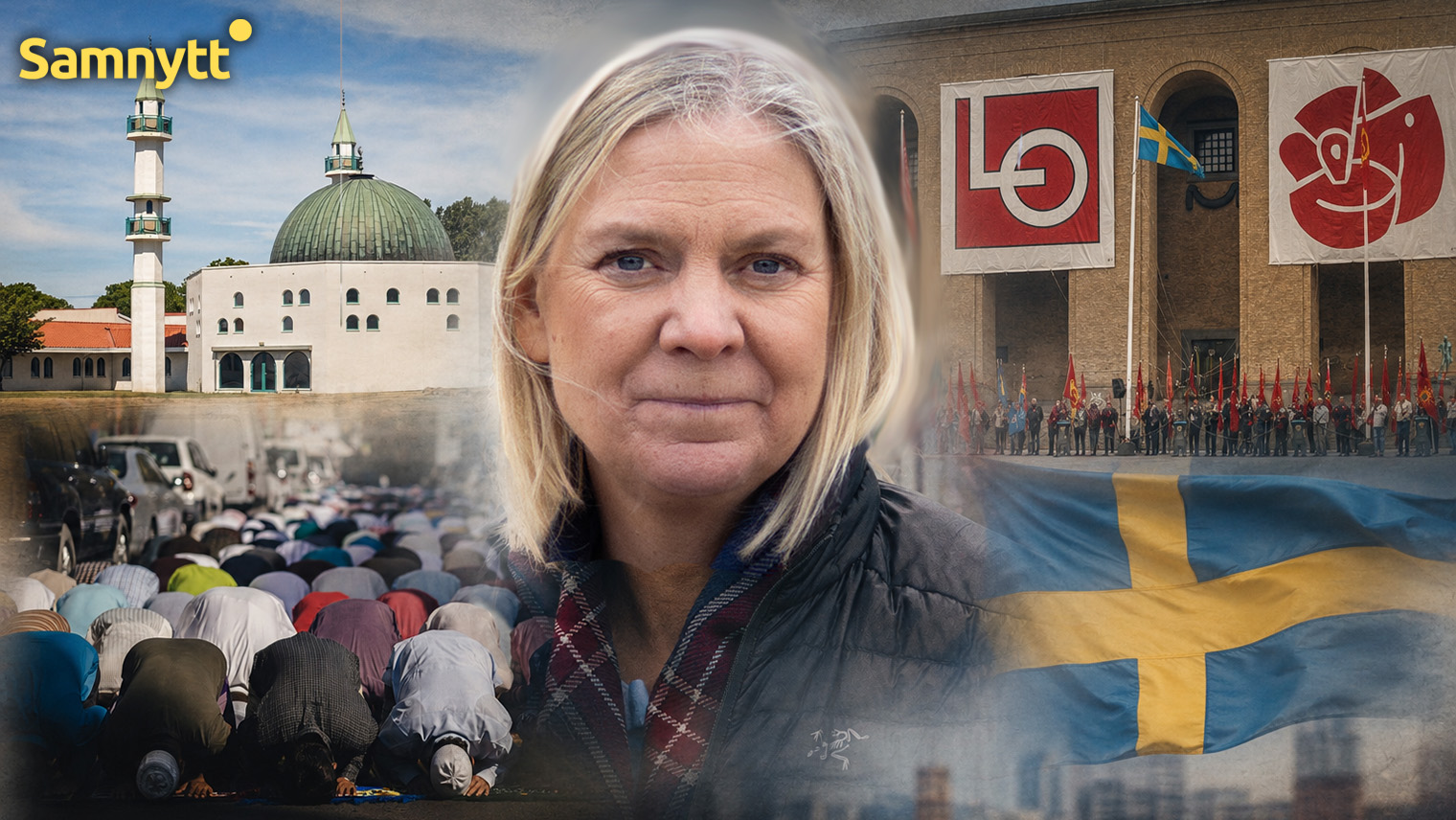
The Social Democrats’ strong position among immigrant Muslims in Sweden is, according to Fokus writer Henrik Sjögren, the result of long-term and deliberate political efforts. Already in the 1990s, contacts were established with Muslim organizations, and the party set concrete goals for representation and recruitment. Today, Muslim immigrant voters are among the party’s strongest voter groups – and their support has become crucial for the party to retain its position as Sweden’s largest.
By the 1990s, parts of the Social Democratic movement appear to have truly identified Muslim immigrants as a voter group with significant political potential. In his analysis in Fokus, Henrik Sjögren recalls a statement in the Social Democratic magazine Broderskap (now Faith and Politics) from 1998:
“There are nearly half a million Muslims in Sweden – together, they could raise any party to unimagined heights.”
According to Sjögren, this formulation summarizes quite well the strategic thinking that came to characterize the Social Democrats’ work towards Muslim voters.
READ ALSO: Interview with diplomat Bo Theutenberg: Islamism is changing Europe
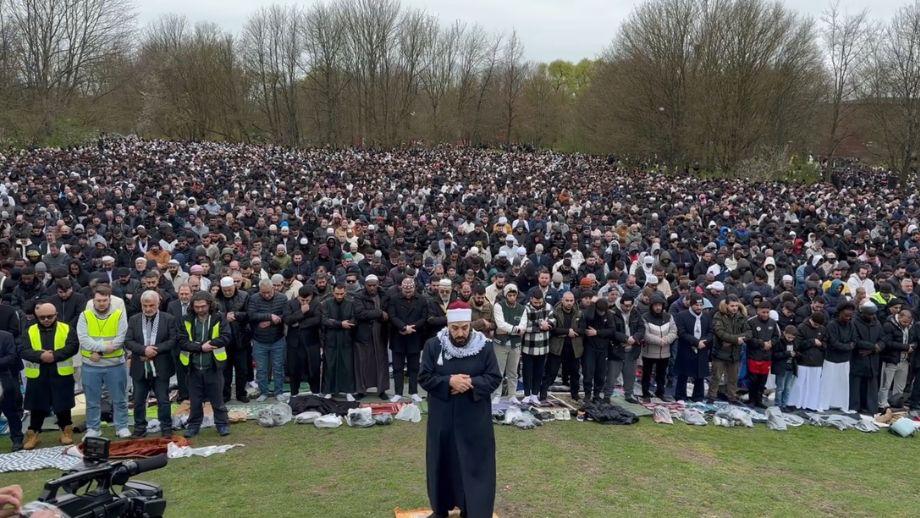
Contacts had already existed for years at that point. Ahead of the 1994 election, Sweden’s Muslim Council informed then S leader Ingvar Carlsson that the organization had decided to support the Social Democrats. The Council also stated that imams had called upon Muslims during Friday prayers to participate in the election and vote for S.
After the election, the Brotherhood Movement, the Social Democrats’ Christian affiliate organization, played a central role in developing contacts. The work soon became concrete.
A report from 1999 set goals for Muslim candidates on Social Democratic lists in 15 municipalities and five county councils, as well as on parliamentary lists in at least five counties. The ambition was also to recruit 2,000 Muslim members and give 300 of them political training.
READ ALSO: Here is the imam demanding that the Sweden Democrats apologize for “Islamophobia”
The documents outlining this strategy only attracted major public attention much later, when Svenska Dagbladet’s Per Gudmundson wrote about them in 2018.
The Result Shows in the Electorate
More than two decades later, the initiative, at least as measured by party support, appears very successful. In the Novus numbers Sjögren refers to, 61.6 percent of Muslim respondents said they supported the Social Democrats. If the Left Party and Green Party are included, the three red-green parties together garnered a total of 85 percent.
The difference compared to the center-right governing parties was dramatic. In the same survey, none of the three government parties would have even reached the four percent threshold among Muslim respondents.
READ ALSO: Social Democrats’ contacts with the Muslim Brotherhood go back to 1969
However, it cannot be said that current voter support is only the result of the organized cooperation set up in the 1990s. Sjögren notes that it is unclear to what extent the formal contacts with Muslim organizations have continued in the same form.
However, he argues that the Social Democrats have continued to work intensively through associations and local opinion leaders in areas with a large proportion of residents with foreign backgrounds.
Associations as Political Infrastructure
This is where the picture becomes more controversial. Over the years, information has emerged from several municipalities about how the Social Democrats built relationships with local associations and influential individuals who in turn could mobilize large groups of voters.
READ ALSO: Imam held a prayer for the killed Hamas leader – linked to the Social Democrats
In Borlänge, former Social Democratic politician Sofie Wiklund described how the party built contacts with immigrant associations and local key figures.
Green Party member Mursal Isa went further when she described ethnic associations and the Social Democrats as being “in alliance” in Fokus in 2022. According to Isa, there were cases where associations receiving municipal grants also urged their members to vote for S.

Similar accusations have arisen in Malmö. Kvartal has reported on grant-dependent associations in Rosengård that stated they felt pressured to help the Social Democrats, as well as about a Social Democratic “election center” near the area’s advance polling station.
READ ALSO: Social Democrats: Eid al-Adha is a Swedish holiday
Sjögren’s point is that the strong position among Muslim voters thus should be seen in a longer historical perspective. It did not arise suddenly, but was preceded by decades of organizational building, representation, and local relationship work.
A Growing Part of the Electorate
It is not possible to determine exactly how large the Muslim voter group actually is. Sweden does not register the population by religion. Sjögren therefore refers to Pew Research Center, which estimated that Muslims made up about eight percent of Sweden’s population in 2020, an increase of about four percentage points compared to 2010.
The uncertainty is also considerable. Already in 1998, Broderskap spoke of nearly half a million Muslims in Sweden. If that estimate was reasonably accurate, today’s number would be significantly larger.
READ ALSO: The Social Democrats and the mosques – a relationship over 30 years
This also increases the political importance of the group. With support for the Social Democrats at over 60 percent, Muslim voters can make up a significant addition to the party’s total voter base. At a time when the differences between the largest parties are small, such a strongly Social Democratic-oriented group can have a significant impact on S’s chances of retaining its position as the country’s largest party.
Strategy or Political Side Effect?
A more far-reaching question is whether the Social Democrats’ earlier migration policy could have had a party-strategic motive – more immigrants would in the long run mean more potential S voters. That explanation is rejected by election researcher Henrik Ekengren Oscarsson, whom Sjögren refers to.
Oscarsson describes such a strategy as “terribly bad.” The reasons include that voter turnout is lower among many immigrant groups and that their party sympathies tend to converge with those of the native-born population as integration progresses. Sjögren considers this a reasonable objection, but at the same time flips the argument – what happens if integration fails?
READ ALSO: Researcher: This is how the Social Democrats’ and the Islamist’s cooperation agreement was exposed
Here he refers to the government-commissioned report “Between Two Worlds”, based on material from World Values Survey. According to Sjögren, the report shows that values concerning, among other things, religion, family, sexuality, and individual autonomy can change slowly and persist for a long time after migration.
In some respects these norms can also be far from values traditionally associated with Sweden. The most important factor may not be how many years a person has lived in the country, but what social and cultural environment they live in.
Political Success with an Open Ending
The historical development Sjögren outlines is essentially clear – the Social Democrats early on identified Muslim voters as a politically interesting group.
The party and its affiliate organizations established contacts with Muslim organizations, set measurable goals for membership and political representation, and continued to build relationships in areas where many voters with a Muslim immigrant background live.
READ ALSO: Police: The Islamization of Sweden has been going on for 30 years
Judging solely by current party sympathies, the efforts have been successful. Few other voter groups show such strong dominance for a single party.

The more complicated question concerns what happens when a large and growing voter group is also characterized by values that, in certain matters, can clearly differ from those of the surrounding majority society. Here, Sjögren leaves the question open rather than presenting a simple answer.
The Social Democrats saw the potential early on and subsequently built up the political relationships. According to Sjögren, the goal fulfillment should be regarded as good. However, the long-term consequences for the party, integration policy and Swedish democracy are a much bigger – and still unanswered – question.
READ ALSO: A societal shift nobody voted for – concrete traces of Islamization in Sweden