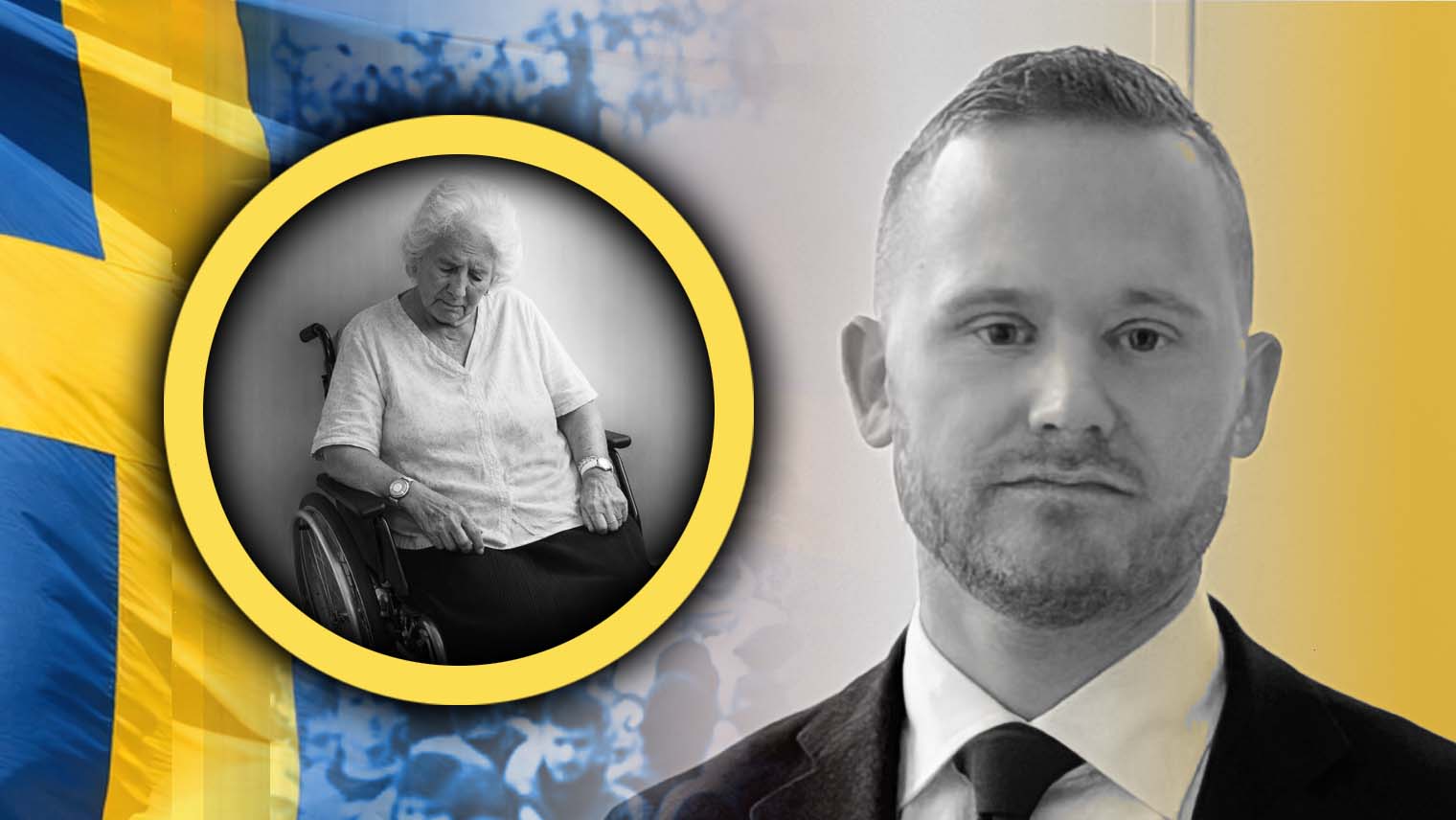
After years of wide-ranging reports on sex crimes, thefts, and humiliations targeting the elderly in elder care, the Sweden Democrats now want to put forward powerful proposals to stop the trend. In recent years, elder care has been described as a kind of tool for integration, which, according to critics, has contributed to language issues where staff and elders do not always understand each other, while requirements for competence and oversight are perceived to have been eroded. In some cases, this has led to people with criminal backgrounds being able to get employment and access to seniors in their homes, where abuse and exploitation have occurred. In an exclusive interview with Samnytt, SD’s deputy party leader Henrik Vinge elaborates on why the party wants to open up for life imprisonment in the gravest cases—but also why he believes the problem runs much deeper than individual perpetrators.
For several years, Samnytt has repeatedly and in detail reported on individuals subjecting pensioners to sexual crimes, theft, and fraud, but also on cases where the elderly are filmed and the material is distributed. All this has occurred in situations where staff had access to their homes or most private everyday lives through home care, nursing, and caregiving.
This has involved everything from theft and fraud to sheer humiliation, but also sexual assaults so severe that many have had trouble even comprehending that they could take place.
In several of these cases, the victims have been very old, ill, demented, or confused. This has also made legal processes particularly complicated. When memories fade, when it’s one person’s word against another’s, and when the victim themselves struggle to account for what happened, obtaining evidence becomes exceedingly difficult.
Therefore, there is a growing concern that what reaches the police, prosecutors, and courts is only a small part of what actually happens.
At the same time, Samnytt has highlighted other types of systemic failures—staff who cannot properly communicate with the elderly, employers who lack oversight of new hires, and municipalities that have not properly responded when abuses have been uncovered.
In these cases, it’s about using home care, nursing, and caregiving jobs as a kind of integration project. Where people who have come here from all over the world and couldn’t get a job anywhere else, have simply gotten it through elder care and home care.
Henrik Vinge, Deputy Party Leader Sweden Democrats
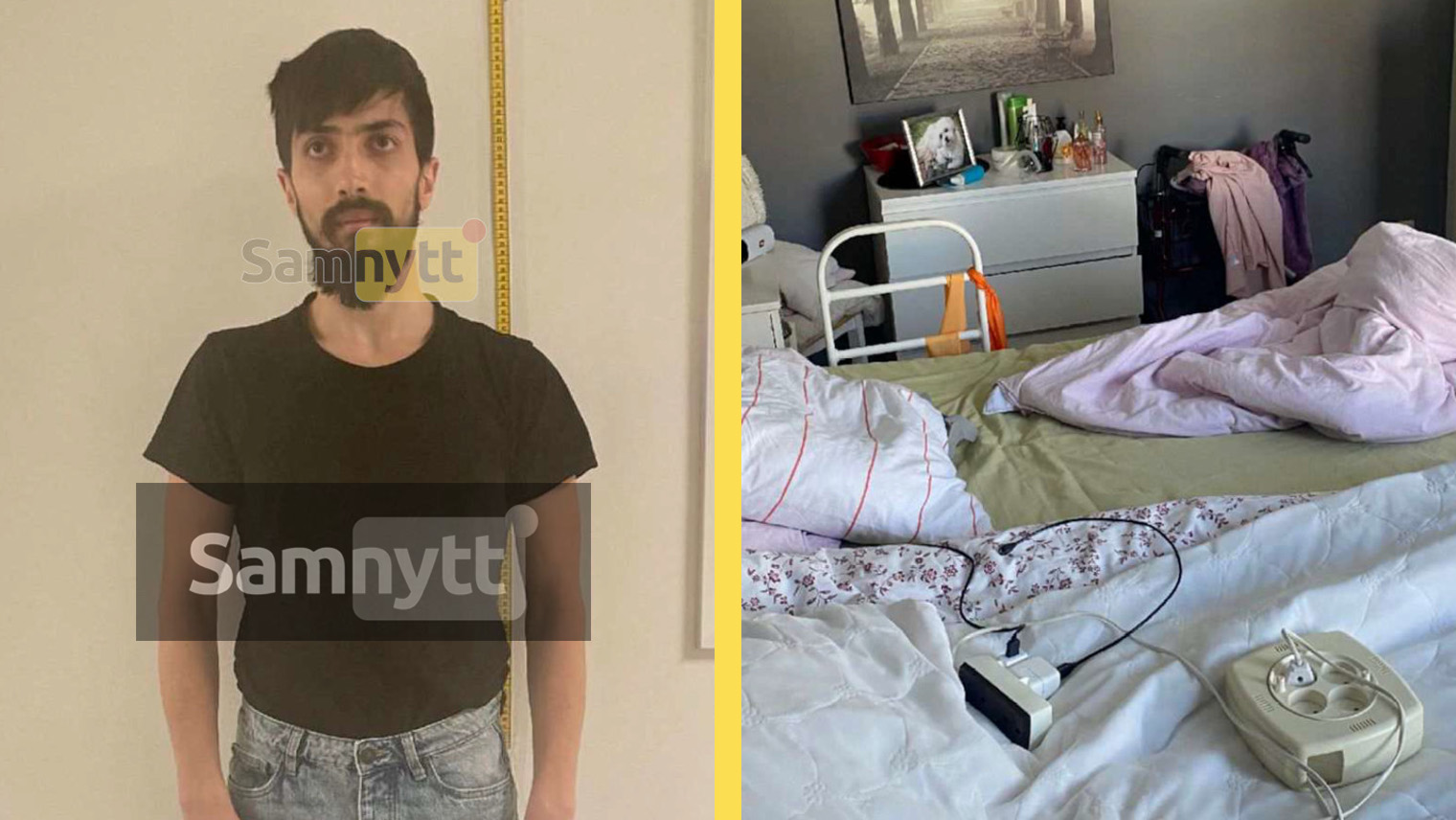
Some of the most high-profile cases Samnytt has reported on include Yusuf Rahimi, where repeated fraud and looting led to prison sentences—and Abdulrahman Al Khleef Almasalmeh, who was convicted of torture-like abuse of elderly Swedish women in elder care.

Against this background, the Sweden Democrats held a press conference on Monday about new powerful measures against crime in elder care. What garnered the most attention was the announcement that the party wants to see life imprisonment for some of the most serious sexual offenses.
READ ALSO: Home care in Örebro employed gang-criminal Syrian—violated and tortured a large number of elderly
When Samnytt subsequently speaks with Henrik Vinge (SD), it quickly becomes clear that he sees this as part of a much larger breakdown.
How did Sweden end up in a situation where our elderly are subjected to sexual assaults and plundering?
– That’s probably the question many are asking themselves, myself included. It’s with a certain resignation. One notes that Sweden is simply not what it once was.
He argues that a crucial change is that home care, nursing, and elderly care have long been used more as a tool for integration than for actually providing care and support.
– In these cases, it’s about using home care, nursing, and caregiving jobs as a kind of integration project. Where people who have come here from all over the world and couldn’t get a job anywhere else, have simply gotten it through elder care and home care.
READ ALSO: Christer, 76, about life at the elder home: “If you criticize, you’re branded xenophobic”
Vinge emphasizes that many do important work in the sector, but at the same time says that standards have not been kept at the level that the situation requires. For him, the core issue is that it involves working in people’s homes, often with individuals who are sick, frail, and unable to defend themselves. He continues:
– These are professions that actually demand quite a lot from those performing them. You have to have high integrity because you work in someone’s home. Often, this person may be ill, unable to protect themselves, and therefore the responsibility on the worker to treat the person with dignity is quite significant.

The Rapes Not the Only Failure
He repeatedly returns to the fact that the high-profile rapes of very old women are the most extreme expressions of a broader problem, but likely not the only ones.
– One should remember these are the worst examples, these severe rapes of elderly people, which I think most of us can’t comprehend. He continues:
– But one can assume that there are also many incidents, not as serious but still severe, where people simply not suited for these jobs are working in them anyway, he tells Samnytt.
This shows it’s a total collapse that’s taken place. That’s why a special commission of inquiry is needed, because it really is a complete collapse.
Henrik Vinge, Deputy Party Leader Sweden Democrats
In the interview with Samnytt, the perspective then expands from the very worst crimes to daily life in elder care. Many elderly, especially those with dementia or very advanced age, live in circumstances where recognition, language, and security become absolutely crucial. With this in mind, we ask Henrik Vinge:
Many elderly people Samnytt has spoken to express frustration and sadness that staff don’t understand what they say in Swedish; how would you comment on that?
– You are describing well how things actually stand—that there’s much more to this than just communication. There’s a sense of belonging, recognition, and security that perhaps becomes extra important if you are demented or otherwise confused.
READ ALSO: Paramedic sounded the alarm over language chaos at dementia home—which is now closed
He says the party wants clear requirements for Swedish language proficiency in both elder care and home care.
– Our standpoint is that one should have the right to care from someone who speaks Swedish, so we want to require Swedish language skills in both elder care and home care.
For Vinge, it’s not just about comfort or social closeness but also about safety and medical responsibility.
– Many of these people handle medications and must be able to interpret symptoms and signals. You have to be able to communicate. He continues:
– It’s also about quality of life, being able to have people you can practically share your daily life with. Not just people who are there and work, but people you can interact with.
Perpetrators Need Interpreters During Legal Proceedings
Several of the men accused of abuse in elder care have needed interpreters. What does that say?
– It says something about how absurd the situation is, that these are the people entrusted with responsibility, being in these elderly people’s homes, caring for them, or, in the case of elder homes, being responsible for them round the clock—and yet can’t even speak Swedish well enough to be held accountable for what they’ve done.
He argues that this together demonstrates a breakdown so serious that a special review is necessary.
– This shows it’s a total collapse that’s taken place. That’s why a special commission of inquiry is needed, because it really is a complete collapse.
READ ALSO: Home care worker Mahamad in Vänersborg confesses: “I was horny”
He also argues that in many parts of the country, it is obvious that municipalities and other employers do not act satisfactorily, and therefore stricter governance, clearer routines, and much greater responsibility for those who hire are required.
Expanded Employer Liability
This is also where the SD proposal for expanded employer liability comes in. Henrik Vinge describes how the party wants employers to be obliged to act in case of suspected abuse or other serious criminality, and that neglecting to do so should be criminally punishable.
READ ALSO: The Tidö government proposes expanded employer liability
– We are talking about expanded employer liability, where the employer will be obliged to take a number of actions if, for example, there is suspicion of abuse or criminality.
We believe that these absolutely worst abuses, where someone exploits a defenseless person who cannot fight back, and where someone also abuses a position of trust in being responsible for a sick person, having gained access to that person’s home, or being a caregiver at a nursing home responsible for deeply vulnerable people— abusing that and committing a serious, traumatic offense that creates fear long after the episode itself, that should be considered a crime grave enough to warrant life imprisonment.
Henrik Vinge, Deputy Party Leader Sweden Democrats

How do you respond to people like Yusuf Rahimi in Nacka municipality—whom Samnytt wrote about—being able to get employed again despite a background that should have stopped him?
– That’s of course completely unacceptable. And it’s also hard to understand why someone would want to cooperate in these types of abuses. Because that’s actually what you do if you don’t take these types of signals seriously. If you don’t take action, then you are part of the abuse. You’re a part of making it possible. Vinge continues:
– It’s hard to understand why anyone would want to do that, but it’s obvious that in many parts of the country, municipalities and other employers responsible for these matters do not act in a satisfactory way. So there will need to be stricter requirements on them. He elaborates:
READ ALSO: SD: Rapes and violence within elder care must not be normalized
– The idea is that with expanded employer liability, it should be subject to fines or prison as penalties. That is, you risk being convicted of a crime yourself if you don’t act. He continues:
– In addition, we also want to support employers, because many probably want to do the right thing but may not know how. So, it’s important for them to have a clear action plan—this is how you act when hiring, this is how you act if a suspicion arises or a report comes in about abuse. The SD leader continues:
– There should be a checklist for action, which should naturally include talking to the police. In this way, we want to create a situation where employers know what to do—and that they are also obligated to do it. He concludes:
– And if they don’t, then they are guilty of misconduct, which may be associated with fines or imprisonment, depending on the severity.
Life Imprisonment
You are proposing life imprisonment for some of these crimes—what is it that makes you take that step?
– We believe that these absolutely worst abuses, where someone exploits a defenseless person who cannot fight back, and where someone also abuses a position of trust in being responsible for a sick person, having access to their home, or being a caregiver at a senior care facility responsible for deeply vulnerable people—abusing that power and committing a serious offense that traumatizes and instills fear long after the event itself, that is a crime grave enough to justify life imprisonment. Henrik Vinge continues:
READ ALSO: When imagined benevolence comes before responsibility—and the elderly pay the price
– If you have shown that you lack empathy, are not afraid to cross all the boundaries that such actions entail, then you are missing something inside that stops this kind of violence and abuse. So these are dangerous people—people should be aware of that. They will likely inflict similar harm on others, so we need to stop it. He continues:
– And then the best way is to lock them up, because then they cannot hurt more people.
If Tidö (the current government) doesn’t succeed in this fall’s election, how do you see the situation developing in the coming years?
– I fear that if the red-greens rule, this situation will worsen, where elder care and home care are viewed as integration projects. There, people want to bring in those who have arrived from other countries and can’t get jobs elsewhere, to make the statistics look better and show that unemployment among immigrants isn’t that high.
Vinge draws the harsh conclusion that this development in practice means that dangerous individuals risk being let into elder care.
– But what you’re doing is simply ushering rapists into elder care and home care, and then we will see more abuse. This is the core problem that has caused this from the start.
The Sweden Democrats present several concrete measures to address crime in elder care. A central part is about strengthening the ability to prevent and investigate crime through increased use of technical aids. Jessica Stegrud (SD) also writes about this in an op-ed here at Samnytt.
Camera surveillance and other forms of documentation are highlighted as tools to reduce situations where it’s one person’s word against another’s and where the evidence situation is often decisive for whether a perpetrator is convicted or acquitted.
The party also wants to tighten the screening of staff working in care. This includes more reliable and regular criminal record checks, where employers should not only rely on extracts provided by the employee themselves.
At the same time, the need for better information sharing between employers is raised, to prevent those with previous suspicions or convictions from moving between workplaces without their background following them.
Beyond this, there are proposals for clearer responsibility for employers and operations within elder care. Through increased oversight, clearer routines, and in some cases sanctions against those who fail in oversight, the party wants to strengthen protections for the elderly.
READ ALSO: This is what the end station looks like for those who built Sweden
All in all, the proposals aim to increase daily safety for a group that often has limited options to sound the alarm or defend themselves, say the Sweden Democrats. Samnytt will continue to report on these proposals.
⚠️ SAVE SAMNYTT ⚠️
Hundreds of thousands read—few contribute.
34,000 ARTICLES
Help us continue investigating
Without your support, we may not be here this year.