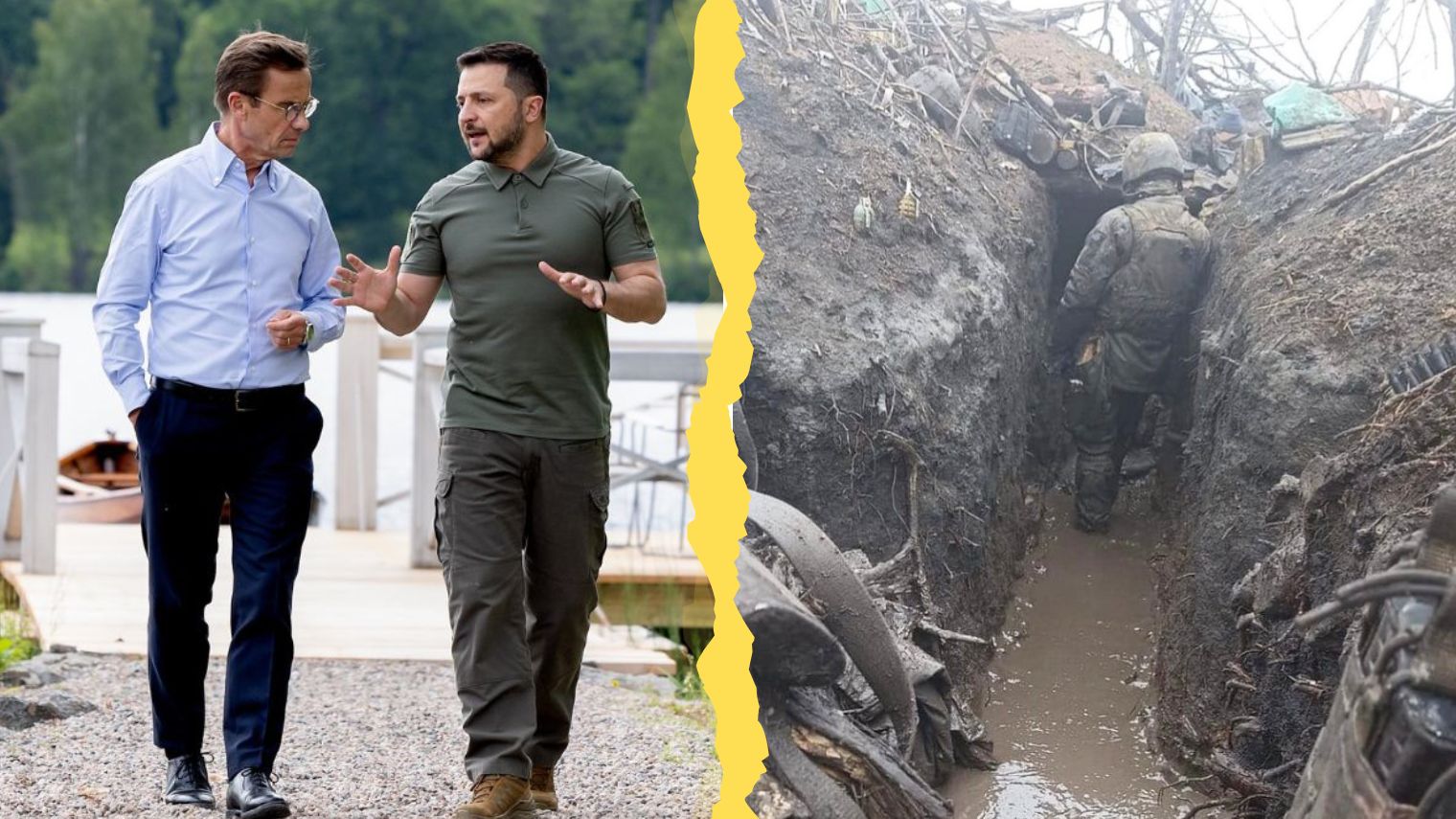
Earlier this week, it became clear that Hungary has lifted its veto against an EU loan amounting to roughly 1 trillion Swedish kronor (SEK) for Ukraine. Prime Minister Ulf Kristersson (M) welcomes the decision and describes it as highly positive. According to Kristersson, the support strengthens Ukraine by giving the country the ability to purchase more weapons, thus increasing pressure on Russia—a factor he sees as crucial for achieving future peace.
The war entered its fifth year this spring since Russia’s invasion. There are no clear signs that the parties are moving closer to a peace agreement, or even a broader political resolution beyond exchanges of bodies and prisoners of war.
Russia has consolidated control over parts of eastern Ukraine and continues to advance in these areas, in a conflict that is largely marked by drone attacks from both sides. With NATO-supplied weapons, Ukraine has managed to slow the Russian offensive and counter Russia’s ambition to fully take over the regions it currently claims.
After the 1 trillion SEK was secured—following Ukraine’s decision to allow Russian oil to flow again to Hungary and Slovakia—the European Council gathered for an informal meeting in Cyprus, which currently holds the EU presidency.
ALSO READ: EU: 1 Trillion Swedish Kronor to Ukraine
Attending were leaders from EU member states, including Prime Minister Ulf Kristersson (M), European Commission President Ursula von der Leyen, and Ukraine’s President Volodymyr Zelenskyy.
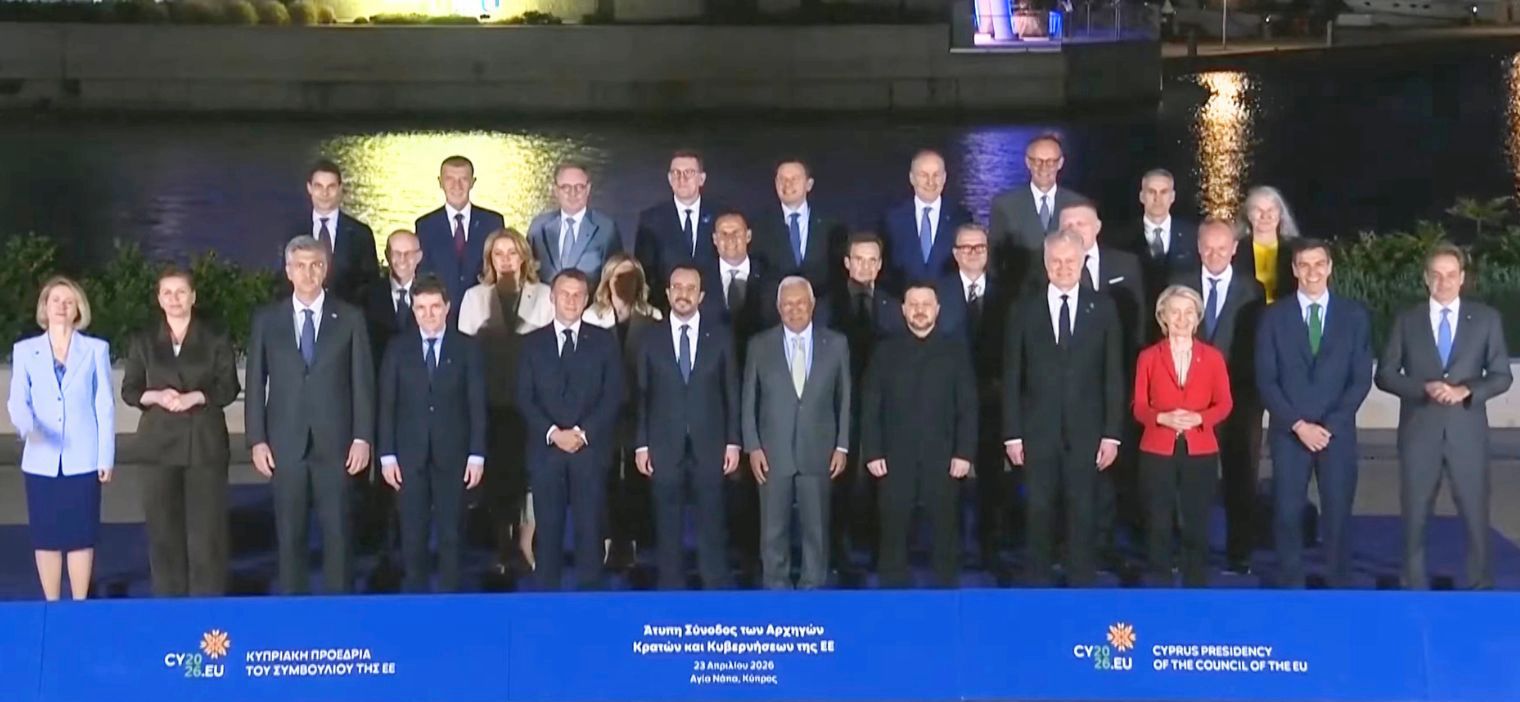
Images and videos from the meeting showed a cheerful and relaxed atmosphere. Hungary’s outgoing Prime Minister Viktor Orbán—the strongest critic of the support—was not seen among the participants.
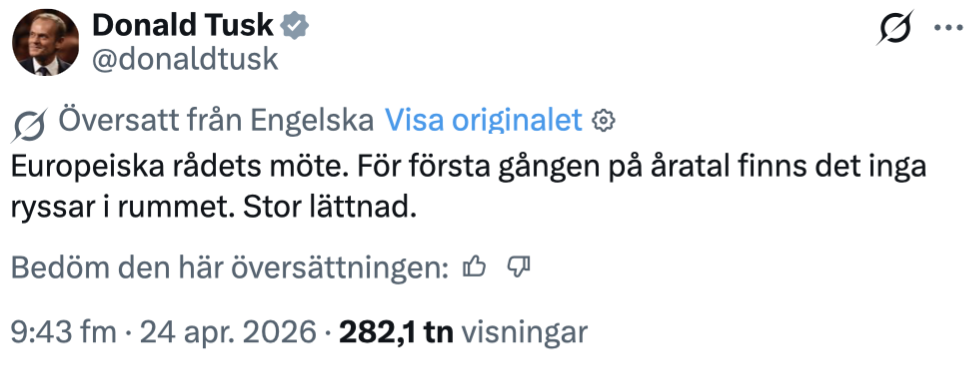
This was also noted by Poland’s left-liberal Prime Minister Donald Tusk, who said there were no Russians in the room, describing the situation as a “great relief.”
With Viktor Orbán no longer in a position to block decisions, Ukraine’s President Volodymyr Zelenskyy has raised his ambitions following the substantial EU loan. The next goal, according to him, is Ukrainian EU membership.
– We are defending common European values. I believe we have earned full EU membership.

“Key to Peace” – but Unclear How Many More Aid Packages Will Follow
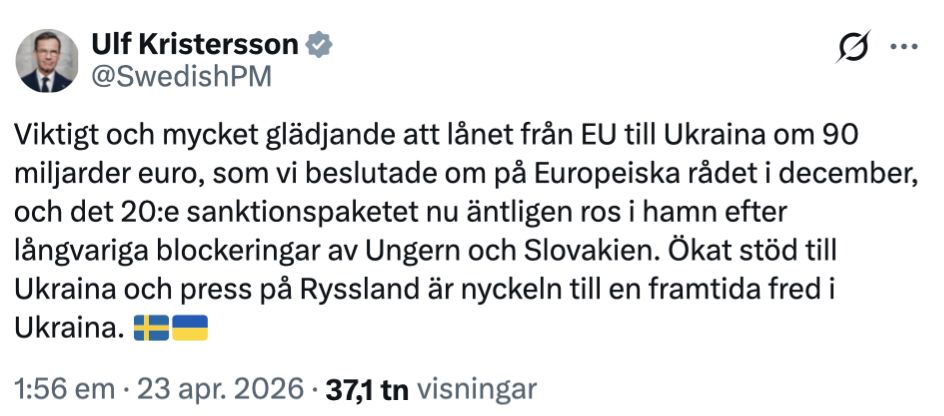
During the trip to Cyprus, Prime Minister Ulf Kristersson (M) posted on social media to inform the Swedish public that the EU’s loan package is now in place, describing the announcement as highly positive. He also singled out Hungary and Slovakia as countries that had previously blocked the support.
During the Cyprus journey, Kristersson made social media posts to the Swedish people, expressing his joy that the EU’s loan package is now finalized. He pointed out that Hungary and Slovakia had blocked the support—without mentioning that these countries actually approved the arrangement in December.
The process of approving the loan was previously stopped this spring when the flow of Russian oil via Ukraine—vital for Hungary’s and Slovakia’s energy supplies—suddenly ceased. The countries then toughened their rhetoric, accusing Ukraine of blackmail and clarified they could only approve the support if oil deliveries resumed.
In his post, Kristersson emphasizes that the substantial support—where EU taxpayers guarantee a loan of around 1 trillion SEK—constitutes a “key to a future peace in Ukraine”. At the same time, a natural question arises on what happens if these funds are used up before a peace deal is reached, and how many similar aid packages may be required in the future.
Furthermore, Kristersson’s description does not mention that the 1 trillion SEK, which may appear like long-term support, according to the EU is only expected to cover Ukraine’s urgent needs for the current and coming year. This is also stated in information from the EU’s own information.
From both the Swedish government, led by Ulf Kristersson, and at the EU level, it has been clearly stated that support will continue “as long as it is needed,” without any fixed upper limit.
Since Donald Trump returned as President in the USA, the country has ended its financial aid to Ukraine, although military aid in other forms—such as intelligence and satellite support—has continued. In practice, this has meant increased pressure on EU countries to shoulder the financial burden, which ultimately falls on taxpayers and future generations.
Moderate Party representatives, including Finance Minister Elisabeth Svantesson, have argued that ongoing support for Ukraine is necessary so that future generations will not have to live in a Europe marked by Russian influence.
– Our children and grandchildren should not have to learn to speak Russian, said Elisabeth Svantesson (M) at a press conference on military buildup last summer.
The same rhetoric is echoed by MP Oliver Rosengren (M), who argues that Sweden’s support for Ukraine—which has exceeded 128 billion SEK—must increase so that we do not have to learn Russian ourselves.
– Sweden has now given over 100 billion SEK in military and humanitarian support to Ukraine. Why, one might wonder? Because if Ukraine does not win against Russia, then our children here in Sweden will speak Russian. Ukraine must win for us to have peace and freedom throughout Europe, explained the Moderate politician in a viral video.
@oliverrosengren Ukraine’s cause is ours. That’s why we have given over 100 billion SEK in military, civilian and humanitarian support. The restructuring of aid continues. In the future, about one fifth – 10 billion SEK per year – will go to Ukraine. #bistånd #fyp #ukraina #ukraine #försvar ♬ original sound – JMSN
Russia Refuses to Pay Reparations
According to statements from Brussels, the financing for this mega-loan to Ukraine is raised within the framework of the EU’s long-term budget. The EU has justified the large loan by saying that Union taxpayers only bear the risk, while Ukraine is expected to repay in the long term.
How this will be implemented in practice remains unclear, not least as the EU is already covering large parts of Ukraine’s ongoing expenses, while the country is highly dependent on external aid to maintain both state functions and military resistance. The plan is instead based on the assumption that repayment will be possible through future war reparations from Russia after the war ends—provided such payments are ever made.
READ MORE: Sweden and the EU agree: Promise to cover Ukraine’s economic needs
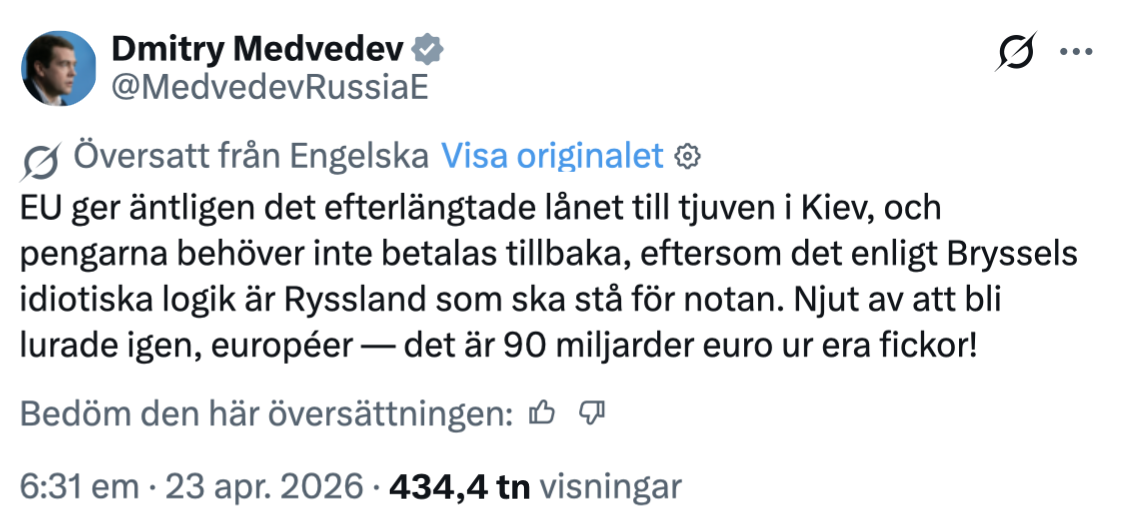
This assumption, however, was dismissed by Russia on Thursday. Former Russian President Dmitry Medvedev, now vice-chairman of the Security Council and still a close associate of Vladimir Putin, wrote in a post on X, formerly Twitter, that EU countries have made an incorrect assessment and that Russia will never accept or pay such claims.
ALSO READ: Kristersson in conversation with Trump: Ukraine is existential for Sweden