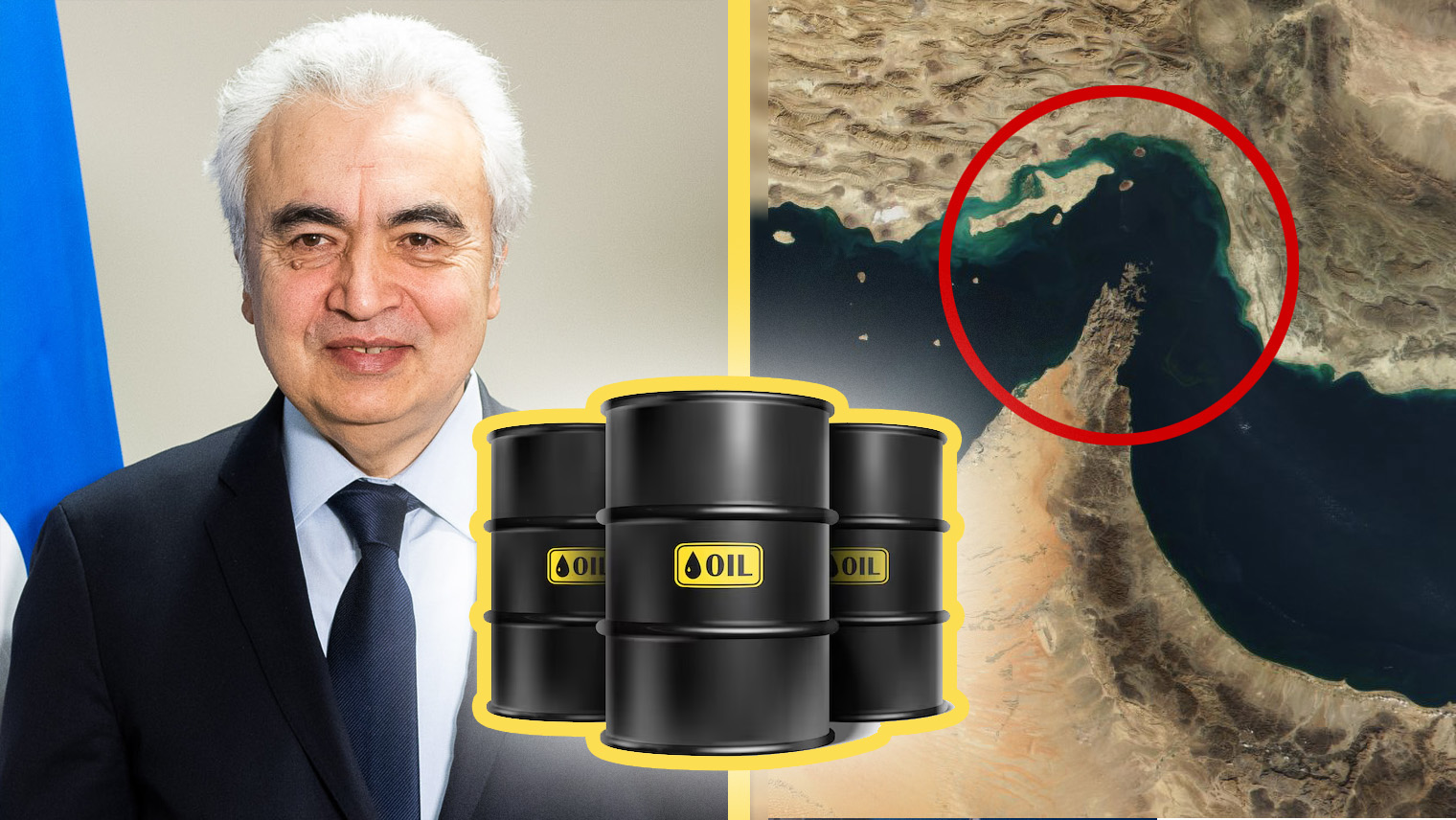
The head of the International Energy Agency (IEA), Fatih Birol, is sounding the alarm about what he describes as the greatest threat to energy security in modern times. The ongoing conflict with Iran and the current closure of the Strait of Hormuz have already knocked out large parts of the world’s oil exports—resulting in rising inflation, risk of rationing, and fuel shortages.
The world now faces the greatest threat to energy security in world history. That’s what IEA chief Fatih Birol said in an interview with CNBC on Thursday. He also stated that millions of barrels of oil per day have already disappeared from the market.
— At present, we have lost 13 million barrels of oil per day … and there are extensive disruptions in several crucial commodity flows, he said.
Double Blockade in the Strait of Hormuz
The strategically important Strait of Hormuz, where an average of 20 million barrels of oil and other petroleum products passed daily before the Iran war, is now closed. Reportedly, a double blockade is in place, where neither Iran nor the US are allowing ships to enter or exit the strait.
READ ALSO: “The Worst Energy Crisis Ever” Exposes EU’s Vulnerability
The IEA describes the passage as one of the world’s most critical chokepoints for oil trade. A continued closure is expected to slow :censored:6:cdd6bbaa89: growth, drive up inflation, and in the worst case, lead to energy rationing.
Europe Risks Jet Fuel Shortage
Birol issued a particular warning for the situation in Europe, where a large share of jet fuel normally comes from refineries in the Middle East. That import is now essentially down to zero, he said.
He explained that Europe is now trying to replace these deliveries with imports from the US and Nigeria. But if Europe does not manage to secure additional imports from other countries, we will have problems, said Birol. At the same time, he expressed hope that the strait will reopen, but did not rule out measures to reduce demand.
— We may well need to take measures in Europe to reduce air travel as well, he said.
Nuclear and Renewables May Benefit
At the same time, the IEA chief believes the crisis may speed up the transition to other forms of energy. He especially expects nuclear power to see a boost. But he also believes that so-called renewable energy will grow significantly, alongside surging demand for electric vehicles.
READ ALSO: EU Warns of Prolonged Energy Shock Due to War in the Middle East
However, not everything is positive for the climate and environment. Birol added that even coal could see a resurgence, particularly in the larger Asian economies.
Released Oil Reserves
The 32-member IEA has already tried to ease the impacts by deciding in March to release 400 million barrels of oil from strategic reserves. But according to Birol, it is only a temporary relief.
— It relieves the pain, but it does not cure the problem, he has previously said.
He emphasized that the real solution is a reopening of the Strait of Hormuz. Drawing on reserves is merely a way to buy time.