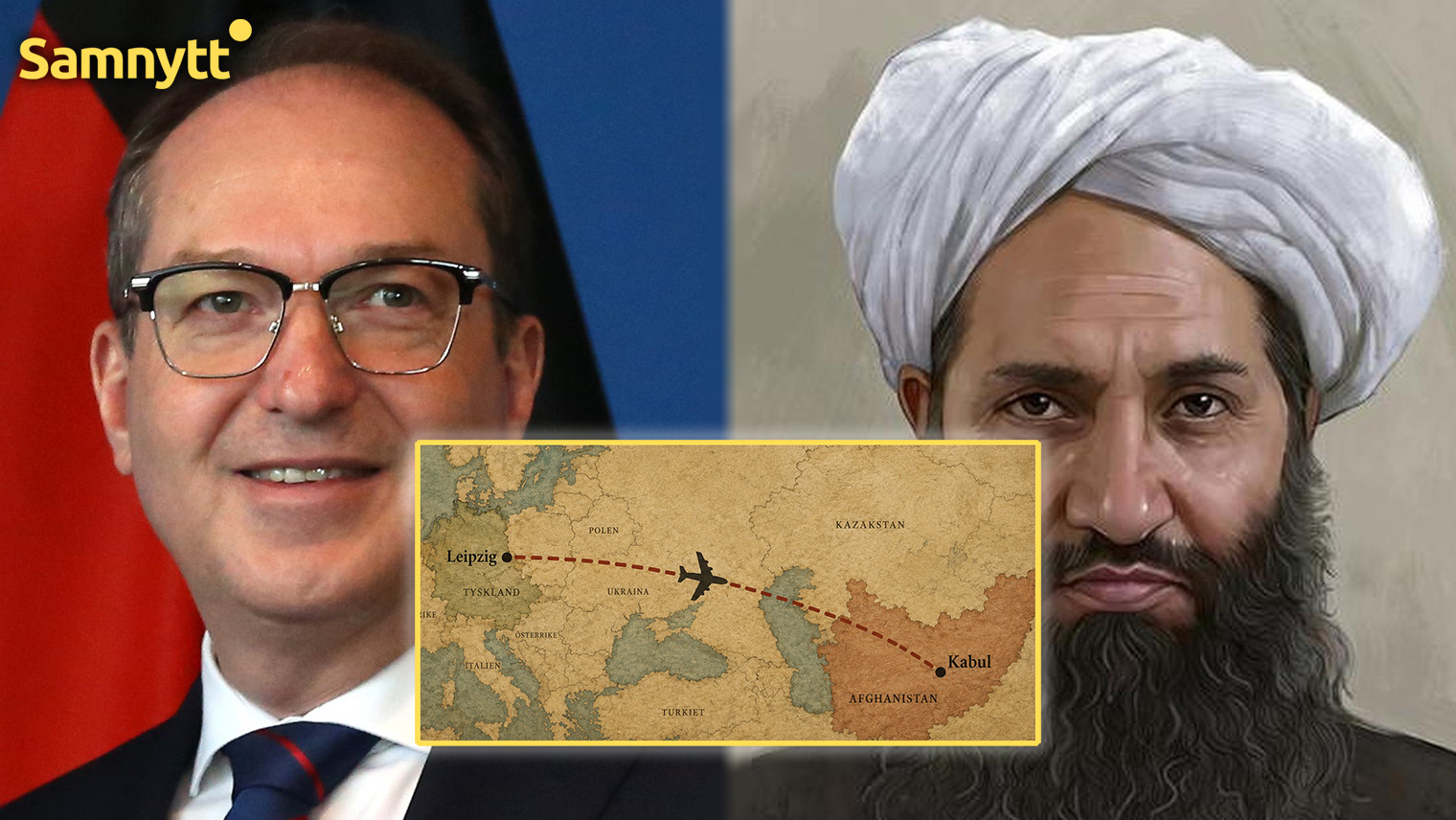
Germany has carried out yet another deportation to Taliban-controlled Afghanistan. On Tuesday, 23 Afghan men were flown from Leipzig/Halle to Kabul. The majority are reported to have been convicted of serious crimes. The deportation is part of the German government’s tightened migration policy and is enabled by contacts with the authorities in Kabul – even though Germany does not recognize the Taliban as Afghanistan’s legitimate government.
Early Tuesday morning, a chartered plane took off from Leipzig/Halle airport with 23 Afghan men on board. All were required to leave Germany and the majority had been convicted of serious crimes, including sexual offenses and assault, according to the German Interior Ministry. Germany’s Minister of the Interior, Alexander Dobrindt (CSU), simultaneously signaled that deportations will continue.
“Our society has a clear interest in making sure that criminals must leave our country,” Dobrindt said, adding that those who have no right to stay in Germany must also expect to be forced to leave.
The new policy goes further than just targeting serious criminals. Dobrindt announced after a previous deportation at the end of July that Germany will no longer limit returns to convicted criminals and those classified as security threats. Other Afghan citizens with enforceable departure orders can also be deported.
From Indirect to Closer Contacts with the Taliban
The deportations mark a significant change compared to the situation after the Taliban takeover in Kabul in 2021. Germany halted deportations to Afghanistan at that time. But in the summer of 2024, the then government under Olaf Scholz changed course after a series of high-profile violent incidents and mounting political pressure over migration.
On August 30, 2024, the first German deportation flight to Afghanistan since the Taliban’s takeover took off. On board were 28 Afghan citizens who had been convicted of crimes and had no right to remain in Germany.

Since Berlin had no diplomatic relations with the Taliban, the return was organized with Qatar acting as an intermediary. This followed discussions about how Afghan citizens could be received.
Since then, efforts have continued. Further deportations have taken place, including 31 Afghans at the end of July this year and now another 23 men.
Carrying out forced deportations in practice requires some form of cooperation with the authorities in the receiving country, for example, to verify identities, arrange travel documents, and ensure that individuals are actually received.
This has forced the German government to take a pragmatic approach to the Taliban, despite Berlin not recognizing their rule as Afghanistan’s legitimate government.
Criticized for Legitimizing the Taliban
The contacts have at the same time drawn criticism from the political left in Germany. Schahina Gambir and Sara Nanni of the Green Party have accused the government of moving closer to the Taliban to implement its deportation policy. Critics argue that such cooperation risks contributing to the normalization of a regime that, among other things, has severely restricted the rights of women and girls.
READ MORE: Germany resumes deportations to Afghanistan
The German government, however, distinguishes between political recognition and the practical contacts required to enforce migration decisions. Similar reasoning is now taking place in several parts of Europe: technical discussions with a country’s de facto authorities do not necessarily mean recognizing the regime diplomatically.
The Taliban Want the Diaspora to Return
Meanwhile, the message from Kabul has been that Afghan citizens abroad are welcome back. In June 2025, Afghanistan’s Taliban-led government urged Afghans in exile to return to the country. Prime Minister Mohammad Hassan Akhund at the time promised amnesty to those who had left Afghanistan after the previous government’s collapse in 2021.
The Taliban’s assurances are controversial, and the situation for certain groups in the country remains challenging. Afghanistan is also in a deep economic and humanitarian crisis.
However, this means that one of the obstacles to European deportations – whether the receiving country will actually accept its citizens – has become, at least in principle, less of an issue.
Sweden and the EU Have Taken the Same Path
Developments in Germany have a direct parallel in Sweden and at the EU level. The Swedish government and the EU have this year worked to establish practical contacts with the Afghan de facto authorities regarding returns. The aim is above all to be able to enforce decisions against Afghan citizens who lack the right to stay and, in particular, those who have been sentenced to deportation after being convicted of crimes.

The Swedish government, like Germany, has made it clear that such contacts should not be seen as political recognition of the Taliban regime.
SEE ALSO: Tidö Government: Afghans Should Go Home to the Taliban
The issue is part of a significantly broader Swedish and European migration policy shift. The Swedish government has repeatedly emphasized that effective returns are a prerequisite for regulated migration. At a Nordic ministerial meeting in Brussels in March, Afghanistan and Syria were also specifically discussed in relation to returns.
Sweden Also in Talks with Syria and Somalia
The same model is being used with other countries where it has previously been difficult to enforce deportations. After the fall of the Assad regime, Sweden has established contacts with Syria’s new leadership on, among other things, the return of convicted Syrians. Minister for Migration Johan Forssell (M) visited Damascus in November 2025 and later stated that the parties had agreed to initiate cooperation.
In May this year, the government allocated three million kronor for the Migration Agency’s relationship-building work with Syrian actors. The initiative includes hosting a Syrian technical delegation in Sweden to work on administrative issues relating to migration, identity, and returns. The government has designated Syria as a priority country in its returns efforts.
The government has also cooperated with Somalia to increase the number of enforced deportations. Forssell has stated that the cooperation has contributed to a fivefold increase in deportations there in a short period.
The common theme among these initiatives is that Sweden and other European countries are attempting to establish functioning contacts with countries of origin, so that people with final deportation orders can actually be sent back.
Migration Issue Simmers Ahead of German State Elections
The latest deportation comes as migration policy once again tops the political agenda in Germany. Chancellor Friedrich Merz’s conservative-led government has taken a tougher stance, while Alternative für Deutschland (AfD) continues to pressure the governing parties on migration.

In the run-up to state elections, AfD is polling at around 36–43 percent in the eastern German states of Saxony-Anhalt and Mecklenburg-Vorpommern. In Berlin, the party is expected to become the second largest, with about 18 percent.
AfD accuses Merz’s government of still doing too little to stop irregular migration and to enforce deportations of both refused asylum seekers and foreign criminals. The German government’s message now is that more decisions should also have practical consequences.
Tuesday’s charter flight with the 23 Afghan men is thus another sign of how an issue that just a few years ago was considered almost impossible – forced deportations to Taliban-controlled Afghanistan – is becoming an established part of German return policy.