Sweden is the country where support for people fleeing is the strongest among the 29 countries included in a new international opinion poll from Ipsos conducted on behalf of the UN Refugee Agency, UNHCR. According to the survey, 78 percent of Swedish respondents agree with the statement that people fleeing war or persecution should be able to seek protection in another country.
The result has been highlighted by Sweden for UNHCR, which describes Sweden as the country where support for people on the run is greatest. At the same time, the same survey shows that the public opinion is significantly more complex than the headlines suggest.
“It is very gratifying to see that Sweden is among the countries with the strongest support for people fleeing. We also recognize this in the great commitment we encounter from our donors every day. At a time when conflicts, violence, and persecution continue to force millions of people to flee, that solidarity is more important than ever,” says Åsa Widell, Secretary General for Sweden for UNHCR.
READ ALSO: Study: This is How Much Asylum Seekers Cost Sweden
Globally, 61 percent say they believe that many seeking refugee status are actually mainly driven by economic reasons or access to welfare. Nearly half, 49 percent, also believe that countries should close their borders to refugees.
The survey is based on interviews with 21,521 adults in 29 countries, conducted between April 24 and May 8 this year. For Sweden, the sample includes about 500 people. Ipsos also points out that the results are not a :censored:6:cdd6bbaa89: average weighted by population size, but a simple average of the participating countries.
In several countries, the samples are also not representative of the entire population, instead reflecting mainly the more urban and connected parts of the population.
The Wording of Questions
The wording of the questions also affects how the results should be interpreted. Respondents have taken a stance on a general statement about people fleeing war or persecution—not on whether their own country should increase its intake of refugees or change its migration policy.
Ipsos itself points out that many simultaneously express support for the right to seek protection and concerns about how asylum systems operate in practice.
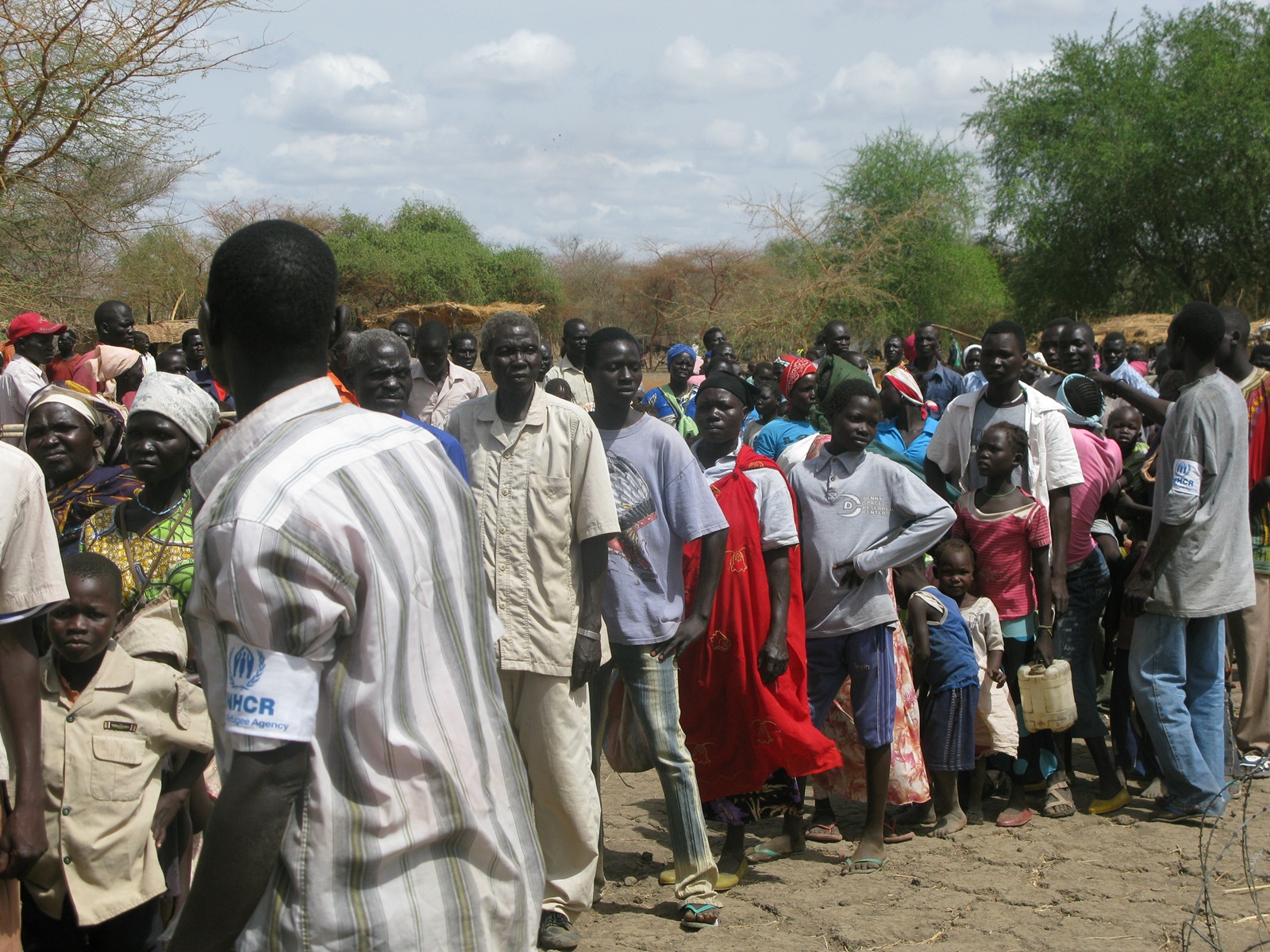
Desire to Reduce Influx
This picture differs from several Swedish opinion polls where the question has been framed more concretely. An Ipsos survey commissioned by Dagens Nyheter in 2018, for instance, showed that six out of ten voters wanted Sweden to receive fewer refugees, while only twelve percent wanted to increase the intake.
Even before the migration crisis of 2015, opinion was divided, but after the autumn of 2015, support for a reduced intake increased sharply.
Newer research also points to a more nuanced development than individual surveys may suggest. A report from the Institute for Futures Studies, based on data from, among others, the SOM Institute, European Social Survey, Gallup World Poll, and Eurobarometer, shows that Swedish attitudes clearly changed after 2015–2016.
According to the report, public opinion became more skeptical toward extensive refugee reception, while support for humanitarian principles and protection for people on the run has largely persisted.
Right of Asylum and Reception Are Distinct
The difference between the surveys illustrates how opinion results are affected by how questions are posed. Agreeing that people fleeing war should be able to seek protection is not necessarily the same as wanting to increase the number of refugees admitted to one’s own country.
Several previous Swedish polls have shown that many voters can simultaneously support the right of asylum as a principle while advocating for a more restrictive migration policy.
This is Sweden for UNHCR
Sweden for UNHCR is a Swedish fundraising foundation and the official Swedish partner organization to the UN Refugee Agency, UNHCR. The organization’s main task is to collect money from individuals, companies, and foundations for UNHCR’s international work with people on the run.
The foundation has a 90-account, is supervised by the Swedish Fundraising Control, and is a member of the industry organization Giva Sweden.
According to the organization’s latest annual report, revenues for 2025 amounted to about SEK 427 million. Of the funds raised, about 84 percent went to UNHCR’s international work, while the remaining part was used for fundraising, administration, and organizational development in Sweden.
Sweden for UNHCR is an independent Swedish foundation and not a government agency or part of the UN’s Swedish representation. Its mission is to finance and inform about the work of UNHCR.
READ ALSO: Study: Western Europeans Dissatisfied with Immigration