A dramatic claim has recently spread widely in the debate about the war in Ukraine and is being propagated by media and policymakers. Russian soldiers sent to the frontline survive on average only between 20 and 35 minutes before being killed. But is it true?
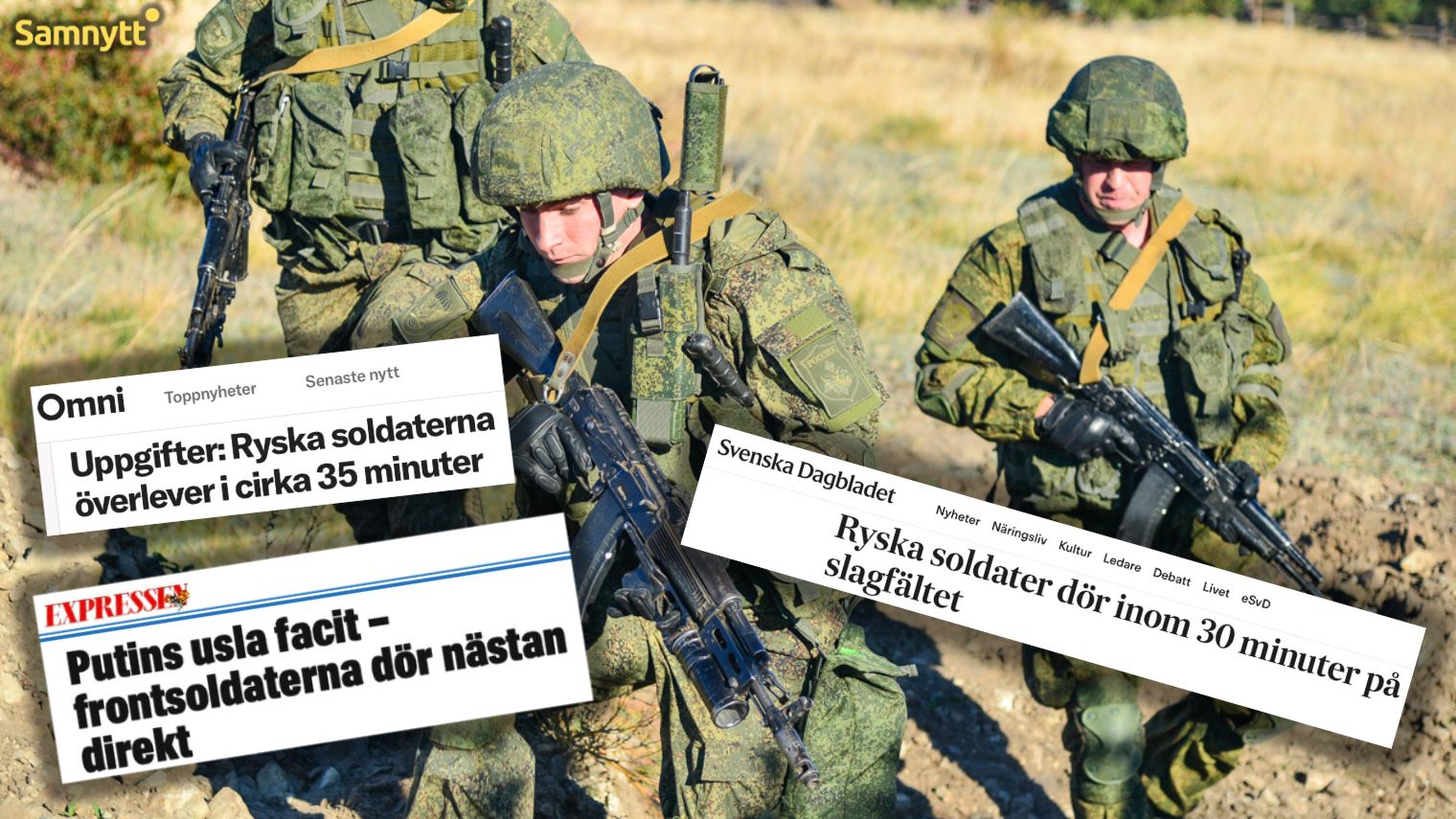
At least, that’s what Swedish media reported in July. Expressen was the most outspoken – the paper that previously claimed Russia had run out of equipment and was forced to use camels and electric scooters.
“Putin’s pitiful record – frontline soldiers die almost immediately.”
The newspapers have drawn attention to a claim promoted by British historian Peter Frankopan in an article for the journal Foreign Policy.
SEE ALSO: Expressen: Russian military obliterated – now forced to use camels and donkeys
But the claim is nothing more than an assertion said to have been taken from a military account on Telegram, where enthusiasts discuss the development of the war. From there, the number made its way to mass media and was reported as reality, but without being investigated further.
Someone on Telegram – anyone can comment on these accounts – wrote that Russian recruits can go from training to death in combat in just a few weeks, and that time at the actual frontline is sometimes said to be as short as half an hour.
According to several military analysts, there is no basis to claim that the figure describes the reality for Russian soldiers in general. The criticism is mainly that it is unclear where the number comes from, how it was calculated, and which soldiers it actually pertains to.
Activist bloggers
One person who takes a more cautious stance and rejects the claims spread in the media is Wolfgang Richter. He is a former colonel in the German army and is now a researcher at the Geneva Centre for Security Policy. According to him, there is good reason to treat these types of claims with great caution.
In an interview with German newspaper Focus, Richter points out that military bloggers and other commentators often have their own agendas, and that it is hard to evaluate what the circulated figures are actually based on.
– First of all, I wouldn’t uncritically accept everything activist bloggers write as truth. They also have political motives and tend to be alarmist, he says.

Unclear what the figure actually refers to
According to Richter, it is, for example, highly unclear whether the figure applies to soldiers who participate in direct assault attacks, the entire frontline, or all Russian soldiers present in a combat zone.
Richter points out that many Russian soldiers may be at the front for extended periods without joining direct assaults. This includes soldiers manning defensive positions, working with artillery, handling drones, communication, or logistics.
SEE ALSO: Russian economy in crisis? Expert accuses Swedish intelligence of ‘information warfare’
A possible explanation is that the 20–35 minutes actually refers to particularly exposed situations, such as smaller reconnaissance units or assault troops sent forward in intense attacks.
In such operations, losses can be very high in a short time. However, this does not mean that the average soldier at the front survives only half an hour, emphasizes the German military expert.
Drones have changed the war
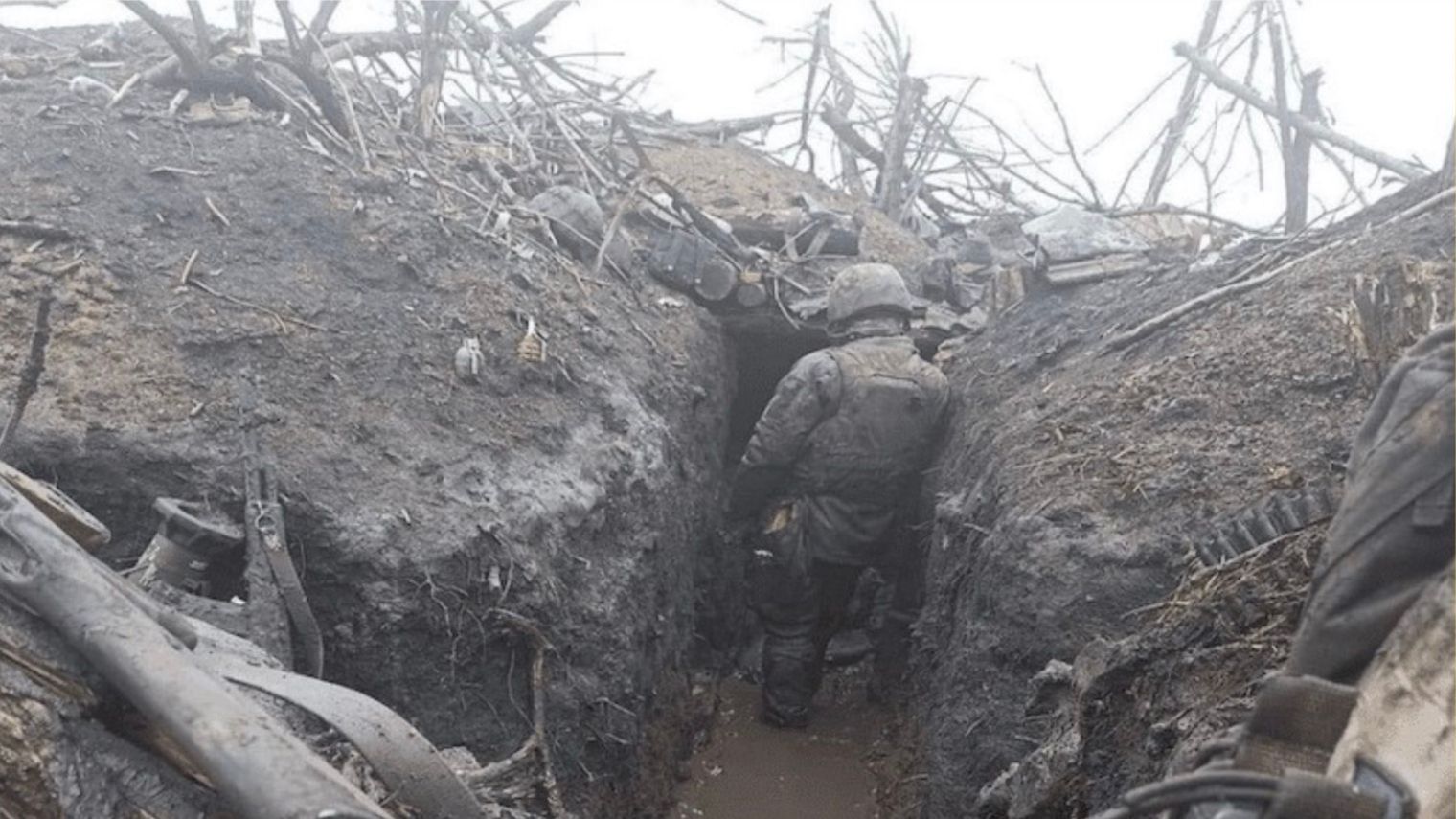
Richter also points out that this does not apply only to Russian soldiers – Ukrainian forces face the same dangers during offensive operations. Modern warfare, where drones play an ever-larger role, has made movements across open battlefields significantly more dangerous and forced more cautious behavior. This is part of the reason why the war is progressing at a slow pace.
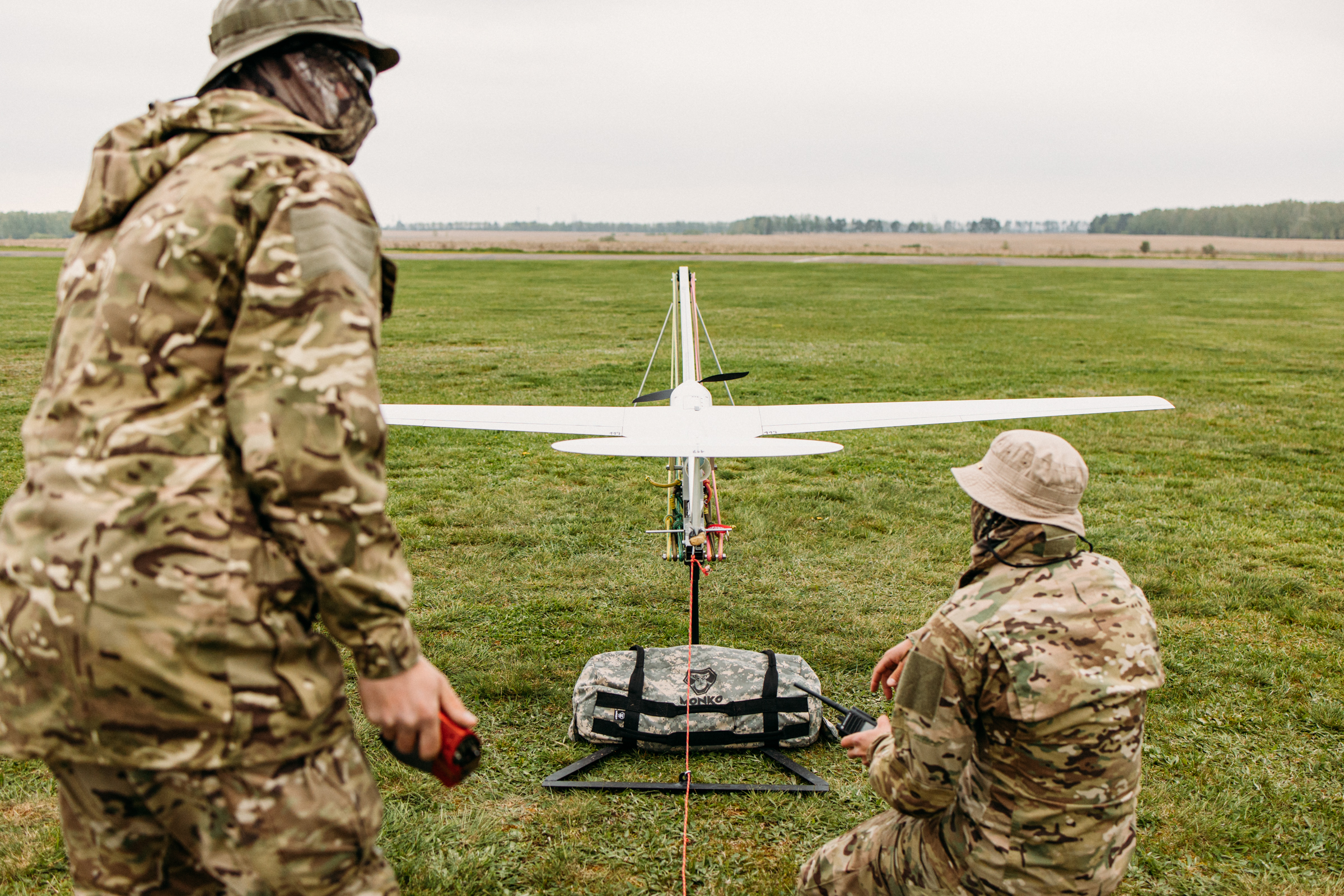
Part of the background to these high losses is the explosive use of drones. Both Russia and Ukraine are employing small reconnaissance and attack drones to locate and strike enemy troops. This has made previously safe movements riskier and changed how ground battles are fought.
Ukraine has also carried out several attacks far behind Russian lines using long-range drones, including strikes against strategic targets within Russia.
Personnel shortages becoming a decisive factor
At the same time, there is broad consensus that both Russia and Ukraine are facing major problems with personnel replenishment. Richter assesses that Russia’s military losses are very extensive and that hundreds of thousands of soldiers may have been killed or wounded so severely that they are no longer able to serve at the front.
Ukraine, too, has a serious personnel problem, where EU countries are now helping to send Ukrainian men back but also making it harder for them to obtain residence permits in the EU.
SEE ALSO: Sweden’s government: Ukrainian men may not flee – they must fight and win against Russia
The country has for some time struggled with a shortage of soldiers, a growing number of desertions, and difficulties staffing its military units. According to former Defense Minister Mykhailo Fedorov, around two million Ukrainians are said to be avoiding mobilization, while approximately 200,000 soldiers are on unauthorized absence.
“Based on unconfirmed assumptions”
That Russian forces have suffered heavy losses is also a point of attention. A report from the Washington-based think tank Center for Strategic and International Studies (CSIS) estimates that Russia has suffered significantly greater losses than Ukraine since the invasion began in February 2022.
According to the report, about 1.4 million Russian soldiers have been killed or wounded – figures over one million have also been cited by U.S. President Donald Trump in recent years.
Of the 1.4 million Russian losses estimated by CSIS, about 450,000 soldiers are thought to have been killed – a figure which, according to the think tank, is roughly four times higher than the total number of American soldiers killed in all wars since WWII. However, these numbers are not officially confirmed but are estimates and therefore associated with significant uncertainty.
Ukrainian losses are estimated by CSIS at between 525,000 and 625,000 killed and wounded. Of these, between 125,000 and 150,000 are estimated to have died. These too are uncertain figures.
SEE ALSO: Researcher: Swedish media and politicians mislead with propaganda about the war in Ukraine
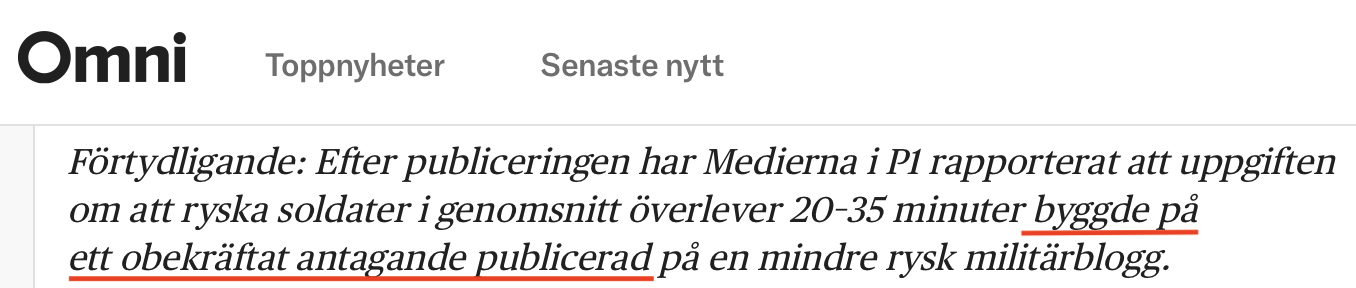
The claim that a Russian soldier survives only 20–35 minutes on average at the front lacks independent verification. The information thus stems from a post on the social media platform Telegram, but has nevertheless been repeated as fact in several outlets, including Swedish media.
Swedish media have now also realized this and subsequently added a “clarification” about the social media claims. It has been stated that the data “was based on an unconfirmed assumption”.