Sweden is in the midst of a demographic shift that can no longer be halted simply by reducing immigration. That is the view of Philipp Huemer, Austrian nationalist and director of operations at the newly established Institute for Remigration. In a long interview with Samnytt, he discusses the institute’s plans, which groups he believes should be included in a return migration policy—and why he thinks Europe has only a few years to reverse the trend.
“We have a time window of five to ten years in which many things are possible that I never could have imagined five years ago. The tide is turning,” he tells Samnytt.
Philipp Huemer has for many years been active within the nationalist scene in Austria. He began as a political activist at a young age, and has since worked as a journalist, including as editor-in-chief for the alternative media outlet Heimatkurier and as political editor at AUF1.
Today, he is the director of operations for the Institute for Remigration, where the more internationally known commentator Martin Sellner is a central ideological figure. According to Huemer, the institute arose from the realization that the issue of remigration had grown larger than what individual activists and opinion makers could address.
“More organization is needed. There needs to be an institutionalization of remigration as a concept. We need models, policy proposals, research, and data to underpin it.”
His own task includes building the institute’s editorial operations and research, creating international networks, and leading projects. The goal is explicitly political.
“Our job and our aim is to build a comprehensive return migration policy within this framework. We don’t have the solution for every individual case yet. We have broad ideas, concepts, and visions. The reason we founded the institute is to develop a thorough policy that we can then present to politicians and decision-makers and try to get them to implement.”
Identifies three groups
Huemer rejects the notion that remigration is just about deporting people who are in Europe illegally.
No one should be able to set foot on European soil on the basis of asylum. There should be opportunities to apply in other countries, and only if there is genuine cause should one be allowed to come to Europe. Really, it should above all be neighboring countries that receive people fleeing.
Philipp Huemer, Institute for Remigration
“That is part of the definition, but it is not the whole picture. It goes further than that.”
ALSO READ: Ekeroth: “Paid remigration requires strict control and closed borders”
He divides the return migration policy into three main groups.
The first is illegal migrants and people covered by the current asylum system. Huemer believes that Europe’s current asylum system has basically outlived its usefulness and wants asylum applications to be handled primarily outside of Europe.
“No one should be able to set foot on European soil on the basis of asylum. There should be opportunities to apply in other countries, and only if there is genuine cause should one be allowed to come to Europe. Really, it should above all be neighboring countries that receive people fleeing.”
The second group is the significant legal immigration from countries outside Europe.
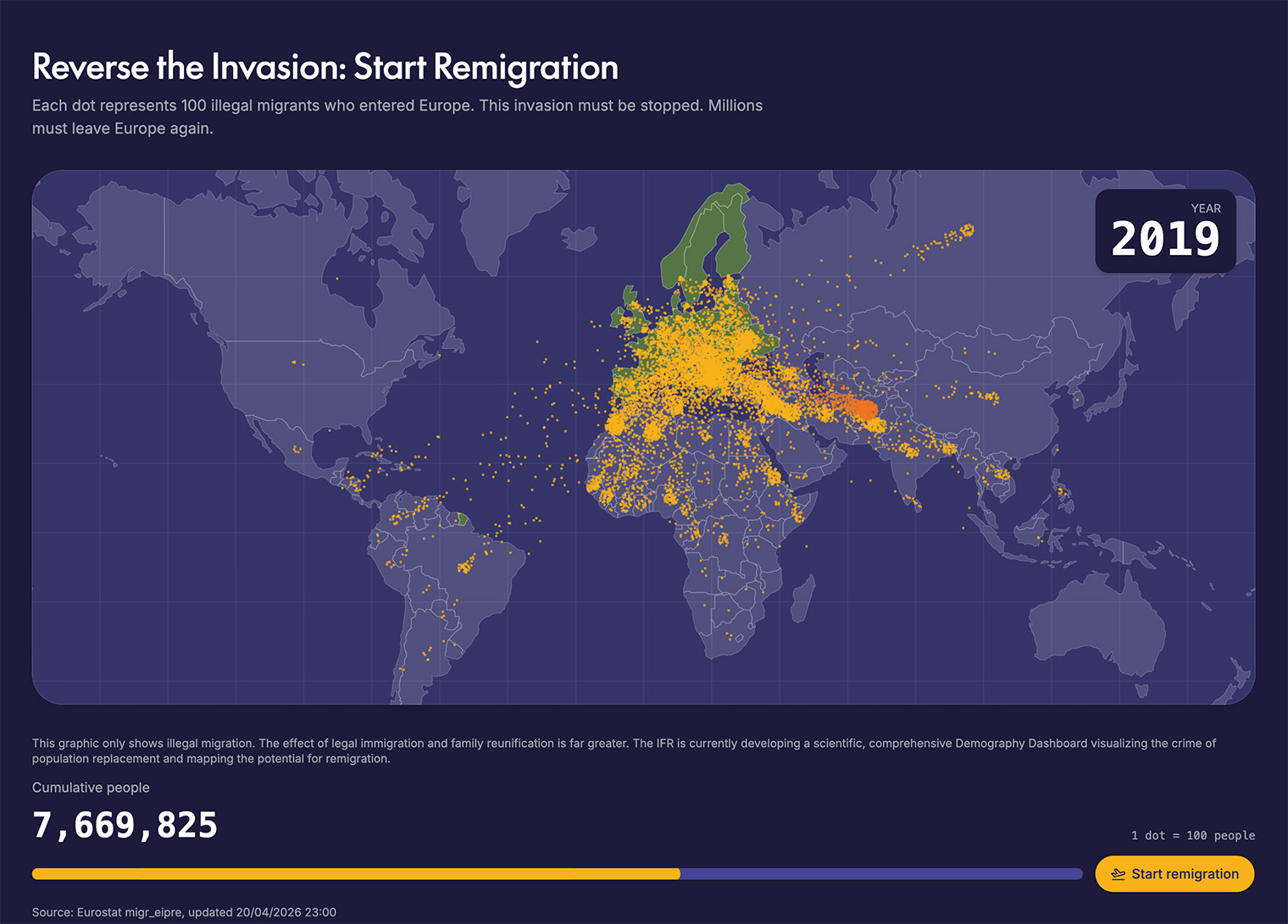
Huemer argues that this issue is often overshadowed by illegal migration, even though in some European countries it is significantly larger.
“We really need to stop legal migration until we have control of the situation and have balanced our own demographics.”
If European economies need foreign labor, he instead advocates for a new guest worker system where the stay is temporary from the outset.
“If people stay in the country for five or ten years, there must be rules and models that ensure they then leave the country.”
He is also critical of companies’ dependence on cheap imported labor. According to Huemer, this reduces firms’ incentives to better educate and pay local workers—and to invest in automation and new technology.
ALSO READ: Europe is undergoing a population replacement – but politicians still talk about integration
The hardest group – citizens
The third group is also the most controversial. This concerns people with immigrant backgrounds who have become citizens but whom Huemer says have never assimilated into their new home countries.
“They have passports and legally they are not different from you or me. But at the same time, they are not assimilated. They may not speak the language and may still be a cultural, economic or social burden. They can act as anchors for further migration and contribute to parallel societies.”
I believe many people are here precisely because they can do as they wish. They do not need to integrate or assimilate. They can continue to speak other languages and receive support from the welfare system. If the pressure changes, I think many will leave voluntarily.
Philipp Huemer, Institute for Remigration
At the same time, Huemer underlines that people who are citizens cannot simply be deported or treated differently than other citizens. For this group, he instead advocates what he calls “soft measures”—stronger assimilation requirements, revised citizenship laws, and a society in which the majority culture regains a significantly stronger position.
“You need a strong leading culture and strong assimilation pressure,” he argues.
ALSO READ: Citizenship should be revocable for serious crimes
If a person has lived in Sweden for 30 years, works, does not commit crimes but still has never become part of Swedish society and refuses to integrate, can you deport such a person?
“If someone has lived here for a long time, has a family, and is a citizen, I think it is very, very difficult to revoke that. It may have been a mistake that the person was allowed to become a citizen, but in such a case you instead need an assimilation policy that puts the question back to the person—do I really want to continue living in a Sweden that is becoming more Swedish again?”
He believes that some would then leave voluntarily.
“I believe many people are here precisely because they can do as they wish. They do not need to integrate or assimilate. They can continue to speak other languages and receive support from the welfare system. If the pressure changes, I think many will leave voluntarily.”
But he also draws a clear line.
“You cannot have harsh measures for every individual case. We must acknowledge that mistakes have been made in the past and in some cases nothing can be done about them.”
In other cases, however, Huemer wants to see greater opportunities to revoke citizenship. He points to serious crime and cases where a person has recently become a citizen but then commits serious crimes.
“As a state and republic, you must have the possibility to revoke such citizenship.”
At the same time, he emphasizes that this must take place under clearly defined legal conditions and within each country’s constitutional framework.
“Certain possibilities already exist today. We need to analyze them and expand the measures that are possible.”
Wants to see a European “RICO law” against clans
During the interview, Samnytt also raised the issue of Swedish gang crime and the phenomenon of families and clans where several members are involved in organized crime.
Huemer sees a problem in that European legislation almost exclusively focuses on individual responsibility, while some criminal networks, he says, are organized along family and clan lines.
The problem is that many countries are now reconsidering migration policies and want to become stricter, but almost everything concerns future migration. They want fewer people to come. But if you look at the demographic situation, it is too late for that to be enough.
Philipp Huemer, Institute for Remigration
He points to the American so-called RICO legislation, which was created to combat organized crime.
ALSO READ: Migration Board from the inside: Clans, Swedes as a minority and silence culture
RICO is an American federal law from 1970 that makes it possible to target organized crime as a whole, instead of only prosecuting individual crimes. By connecting people, money, and recurring criminality, several separate acts can be treated as parts of the same criminal enterprise, with harsher penalties and greater possibilities to seize criminal proceeds.

Should you be able to deport an entire family or clan if some are involved in serious gang crime?
“I think if we had something like RICO in Europe for certain organized gang crime, something like that could actually be possible.”
Huemer does not want to hold entire families accountable just because of kinship but believes legislation must better target those who help, finance, or profit from criminal structures even without committing the crimes themselves. In Sweden, police refer to such people as ‘enablers.’
“You basically need a European RICO law directed against these types of migrant-based clan structures. That’s something we want to work on,” he says.
“It is not enough to stop immigration”
When the conversation turns to Sweden, Huemer primarily points to the extensive welfare system as an explanation for why the country has become attractive to migrants. But he believes Sweden is now in a position where simply reducing immigration is no longer enough.
ALSO READ: Economist: “There is no solution” to the demographic challenge
“The problem is that many countries are now reconsidering migration policies and want to become stricter, but almost everything concerns future migration. They want fewer people to come. But if you look at the demographic situation, it is too late for that to be enough.”
According to him, policies must therefore move from slowing the trend to actively trying to reverse it.
“That is why remigration is so necessary. In many Western European countries, especially in Sweden, the focus must be on reversing the trend—not just slowing or stopping it.”
Institute projection: 20 years to demographic tipping point
The Institute for Remigration is now working on a “Demography Monitor”, collecting demographic data and building projections for Western European countries.
According to Huemer, a key question is when people with a migration background will make up 50 percent of the population.
“For Sweden, we have run the numbers. It will happen in about 20 years.”
ALSO READ: Demography flashpoint: Researchers warn of civil war in future Sweden
This projection has not yet been published and the method of calculation has not therefore been independently reviewed. Huemer says a first version is planned by the end of August or beginning of September, and that the institute will then work on more detailed models.
He also says the institute is collaborating and sharing knowledge with Finnish researcher Kyösti Tarvainen, who has been previously interviewed by Samnytt about demographic trends in the Nordics.
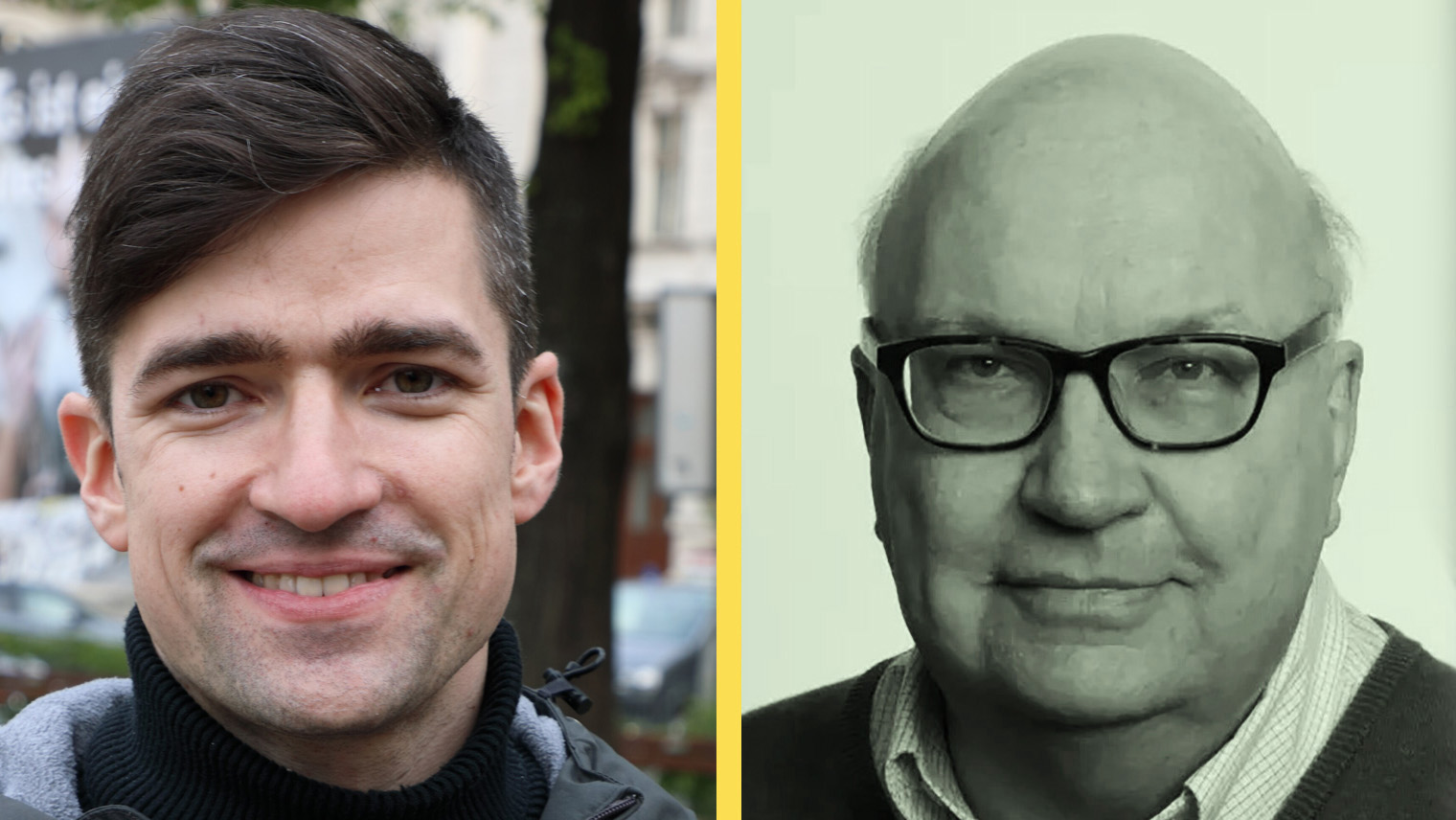
Huemer’s conclusion is that Europe has a limited political window.
“I believe that in most countries there is a window of between ten and twenty years in which significant changes to demographic trends must be made for this still to be feasible in a classical democratic way.”
ALSO READ: Demography researcher to parliament: “Only return migration can save Sweden”
“Demography is eating democracy”
Sweden now faces a left-wing government, which will likely allow for more immigration. Most immigrants vote for parties that want greater immigration. Are we approaching a “tipping point”?
“Demography undermines democracy. Democracy is being eaten up by demographic developments.”
ALSO READ: Bali: Demographics may make future right-wing governments impossible
He refers further to what he describes as “ethnic voting”—that groups with migration backgrounds tend to support parties that pursue more migration-friendly policies for the benefit of their own group.
“Eventually, there are no longer enough voters to elect a party that wants to limit migration or send back a large number of migrants, because the migrants themselves have become such a large part of the electorate that such a policy can no longer win a majority.”
This is the development Huemer sees as the real turning point.
What happens if the trend is not reversed? Some mention the risk of civil war.
“There is definitely a possibility that there could be some form of civil war. That’s why I see remigration as the peaceful solution.”
ALSO READ: Ekeroth: Lebanon shows what happens when demography shifts
But he also sees another possible scenario—that Europeans simply accept the change and lose the ability to shape their own societies.
“I hope that people of European descent won’t just accept this. But there is also the possibility that a significant part of Europeans simply submit to an ever greater foreign cultural influence.”
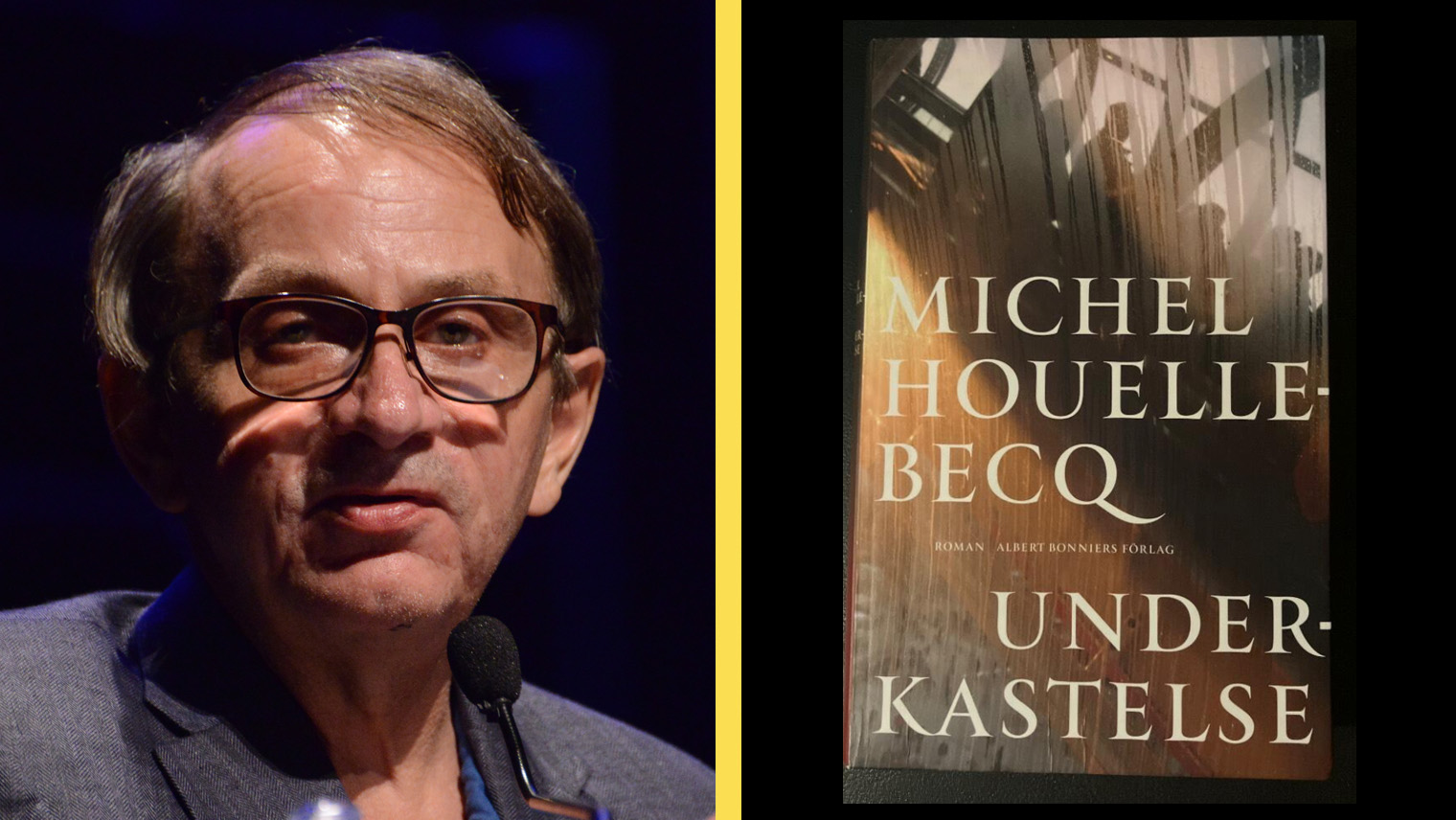
He refers to French author Michel Houellebecq’s novel Submission, which depicts a future France where an Islamic party takes power.
“I’m not a prophet. I don’t know what will happen. I just know that if we don’t manage to make remigration a reality over the next five, ten, or fifteen years, we face a very uncertain future that doesn’t look good for anyone.”
If the political route fails, Huemer believes some Europeans in the future may begin to organize their own, more closed local communities.
I do not know if we will succeed. I cannot guarantee it, I’m not a seer. But I believe the tide is turning and that over the next five to ten years we have a unique opportunity to do everything we can.
Philipp Huemer, Institute for Remigration
“If remigration does not happen within the next 20 years, I think we need to withdraw from the system, withdraw from the state, and build our own communities and protect them.”
ALSO READ: Return migration petition handed over to the EU parliament
He mentions the South African community of Orania and various gated residential areas, so-called “gated communities,” as possible, albeit not at all desirable, visions of the future.
“The tide is turning”
Despite this bleak outlook, Huemer is optimistic about the coming years. Since he began working with the institute, he claims nearly a hundred people have contacted him personally to offer their help.
“They are successful people, entrepreneurs and professionals from very different fields. Engineers, software developers, journalists, writers, and people from academia. They have families, children, and something to lose.”
According to Huemer, many have long been concerned about Europe’s development but lacked an organization to get involved in.
“Now they write to us and say: ‘I have been waiting for something like this for several years. I knew something was wrong, but I never knew what I could do.’”
ALSO READ: Andersson: ‘Time to rally around the next major demographic issue’
He therefore sees the next few years as crucial.
“I do not know if we will succeed. I cannot guarantee it, I’m not a seer. But I believe the tide is turning and that over the next five to ten years we have a unique opportunity to do everything we can.”
For Huemer, it is ultimately about building a political and organizational infrastructure that can transform growing discontent into concrete policy. He concludes:
“Millions of Europeans already vote for nationalist and right-wing parties. They have millions of hours they can dedicate to a cause they believe in and enormous resources that can be mobilized. If we can build the infrastructure that channels that energy, I believe we have a good chance of success.”