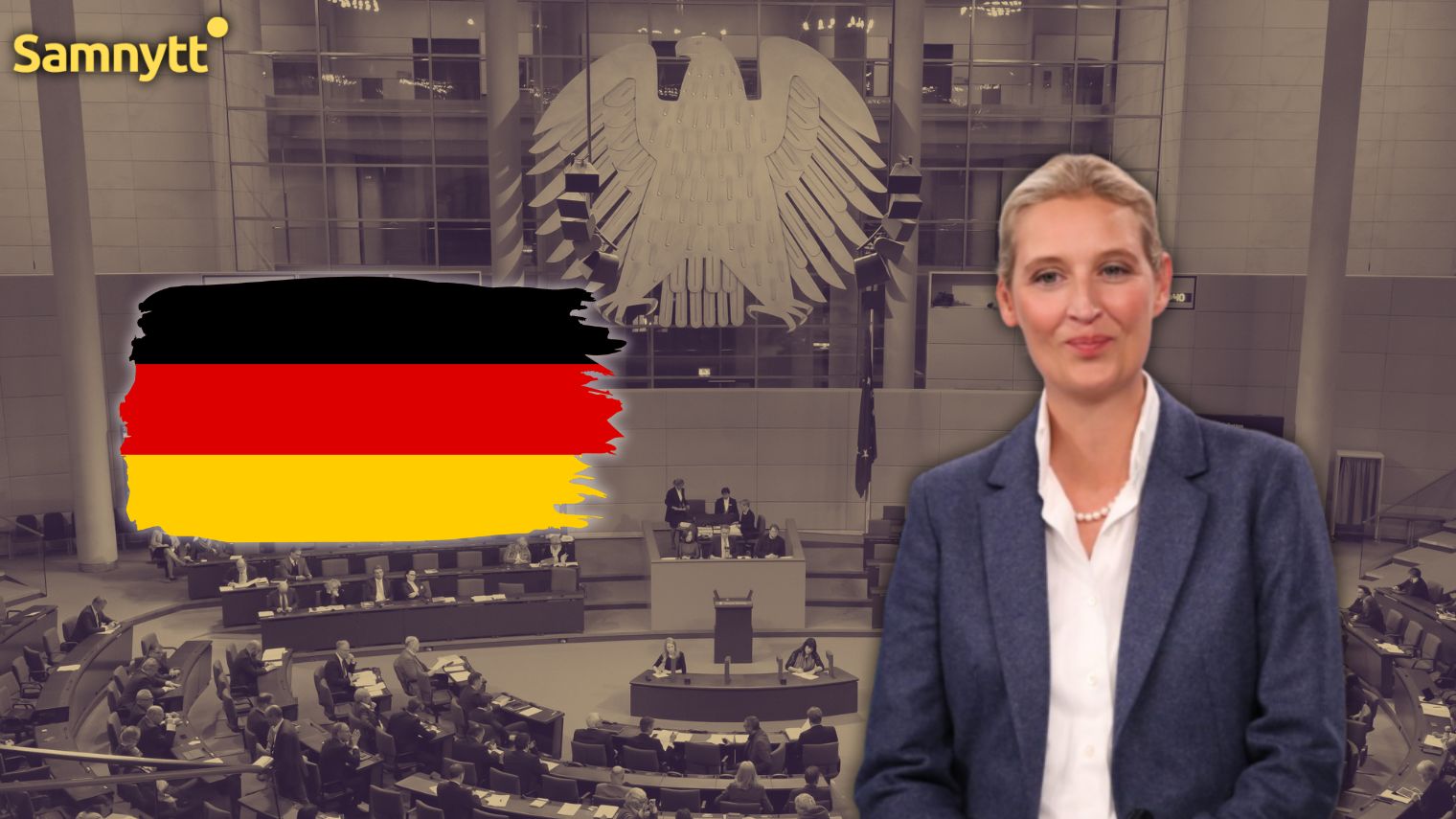
After being re-elected as party leader at the Alternative for Germany (AfD) party congress in Erfurt, Alice Weidel has clearly shifted focus from opposition to aspirations for government. During the congress and in interviews in recent weeks, she has stated that the party now sees itself as a government alternative – both in the upcoming state elections and at the national level for the next Bundestag election.
AfD became the second largest party in the 2025 German Bundestag election and is now leading several opinion polls. At the same time, the other major parties maintain the so-called “firewall,” which means they refuse to cooperate with AfD. Despite this, Weidel says the party is preparing to govern.
– We want to take responsibility for this country that we love so much, said Weidel in her closing speech at the party congress. Together with co-chairman Tino Chrupalla, she also thanked the delegates for the renewed trust and described her re-election as a mandate to continue the party’s path toward governmental responsibility.
READ ALSO: Gender researchers revolt as AfD wants to abolish the subject at universities
One of Weidel’s most noted statements in recent weeks came in an interview with Reuters at the end of June. There, she said that Germany should resume importing Russian oil and natural gas to strengthen the German economy.
– Cheap energy from Russia was the secret behind the success of “Made in Germany.” We need it back.
She argued that the loss of cheap Russian energy has cost hundreds of thousands of jobs and made Germany dependent on more expensive energy deliveries from the USA. According to Weidel, a normalization of relations with Moscow is a key part of AfD’s economic policy.
The Reforms AfD Says It Wants to Implement
During the party congress and in subsequent statements, Weidel has identified the reform areas the party wants to prioritize if it comes to power.
Among the most important are:
Significantly reduced asylum immigration and a much stricter migration policy
Strengthened border controls and more deportations of people without legal right to stay in Germany
Restart of German nuclear power
READ ALSO: Politicians try to ban AfD
Resumption of imports of Russian natural gas and oil
Lower energy prices for households and industry
A reorientation of climate and energy policy with reduced burden on industry
Increased focus on German national interests in foreign policy
Reduced German support for Ukraine compared to current levels
Several of these points have been part of AfD’s policy before, but in recent weeks Weidel has highlighted them as the reforms the party wants to carry out if it assumes government responsibility.
???????? CHAINSAW ALICE WEIDEL‼️
HUGE announcement from AfD leader @Alice_Weidel:
The AfD will:
– Cut taxes by up to 75%
– Cut foreign aid
– Fire 30,000 tax-funded civil servants
– Fire the domestic intelligence TRAITORS who spy on patriots
– End the “Green” agenda“YOU need more… pic.twitter.com/XhYB6ymK4z
— Naomi Seibt (@NaomiSeibt) July 19, 2026
Criticizes Merz’s Government
In July, Weidel has also directed strong criticism toward Chancellor Friedrich Merz’s government. In a press release about Volkswagen, she claimed that the company’s problems are the result of Germany’s energy and climate policy and described the company’s transformation as a failure.
She has also warned that more and more companies are moving investments and jobs abroad, describing this trend as a sign that German industry is in a deep crisis.
Does Not Open the Door for Cooperation with Today’s CDU
When asked about possible future government cooperation with the Christian Democratic CDU, Weidel was clear.
– With this CDU I see no possibilities for a coalition.
At the same time, she did not rule out that the situation could change in the future if the party gets new leadership.
– It’s not clear how things will look in one or two years. Maybe there will be personnel changes in the CDU.
Emphasizes the Traditional Family
During the party congress, Weidel was also asked about AfD’s family policy after allegedly controversial statements from a regional party representative.
Weidel said that same-sex relationships should be treated equally before the law, but at the same time emphasized that the traditional family remains the societal ideal that AfD wants to promote politically.
Focus on Government Capability
Even though the party congress did not result in a new comprehensive party program, it was marked by a clear message: AfD no longer wants to be seen primarily as an opposition party but as a party ready to take on governmental responsibility.
With several important state elections this autumn, Weidel hopes that successes there will pave the way for the party’s long-term goal – to be able to form a government at the federal level after the next Bundestag election.
READ ALSO: New poll: AFD is the largest party – establishment parties collapsing