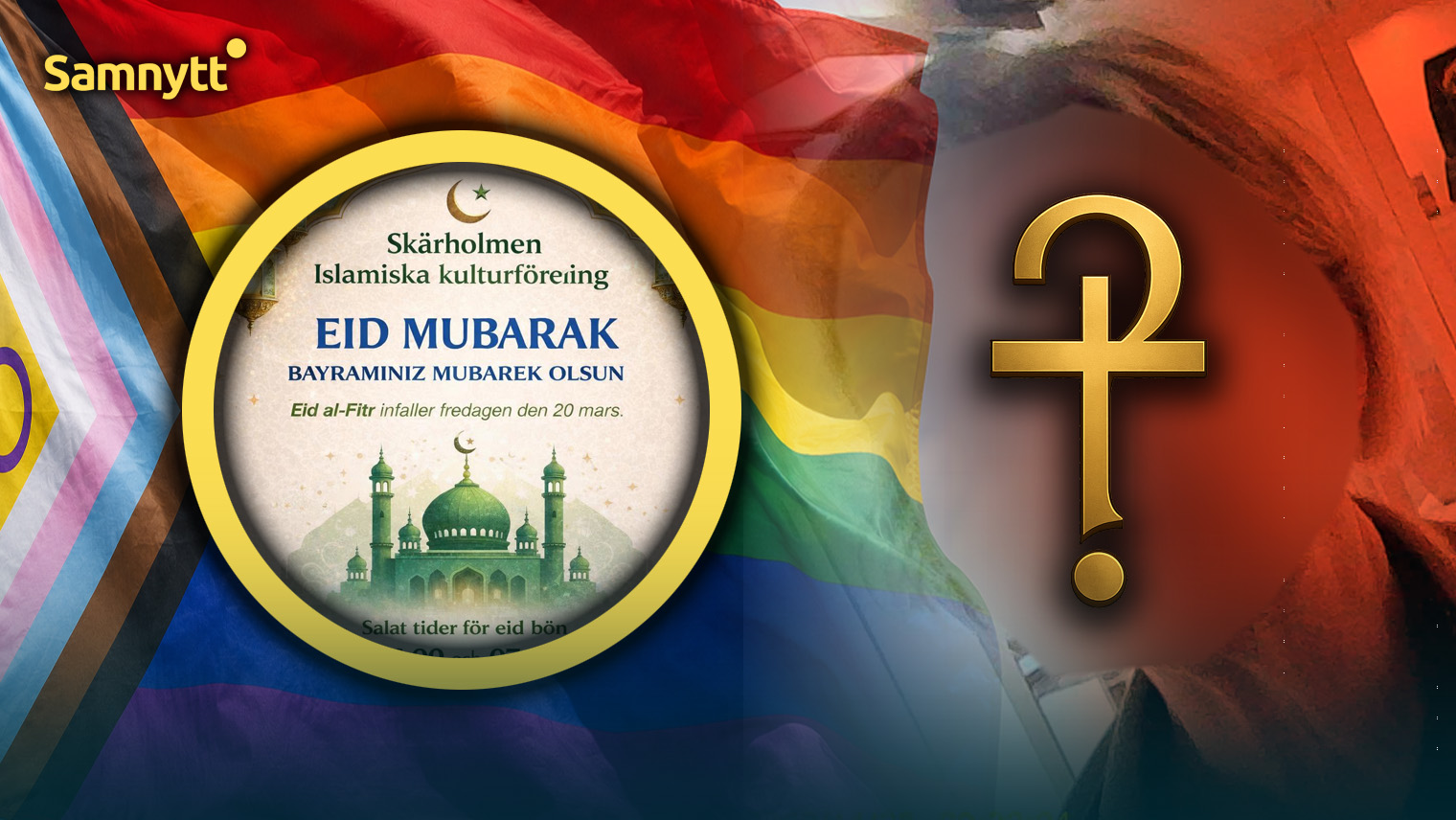
The debate over the planned mosque in Skärholmen has brought up questions about Islamism, integration, and religious influence in Sweden. When Samnytt visited Skärholmen Church to talk about the mosque project, the conversation quickly turned to a broader discussion on terror, LGBTQ issues, Israel, Iran, and the Church of Sweden’s view of Islam. The female priest repeatedly emphasized the same message — that extremism is dangerous, but it exists within all religions.
During the spring, Samnytt has made several visits to Skärholmen to investigate the controversial mosque construction and find out what the locals really think. On one of these visits, we also met a priest at Skärholmen Church, and the conversation soon touched on much more than just the mosque.
The discussion began with the relationship between the church and the local Muslim groups. The priest explained how the church has long had contacts with local Muslims and how these relationships have become especially important in times of conflict.
She described, among other things, the period surrounding the widely reported Quran burnings in the area. When Danish activist Rasmus Paludan held one of his demonstrations in Skärholmen, Muslim representatives turned to the church for support.
– The first burning happened here. Our Muslim friends came here and asked if we could also be there and show our presence, she recounts.
READ ALSO: Christians Find a Home in the Orthodox Church: “The Church of Sweden Feels Less Christian”
According to the priest, the church’s role was about contributing to calm and reducing tensions in the area.
She describes Skärholmen as a place where people of different religions and backgrounds live side by side, and where coexistence in everyday life is more important than the conflicts that often dominate public debate.
The priest further explains that she has not encountered any negative discussions about the large mosque now being built next to the center, partly financed by the City of Stockholm and other foreign financiers, including the Turkish Islamist and ultranationalist group Milli Görüş, which Samnytt has previously written about.
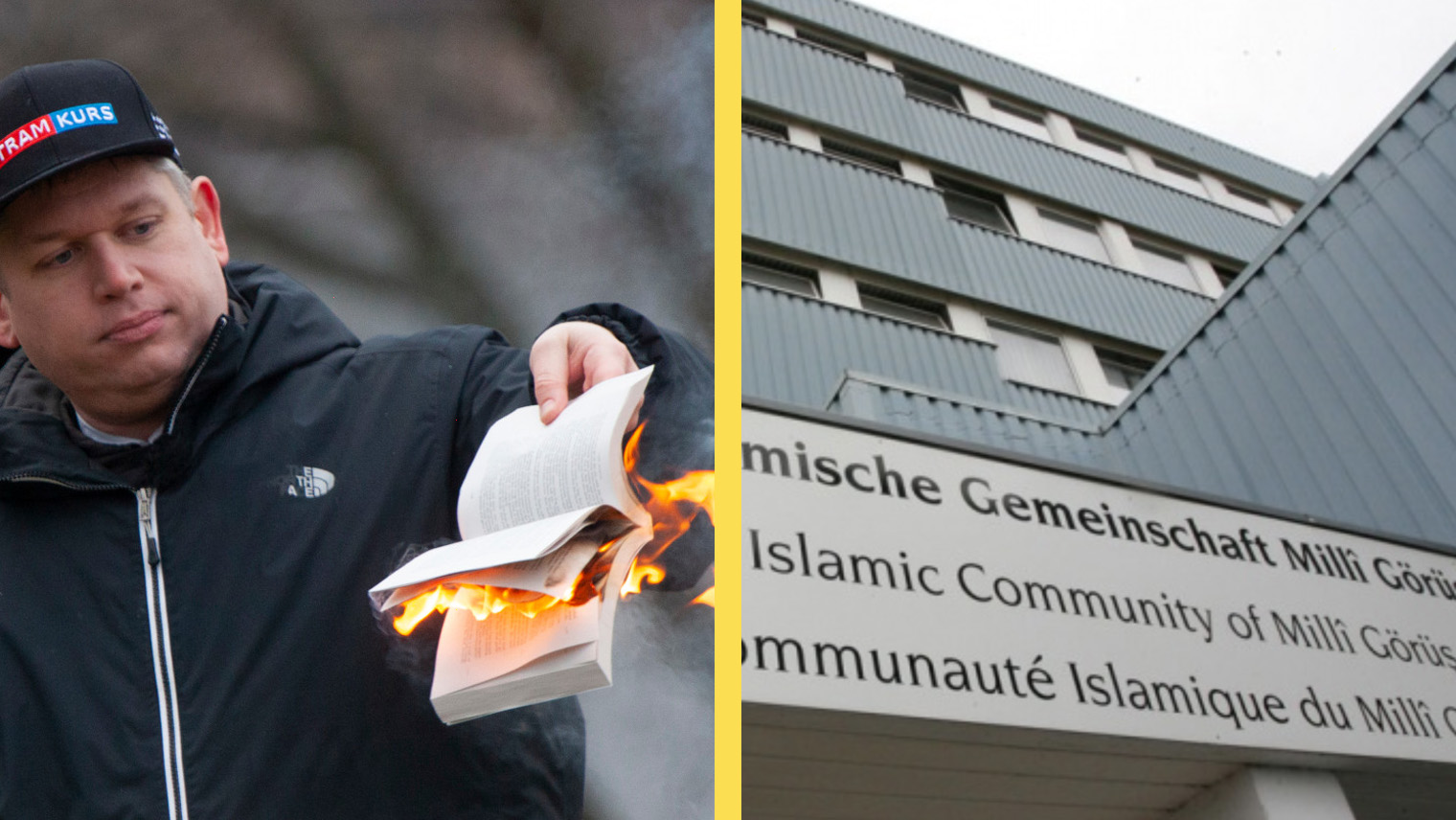
Milli Görüş is a Turkish Islamist movement founded by former Turkish Prime Minister Necmettin Erbakan in the 1970s. The movement advocates a strong Islamic identity in society and has built an extensive network of mosques and associations in Europe, particularly in Germany.
Critics have described the organization as Islamist and accused it of hindering integration.
READ ALSO: Suspicion: Turkish Islamists Raise Money for the Giant Mosque in Stockholm
Hamas, Hezbollah, and Christian Anti-Abortionists
When the conversation turns to Islamist extremism, the discussion becomes more ideological. Samnytt brings up Hamas, Hezbollah, Salafism, and the many Islamist terror attacks that have struck Europe in recent decades. However, the priest rejects the idea that Islam as a religion is the core of the problem.
But then I want to ask you: are all the bombings and murders of high-profile politicians in Sweden committed by Muslims? Fundamentalists exist everywhere.
Swedish, female priest, Skärholmen
Instead, she repeatedly reiterates that fundamentalists can be found in all religions.
READ ALSO: The Church of Sweden Between Faith and Politics – a Growing Conflict
As an example, she mentions Christian fundamentalists in the USA and anti-abortion advocates whom she claims scare people and contribute to an atmosphere of fear.
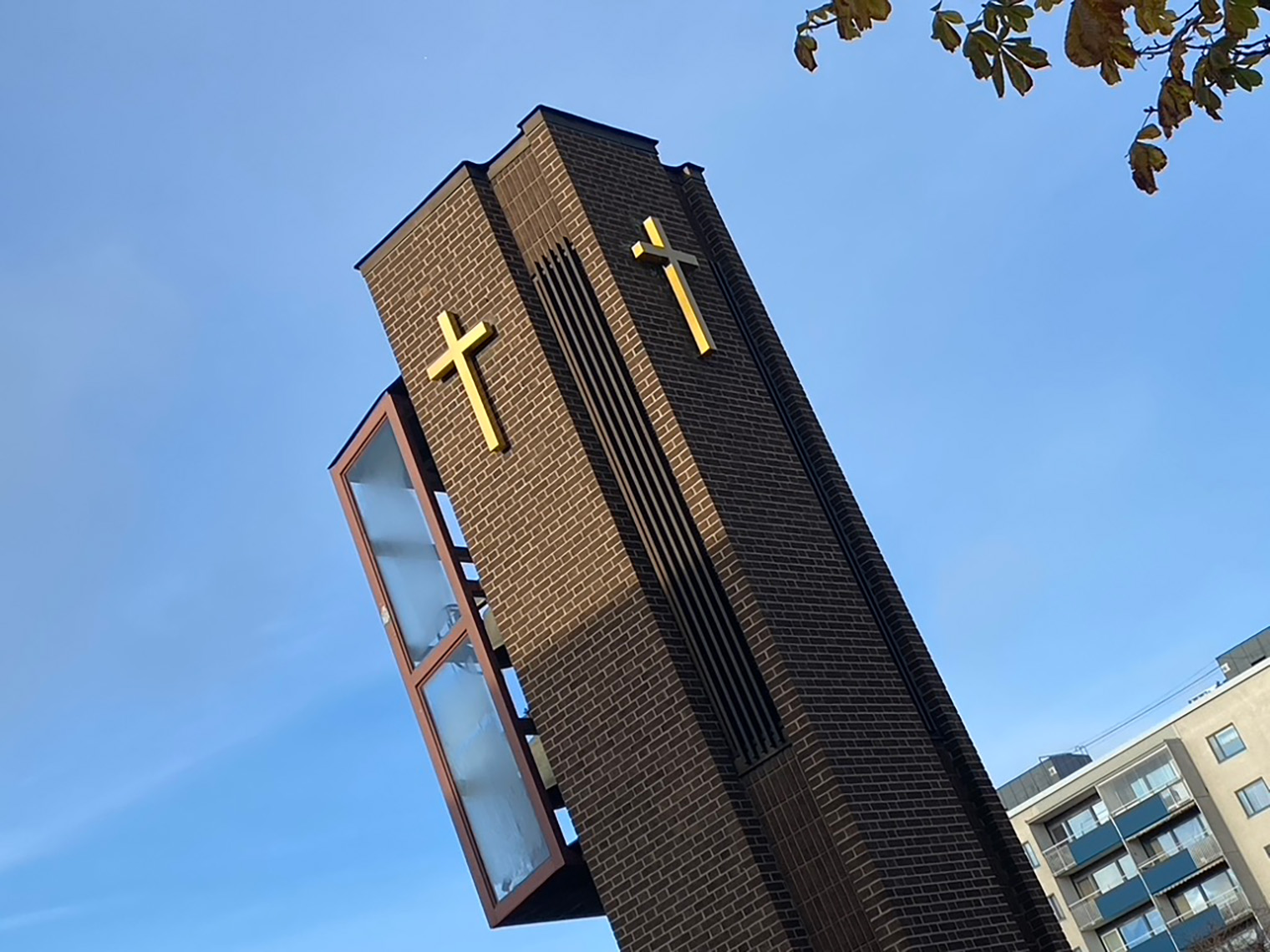
When Samnytt asks for concrete examples of Christian organizations conducting international terror on a scale comparable to Hamas, ISIS, or al-Qaeda, her answers become considerably less specific.
READ ALSO: The Church of Sweden Urges Cooperation with Muslim Congregations
Can you give a concrete example of Christian terrorists who blow up bombs and kill people?
– Christian fundamentalism, yes, absolutely. Google the USA and Christian fundamentalists — and they’re often very Christian.
But you are comparing Islamist terror groups with the Christian right in the USA, can you give some examples?
– But then I want to ask you — are all the bombings and murders of high-profile politicians in Sweden committed by Muslims? Fundamentalists are everywhere.
READ ALSO: Burning Down the Social Services Chief’s House Not Serious Enough for Deportation
Akilov on Drottninggatan, who killed five people, including a little girl. Taimour Abdulwahab tried to kill many on the same street, but only managed to blow himself up…
– But his links to others were questioned, he didn’t have any clear connection to Islam.
Taimour Abdulwahab was the Iraqi-born Swedish citizen who on December 11, 2010, carried out Sweden’s first suicide bombing.
After first placing a car bomb on Olof Palme Street, he moved toward Bryggargatan near Drottninggatan, carrying a bomb belt and several explosives filled with nails and metal fragments.
The plan was to strike in the middle of the Christmas crowds in central Stockholm, but the attack failed when one of the bombs detonated prematurely and killed only himself. Investigators later concluded that dozens could have been killed if the explosives had worked as intended.
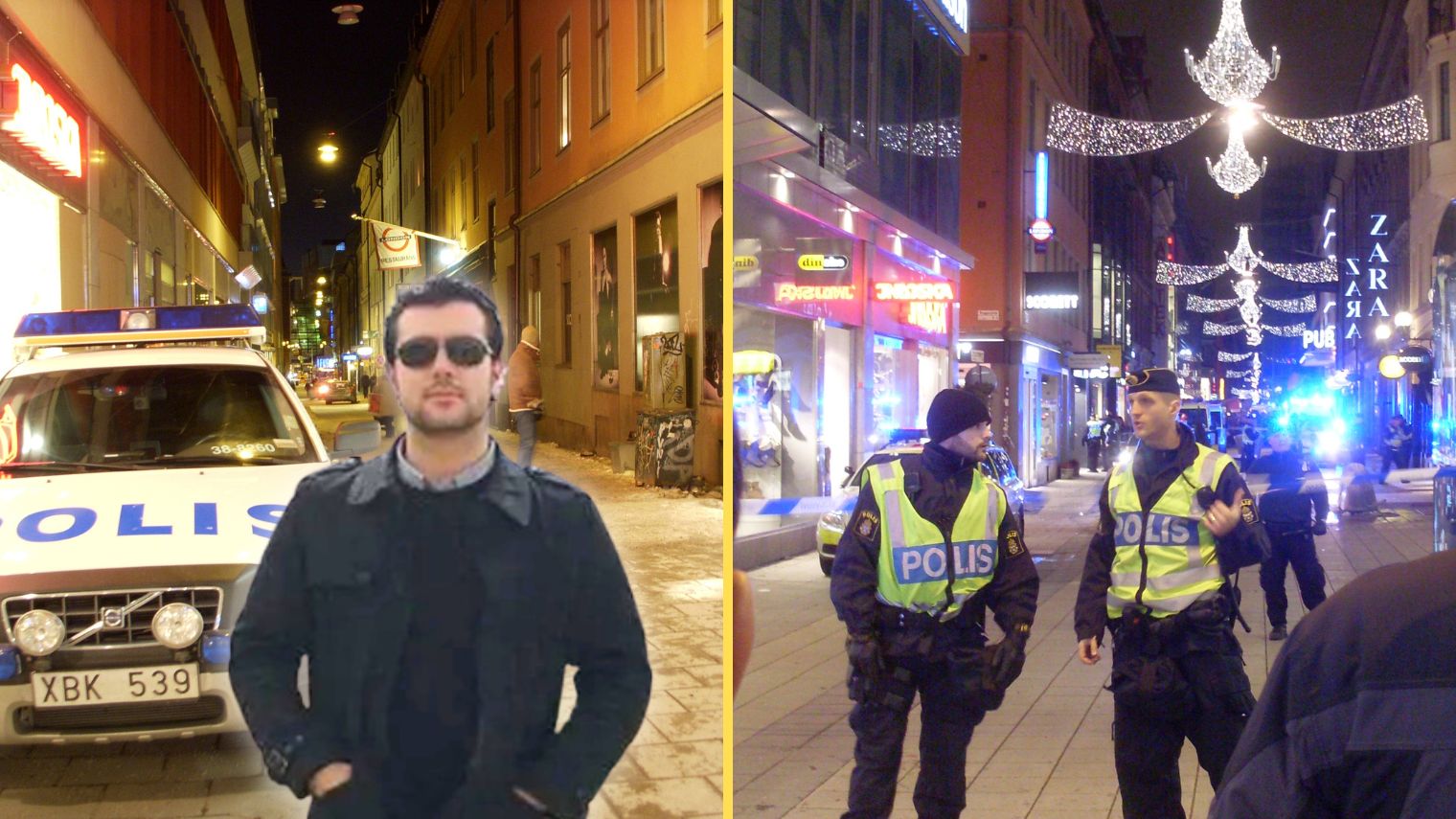
Shortly before the attack, Abdulwahab sent a message to TT and the Swedish Security Service referring to Sweden’s military presence in Afghanistan and to Lars Vilks’ Muhammad cartoons. His wife also testified that he had become more religious and prayed five times a day.
– Looking back, he became more religious. He was an active Muslim, prayed five times a day, fasted during Ramadan, and donated to charity. He withdrew from people around him. Fewer and fewer people visited their home, she told Expressen.
In the years leading up to the attack, he had become increasingly radicalized and had connections with Islamist circles in Britain and the Middle East.
The assault was classified as Islamist terrorism and is often considered the first major jihadist terror attack on Swedish soil, several years before Islamist Akilov’s attack on Drottninggatan in 2017.
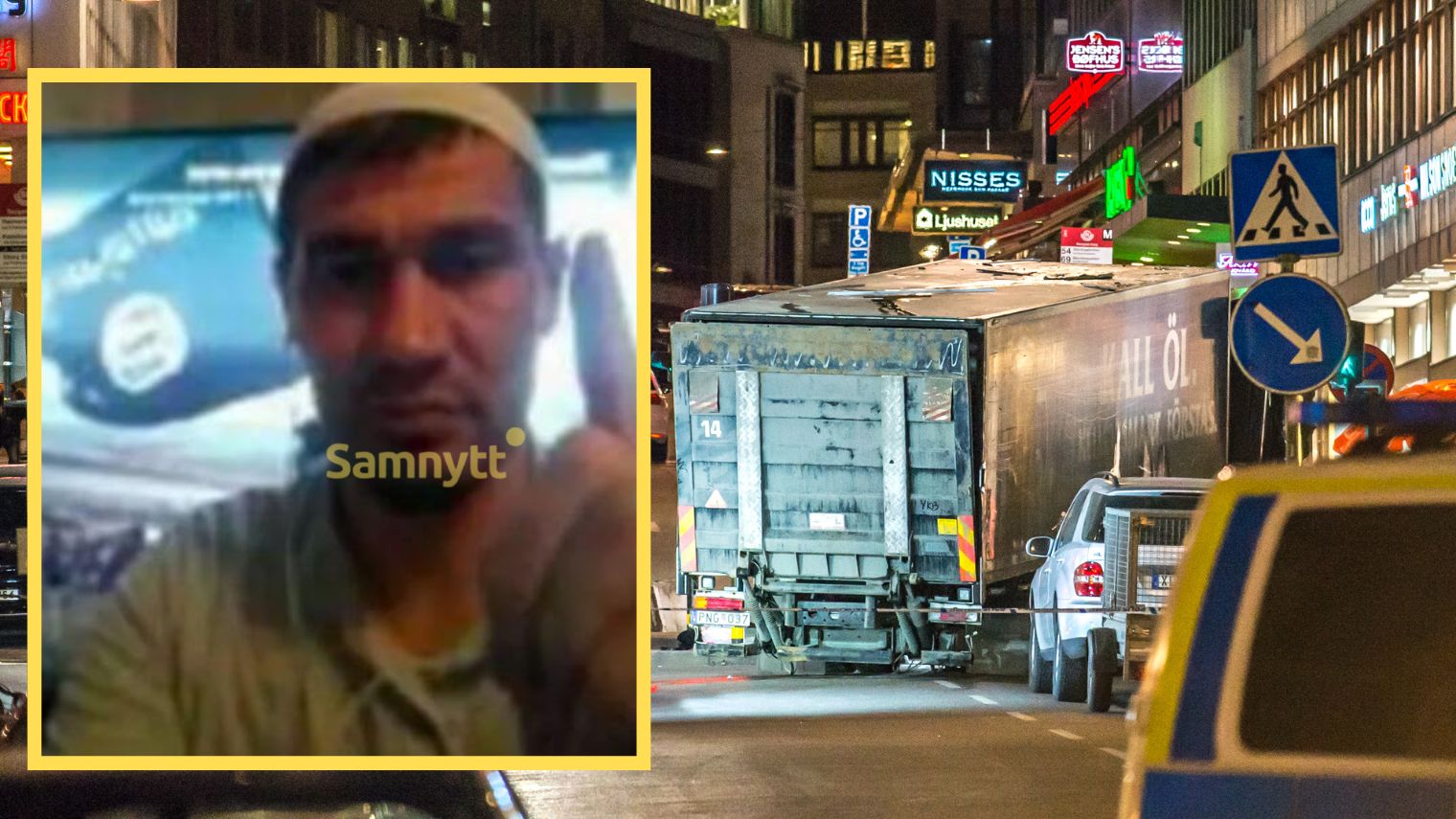
But the female priest in Skärholmen would rather talk about Anders Behring Breivik’s terror attacks in Norway.
The idea that Muslims are more prone to violence is something I will never accept. It’s completely unthinkable,
Swedish, female priest, Skärholmen
On July 22, 2011, Anders Behring Breivik carried out two terror attacks in Norway. First, he detonated a bomb near government offices in Oslo, then he committed a mass shooting at the Labour Party’s youth camp on Utøya. In total, 77 people were killed. Breivik acted alone and was sentenced to preventive detention, Norway’s harshest penalty, in 2012.
Do you think it can be perceived as naïve and as relativizing, not to recognize the Islamist terror attacks that have occurred in Europe in recent decades? Should we just turn the other cheek, do you mean?
– Yes, in a way we should. But of course, I don’t think it’s fun. She continues:
– I have many Jewish friends and not everyone there agrees with the Zionists.
Samnytt brings up the situation for apostates, converts, and religious minorities in Muslim environments. Even moderate Muslims are highlighted as groups that often come into conflict with Islamist movements and may therefore live under threat.
READ ALSO: The Church of Sweden Continues Cooperation with Islamic Relief
The priest, however, does not accept the reasoning that this says anything fundamental about Islam as a religion.
– The idea that Muslims are more prone to violence is something I will never accept. It’s completely unthinkable, she says.
Instead, she believes that people in Skärholmen mainly try to live their lives, form families and create a safe everyday life regardless of religious affiliation. According to her, divisions are often aggravated when religion is reduced to its most extreme expressions.
The Rainbow Flag and Islam
In the church, you see both the rainbow-colored Pride flag and the “Progress” flag, which leads to a conversation about the relationship between the Church of Sweden’s LGBTQ engagement and traditional Islam’s view of homosexuality.
READ ALSO: The Church of Sweden’s Decision: Priests Must Marry Same-Sex Couples
Samnytt asks how the church manages the fact that most Muslim groups have a much more conservative view of homosexuality than the Church of Sweden.
The priest does not, however, describe this as a fundamental conflict.
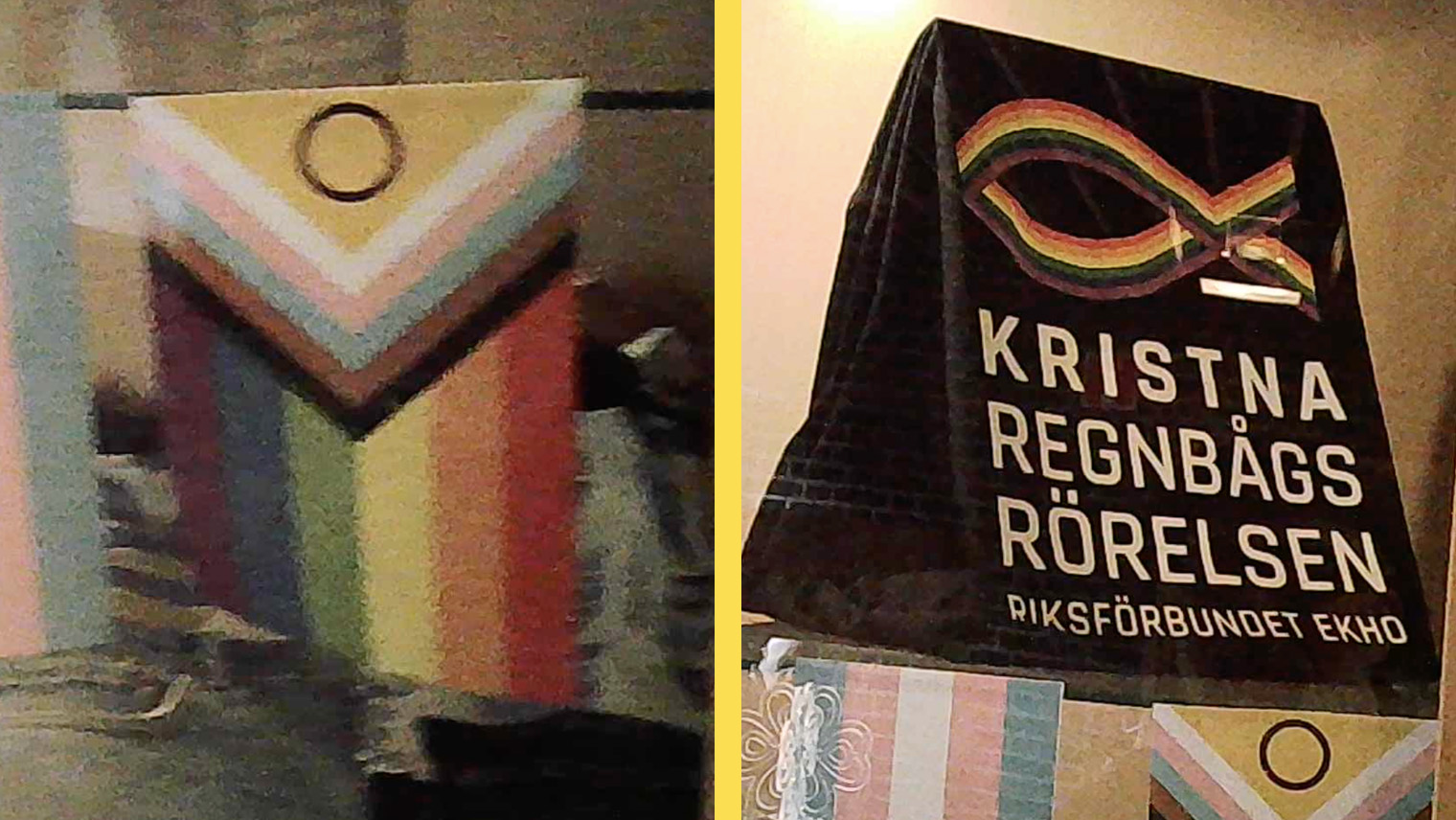
How do you approach the fact that homosexuality is not accepted in Islam?
– Of course, there are many Muslims who are openly homosexual. Now they are even performing a play at Kulturhuset, “Don’t Tell Mom.” Here, just like in Lebanon, people have always lived with all religions.
SEE ALSO: VIDEO: Church of Sweden’s Trans Priest Preaches in Pride Clothing
When Samnytt points out that homosexuals in many Muslim settings risk social exclusion, honor-based oppression or, in some countries, much worse consequences, the priest returns to her refusal to accept the notion of Muslims as particularly intolerant or violent.
For her, the church’s task is to create community rather than to reinforce divisions between different groups.
Israel, Iran, and the Church of Sweden’s Choices
The conversation concludes with the ongoing conflict between Israel and Iran. When Samnytt asks about Iran and the country’s support for Hamas, Hezbollah, and other armed groups — and Israel — the priest chooses not to take sides.
Instead, she describes the church’s mission as helping people to live together and to meet each other with hospitality and respect.
READ ALSO: The Church of Sweden in Interreligious Cooperation with Mosque Linked to Iran’s Regime
At the same time, she defends the use of the term “apocalyptic Zionism,” which was used in SVT reporting, and argues that there are Christian groups, particularly in the USA, that view developments in Israel from a religious perspective connected to Jesus’ second coming and the end times.
But isn’t the Iranian ayatollah’s worldview apocalyptic?
– I think you should be careful not to pit people against each other.
The priest’s reasoning closely follows the line that has characterized much of the Church of Sweden for a long time.
READ ALSO: Priest on Swedes Who Emigrated to the USA: They Were Gang Criminals and Committed Gang Rape
Interfaith dialogue has become a central concept and in many places around the country, churches collaborate with Muslim organizations, imams are invited to church events, and joint projects between churches and mosques have emerged.
For critics, this is a sign that the Church of Sweden has become increasingly reluctant to speak plainly about Islamism and religious extremism. Throughout the interview, Samnytt repeatedly returns to Islamism, jihadist terrorism, apostates and religious oppression.
The priest just as consistently returns to another perspective — that Islam should not be singled out and that extremism exists within all religions, perhaps most of all within Christianity. That is where the conversation ends.
READ ALSO: The Church of Sweden Removes Crosses and Pursues “Religious Neutrality”
Get 50% off today
123 083 33 50