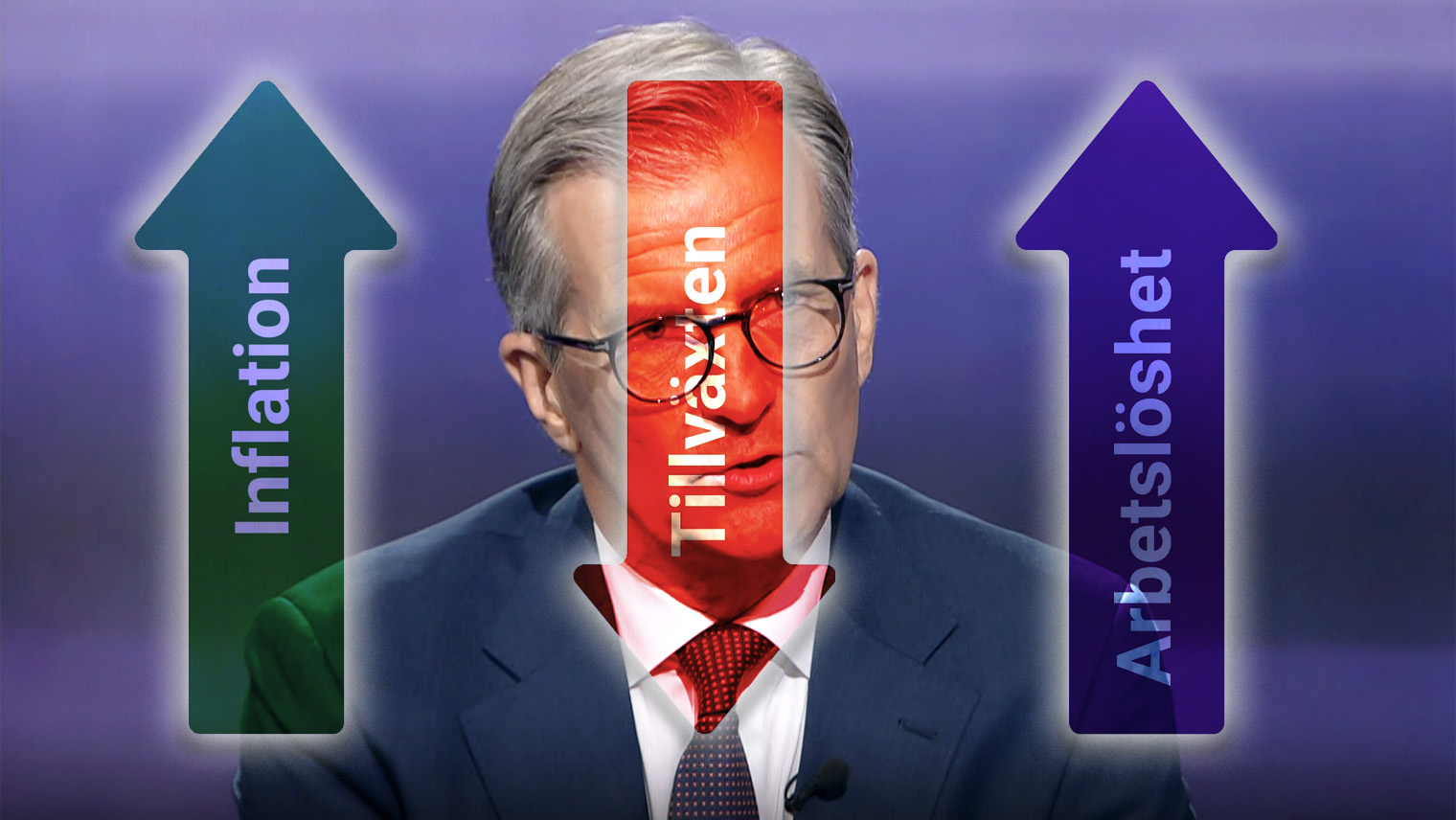
Riksbank Governor Erik Thedéen sees signs that the Swedish economy is moving toward stagflation—a situation of weak growth combined with rising prices. He describes the trend as worrisome and warns that more persistent inflation could lead to higher interest rates. At the same time, he directs sharp criticism at major banks for raising mortgage rates without offering savers better terms.
When Erik Thedéen appears on ‘SVT 30 Minutes,’ he says that Sweden has already moved in the direction of stagflation. The background is an uncertain :censored:6:cdd6bbaa89: situation in which the war in Iran is pushing up energy prices, while confidence in both the manufacturing and service sectors is deteriorating.
He describes the combination of higher oil and gas prices and weaker growth as particularly problematic for the economy. According to Thedéen, stagflation is a difficult scenario because inflation rises while the economy slows down. He also notes that this trend is challenging for a central bank.
– It’s clearly a nightmare.
Risk of Higher Interest Rates
Thedéen emphasizes that the most serious risk would be if price increases persist for a longer period. If that happens, the Riksbank might be forced to maintain a tighter monetary policy, which would mean higher interest rates and increased costs for households with mortgages.
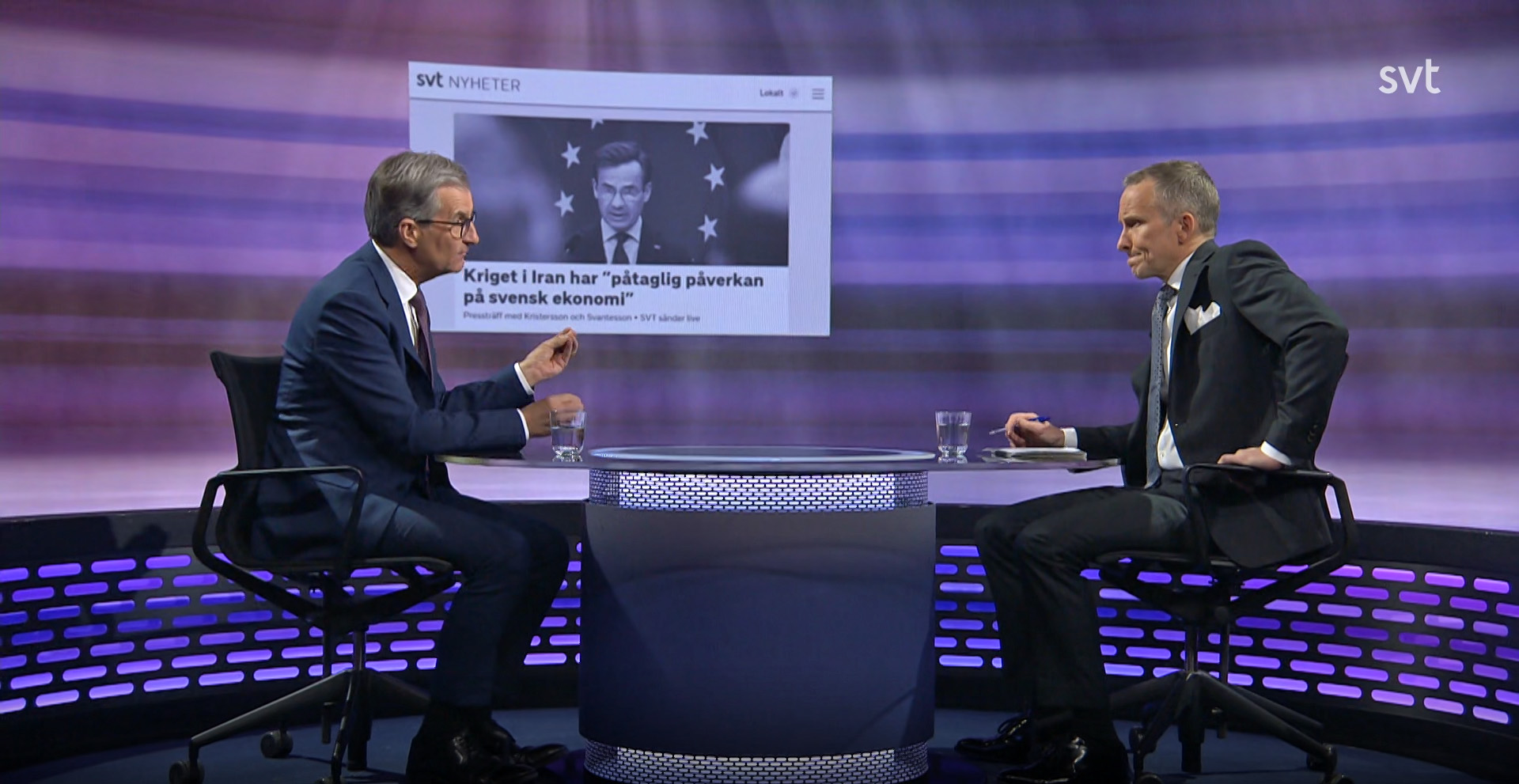
At the same time, he points out that the fight against inflation is necessary for the Swedish economy in the long run, even if the measures feel painful in the short term. According to him, it may be “a bitter pill” in the short run.
Sharp Criticism of Major Banks
In the same interview, Thedéen also criticizes several Swedish banks that have raised their variable mortgage rates in the wake of increased :censored:6:cdd6bbaa89: uncertainty. Banks like Swedbank, Nordea, SBAB, and SEB have cited rising market interest rates, but have not made similar increases to savings interest rates.
The Riksbank governor does not fully accept that reasoning. He argues that banks cannot reference market rates when mortgages become more expensive but ignore the same logic when it comes to the compensation offered to savers. When asked if banks should also raise savings rates, his answer is clear.
– Yes, absolutely.
Risk of Undermining Trust
Thedéen thinks this imbalance allows banks to strengthen their margins at the expense of customers. He notes that banks are, of course, driven by profitability but at the same time warns about how this behavior is perceived.
According to him, it “hardly does anything to strengthen confidence” in the banking sector. His statement is a pointed message from the country’s Riksbank governor about how major banks are acting in an already strained economic situation.
READ ALSO: Riksbanken warns of effects of war: Energy prices may drive up inflation