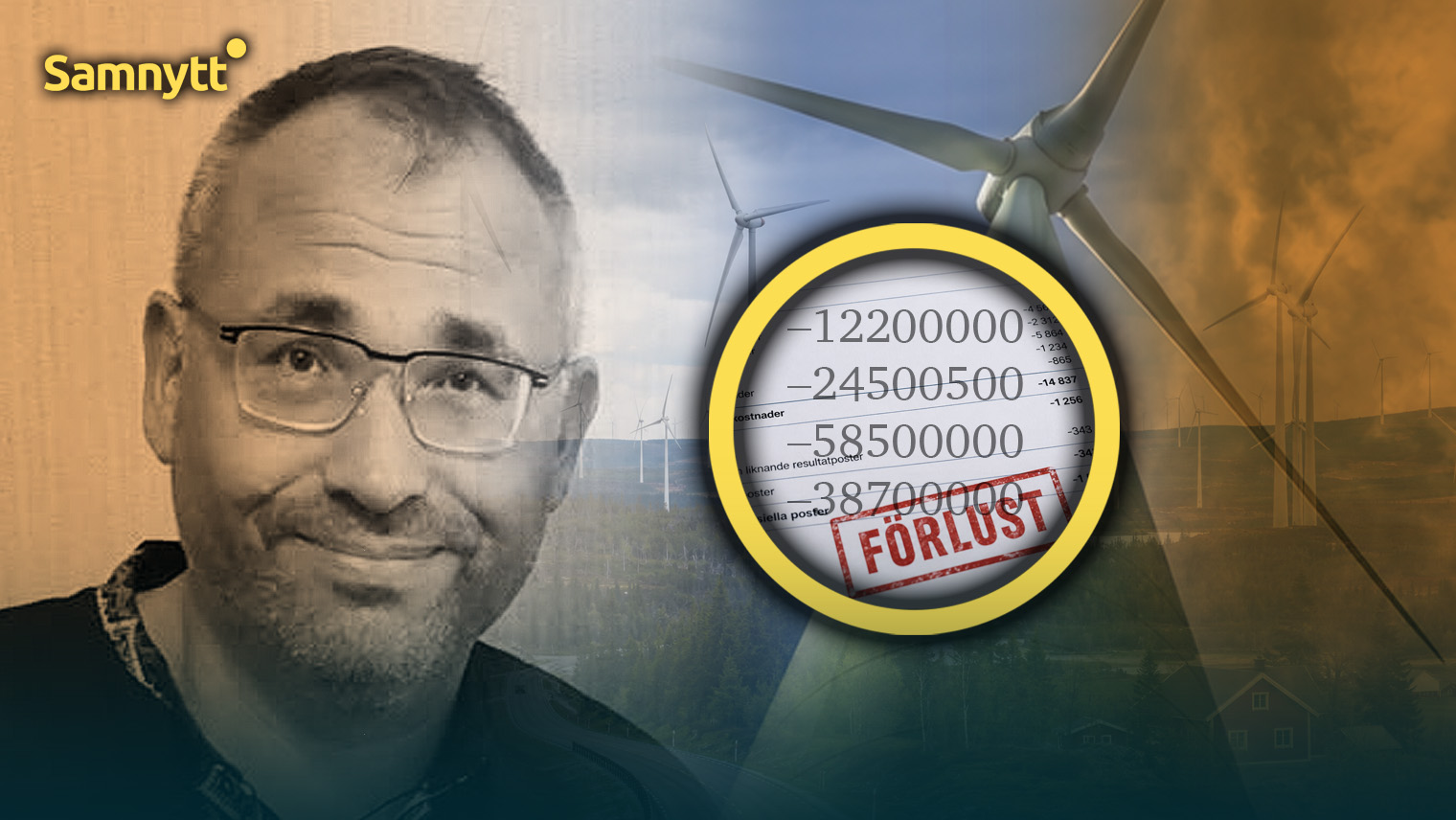
Billions in public subsidies, green industrial ventures, and political prestige projects have, over the past decade, become an ever-increasing part of Swedish business policy. At the same time, several of these ventures have been plagued by economic disasters, rising costs, and questions about who actually bears the risk when projects fail. Business economist Christian Steinbeck argues that the development has created an entirely new economic system—where private players can build business models around taxpayers’ money while politicians attempt to steer desired societal change. In a lengthy interview with Samnytt, he describes the green transition as a symptom of subsidy capitalism, warns of planned economic thinking, and directs sharp criticism at both the political establishment and at public service media’s role in the debate.
Christian Steinbeck is an entrepreneur, economist, and social commentator with a background as CFO and business leader in the corporate sector. In recent years, he has become a notable critic of the economic logic underlying the green transition, wind power expansion, and what he describes as the rise of Swedish subsidy capitalism.
Through lectures, columns, and analyses, he has examined how public funds are used in various climate and energy projects, while arguing that political decisions are increasingly replacing the market’s usual mechanisms.
READ ALSO: Green corruption and a poorer Europe after Stegra?
He has also studied planned economies and frequently draws comparisons between today’s political governance and experiences from East Germany.
To understand the criticism against the green transition, one must first understand what Christian Steinbeck means by the term subsidy capitalism. He begins with the classic business role.
– A real entrepreneur uses their own money, or borrows private funds, and tries to create something people want to buy.
Steinbeck highlights Ingvar Kamprad as an example of traditional entrepreneurship.
– No politician gave Ingvar Kamprad subsidies to sell bookshelves. He had to convince the customers. When this kind of entrepreneur fails, he bears the consequences himself. He continues:
– You take the hit when things don’t go well. That’s how a market economy works.
The problem, Steinbeck argues, is that a different type of entrepreneurship has emerged in recent years.
– The subsidy capitalist says that society should bear the main risk.
Politicians have decided that we should have wind power, electric cars, and various green projects. But they have never had to prove that people actually demand this in the way the market normally requires.
Christian Steinbeck, economist and commentator
He points, for example, to major industrial projects in the green transition, where public money, guarantees, and subsidies have played a central role.
– You go to the politicians and say the business idea is so important that taxpayers have to help out.
READ ALSO: Professor warns: Finnish wind power may become worthless – Sweden headed the same way
For Steinbeck, this is precisely what distinguishes today’s green industrial projects from traditional entrepreneurship.
– You don’t use your own money. Most of it is supposed to be covered by society.
To Steinbeck, the small business owner is also the very epitome of the market economy. He points to the pizzeria owner, the local plumbing company, or the local entrepreneur who invests his own money, works long hours, and must face customers on their terms.
READ ALSO: Ekeroth: “Subsidy capitalism – the green industry’s real business idea”
If the business goes badly, the entrepreneur must take the loss. That is why he opposes what he calls subsidy capitalism. While small business owners are expected to bear all the risk themselves, according to Steinbeck, a new class of companies has emerged that is largely financed by public money, with taxpayers footing the bill when the numbers don’t add up.
“This is planned economic thinking”
Steinbeck has long studied planned economies and also has personal experience through his family’s background in East Germany.
Do you see similarities between this type of initiative and socialist planned economies?
– Yes, planned economy is essentially about politicians deciding what people need. In a market economy, it’s the customers who decide through their choices.
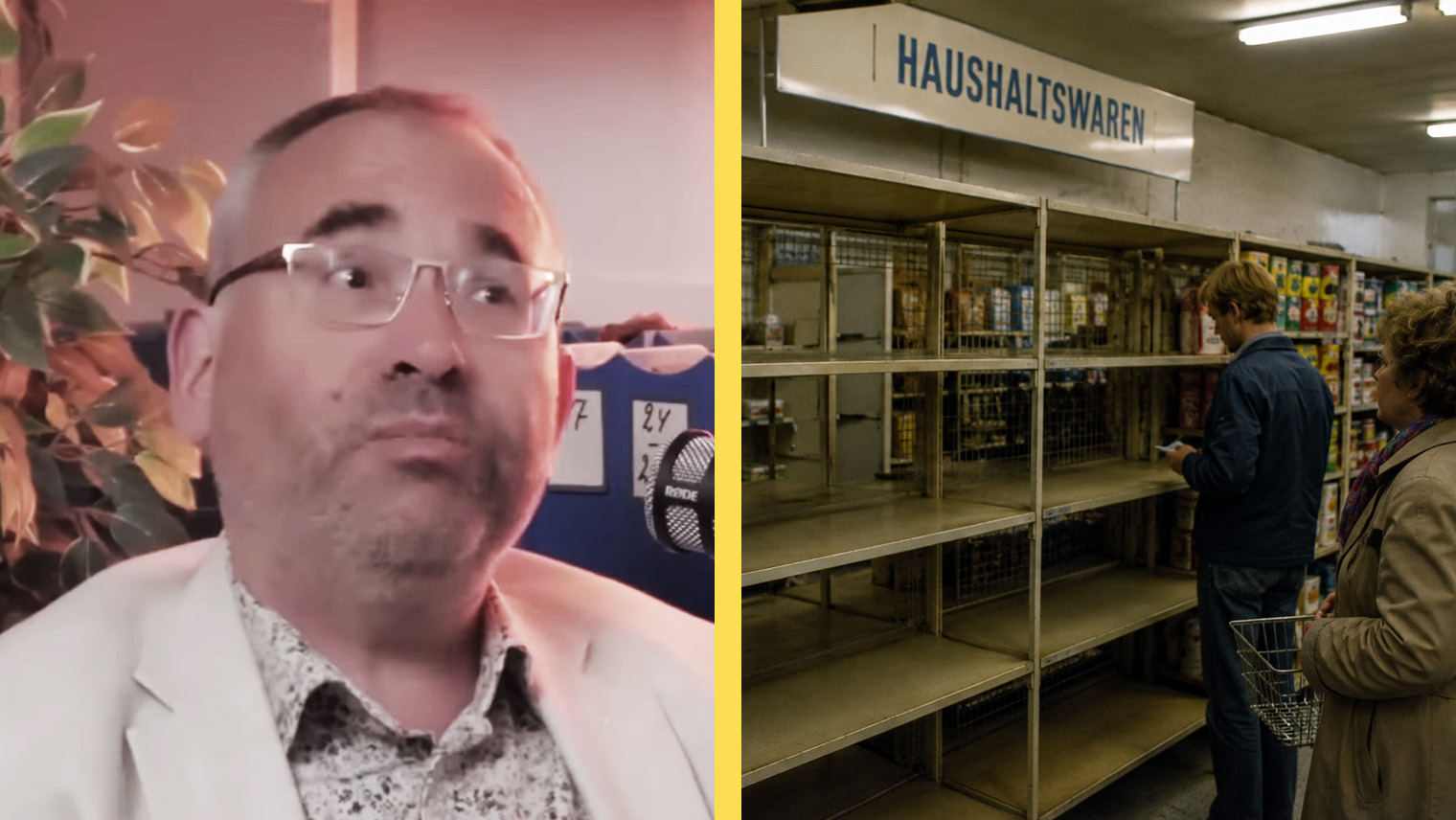
He describes how everyday life in the GDR was marked by constant shortages, even as resources were spent on things people actually did not want.
READ ALSO: How the EU’s wind power plan is being quietly introduced to Öland
– There was no toilet paper, but there were tons of sheet music for Beethoven and Mozart. It’s a classic example of misallocation of resources.
He sees the same pattern in today’s energy policy.
– Politicians have decided we are to have wind power, electric cars, and various green projects. But they have never had to prove that people actually demand this in the way the market usually requires.
According to Steinbeck, the main issue is not the politicians’ intentions.
– Most of them probably mean well. The problem is that they lack the information the market normally provides through prices and demand.
Is this about politicians being ignorant or incompetent?
– Yes, we have a huge problem in Sweden today. Take Östersund municipality, it’s a billion-kronor operation today, annual revenues are 3.7 billion. Politicians are supposed to run a municipality with 60,000 inhabitants. Steinbeck continues:
– It also becomes a huge problem to recruit expertise to such a municipality. It’s not an easy task to manage these sums. They are not paid much for sitting as politicians, alongside the fact that official accountability has been abolished.
According to Steinbeck, today’s party system is rooted more shallowly than many believe. He points out that the youth wings now have relatively few members compared to previous generations, which affects the recruitment of tomorrow’s politicians.
With fewer active members, the pathway to political office becomes shorter, while fewer people participate in the internal discussions that shape policy. The result, he believes, is a system in which a small circle of people get disproportionately large influence over decisions that affect the entire society.
A private school can make a small profit, which is seen as a scandal. But the same politicians are thrilled when Harald Mix, a billionaire with a shady track record—if you look into his background—receives billions and makes a profit too.
Christian Steinbeck, economist and commentator
As the interview continues, Steinbeck counts the view of private profits as one of the greatest contradictions in Swedish politics. He notes that the Social Democrats often heavily criticize charter schools and private healthcare companies for making profits from publicly funded operations.
At the same time, politicians from the same camp have been significantly more positive about private entrepreneurs making a fortune from the green transition through various subsidies, guarantees, and public investments.
For Steinbeck, it is difficult to understand why a small profit at a charter school is seen as morally dubious while billion-kronor profits in taxpayer-supported industrial projects receive applause.
READ ALSO: SVT tries to sabotage the operations of charter schools: “This is public service at its finest!”
Can you give an example?
– A charter school can make a small profit, which is regarded as a scandal. But the same politicians are absolutely delighted when Harald Mix, who is a billionaire and has a history of dubious deals—if you look at his background—receives billions and also makes a profit. He continues:
– It’s one of the strangest stories I’ve ever witnessed. He elaborates:
– They want to hire private companies to save the planet, as they say? How is that logical?
Has the so-called green transition become a kind of sect?
– I might not use that word, but it’s hard to explain rationally what’s going on. I’m an economist and have spent my whole life working on profitability in private companies. He continues:
– If it were about saving the planet, then the first thing would be that it must be handled by the state. In such a scenario, no one should be able to profit from it. The economist continues:
– If I wanted to save the Earth’s climate, for example by building wind turbines, then I must set a goal. And I must know how much these wind turbines impact the climate. But if you ask, you get the answer: “It isn’t measurable.” Steinbeck elaborates:
– It’s very strange. If I’m on a sinking boat and start the bilge pumps, I need to check if anything is happening, if things are improving. But here, you can’t even measure it?
READ ALSO: Municipalities abandon wind power after fiascos—trying to sell off assets
The Billions That Disappeared
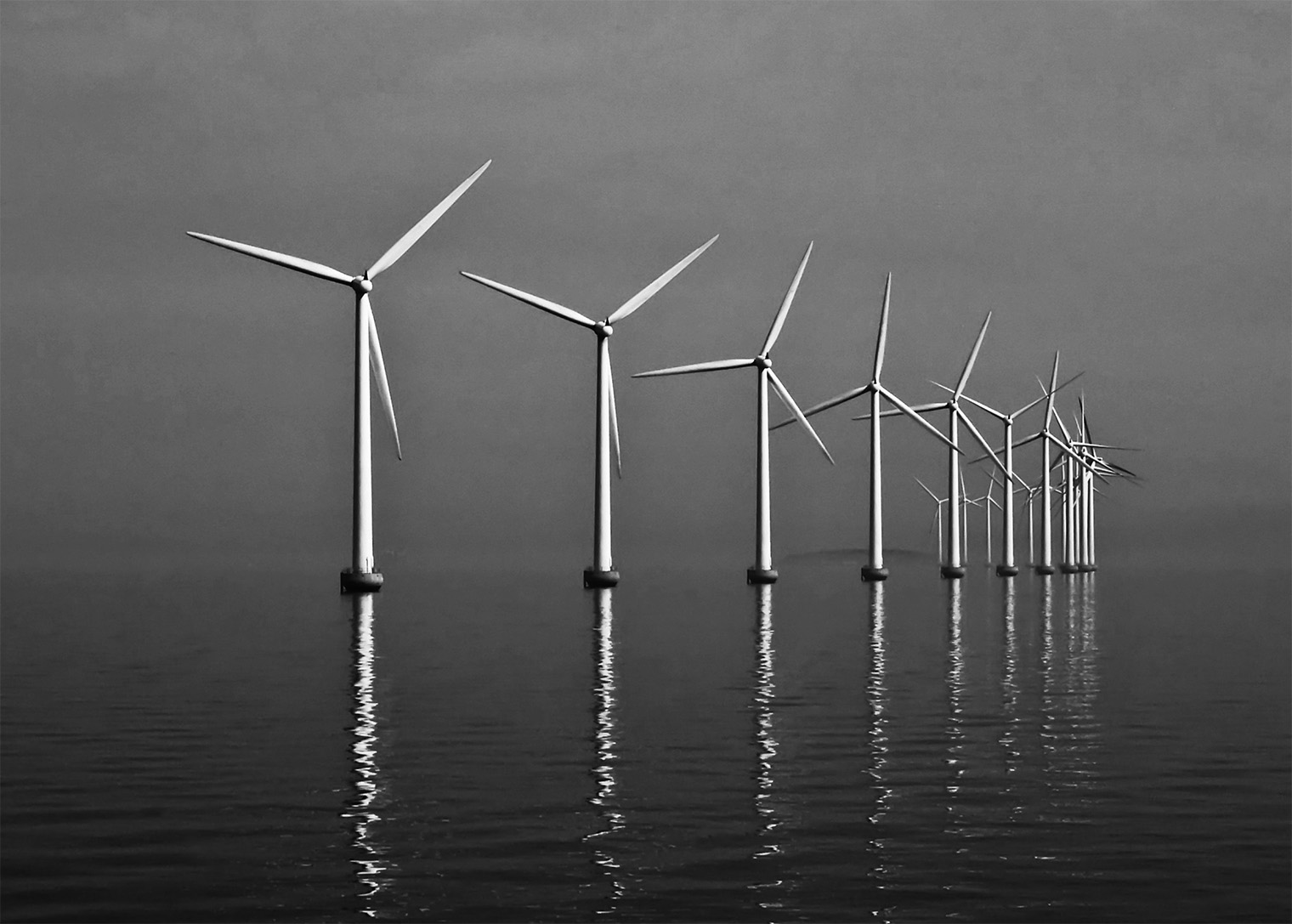
Much of Steinbeck’s criticism targets wind power expansion. For several years, he has scrutinized municipal investments and energy projects, especially in Jämtland, arguing that many initiatives have been undertaken without clear requirements that the results should be measurable.
– If the goal is to impact the climate, then you should reasonably be able to demonstrate what effect you’re getting for your money.
He repeatedly returns to what he sees as a fundamental question.
– What should it cost, and when are we done?
According to Steinbeck, clear answers are often lacking. He points, for example, to municipal investments where schools have been closed while vast resources are spent on energy projects.
– If a school fails to deliver results, we follow up. We measure. We make demands. But when it comes to many of these climate projects, they just keep pumping money in.
He is particularly critical of public entities taking on debt for initiatives whose benefit, according to him, is hard to demonstrate.
– Residents of the municipalities become poorer when the money disappears into these projects. These are resources that could have been used for core activities.
Get 50% off today
123 083 33 50
The Wind Power That No One Needs
Steinbeck believes the Swedish energy system increasingly ends up in situations where more electricity is produced than the grid can receive.
We hear about wind turbines being shut off when it’s windy—what’s that about?
– In Sweden, there is mainly the price mechanism, so there’s a market. When there’s a surplus, the price is zero, or even negative, and then you shut down production. He continues:
– But that’s not enough, so now we’ve started paying these private companies—the subsidy capitalists—for providing so-called downregulation services, which means paying them to shut down when it’s windy. This is one of the biggest mysteries in Swedish political debate in modern times, he says.
READ ALSO: Record production and record losses—researchers warn of a wind power industry in crisis
Can you elaborate?
– This is how it works: for an electricity system to function, you must produce as much electricity as you consume at every moment. But here it’s as if the circuit breaker has blown, and we just keep building wind power plants even though they can’t be used. Steinbeck continues:
– When it gets windy, there is more electricity than we can handle, and so it gets exported. Now, when the wind blows here and the sun shines in Germany, there’s more electricity than anyone can use.
I can reach no other conclusion than this is corruption—and stupidity. We’ve ended up in a situation where society gives money to private entrepreneurs to solve political problems. It’s a very strange development.
Christian Steinbeck, economist and commentator
What does this lead to?
– They are paid to shut down. When it’s very windy, there’s a surplus. The price drops to zero or even negative.
For Steinbeck, this is an indication that the system is not functioning as intended.
– We keep building more and more generation even though we already have trouble using the electricity produced.
He believes the energy question has become an area where political goals often outweigh technical realities.
– An electricity system must function every second. That’s why technicians and engineers should have a much greater influence than politicians.
“It’s About Stupidity or Something Else”
Steinbeck repeatedly returns to the economic incentives that have emerged around the green transition. He points to how former politicians, civil servants, and people with strong networks are often found in various projects and companies that benefit from public investments.
– There are people who have made a lot of money from this.
READ ALSO: Politicians educated in wind power—by the wind power industry’s own PR agency
When he seeks to understand the development, he lands on two possible explanations.
– It’s either stupidity, or it’s something else.
Does this resemble corruption?
– I can reach no other conclusion than that this is corruption—and stupidity.
Steinbeck clarifies that he doesn’t use the term in the legal sense, but says he finds it hard to see any other explanations for why so many public resources continue to flow to projects that, in his view, deliver weak results.
– We’ve reached a point where society gives money to private players to solve political problems. It’s a very strange development.
READ ALSO: The Green Fraud—or when the hydrogen leaks, the truth follows
Politicians Without Responsibility
Steinbeck believes that part of the explanation can be found within the political system. He describes Swedish municipalities as organizations with billion-crown budgets and extensive responsibilities, but where the recruitment of decision-makers does not always reflect the complexity of the task.
I am very rarely met with rational objections to my calculations. Instead, you’re told the world is ending or that you’re far right.
Christian Steinbeck, economist and commentator
– If a private company had billions in turnover, you’d allocate huge resources to recruit the management team.
At the same time, he points to the abolition of official accountability and reduced political engagement as factors behind the development.
– Fewer people are active in the parties today. A much smaller group is making decisions for everyone else.
He believes this risks creating a political class that is increasingly detached from ordinary citizens.
– Many feel that the parties exist alongside society, rather than as a part of it.
According to Steinbeck, the issues are not only about individual political decisions but about a failing culture of responsibility. He notes that municipalities and regions manage billions each year, but argues that those making the decisions are rarely subjected to the same scrutiny or consequences as in the business world.
Meanwhile, official accountability has been abolished and the membership base of political parties has shrunk significantly.
The combination of vast economic power, limited personal responsibility, and an increasingly narrow recruitment base has, according to Steinbeck, contributed to costly political projects being carried out without anyone being held accountable when results fall short.
Public Service and the Creed
Towards the end of the interview, Steinbeck also criticizes Swedish media, especially public service. He believes journalism often fails to scrutinize the economic assumptions underlying the green transition.
– I am very rarely met with rational objections to my calculations. Instead, you’re told the world is ending or that you’re far right.
READ ALSO: SR’s report: Higher electricity prices blamed on missed wind power projects
How do you view the role of public service in this development?
– I think the strong position of public service in Sweden has been very damaging.
Steinbeck believes there is a fundamental difference between how science works and how the public service system is structured. In science, knowledge development is based on theories being constantly questioned and subjected to criticism by other researchers. No one is assumed to possess the final truth.
If we let politicians and the media decide which companies should win, which ideas should be promoted, and which perspectives may be described as factual, then we have left behind the market economy and open debate that once made Sweden successful.
Christian Steinbeck, economist and commentator
However, when he has scrutinized public service and the Broadcasting Commission’s work, he finds that certain issues are handled in the exact opposite way. According to Steinbeck, a system where politically appointed board members decide what is considered factual or not risks shifting focus from open examination to officially sanctioned truths.
That is also why he often returns to the wind power debate, which he sees as an example of how economic and technical issues can get a predetermined answer instead of remaining subjects for critical review.
– I only show data. But still, people get angry.
He further maintains that parts of the climate debate have taken on the characteristics of a belief system where some statements may no longer be questioned.
– If the problems truly are as severe as claimed, people should be even more meticulous with the calculations, he says.
The Broadcasting Commission and “The Truth”
When asked to elaborate, he becomes particularly critical of what he perceives as an institutionalized consensus within public service. He refers to a decision by the Broadcasting Commission after a series of critical reports about wind power aired in SVT’s regional news.
According to Steinbeck, the outcome was that criticism of wind power economics was in practice labeled unfactual—and thus untrue.
READ ALSO: Ekeroth: “State media serve the wind power lobby”
– In science, all knowledge is based on someone opposing it. Thesis meets antithesis. But in public service, there is a politically appointed board that ultimately decides what is considered factual or unfactual.
He believes this creates a system where certain perspectives get institutional precedence over others.
– The question is not just what they have decided so far. It’s also what other decisions may exist there, shaping the debate without people even being aware of them.
Steinbeck therefore does not see the wind power debate as an isolated energy issue.
To him, it is ultimately about how political power, public money, and information flows interact in today’s Sweden. Christian Steinbeck concludes:
– If we let politicians and media decide which companies will win, which ideas are to be promoted and which perspectives are allowed to be described as factual, then we have abandoned the market economy and open debate that once made Sweden successful.
READ ALSO: EU’s growing electricity problem: Households are urged to cut usage and reduce grid load
Get 50% off today
123 083 33 50