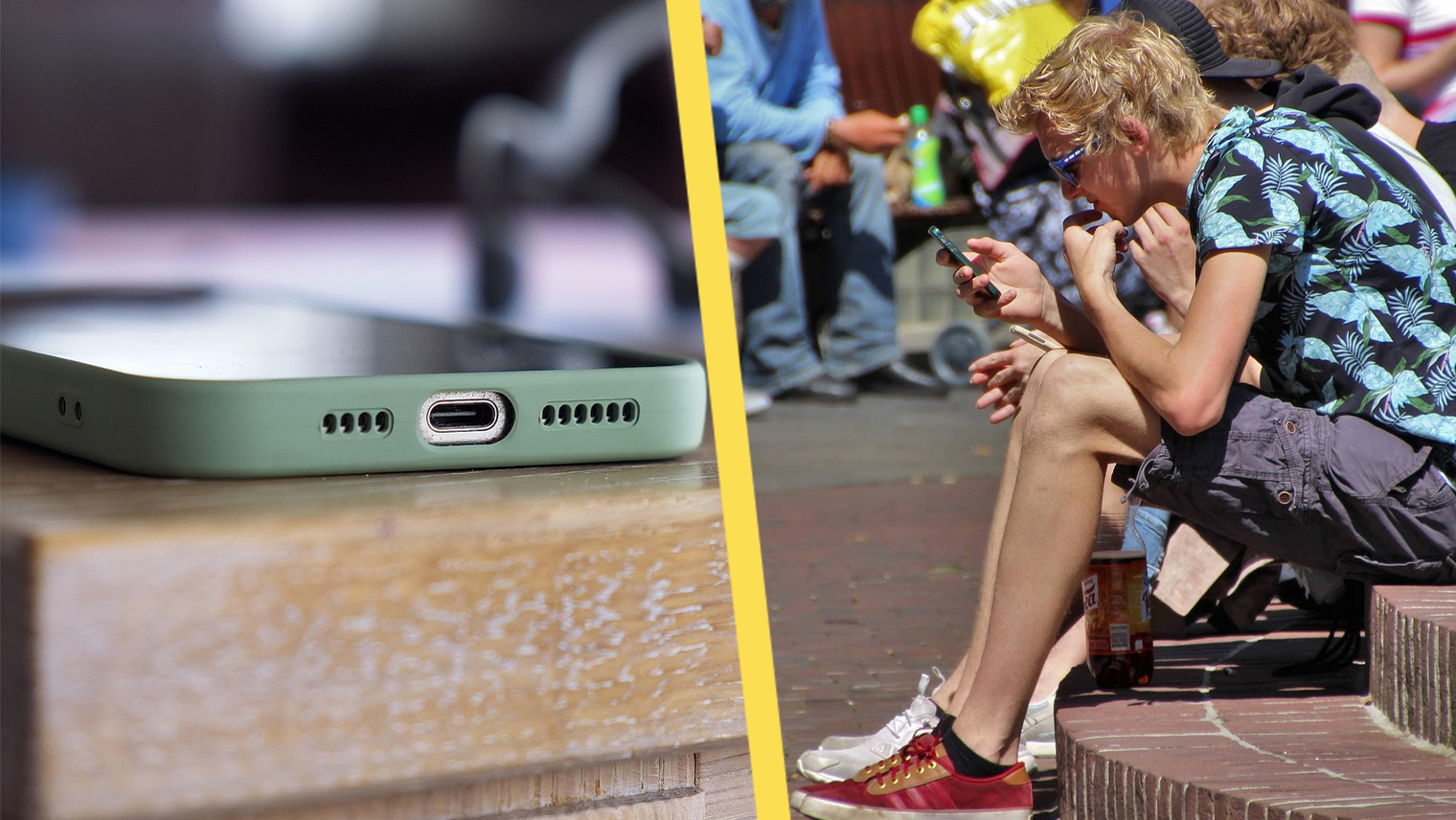
Children who have smartphones at the age of twelve are at higher risk of experiencing issues such as sleep deprivation, obesity, and depression. This is shown in a new study published on Monday in the journal Pediatrics.
The research team consists of scientists from the University of Pennsylvania, the University of California, Berkeley, and Columbia University, who examined data from more than 10,500 participants in the Adolescent Brain Cognitive Development Study, an ongoing study evaluating brain development in children during adolescence.
The researchers analyzed data on children aged nine to sixteen, collected between 2016 and 2022, to test how smartphone ownership and the age at which a child or teenager received their first smartphone affected their health outcomes.
READ ALSO: Decision in neighboring country: Social media banned for children
The team found that compared to 12-year-olds who did not own a smartphone, those who did had a 1.3 times higher risk of depression, 1.4 times higher risk of obesity, and 1.6 times higher risk of inadequate sleep.
“This was quite surprising, I must say. I mean, we designed the study with a question in mind to try to test it, but to discover that it was quite convincing,” said Dr. Ran Barzilay, lead author of the study and child and adolescent psychiatrist at the Children’s Hospital of Philadelphia.

Limitation most important
The earlier a child gets a smartphone, the greater the health risk. According to Barzilay, experts recommend that parents delay the age at which children receive their first smartphone.
Barzilay said that although the study only proves correlation, not causation, it contributes to a growing body of evidence linking smartphone use among children to negative health outcomes.
He added that smartphones have certain advantages, such as increased connectivity and access to information, but believes that parents can implement certain rules to limit the potential harm that smartphone use can cause. These rules may include not allowing children to use them in the bedroom at night and ensuring that their children participate in activities that do not require phone use.
READ ALSO: Study: The less social media, the better well-being