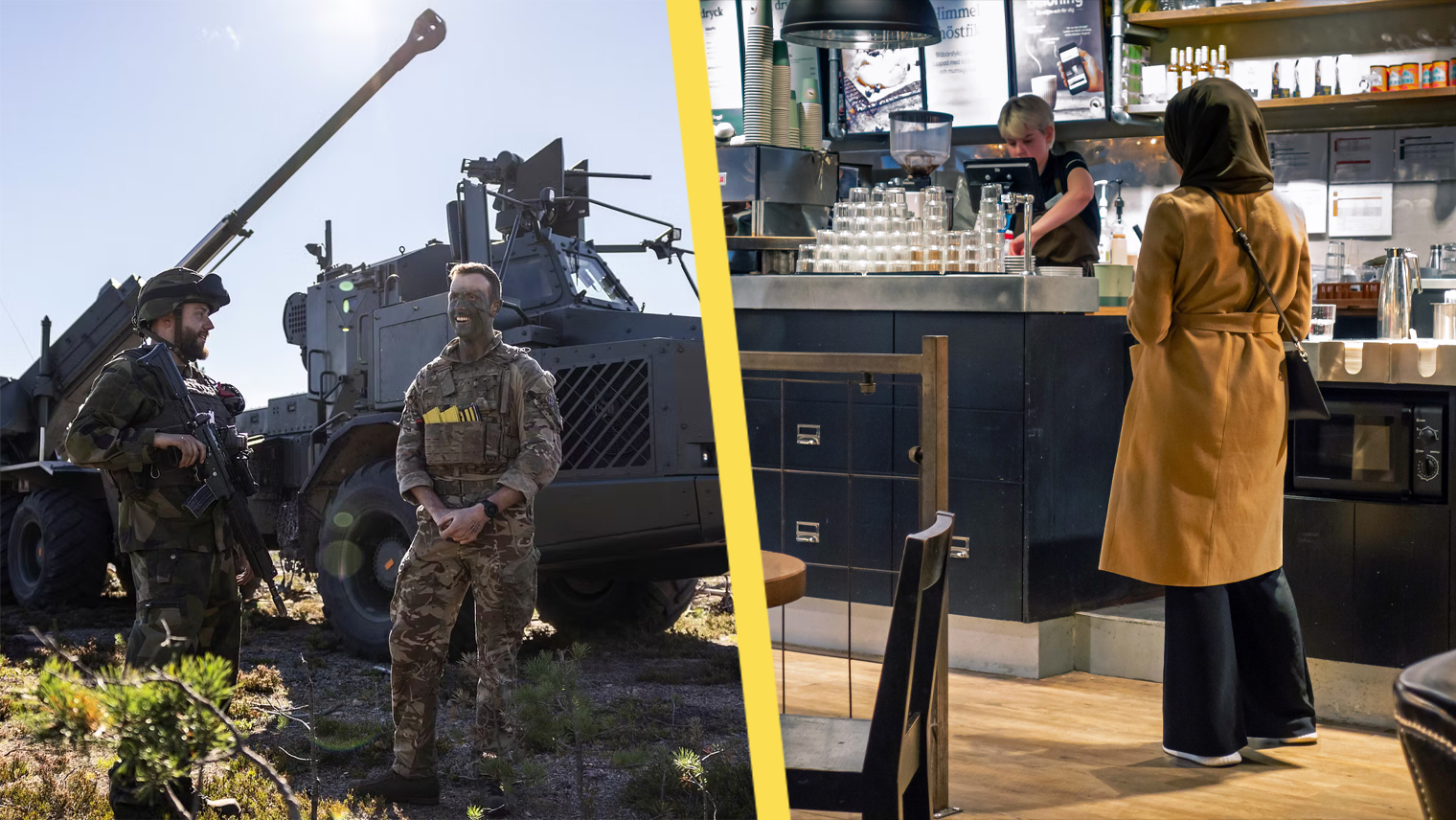
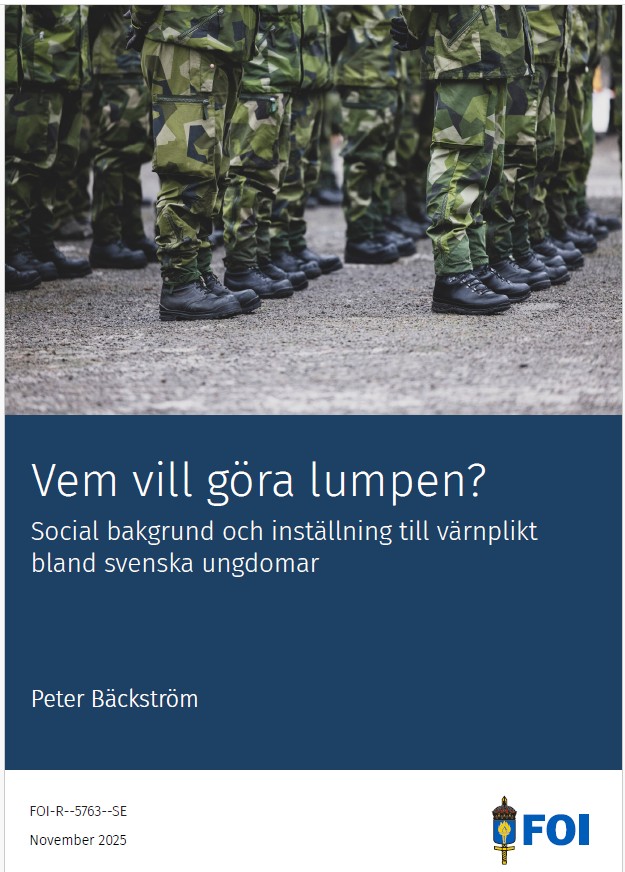
On behalf of the Swedish Armed Forces, the Swedish Defence Research Agency, FOI, has for the first time examined the significance of social background on young people’s attitudes towards conscription. It turns out that socioeconomic background has limited significance, while origin plays a greater role.
The data compiled by Peter Bäckström is based on approximately 500,000 conscriptable 18-year-olds born between 2000 and 2004 and the conscription data they are required to fill in and submit to the Swedish National Service Administration. This includes questions about the individual’s attitude towards completing basic training with conscription. The material was then linked to registry data from Statistics Sweden, SCB, with information about the parents’ socioeconomic status and the individual’s migration background.
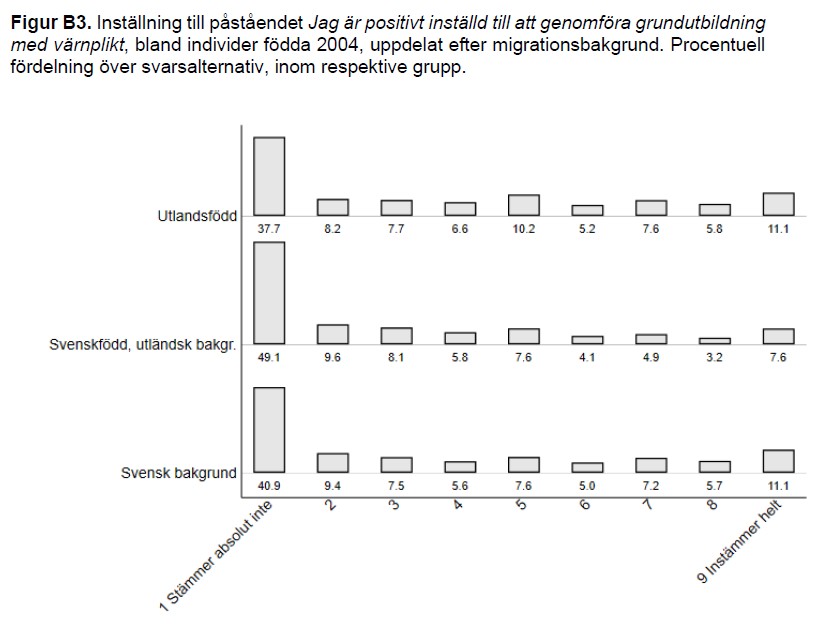
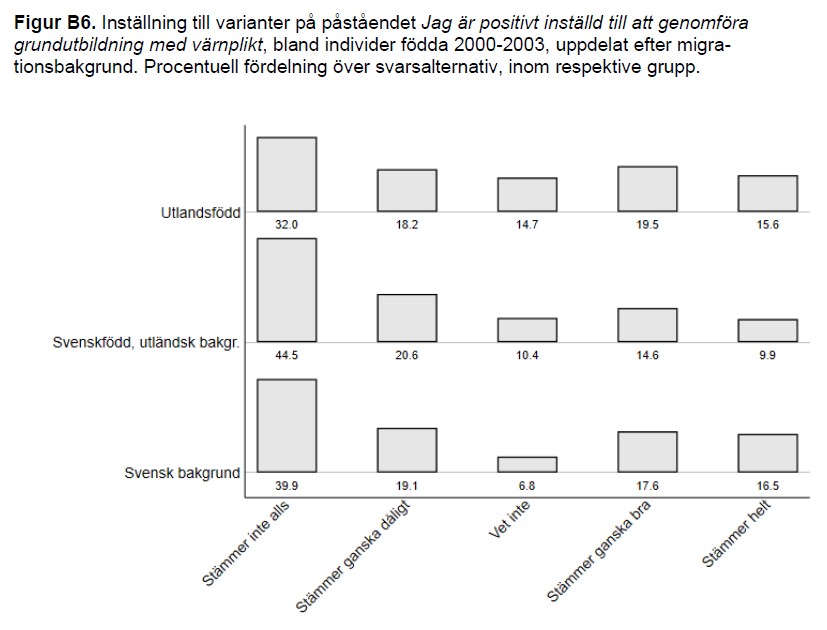
“Young people whose parents have higher education and high incomes are somewhat more positively inclined to do military service than those with low incomes and low education. However, the differences are small. But it is clear that young people born in Sweden, but with foreign-born parents, are more hesitant about doing military service. This cannot be explained by underlying differences in the parents’ socioeconomic status,” says researcher and report author Peter Bäckström.
READ ALSO: SD men most inclined to defend Sweden in war
“It is important to emphasize that the attitude among foreign-born young people towards military service is more or less the same as among young people with Swedish-born parents. There are therefore significant differences within the group with a foreign background. I do not know what it is due to, but one guess is that it has something to do with differences in trust and perceived belonging,” says Peter Bäckström, who calls for more social science research into why it is so.
Bäckström believes that the Swedish Armed Forces, the Swedish National Service Administration, and the Swedish school should consider whether they need to work more extensively to reach young people with a foreign background early on and increase access to the activities of the armed forces.
READ ALSO: Desire to defend Sweden low among migrants
She points out that since the autumn term of 2025, there are new opportunities in upper secondary school where total defence knowledge is now a mandatory part of the new curriculum for social studies.
Too low demands?
Political scientist, journalist, and editorial writer Carolin Dahlman has reacted to the numbers – which she simultaneously notes is not the first time a higher reluctance to defend Sweden has been noted among people with an immigrant background.
The reason is likely that very low demands have been made. We have generously offered refugees a safe haven, but then not demanded that those helped adapt, do their duty, or be loyal to the country. As a consequence, many first-generation immigrants have not found jobs, learned Swedish, or integrated into society, the value community, the culture. Now their children (and grandchildren) are damaged. Perhaps they are not doing well in school and are angry, thinking that Sweden is crap.
Dahlman points out that left-wing media and politicians have regularly claimed that Swedes treat foreign-born individuals poorly and immigrants have been portrayed as victims of discrimination and racism.
In 2023, for example, Aftonbladet’s editorial writer Noor Karim wrote that young people with a foreign background did not want to do military service because they had not been treated well, had been subjected to racism, and had not been able to benefit from the welfare system.
Eventually, these “victims” nod and begin to accuse the rest of us. It is a dangerous development, built on false grounds. Sweden has generously provided economic support, interpreters, healthcare, and education. According to the World Values Survey, we are one of the least racist countries in the world.
READ ALSO: VIDEO: Are you ready to defend Sweden?