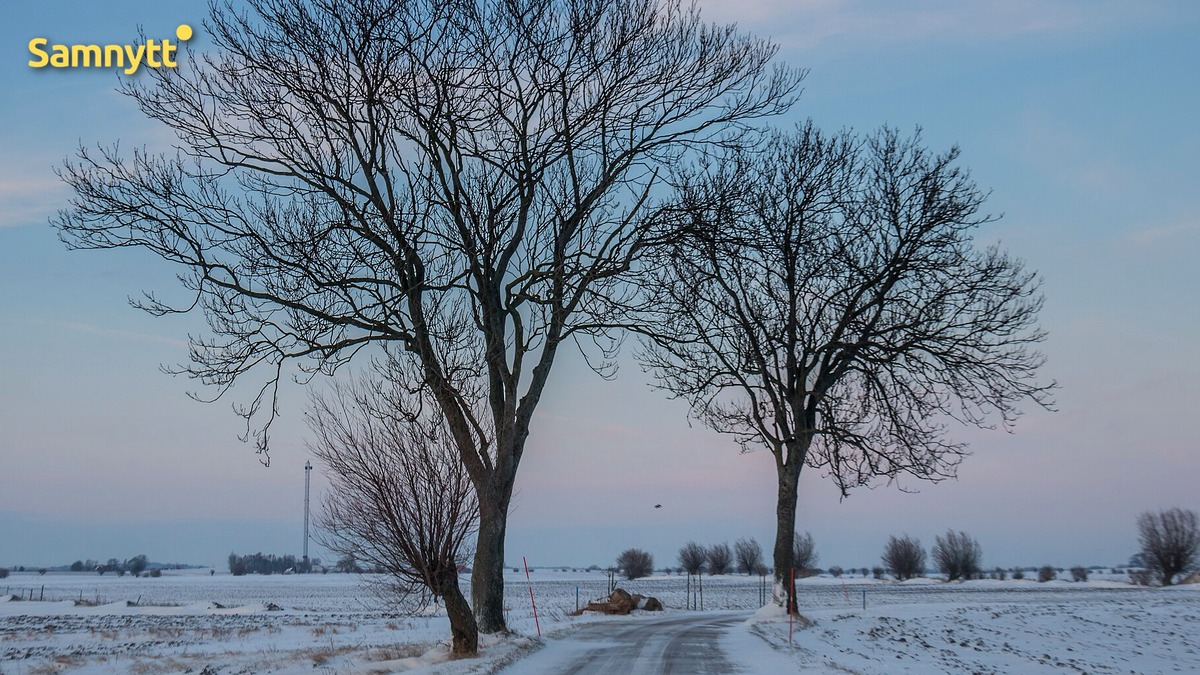
Autumn takes a clear step toward winter as an extensive area of precipitation moves over Sweden on Thursday. The Swedish Meteorological and Hydrological Institute (SMHI) has issued this season’s first yellow snow warning and expects that snow and sleet could cause problems on the roads.
The warning applies to northern Värmland, Dalarna west of Siljan, and southern Jämtland County. The precipitation is initially expected to come as rain, but as colder air meets the low-pressure system moving into the country, the rain will increasingly turn to snow or sleet during Thursday morning.
The low-pressure system is currently over the British Isles and heading toward Sweden. The frontal system will first pass over the southern parts of the country before continuing northwards. In the areas covered by the warning, snowfall may at times be heavy and continue through much of Thursday.
Despite the forecast for snow, not much is expected to remain on the ground. The ground temperature is still relatively high, which means the precipitation can quickly turn to slush.
It’s also not particularly unusual for the first snow to arrive already in autumn; however, according to SMHI, it is more unusual for it to actually settle.
The larger question is how the weather change will affect traffic. Snow, slush, and temperatures around freezing can quickly make roads slippery, while visibility deteriorates as precipitation increases. Many drivers also haven’t yet switched from summer tires.
The yellow warning is the lowest of SMHI’s three warning levels but means the authority assesses that the weather could have consequences. In this case, it mainly concerns difficult road conditions, but public transport could also be affected by the weather.
Delays and canceled departures may occur when the snow arrives, and in areas where electricity and telephone lines are above ground, there is additional risk of disruptions if temperatures approach freezing.
SMHI therefore recommends that anyone who must head out on the roads expect longer travel times and adjust their speed to suit both road conditions and visibility.
Those who do not yet have winter tires can note that the rules already permit studded tires from October 1 to April 15. If there are, or are expected to be, wintry road conditions, studded tires may also be used outside this period.