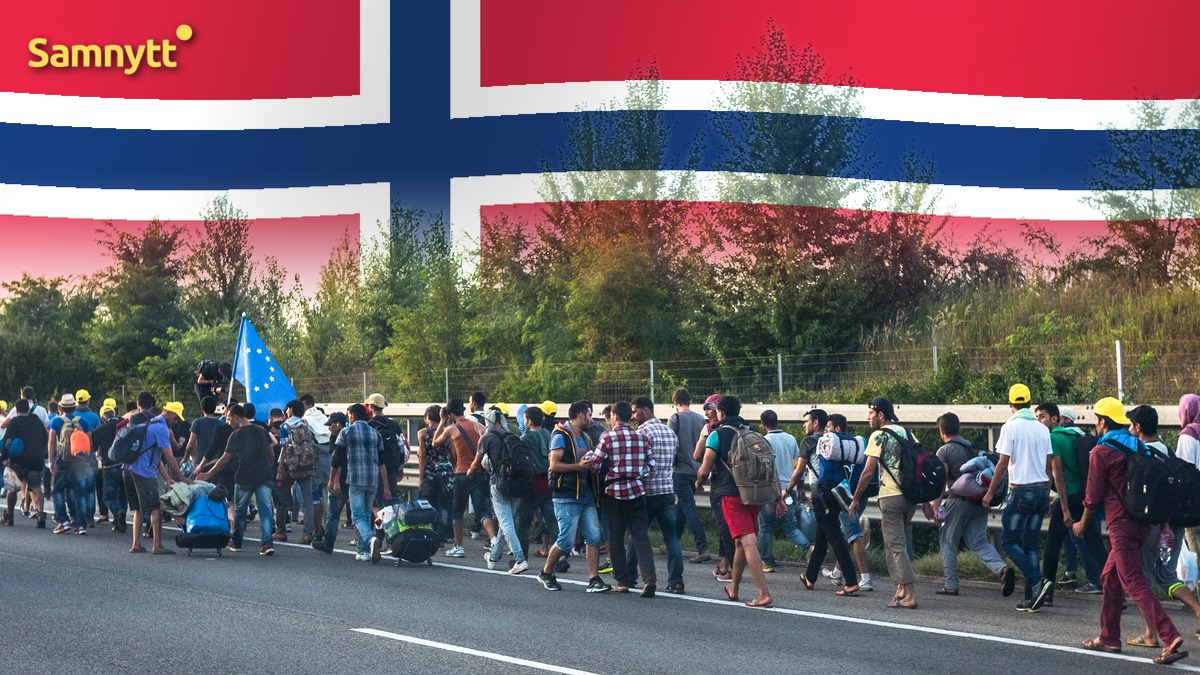
The number of immigrants in Norway from outside the EU is expected to rise sharply. This emerges from a new forecast from Statistisk sentralbyrå (SSB), Norway’s equivalent of Statistics Sweden (SCB). The assessment is higher than the previous one from 2024, despite the Norwegian government’s promise of a stricter immigration policy.
Today, 585,000 immigrants from Asia, Africa, Latin America, and the parts of Eastern Europe outside the EU live in Norway. By 2040, that number is expected to be nearly 800,000, and by 2070 it is projected to surpass 1,019,000. This is reported by Nettavisen.
The figures come from the population forecast SSB published in June. In the main scenario, the group of immigrants from outside the EU grows to about 796,000 people by 2040 and about 912,000 by 2050.
Nettavisen has compared these numbers with the forecast from two years ago. The agency now expects about 47,000 more immigrants from this group in 2040 than in the previous forecast.
READ ALSO: The number of residents with an immigrant background has nearly doubled in Norway – in 16 years
Over 80,000 Ukrainians came to Norway between 2022 and 2024. SSB has adjusted its model so that the extreme years of Ukrainian immigration do not dominate the long-term forecast.
If you count all immigrants, the total is expected to rise from about 987,000 today to 1.38 million by 2050. At that point, the proportion of immigrants in the population would increase from about 17 to about 22 percent.
The government promises tightening
At the same time as these numbers were published by SSB, Norway’s social democrat Prime Minister Jonas Gahr Støre told VG that the government is tightening immigration policy. He has, among other things, boasted about new rules for family reunification and deportations.
“Now is the right time for a clearer and stricter immigration policy,” Støre asserted in that interview.
The party’s deputy leader, Tonje Brenna, wants to go even further and has told Nettavisen that the policy should be tightened even more. But Ane Tømmerås, a researcher at SSB, explains that the agency does not adjust its numbers based on political decisions. The forecast is instead built on a model that weighs factors that have historically influenced immigration.
She emphasizes that the high level of immigration in recent years has led to even more arrivals through family reunification. In addition, a stronger Norwegian economy is attractive.

Anti-immigration party gains ground
The anti-immigration Progress Party continues to strengthen its support among Norwegian voters. In the latest poll by Opinion for ABC Nyheter, the party received 32.6 percent – its highest rating since 2008.
At the same time, the ruling Labour Party received 22.4 percent in the same poll. The Progress Party’s rise means the gap to the governing party continues to grow.
READ ALSO: How many billions immigration costs Norway