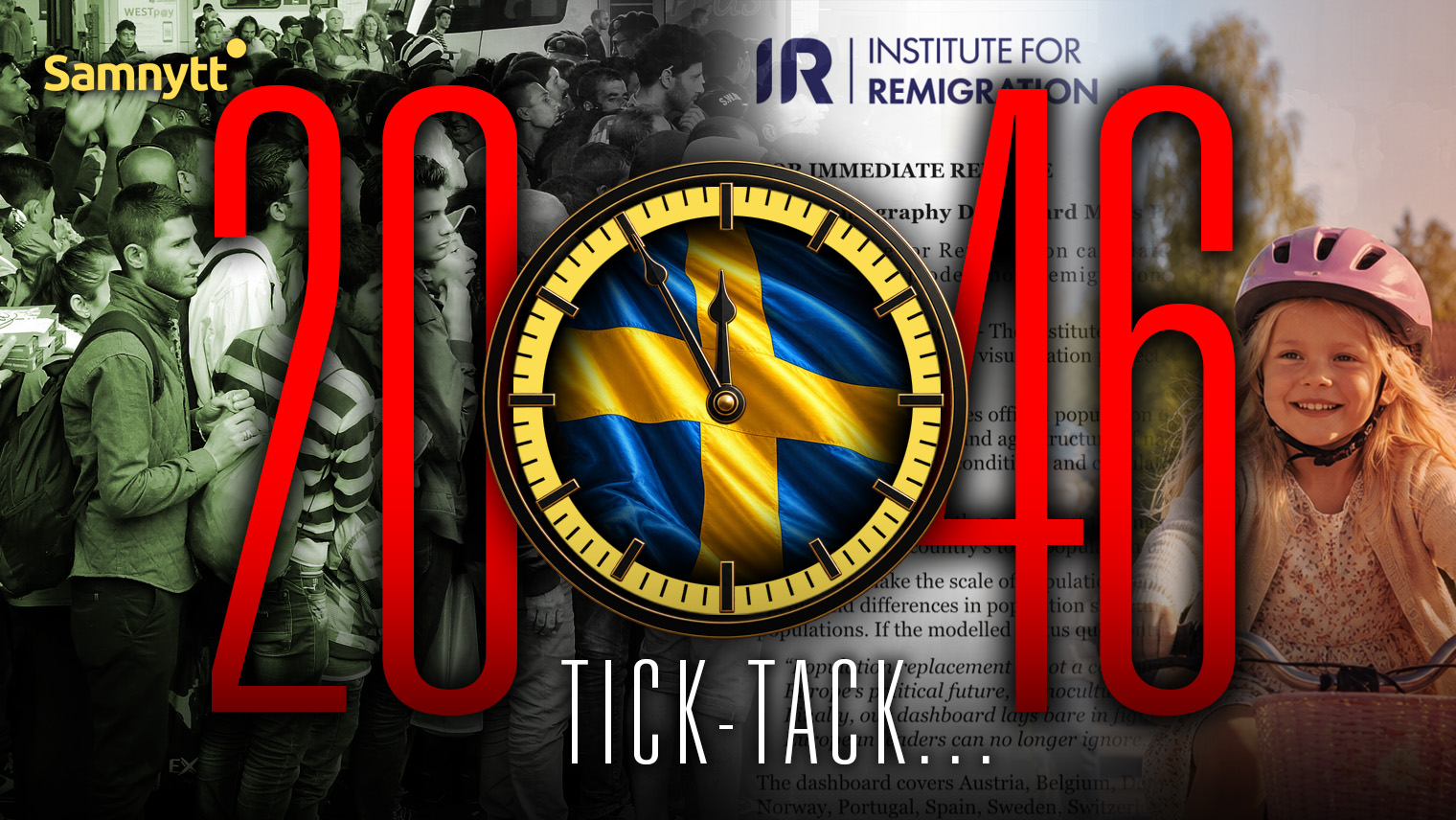
In 20 years, the population that the Institute for Remigration defines as migrants could make up more than half of Sweden’s population. This is shown in the institute’s new demographic model, which is based, among other things, on SCB data. At the same time, Swedish population statistics show that the proportion with a foreign background has already increased sharply – and that the 50 percent threshold has been passed in several municipalities.
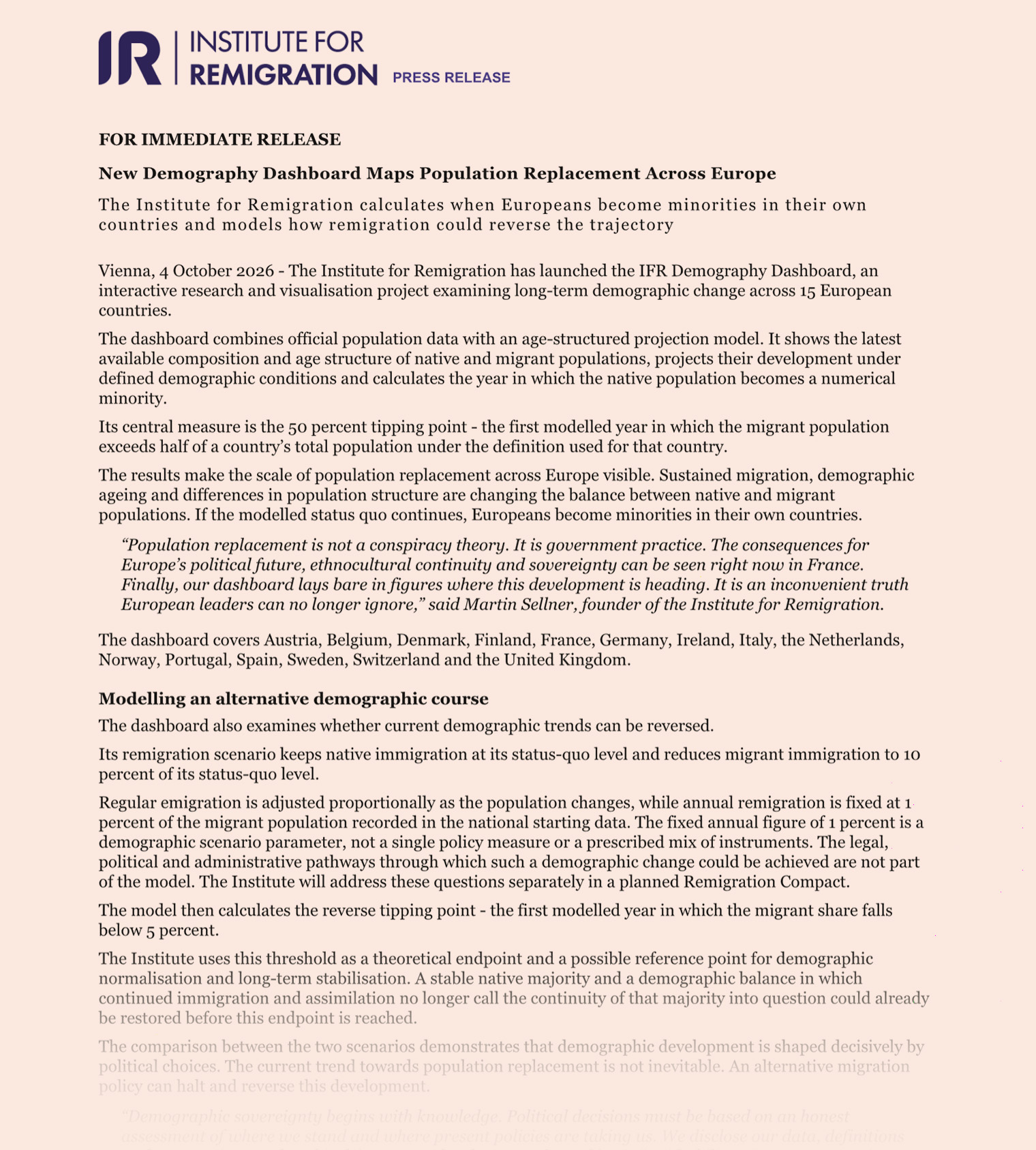
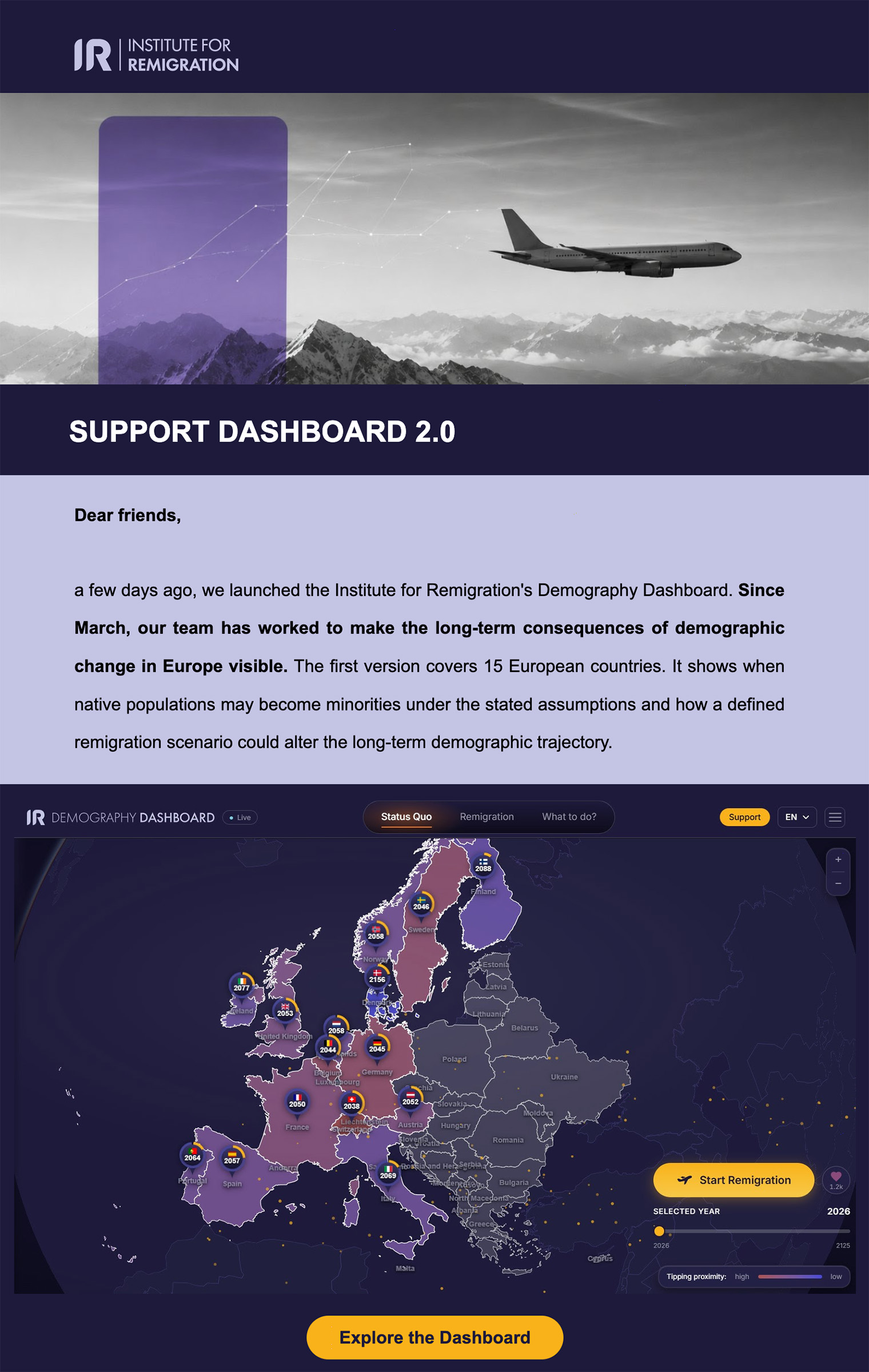
The Institute for Remigration, IFR, has launched a new demographic tool that maps population developments in 15 European countries. Using national population statistics, the institute calculates, among other things, when the population defined as native falls below 50 percent.
For Sweden, IFR uses registry data for 2024. At that point, 35.4 percent of the population is classified as belonging to the migrant population. In the model’s base year, 2026, this share is expected to have risen to 36.8 percent.
If the demographic assumptions in the model hold, the 50 percent threshold will be crossed in 2046.
This means Sweden is among the countries where the tipping point occurs the earliest. The dashboard also includes Germany, France, Denmark, Finland, Norway, the Netherlands, the United Kingdom, and Austria, among others.
IFR calls the 50 percent level a “tipping point” – the first modeled year in which the migrant population exceeds half of the country’s total population. The institute emphasizes at the same time that the years are conditional projections and not predictions that the change will certainly occur in a specific year.
READ ALSO: Head of the Institute for Remigration warns Sweden: “You have a window of five to ten years”
Broader Calculation Than SCB
IFR’s migrant concept differs from the official SCB definition of “foreign background.” SCB counts foreign-born and Swedish-born people with two foreign-born parents as people with a foreign background. At the end of 2025, this group included about 2.94 million people, corresponding to just under 28 percent of the population.
IFR uses a broader definition. It also includes people born in Sweden with one Swedish-born and one foreign-born parent. This explains much of the difference between SCB’s share of just under 28 percent and IFR’s significantly higher starting value. The figures, therefore, do not describe exactly the same population category.
During 2025, Sweden’s total population increased by about 17,800 people. The group with a foreign background increased by about 26,000 people at the same time, while the number of people with a Swedish background according to SCB’s definition decreased by about 8,100.
Even with SCB’s narrower definition, the change has been clear. In 2010, 19.1 percent of Sweden’s population had a foreign background. By 2015, that proportion had risen to 22.2 percent, in 2020 to 25.9 percent, and in 2025 to 27.7 percent.
During 2025, Sweden’s total population increased by about 17,800 people. The group with a foreign background simultaneously increased by about 26,000 people, while the number of people with a Swedish background according to SCB’s definition decreased by about 8,100.
The Finnish mathematics professor and demographic researcher Kyösti Tarvainen has for several years studied the long-term effects of migration on the population composition in the Nordics and Europe.
Samnytt has previously interviewed Tarvainen about his calculations for Sweden, where he has, among other things, concluded that even sharply reduced immigration is not enough to reverse the trend and argued for remigration; in June, he also sent his analyses directly to Swedish MPs.
The Institute for Remigration has stated that it cooperates and exchanges knowledge with Tarvainen in its work on demographic models.
READ ALSO: Demography researcher to parliament: “Only remigration can save Sweden”
Large Differences Between Generations
The population composition also differs clearly between different age groups. Among people over 65, about four out of five are Swedish-born with two Swedish-born parents. Among children and youth aged 0 to 19, the corresponding proportion is around 60 percent.
In the younger group, about 13 percent have one foreign-born parent. About 17 percent are born in Sweden with two foreign-born parents, and about ten percent were themselves born abroad.
READ ALSO: Petition on remigration handed over to the EU Parliament
IFR’s national 50 percent threshold has already been passed locally, even with SCB’s narrower definition of foreign background.
In Botkyrka, about 63 percent of residents have a foreign background. Södertälje, Sigtuna, Järfälla, Haparanda, and Burlöv are also above 50 percent.
This is How IFR Calculates
For its calculations, IFR uses an age-structured so-called Leslie matrix. The population is moved forward one year at a time and the model takes into account aging, mortality, births, immigration, and emigration.
That Swedes become a minority in Sweden may therefore go both faster or slower, depending on which governments the country has in the coming years.
For migration flows, the annual average for the period 2015–2024 is normally used. For Sweden, central base data comes from SCB. There are also several uncertainties in the model.
One is that Swedish migration over the coming decades may deviate sharply from the average during 2015–2024. A changed migration policy would therefore also affect the year when the 50 percent threshold is possibly passed.
READ ALSO: Left-liberal anger over EU’s new remigration policy: “Incredibly disturbing”
That Swedes become a minority in Sweden can therefore happen both faster or more slowly, depending on which governments the country has in the coming years.
The model also contains simplifications when classifying coming generations. A newborn child is, in IFR’s general model, assigned to the mother’s population group, while the father’s background is not modeled separately.
The model also does not attempt to calculate how, for example, assimilation or changing family patterns affect group belonging across several generations.
READ ALSO: Political scientist’s warning after the election: “Not wrong to call them colonizers”
IFR itself states that definitions vary between countries because states collect different kinds of population statistics. Depending on the country, factors such as country of birth, parents’ country of birth, citizenship at birth and other official origin categories are used.
The year 2046 therefore applies under the assumptions IFR uses in its model and should not be read as an entirely certain forecast.
Also Projects Remigration
IFR has also created an alternative scenario in which migration policy changes dramatically. In this case, migrant immigration is reduced to ten percent of the level in the status quo scenario.
At the same time, the institute incorporates an annual remigration rate corresponding to one percent of the migrant population according to the model’s Swedish base data. The difference between the scenarios is large. In the status quo model, the migrant population passes 50 percent in 2046. In the remigration scenario, the share instead gradually decreases, and according to IFR drops below five percent by 2099.
Population replacement is not a conspiracy theory. It is state practice.
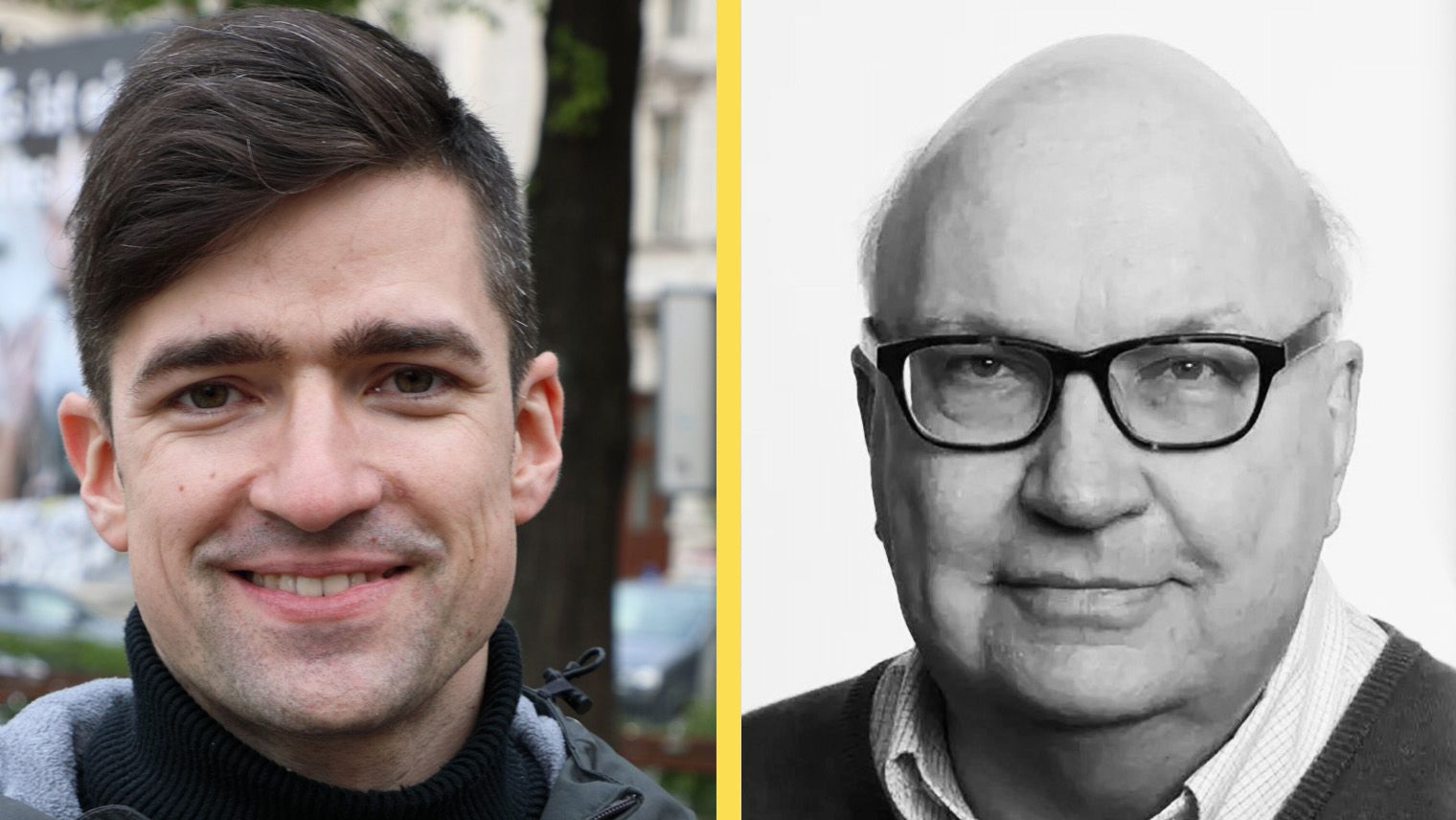
Martin Sellner
The institute emphasizes that the annual one percent level is a demographic model parameter and not a finished political proposal. The legal, administrative or political measures that would be required to achieve such a development are not included in the calculation.
READ ALSO: Demography’s powder keg: Researcher warns of civil war in Sweden’s future
IFR’s CEO Philipp Huemer argues that the comparison shows how significant an effect political decisions can have on population development.
– Demographic sovereignty begins with knowledge. Political decisions must be based on an honest assessment of where we stand and where today’s policies are taking us, he says in connection with the launch.
The Dutch opinion-maker Eva Vlaardingerbroek, along with Philipp Huemer and Martin Sellner, is one of the initiators of the Save Europe Act, a campaign pushing for sharply reduced migration and remigration at the European level.
READ ALSO: Eva Vlaardingerbroek to Samnytt: “Remigration is Europe’s last peaceful option”
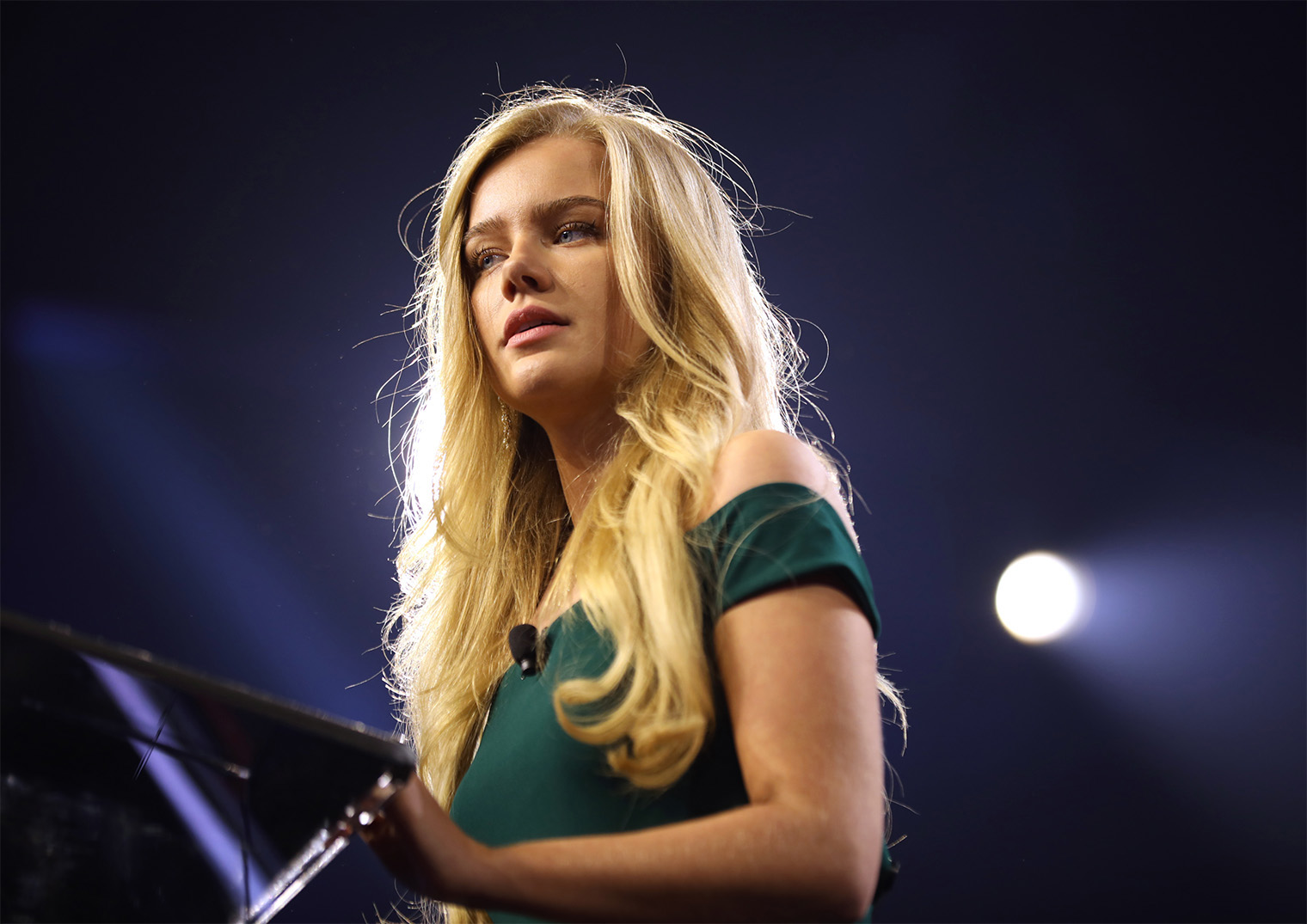
The work is closely related to the operations of the Institute for Remigration and Sellner is also one of the people behind the institute. Earlier this year, Samnytt interviewed Vlaardingerbroek about the Save Europe Act and her view on remigration, which she described as “Europe’s last peaceful opportunity.”
Wants to Shift Focus from Annual Immigration
The Institute for Remigration has an explicit purpose to study population changes and remigration. The institute describes maintaining a stable native majority as important for, among other things, the continuity of the indigenous population and demographic sovereignty.
One of the founders is the Austrian remigration activist Martin Sellner. He uses the launch to reject the description of population replacement as a conspiracy theory.
– Population replacement is not a conspiracy theory. It is state practice, says Sellner.
READ ALSO: Ekeroth’s warning about demography gets unexpected support from a leftist researcher
The institute’s standpoint is that the migration debate often focuses on how many people arrive in a single year and on short-term policy changes.
The dashboard is instead designed to show the combined effect of migration, birth rates, mortality, and the population’s age structure over several generations. For Sweden, IFR’s status quo scenario means the 50 percent threshold is passed in 2046.
How close the actual development will come to that year will depend, among other things, on future migration, birth rates and other demographic changes, as well as the policies adopted by future Swedish governments.
READ ALSO: Hesa Fredrik wails – but no one warns of the invasion
@media (max-width:600px) {
.samnytt-support-title {
font-size:25px !important;
}
.samnytt-support-text {
font-size:14px !important;
}a
.samnytt-swish-number {
display:block;
margin:2px 0 0 !important;
font-size:19px !important;
}
}
Samnytt?
Do you appreciate Samnytt? Show it with a subscription or donation.
DONATE VIA SWISH
123 083 33 50