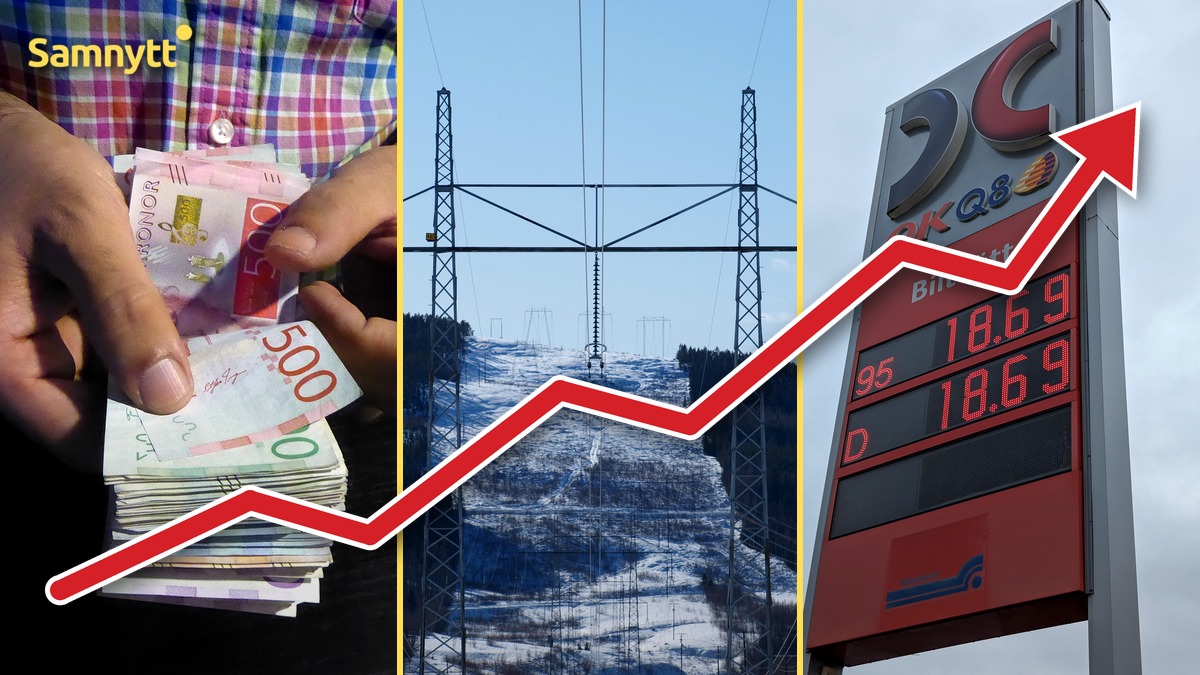
More expensive electricity and fuel may have caused inflation to more than double in September. Analysts anticipate that KPIF inflation has risen from 0.7 to around 1.5 percent when Statistics Sweden (SCB) publishes its first measurement on Wednesday. For highly indebted households and businesses, a sharp increase could be an expensive signal with higher interest rates already this autumn.
Analysts’ forecasts average at 1.6 percent, according to a compilation by analytics firm Infront. In its September forecast, the Riksbank expected 1.5 percent.
In August, KPIF inflation stood at 0.7 percent, the same level as in July, according to statistics from SCB. CPI inflation, which also includes household interest expenses, was 0.3 percent at the same time, while KPIF excluding energy was at 0.5 percent.
The low figures are largely due to temporary support measures. The halved VAT on food, temporarily reduced fuel taxes, and half-price public transport tickets are holding down measured inflation. If these measures are excluded, the inflation rate was 2.2 percent in August, according to the Riksbank’s monetary policy report.
READ ALSO: Riksbanken keeps the interest rate steady – but hikes could come as early as this year
In September, inflation—adjusted for support measures—could approach 3.0 percent. According to news agency TT, it is primarily energy prices that are driving inflation up. Adjusted also for energy, however, the inflation rate is expected to remain below 2.0 percent.
Analysts Anticipate Rate Hike
Torbjörn Isaksson, chief analyst at Nordea, said in an interview with TT that Sweden is in an inflation bubble. He describes that Sweden has significantly lower price increases and interest rates than abroad.
When other central banks raise key interest rates while the Riksbank waits, the krona weakens and imports become more expensive. He believes the effects will be most noticeable next year.
In September, the Riksbank left the policy rate unchanged at 1.75 percent, but indicated in its press release that hikes could begin this year if the outlook persists.
The target for KPIF inflation is 2.0 percent. Isaksson goes further and says that something drastic would have to happen for the Riksbank not to raise the rate in November.
READ ALSO: Report: This year’s electricity grid fees to rise to record levels
According to TT, the interest rate market is almost certainly pricing in five rate hikes, from 1.75 to 3.00 percent, during 2027. The Riksbank’s own forecast points to two or three hikes.
Nordea is more cautious and expects two hikes to 2.25 percent, the first in November this year and the second in February 2027. The bank also predicts that KPIF inflation excluding energy will rise to around 3.0 percent by the end of 2027, and assesses that the risk of higher inflation is greater than the risk of lower.
More and more mortgage borrowers are now choosing to fix their rates. If the interest rate on a loan of two million kronor increases by 1.25 percentage points, the interest cost rises by 25,000 kronor per year, just under 2,100 kronor per month before interest deductions.
READ ALSO: Car association warns of fuel prices rising by 6 SEK