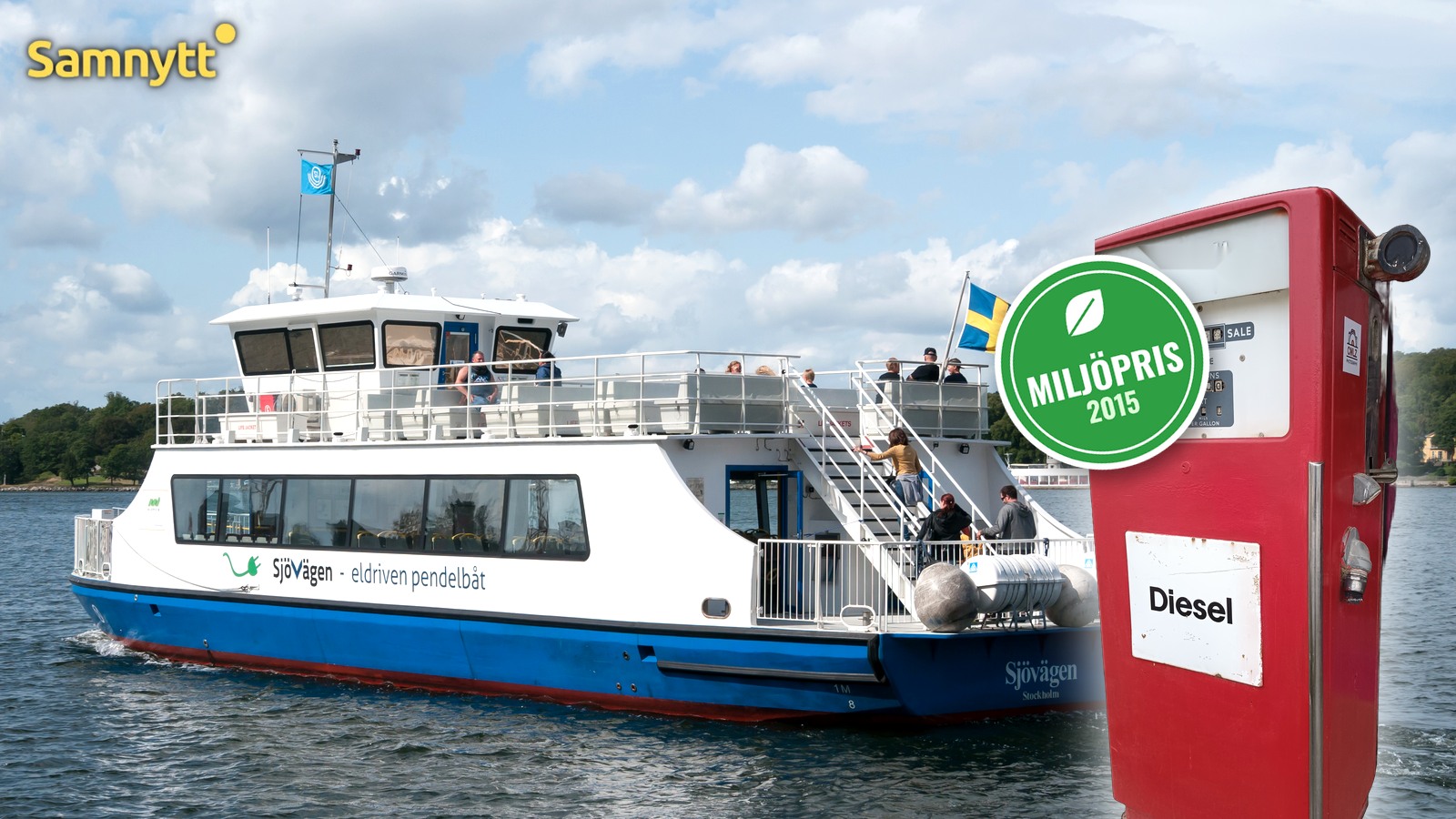
It was supposed to be a model for climate-smart public transport and was awarded the Stockholm Region’s environmental prize. But behind the green façade lies another reality. SL’s much-publicized electric ferry, Sjövägen, is largely powered by diesel, while the batteries are barely operational.
It was in 2015 that the ferry Sjövägen was highlighted as SL’s first electrically powered vessel in regular service and was awarded the Stockholm County Council’s environmental prize.
Since then, the project has been used to showcase the region’s work with sustainable public transport and was presented, for example, to international visitors during an EU study visit in 2023.
According to SL’s own statements, the electric ferry is supposed to reduce emissions by up to 152 tons of carbon dioxide annually. But an investigation by TV4’s Kalla fakta reveals that the award-winning environmental initiative is in practice largely run on fossil fuel.
Sources with insight into the operation describe how the vessel’s batteries have such limited storage capacity that electric propulsion barely works as intended. Instead, diesel generators are used to keep the ferry in service.
Ran on diesel during all inspections
To investigate how the ferry is actually operated, TV4 conducted ten trips over seven days. On all occasions, diesel generators were used. Crew members also confirm that the vessel is mainly powered by diesel, rather than electricity charged from shore.
A source with internal knowledge indicates that these problems are not new but have instead worsened over time.
– They have a vessel that was awarded the environmental prize but is, in fact, running on diesel. And it’s only gotten worse and worse over the years, the source told TV4.
Ballerina Shipping, which operates the line, on the other hand, rejects the claim that there is any contractual requirement for the ferry to be run on electricity. In a written response to TV4, the company states that the batteries are maintained according to the supplier’s instructions.
The information has drawn sharp criticism from the Swedish Society for Nature Conservation, which points out that the gap between the marketed electric operation and the actual diesel use has significant consequences for climate impact.
– It is extremely serious. If they say that this runs on electricity, which is best for shipping from a climate perspective, but in reality it runs on diesel, then the climate impact is enormously greater, says Kristina Östman, Head of Climate and Law at the Swedish Society for Nature Conservation, to TV4.
More environmental problems – exhaust gas purification not functioning
But the problems do not stop at the award-winning electric ferry. The investigation shows that even Ballerina Shipping’s diesel-powered vessels have extensive shortcomings in their exhaust purification systems.
According to the agreement with Region Stockholm’s traffic administration, vessel emissions of nitrogen oxides must be limited through specific filtration techniques. The relevant ferries are therefore equipped with so-called SCR systems, in which the purification fluid urea is used to reduce emissions.
But when TV4 reviewed SL’s fuel consumption and urea refilling statistics, a different picture emerged. Over long periods, seven of the company’s vessels consumed large amounts of fuel without corresponding volumes of purification fluid being topped up. In some cases, no urea had been recorded at all.
This information is further supported by internal incident reports and testimony from individuals with insight into the operations. According to these, the purification systems have periodically been switched off or out of order, meaning exhaust gases have not been filtered as required by the contracts.
READ ALSO: Here Greta joins a Palestine demonstration in a diesel pickup