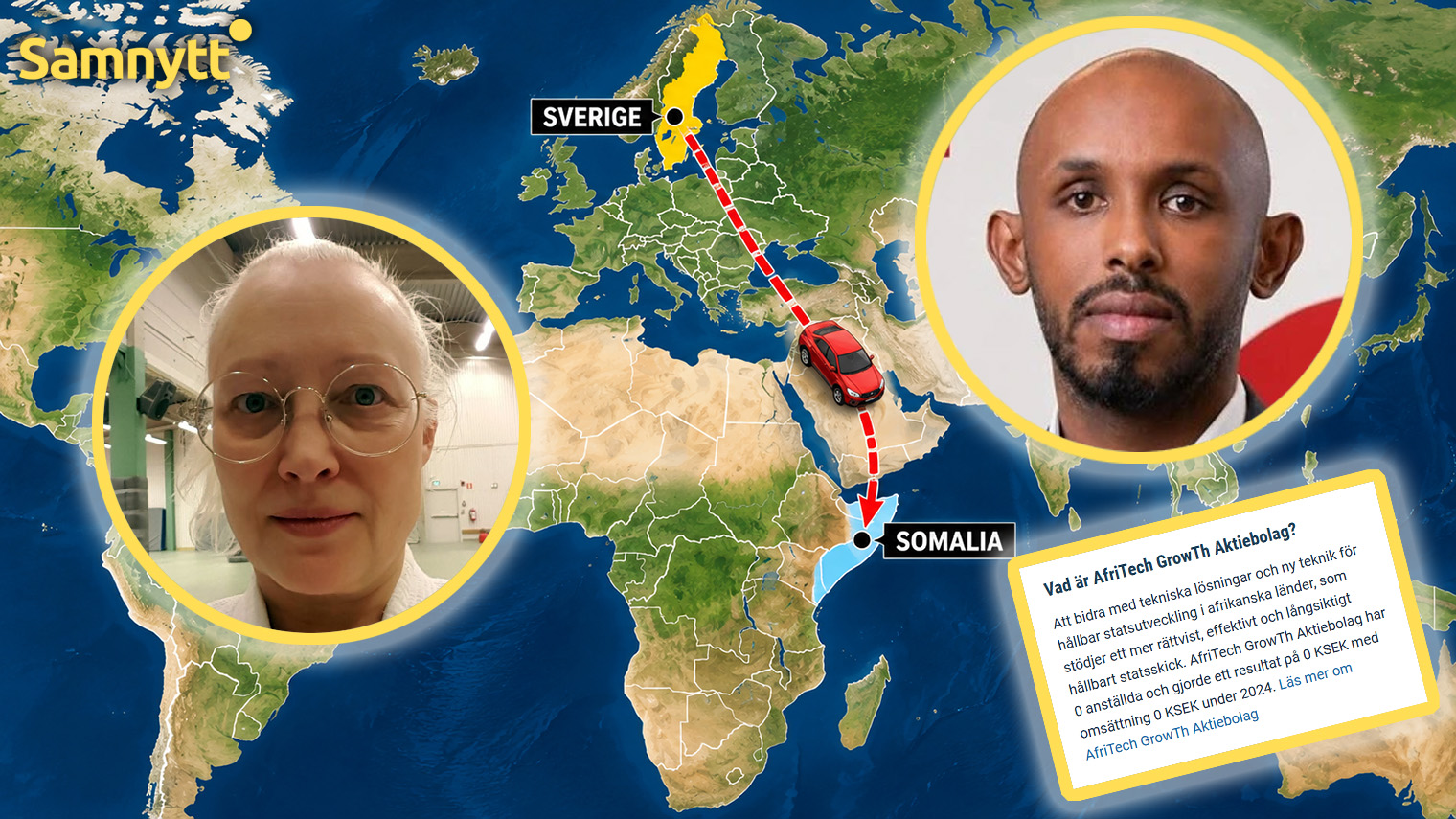
The Left Party’s controversial Member of Parliament Mohamed Ali claimed to have grand plans for billion-krona deals in his home country Somalia together with former Moderate politician and entrepreneur Agneta Nyvall. Yet behind the visions of digitalization, environmental projects, and contacts at the highest political level, there seems to have been very little concrete activity. Now, Nyvall questions whether Ali even carried out the business meetings in Somalia that she helped finance. At the same time, it is revealed that he used the joint project as an argument to obtain Swedish citizenship.
Mohamed Abdukardir Ali from Borlänge has, in a short time, found himself at the center of several high-profile matters. After unexpectedly being elected to the Swedish Parliament for the Left Party with 648 personal votes, a police investigation was launched into suspected electoral fraud related to his personal campaign. Subsequently, attention was drawn to his significant debts, ongoing debt restructuring, and the circumstances surrounding his Swedish citizenship.
Now, yet another side of the controversial MP’s activities emerges. In an investigation by Expressen, his business partner Agneta Nyvall tells how their joint venture into business in Somalia has gone from grand future visions to an unserious project that she now prefers to dismantle.
They Were Supposed to Do Billion-Krona Deals in Somalia
Agneta Nyvall is a well-known entrepreneur in Borlänge and was previously an opposition councilor for the Moderates. About two years ago, she was contacted by Mohamed Ali, who presented a business idea focused on his former home country Somalia.
Ali claimed to have important contacts in the country and described opportunities to contribute to an extensive societal transformation. Nyvall became interested, and the two began working on a project that eventually was named Afritech Growth.
The ambitions were, to say the least, extensive. Part of the initiative involved developing digital identity systems and other technical solutions for Somalia’s education sector and public administration. The technology was intended, among other aims, to reduce corruption and strengthen societal security.
Another part concerned what was referred to as the blue economy. Cleaning up Somalia’s long coastline would create conditions for future tourism and other investments. The project material also described opportunities to access attractive coastal areas on favorable terms.
The plans were presented in an extensive document that, among other things, proposed that the President of Somalia establish a new authority for water and environmental issues. The initiative was estimated to cost approximately 875 million Swedish kronor in the first two years alone. In the longer term, the prospect of billion-krona revenues was painted.
The Authorities Are Unaware of the Project
Despite the grand plans, Expressen, which has reported on Ali’s business ideas, has found no evidence that the project has progressed very far. The documents do not indicate how the activity would be financed, what technology would be used, or how the proposed reforms would be implemented.
Nor has the paper managed to confirm that Afritech Growth had the contacts with the Somali government that Ali is said to have described. The Swedish Foreign Ministry, the embassy’s Somalia office in Nairobi, and the development agency Sida report that they are unaware of Ali and his project.
The company’s material refers to Somalia’s National Development Program for 2025–2029. Swedish agencies Sida and the innovation agency Vinnova are also named as potential partners. But according to Nyvall, Ali never actually made any contacts with these authorities. Sida and Vinnova also confirm there have been no such contacts.
Paid for His Travels – Doesn’t Know If the Meetings Happened
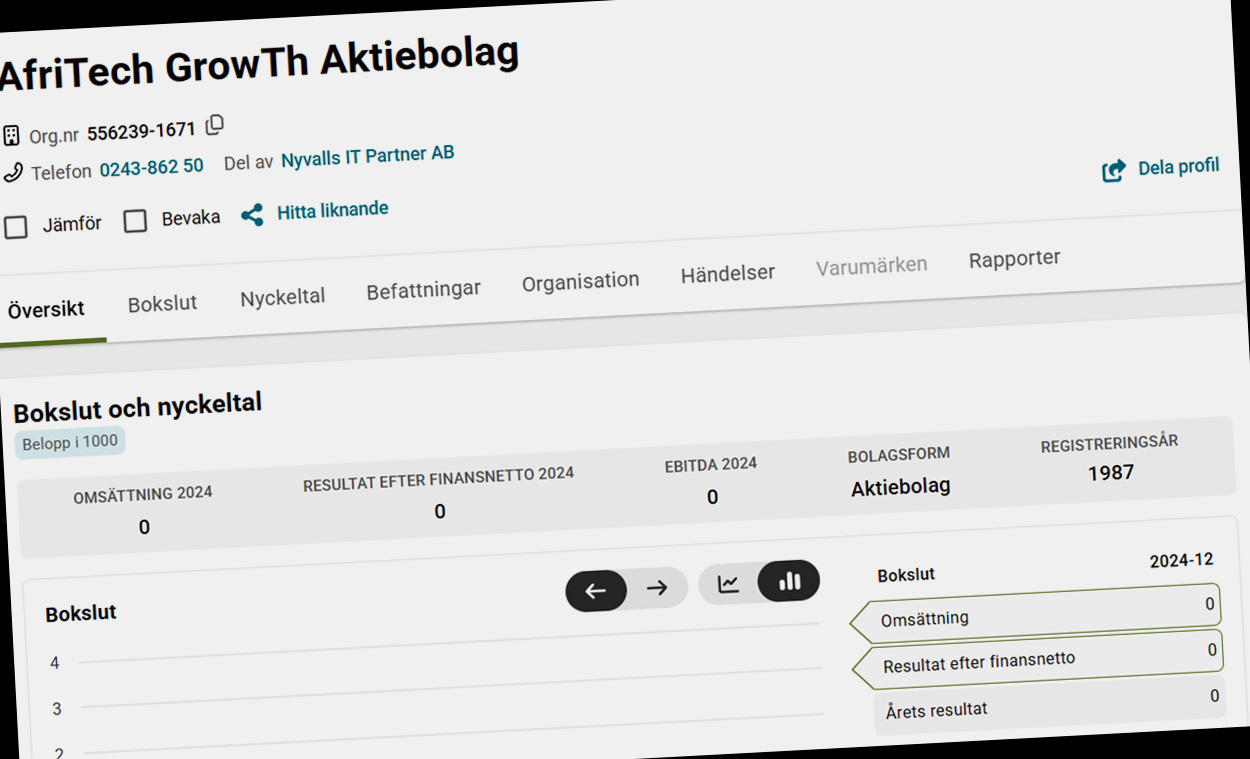
While billions featured in the business plans, the company’s actual economy was practically nonexistent. In autumn 2025, Nyvall transferred a long-dormant limited company to Ali. The company was renamed Afritech Growth and, according to Nyvall, Ali became sole shareholder, while she continued as deputy board member and authorized signatory.
The share capital was already depleted. Ali allegedly promised to inject funds to restore it, but according to Nyvall, no such money was ever paid in. A prior review in Fokus also showed the company had no turnover and was not registered for either F-tax, VAT, or employer contributions.
Despite the strained finances, Ali traveled to Somalia for what was described as business visits. Nyvall says she herself contributed roughly half of the cost of his plane tickets. In hindsight, however, she has begun to doubt what the trips actually accomplished.
In June, Ali published pictures from Somalia on Facebook, where he spoke about meetings and discussions on the country’s development. The pictures have since disappeared from his public profile.
No concrete business contacts or agreements have been verified. Nyvall had previously spoken of a letter of intent between the company and the Somali government. She now admits she never actually saw such a document herself.
Claimed to Have Contacts at Stockholm University
Even domestically, several of the connections that were supposed to lend credibility to the project seem to have lacked substance. According to Nyvall, Ali claimed he was in talks with Stockholm University about digital identity systems and technical solutions. She understood that he had visited the university on several occasions.
Expressen thus requested the correspondence between Ali and the university. The result was scant. The only thing the university could find was an automated response to an online form Ali had filled out on the university’s website to get information on how to apply for a course.
Neither does Stockholm Environmental Law Centre, which is specifically mentioned in the company’s documentation, know of any contacts with Ali. Thus, no evidence has emerged of university contacts Nyvall thought existed.
Used Business Plans to Obtain Citizenship
A particularly striking aspect is that the apparently fruitless business project also played a role in Ali’s attempt to become a Swedish citizen. Ali had previously been denied citizenship due to his debts. During the process of trying to overturn the decision, he referred in June 2025 to his international development project.
In a letter to the court, he presented himself as an initiator of a project in technical innovation and societal transparency that had already attracted international interest. He argued that Swedish citizenship would give him the legal standing needed to drive the work forward.
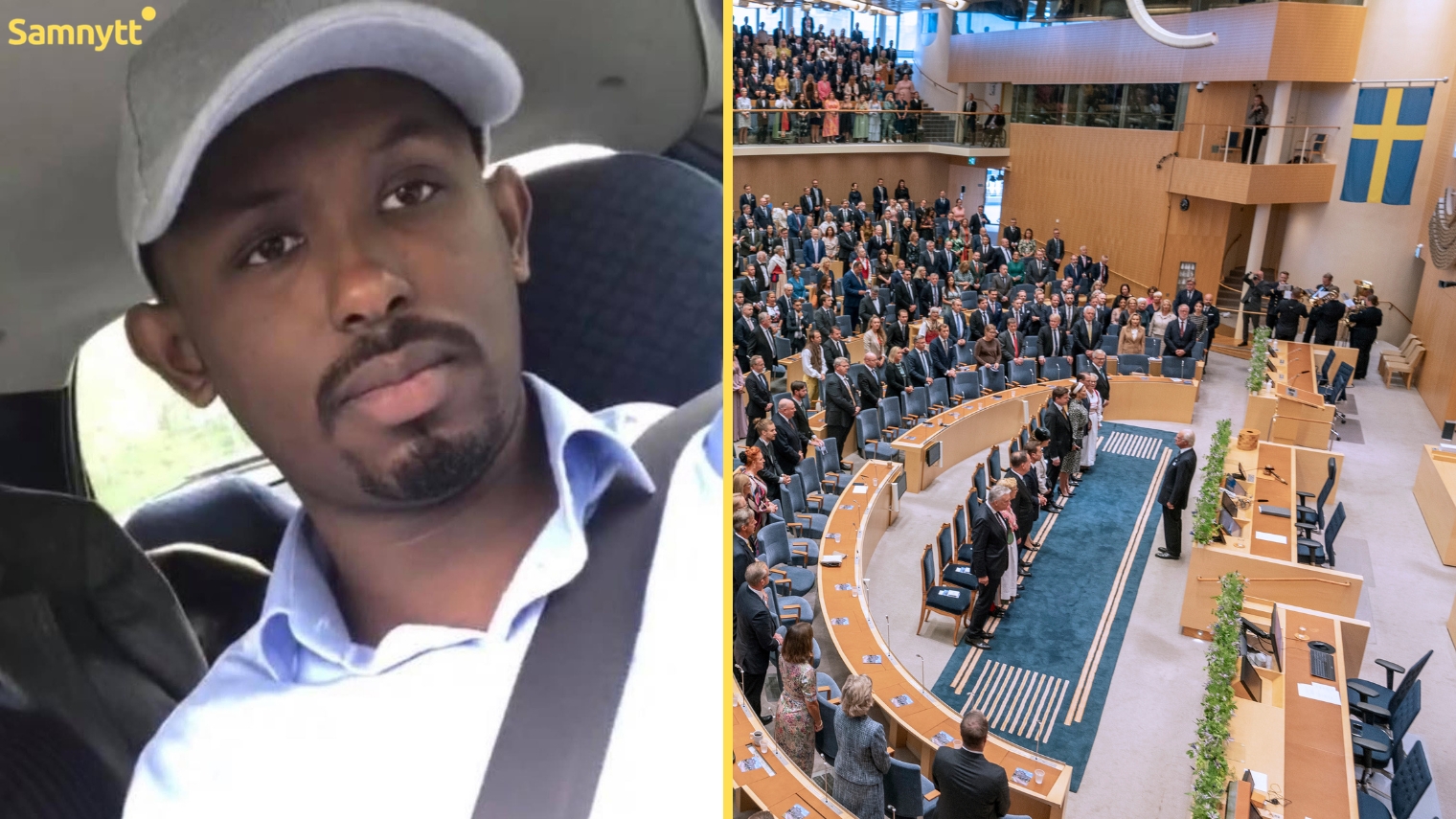
In February 2026, he was granted Swedish citizenship. What role the business project played in the decision is unknown, as the Migration Agency’s reasoning is covered by confidentiality. When Expressen tells Nyvall that their joint business plans were used as an argument in the citizenship case, she reacts with surprise.
“– I may be a damn useful idiot, that was my thought when you told me that. I had no idea about it.”
Nyvall also states that she was unaware of the extent of Ali’s debts when they began their cooperation.
Debt Restructuring and New Unpaid Debts
Ali was granted debt restructuring in 2022 for debts of just over 163,000 kronor. The restructuring continues until 2027, according to earlier reports. Despite this, he has incurred new debts, including for unpaid vehicle insurance and parking fines.
Since being elected to Parliament, a creditor has requested that the debt restructuring be reviewed, citing his greatly improved financial circumstances. Parliamentary salary amounts to 81,400 kronor per month.
Wants to Wind Up the Company – Ali Does Not Respond
For Agneta Nyvall, trust in her business partner is now gone. She states that she has not been able to contact Ali for about a month and has therefore turned to the Swedish Companies Registration Office to investigate how to wind up Afritech Growth. She considers her initial decision to transfer all shares to him a mistake.
“– He has not been fully honest. He has sold his ambitions, but there has been no realism in them.”
At the same time, Nyvall admits that she herself did not check Ali’s information very closely before they started their partnership. However, she does not think the project ever got far enough for such checks to become relevant.
She does not want to place all responsibility for the failed cooperation on her partner either. But her earlier hopes of building up an international business have been replaced by a desire to end her involvement.
“– I don’t blame anyone. We thought it could work. People can think I’m crazy, but it was an idea that just didn’t make it. Nothing more than that.”
Mohamed Ali has not agreed to any interview about the new information. He has previously described the company as a start-up without revenues.
It therefore remains to clarify what contacts he actually had in Somalia, what his business trips resulted in, and why the far-reaching project plans never seem to have been realized in concrete activity.