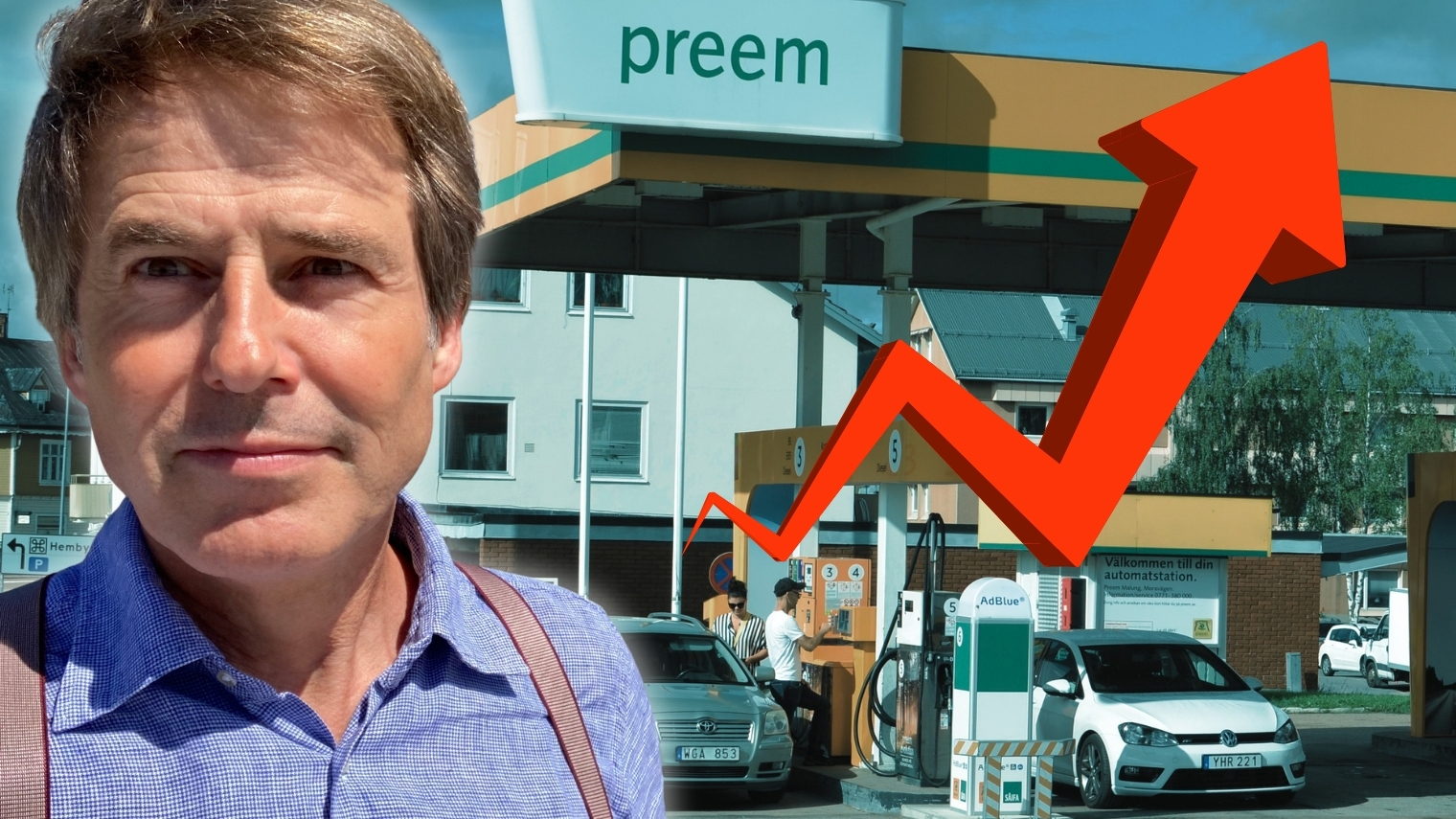
Swedish motorists face the risk of a new price shock at the pump. Diesel prices could surpass 30 kronor per liter before the end of the year, breaking the previous record set during the 2022 energy crisis. Energy economist Claes Hemberg warns that a combination of higher taxes, a diesel shortage in Europe, and a weakened Swedish krona could drive prices even higher during the winter.
It could be an expensive winter for Sweden’s diesel drivers. According to energy economist Claes Hemberg, several factors point to sharply rising fuel prices in the coming months. As early as December, the price of diesel could exceed the previous record of 28.67 kronor per liter, set during the energy crisis in October 2022.
Hemberg told the car site Carup that several people within the oil industry expect even higher levels.
“When I listen around in the oil industry, most people are talking about a price of 30 kronor for diesel before the end of the year,” he says.
Tax hike already coming in December
An initial price increase could come as early as December 1, when the government’s temporary reduction of the carbon dioxide tax on diesel expires. The tax change corresponds to about three kronor per liter including VAT, assuming the entire increase hits at the pump.
According to Hemberg’s forecast, this could push the diesel price past 26 kronor per liter as early as the turn of the month. But taxes are far from the only factor likely to make diesel more expensive.
READ ALSO: SBAB predicts three consecutive rate hikes
Over the past decade, a large number of European oil refineries have been closed, making Europe increasingly dependent on imported oil products. This means that even minor disruptions in international trade can have major consequences for supply and prices.
Hemberg points, among other things, to a growing diesel shortage in Italy, where around 150 petrol stations have reportedly run out of fuel. The shortage has contributed to protests and strikes among Italian truck drivers.
READ ALSO: Expert: The electricity bill could be 10,000 kronor more expensive this winter
At the same time, lower diesel taxes are being discussed in Italy. If more European countries follow suit, demand could increase, which according to Hemberg could push the international diesel price even higher.

Could drive up the price
The Swedish krona’s development could also hit motorists. Since oil and diesel are traded on the international market, imports become more expensive if the krona weakens. Hemberg estimates that currency fluctuations alone could add about one kronor per liter.
READ ALSO: Krona worst of the world’s major currencies this year
Added to this is increased demand for heating oil during the winter. Since diesel and heating oil are produced from closely related oil products, competition for refinery capacity can drive up prices. In addition, winter-adapted diesel is more expensive to produce, as the fuel must withstand low temperatures.
Hemberg estimates that the combined winter effects could make diesel between 10 and 20 percent more expensive.
READ ALSO: Prime Minister: EU on the brink of “an existential crisis”
“Here you have 10–20 percent more expensive diesel. Automatically,” he tells Carup.
The war in Ukraine and unrest in the Middle East also add to the uncertainty. Attacks on energy facilities, disruptions in oil supplies, and problems along international transport routes risk worsening the already strained diesel supply.
A full tank could cost 1,800 kronor
If Hemberg’s forecast comes true and diesel reaches 30 kronor per liter, a 60-liter tank would cost a full 1,800 kronor. This can be compared with about 1,720 kronor at the previous record price from October 2022.
The energy economist does not expect any quick improvement either. According to him, Europe’s lack of refineries is a structural problem that will take several years to resolve. At the same time, electrification of the heavy transport sector is progressing slowly, meaning that demand for diesel remains high.
Hemberg emphasizes that the limited refinery capacity makes Europe particularly vulnerable to new disruptions from abroad.
However, the forecast of 30 kronor per liter comes with significant uncertainty. While the upcoming tax change is known, other potential price increases depend on factors such as the price of oil, exchange rates, and developments in the international diesel market.
READ ALSO: AFD: Germany’s economy is collapsing