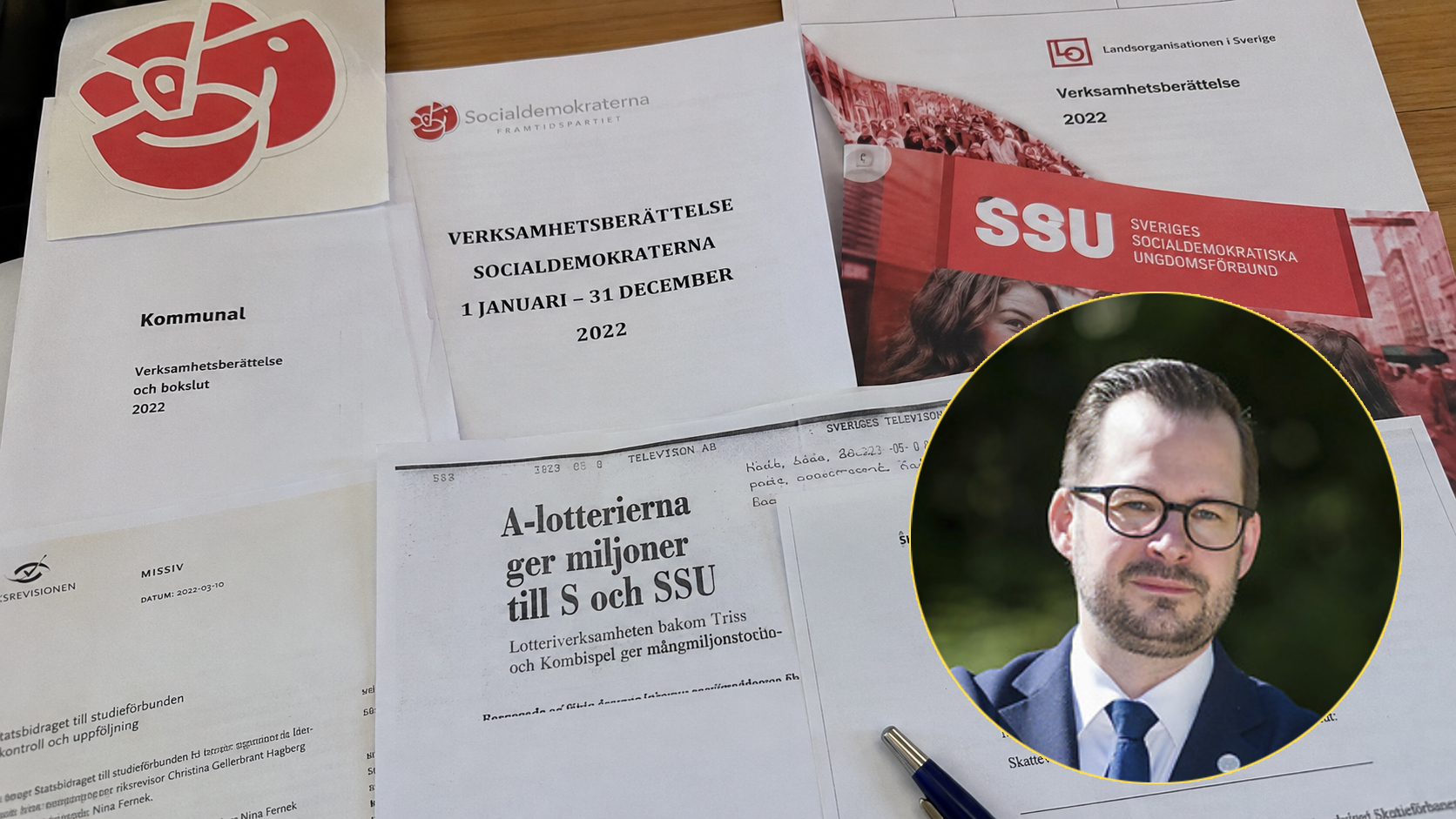
The Social Democrats are not only Sweden’s largest political party. For more than a century, the party has evolved together with an extensive network of trade unions, educational associations, organizations, housing organizations, and businesses—together often described as the labor movement. For example, LO itself states that the organization cooperates with the Social Democrats, SSU, ABF, and Unga Örnar, while the Social Democrats have five formal affiliated organizations in addition to about 2,500 party associations. Now, the Sweden Democrats want to review this power network. “They are afraid of having their power scrutinized,” Bäckström Johansson (SD) tells Samnytt.
However, it is the financial and political ties between the party and the much larger sphere surrounding it that have long provoked criticism. Economist Lars Jonung, professor emeritus at Lund University, has described the structure as a Social Democratic “business-political complex.”
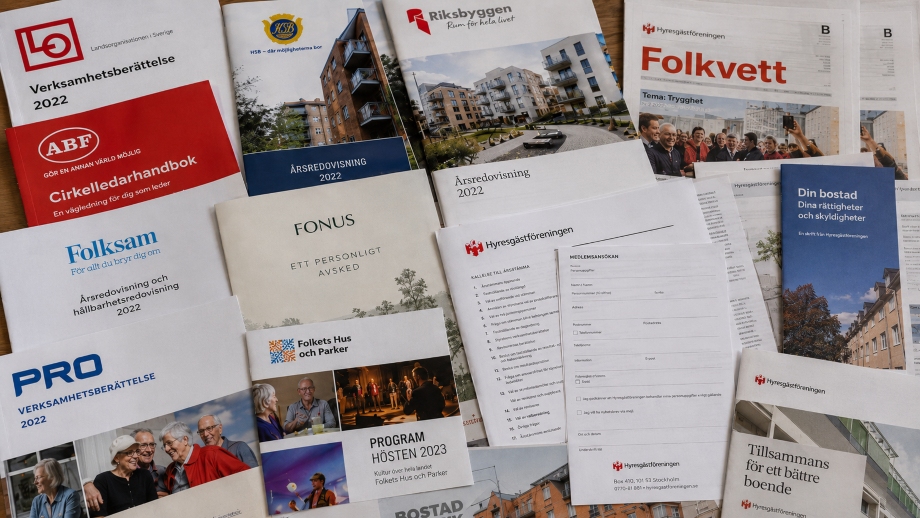
In the broader sphere, he counts LO, ABF, HSB, Riksbyggen, Folksam, Fonus, the Tenants Association, PRO, and Folkets Hus och Parker, among others. His criticism is that prolonged political power has made it possible, through legislation, subsidies, and other public decisions, to benefit organizations with historic and organizational links to the labor movement.
One of the clearest illustrations has been the Social Democrats’ own business interests. The party and SSU owned A-lotterierna and thereby, among others, Kombispel, whose surpluses for many years funded the activities of the Social Democrats. The lotteries also had special conditions applying to public benefit lotteries. After Dagens Nyheter’s 2024 exposé on aggressive telephone sales, including to the elderly, the phone sales were stopped and the management was replaced. The following year, the criticized lottery business was sold.
Tax-funded associations and party politics
Elsewhere, the line between tax-funded associations and party politics has also come under question. The National Audit Office concluded in its review of government grants to study associations that the system had deficiencies “at all levels,” that irregularities and fraud had occurred, and that there was a significant risk that state funds had been used for purposes other than public education.
The review concerned the entire study association system and did not single out the Social Democrats, but ABF – with roots in the labor movement – is one of the major actors in the system.
More directly partisan criticism has been raised in Malmö. In a review from Kvartal, representatives of three politically independent associations claimed they had been pressured to help the Social Democrats before elections and demonstrations. One association representative claimed that municipal funds intended for “democracy work” were in practice used to mobilize votes for S.
Katrin Stjernfeldt Jammeh, chair of the municipal executive committee for the Social Democrats, has dismissed the allegations and said she does not believe evidence for them has been presented.
SD wants to initiate an investigation
Critics like Jonung argue that these examples should be seen as parts of a larger system: political power, public money, organizational life, companies, and opinion-forming organizations have merged over decades, allowing economic value to move between different parts of the same political environment.
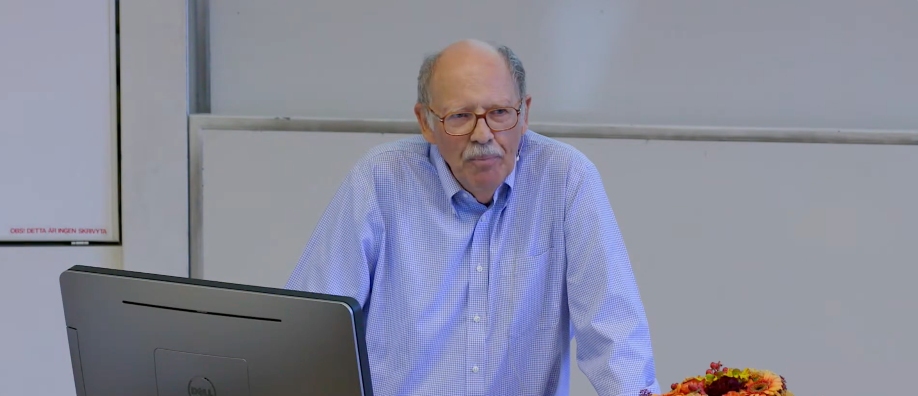
He has therefore called for an extensive government investigation to map the network’s historical development and extent, estimate the value of public support and politically granted benefits, and examine how the merging of economic and political power has affected liberal democracy.
The Sweden Democrats are now making the same issue an election pledge. The party wants to initiate an independent investigation of what they call the Social Democrats’ “business-political complex”—and map how extensive the network is, what economic values have been transferred over the years via political decisions and tax funds, and what consequences this system has had for democracy and competition among Sweden’s political parties.
“The Social Democrats are not afraid of SD. They are afraid of a Sweden where their power, money, and privileges are scrutinized under the same terms as everyone else’s,” says Mattias Bäckström Johansson, party secretary for SD, to Samnytt, and continues:
“There should be no fast-track for the Social Democrats. The same rules, same requirements, and same scrutiny should apply to them as to everyone else. This unhealthy business complex has been built up over decades.”
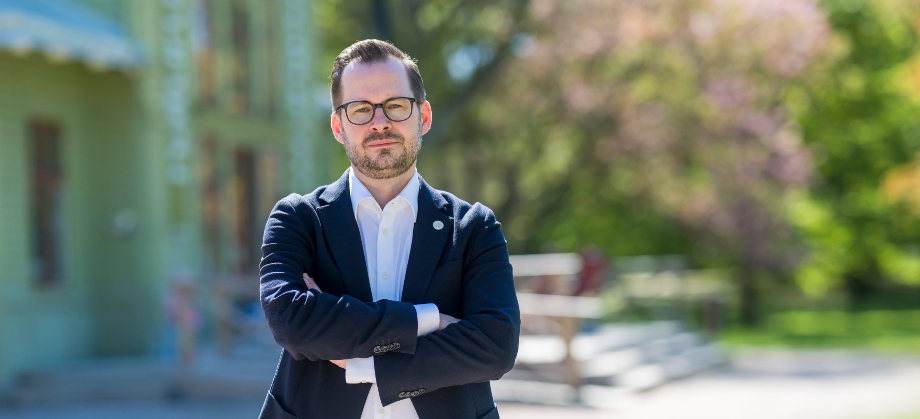
He also issues an electoral pledge if SD and the Tidö parties win the election: namely, to initiate an independent “power investigation” of the Social Democrats’ “unethical business complex.”
“If the Sweden Democrats come into government after the election, we intend to push for an independent, public power investigation aimed at uncovering the Social Democrats’ unethical business complex, through which, via various proxies and hidden corporate structures, economic value is funneled to the party’s own activities,” Bäckström concludes.