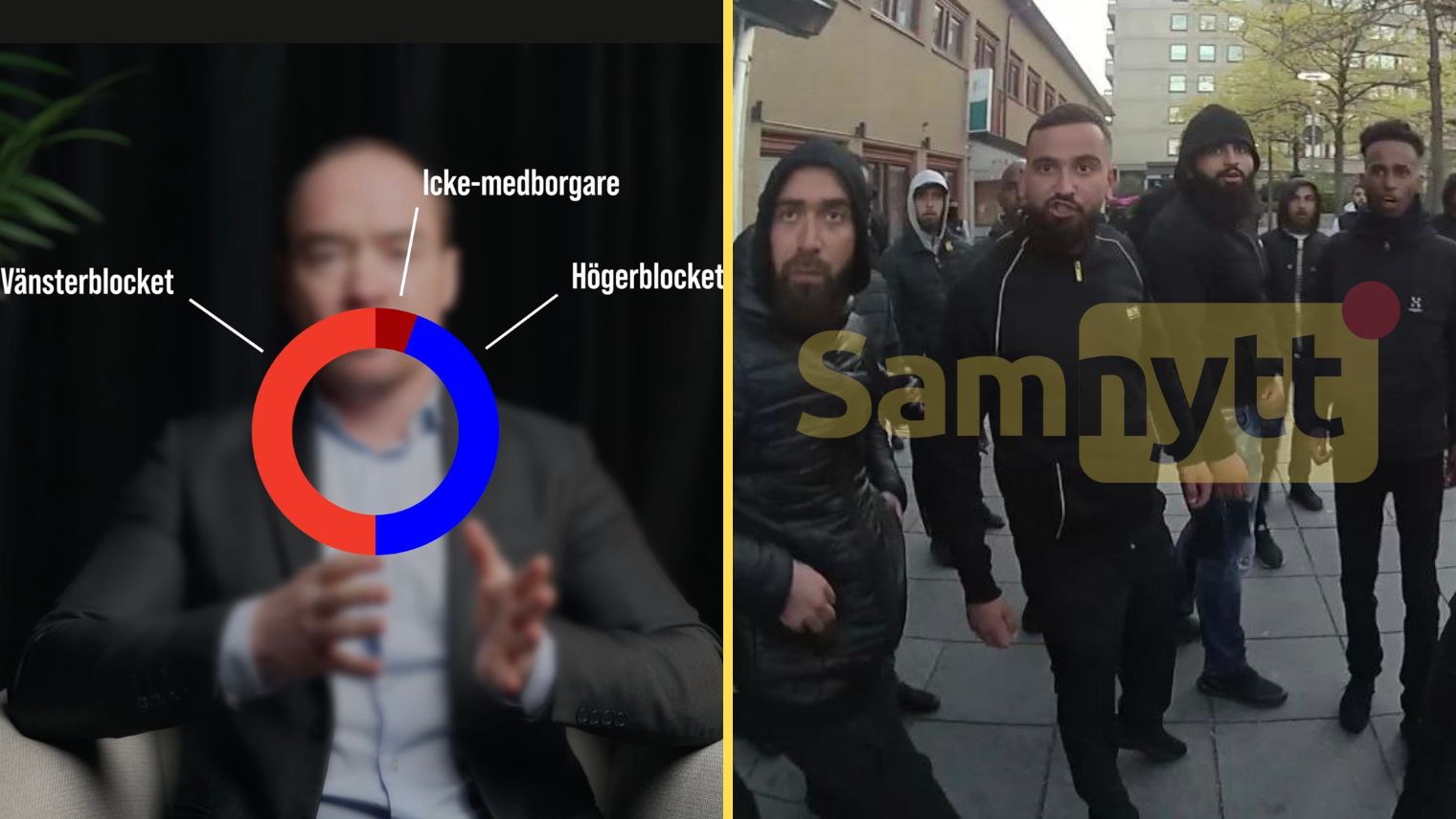
There are occasions when politics should act quickly, decisively, and without euphemisms. This is one of those occasions. The Tidö Parties have at their disposal a tool whose significance too few seem to grasp: voting rights for non-citizens in municipal and regional elections are not protected by the constitution. They are governed by ordinary law. And they can be repealed just as simply as they were introduced. Check out Kent Ekeroth’s new editorial podcast on YouTube below.
This is why the government should, as soon as this spring, launch a rapid investigation with a single purpose: to abolish voting rights for non-citizens (NC) in municipalities and regions. The proposal should be tabled in parliament well before summer 2026, so that the matter is clear to voters ahead of the September election that same year.
READ MORE: Ekeroth: Revoke voting rights before it’s too late
This is not a symbolic issue. It’s a power issue. And in many municipalities, it’s about actual majorities.
Today, there are several municipalities where over 20 percent of eligible voters lack Swedish citizenship, and even more with over 10 percent. This is not an exaggeration. It is a fact resulting from decades of mass immigration combined with generous rules for local voting rights.
The result is that people who are not part of our country, who have no formal connection to the nation, and in many cases don’t even speak the language, are helping to decide schools, social services, elderly care, housing policy, and municipal priorities.
According to figures from Statistics Sweden (SCB) that I have obtained, we have just over 600,000 foreign citizens entitled to vote in municipal and regional council elections.
Don’t miss our new editorial podcast on YouTube, where he will tackle important and interesting subjects:
– The group as a whole has the potential to decide the election outcome.
– Voting rights are not a universal human right; they are a civic right within a specific political community.
What does it look like in your municipality?
Over the past 45 years, Sweden has experienced very extensive immigration. This, combined with differences in birth rates between Swedes and certain immigrant groups, has resulted in massive demographic changes in the country. Now Samnytt can present a list of the share of people with foreign background in Sweden’s 290 municipalities.
SEE WHAT IT LOOKS LIKE IN YOUR MUNICIPALITY:
LIST: The share with foreign background in your municipality