
EDITORIAL • It’s been a while since I last publicly complained about the quality of Swedish sentencing. The pathetically low punishments in Sweden for serious violent crimes was one of the issues that I was most passionate about during my time on the Justice Committee in parliament. During the current term, things have moved in the right direction, but Sweden still suffers from a sad and almost embarrassing backwardness in this area.
The other day, the verdict was announced in the case of the murder of Rio Berg Aygün—a 16-year-old boy who was shot and killed in March last year, which Samnytt has previously reported on. He was in his first year of the economics and law program at Midsommarkransens gymnasium. On his way home from the gym with some friends, he was shot multiple times and died. No motive has been established. No personal intent. Nothing gang-related. Everything indicates that Rio had no connection to crime whatsoever.
The district court’s ruling notes that “Most indications are that they were in the wrong place at the wrong time. From what has emerged, the perpetrator was in phone contact with one or more people during the shooting, and for some unknown reason, it was suddenly decided that the perpetrator would attack the people he saw, i.e., the four youths.”
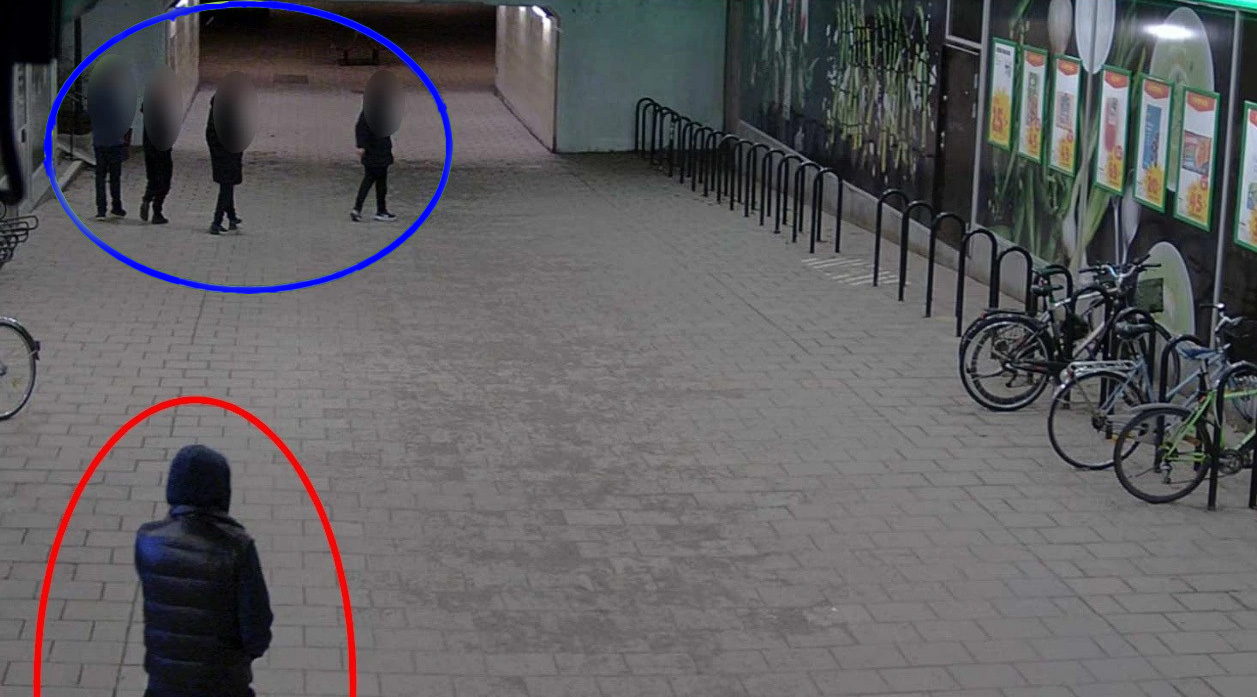
When you see how the Swedish legal system handled this—both before and after the murder—it’s hard not to be overcome with anger. It’s an exhibition of Swedish cowardice, timidity, and pathetic indulgence.
Should Have Been Deported
To begin with, the perpetrator should never have been in the country. The immigrant, who wasn’t even a Swedish citizen, had a legally binding deportation order. Just days before the murder, the accused shooter was stopped by police. At the time, he was wanted by authorities. Despite this, the 16-year-old was released and allowed to continue on his way, even though he according to Aftonbladet was carrying a weapon at the check and later posed with it.
I have previously proposed in parliament that individuals with deportation orders be held in custody until deportation can be executed. But in Sweden, such people are allowed to walk free—even when you literally have them in hand. It’s hard to describe just how weak and pathetic this is.
And after this brutal murder finally took place—what does Sweden do? Once again, the victim and his family are spat upon. The murderer is sentenced to ten years in prison. He’ll be out in seven years, even after the Tidö government’s tightening of parole regulations. And deportation? Yes, he’s deported—but only for ten years.
The justification for this madness is the perpetrator’s young age.
It’s such an unbelievably weak attitude from lawmakers that it’s almost incomprehensible.
How Hard Can It Be?
Quite honestly, this isn’t rocket science. The small sliver of hope is that the Tidö government is now making the necessary adjustments to the law. In my view, it’s too little and too late—but it’s light years better than the alternative of a Social Democratic government.
Last year, for example, legal changes were implemented that abolished sentence reduction for offenders aged 18–20 in cases of serious crime. That was a proposal I personally put forward in parliament, which was then voted down by all other parties. Today, the Tidö parties have implemented exactly this—which is of course a positive development.
But in the case of Rio’s murder, the problem is different. Here the perpetrator received a massive sentence reduction solely because he was under 18. He’ll likely be out before he even turns 25. He can return to Sweden when he’s 35. For a completely unprovoked murder of a 16-year-old boy. It’s hard to describe just how sadly pathetic the Swedish justice system appears.
I tried to prevent exactly these sorts of situations in motions that are now over ten years old. In one of them, I wrote:
To address this blatantly immoral system, we propose that in cases of serious violent or sexual crimes, especially those of callous nature, committed by individuals under 18 but over 15, the courts should consider whether the perpetrator should be sentenced as an adult. If the perpetrator is sentenced as an adult, the full scale of punishment should be applied without sentence reduction.
This should have been Swedish law today. Had these—even at that time obvious—proposals been heeded, the murderer or murderers would have been treated as adults and sentenced to the maximum penalty. And if the proposal had been fully embraced, the maximum penalty would have been true life imprisonment, deportation would have been permanent, and the sentence would have been served abroad—ideally in Congo or some other country where a prison sentence actually means punishment.
This isn’t difficult. It’s not rocket science.
The Tidö parties are now, thankfully, enacting several important reforms: lowering the age of criminal responsibility, harsher sentences, abolishing youth reductions for those over 18, and reviewing sentence breaks even for those under 18. But unfortunately, this is coming too late to give Rio Berg Aygün the justice that, even after a lost life, would have been possible.
And for that, Sweden’s justice system still deserves to be called what it is: a pathetic joke.