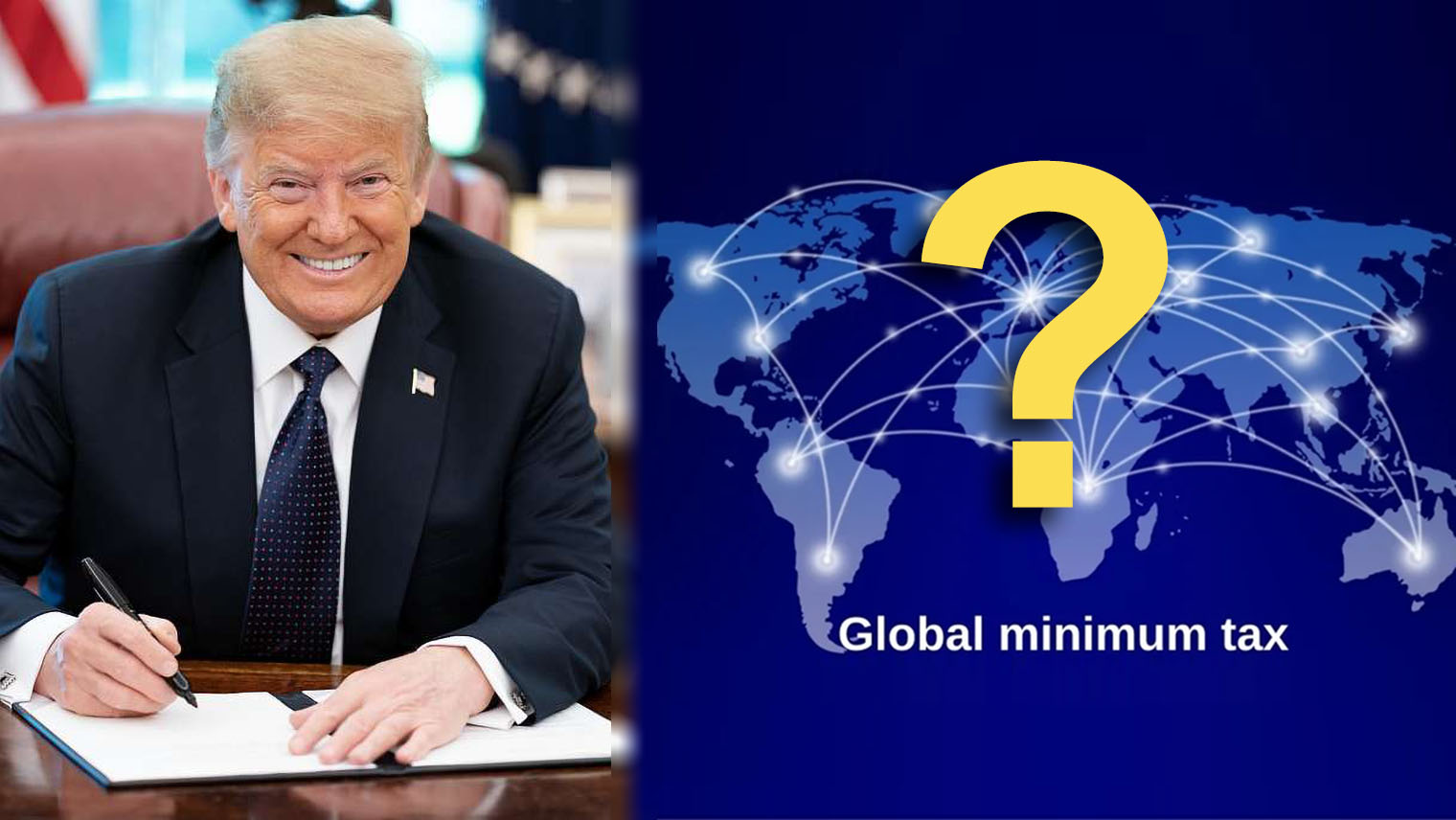
After negotiations between the US and G7 countries, American multinational companies are exempted from the OECD’s :censored:6:cdd6bbaa89: minimum tax of 15 percent. The announcement is described in the US as a victory for national sovereignty but is met with strong criticism in Europe and Sweden. Critics warn of distorted competition, increased regulatory complexity, and that the entire idea of a ‘:censored:6:cdd6bbaa89:’ minimum tax is at risk of collapsing.
The :censored:6:cdd6bbaa89: minimum tax, which was negotiated within the OECD framework and adopted in 2021, had a clear purpose: to prevent multinational companies from shifting profits to low-tax countries, thereby undermining national tax bases. Nearly 150 countries joined the agreement.
Now, however, the US has secured an exemption after negotiations with the G7. American corporations will not be subject to the central rules of the system, citing that the US already has its own minimum tax rules. That is reported among others by the Swedish magazine Näringslivet.

US Treasury Secretary Scott Bessent calls the agreement a historic victory protecting American companies and workers from what he describes as ‘extraterritorial taxation.’
Trump Administration’s Stance: Sovereignty over Coordination
The background to the agreement lies in the clear policy shift that occurred when Donald Trump returned to the White House. Early on, the administration declared that the US would not accept international tax rules that could impact American companies.
Threats of US retaliatory taxes against countries applying rules deemed discriminatory—among others, through the so-called UTPR rule—helped force the compromise. The result was the so-called ‘side-by-side’ package, where the US is effectively left outside the OECD’s GLOBE rules.
SEE ALSO: New EU Tax Hits Car Manufacturers and Large Companies Hard
In the US, reactions have largely been positive, especially among Republicans and business organizations who have long criticized the minimum tax as an infringement on national decision-making.
Swedish and European Criticism: ‘Level Playing Field’ Undermined
In Europe, the sentiment is different. According to an analysis from the Confederation of Swedish Enterprise, the agreement essentially deals a heavy blow to the ambition for equal competitive conditions.
The organization argues that American companies now have clear competitive advantages, while European firms remain in a complex and administratively burdensome system. The EU has already implemented much of the minimum tax, making it difficult to backtrack quickly without political and legal costs.
‘The :censored:6:cdd6bbaa89: minimum tax was intended to be just that—:censored:6:cdd6bbaa89:. When the US—and potentially other major economies—stand outside of it, the very foundation of the idea disappears,’ is a key point of criticism.
Increased Complexity Instead of Simplification
A central promise of the OECD process was to create clear and predictable rules. But according to the business sector analysis, the new agreement rather leads to the opposite: a patchwork of national, regional, and bilateral solutions.
SEE ALSO: Higher Carbon Tax Hit Industrial Companies Hard – Thousands of Jobs Lost
The so-called safe harbour rules presented simultaneously are not considered sufficient to offset the increased complexity. This is seen as particularly problematic for European companies, who risk higher administrative costs without corresponding competitive advantages.
A Political Reassessment on the Horizon?
The question increasingly being asked—even among European finance ministers—is whether the :censored:6:cdd6bbaa89: minimum tax in its current form is sustainable. If major economies stand outside while the EU is tightly bound by the rules, the investment climate in Europe risks further weakening.
For the US, the outcome is clear: the country appears to be the big winner. For Europe and Sweden, a difficult balancing act between tax policy ambitions and the need for competitiveness remains.
Whether the agreement marks the beginning of the end for the :censored:6:cdd6bbaa89: minimum tax—or the start of a new, more fragmented tax system—remains to be seen. What is certain is that the political debate about the future of the minimum tax is now entering a new, more contentious phase.