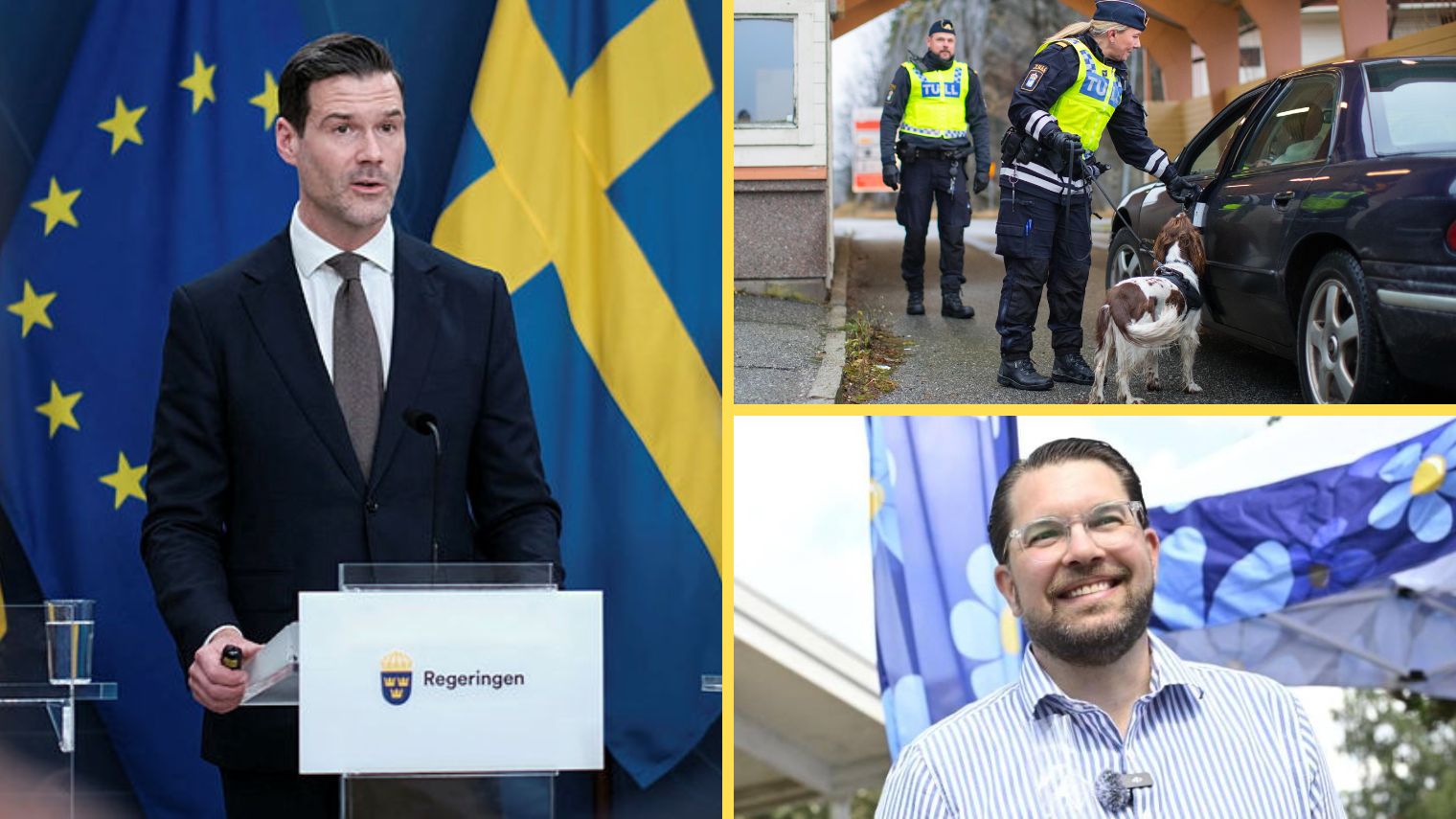
At a press conference on Friday, Minister for Migration Johan Forssell (Moderate Party) presented the results of the government’s and the Sweden Democrats’ efforts to reduce the number of migrants coming to Sweden.
Last year, 6,735 asylum seekers came to Sweden, compared to 9,645 the year before. This is a decrease of 30 percent and the lowest figure in 40 years. During 2016-2022, the average was just over 20,000 asylum applications per year. At the same time, the return to home countries is the highest in a decade – 8,321 people chose to voluntarily leave Sweden in 2025.
Currently, the approval rate is around 30 percent. If one does not have sufficient grounds for protection, one should return. The government estimates that the number will decrease further in 2026, down to 5,500.
READ ALSO: Inside the Migration Agency: Clans, Swedes in the Minority and a Culture of Silence
According to Johan Forssell, information about the regulations in Sweden spreads very quickly.
“We have not announced a specific number to aim for. That is simply our forecast. But ever since we took office, we have said that we need to continue reducing asylum immigration. That remains my message today.”
Obvious Points
According to Forssell, there is not a single reform that has led to the reduced asylum pressure.
“We are stating things that are really quite obvious, but which have not been obvious before. If you do not have grounds for asylum, you should return home. You should not stay for several years in Sweden. You should not switch tracks or go underground and remain here. We know this information spreads very quickly to many people,” says the Minister for Migration.
After a long series of tougher laws and rule changes in the migration area, the Tidö government plans to implement more in 2026.

Increased Returns
In December, the Tidö government decided on the Swedish Migration Agency’s appropriation directions for 2026. The focus is on measures for increased returns through, among other things, more efficient use of detention centers. The authority is also tasked with implementing reinforced measures to encourage voluntary return migration.
“Since the government took office, returns have increased by over 60 percent. This shows that our work is yielding results. With the government’s policies, Sweden will next year have the toughest expulsion regulations for criminal offenses in the Nordic region. The Migration Agency will play a key role in ensuring that deportation decisions are actually carried out,” says Minister for Migration Johan Forssell.
The appropriation directions also include enhanced incentives to encourage voluntary return. On 1 January 2026, the return grant will be significantly increased. The Migration Agency will work with the national coordinator for voluntary return and continue informational efforts to increase awareness of the opportunity for voluntary return. Similar information assignments are also given to the Swedish Public Employment Service, the Police Authority, the Swedish Social Insurance Agency and the Swedish Prison and Probation Service.
READ ALSO: Immigrants: We Have Made Sweden Better
“Ensuring that those who lack the right to remain in the country are identified and quickly deported is one of the most important migration policy measures, and here detention centers play a key role. We are also continuing efforts to increase information activities to enhance knowledge about the opportunity for voluntary return for foreign-born individuals who have not found their place in Sweden,” says Ludvig Aspling, migration policy spokesperson for the Sweden Democrats.
The Police Authority is also given a mandate to immediately intensify its targeted efforts to identify more people who lack the right to remain in Sweden.
The press conference:
READ ALSO: Bildt: Immigration Works Well – Crime Is a Trifle