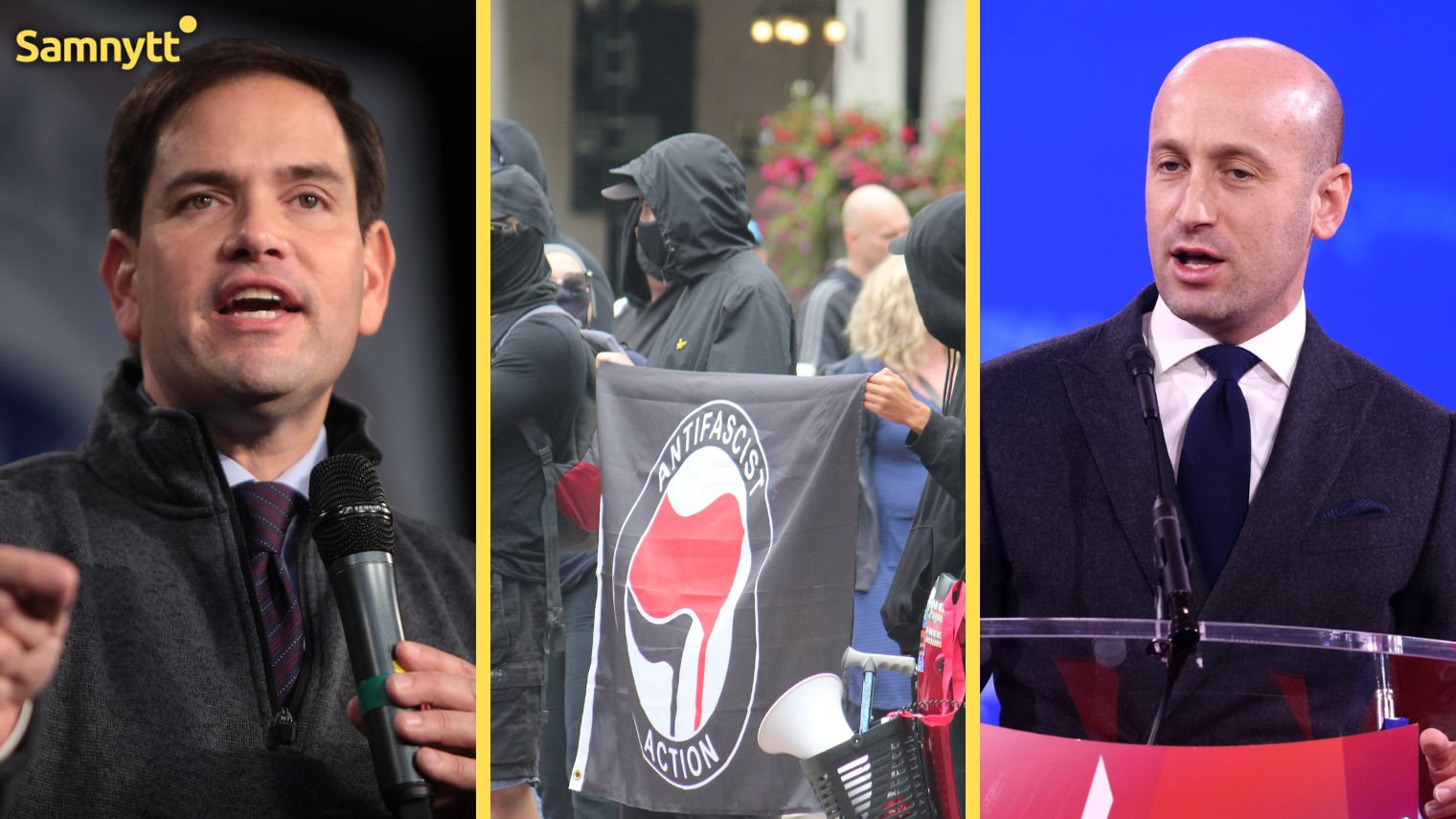
US Secretary of State Marco Rubio delivered sharp criticism of what he described as a decades-long failure to recognize and combat left-wing extremist terrorism as he opened the international conference Ministerial on the Resurgence of Political Terrorism in Washington on Thursday.
Representatives from 66 countries participated in the conference, which was organized by the US State Department and brought together several of the Trump administration’s top officials, among them White House Deputy Chief of Staff Stephen Miller, Treasury Secretary Scott Bessent, FBI Director Kash Patel, and Education Secretary Linda McMahon.
The conference is described as part of President Donald Trump’s strategy to make the fight against political terrorism and violent left-wing extremist networks a central part of US national and international security policy.
Rubio began his speech by claiming that many governments, universities, and media outlets have long dismissed warnings about left-wing extremist terrorism. He said that the very existence of the conference proved that reality could no longer be denied.
According to Rubio, many democratic countries have been reluctant to acknowledge the threat, since the perpetrators often describe themselves as anti-fascists, anti-capitalists, or social activists.
READ ALSO: USA classifies Antifa as terrorists – demands for Swedish action against Afa
A large part of Rubio’s speech was devoted to the ideological background behind the groups the USA is now targeting. He argued that despite different names and national differences, they are built on the same fundamental ideas.
– They may call themselves anti-capitalists or anti-imperialists, communists, anarchists, or Marxists. It’s always the same thing.
Rubio claimed that the movements are united by a revolutionary worldview in which violence is seen as a legitimate political tool and the goal is to undermine liberal democracies and market economies.
According to the Secretary of State, the hatred is not just directed at individual governments but at the values that, in his view, have made the Western world successful – democracy, individual freedom, private property, and the rule of law. He therefore described left-wing extremist terror groups as “enemies of civilization”.
Sec. Rubio names it plainly: radical leftism is a distinctive and unique evil, a revolt of the worst against the best. To 66 nations he laid out the plan to dismantle far-left terror networks brick by brick. It is time to defend ourselves and fight for what is ours. pic.twitter.com/iKm5SdEUL3
— Sean Hannity ???????? (@seanhannity) July 18, 2026
Antifa and International Networks
Rubio further claimed that today’s left-wing extremist movements can no longer be seen as isolated national groups. In his speech, he described how various organizations, according to US authorities, cooperate across national borders through funding, training, propaganda, logistics, and recruitment.
He specifically pointed to groups identifying as Antifa, the autonomous left, and revolutionary Marxist organizations.
READ ALSO: American Antifa’s founder hiding in Sweden
According to Rubio, the networks use modern communication platforms to rapidly spread tactics, organize demonstrations that turn into riots, and provide support to like-minded groups in other countries.
He warned that the same activists often reappear at violent protests in various countries and that they have developed international cooperation which, according to him, can no longer be seen as spontaneous.
Cuba and Iran Accused
A central part of Rubio’s presentation focused on state support for revolutionary movements. As the son of Cuban exile parents, Rubio repeatedly returned to Cuba’s communist regime, claiming that Havana has for decades trained and supported left-wing revolutionary groups in Latin America.
He also singled out Iran as a state which, according to the USA, uses proxies and affiliated organizations to destabilize democratic societies and support political violence.
Rubio argued that the fight against left-wing terrorism therefore isn’t just about isolated extremist groups, but also about countering states that export revolutionary ideology and finance violent movements.
New Visa Policy
In connection with the conference, the State Department presented a new visa policy. Individuals who belong to or actively support what the department describes as “Far-Left Terrorist and other aligned groups” can now be denied entry to the USA.
According to the department, this includes, among others, people who finance, organize, recruit for, or in any other way facilitate politically motivated violence and terrorism.
Rubio said that the US no longer intends to offer sanctuary to those participating in international violent extremist networks.
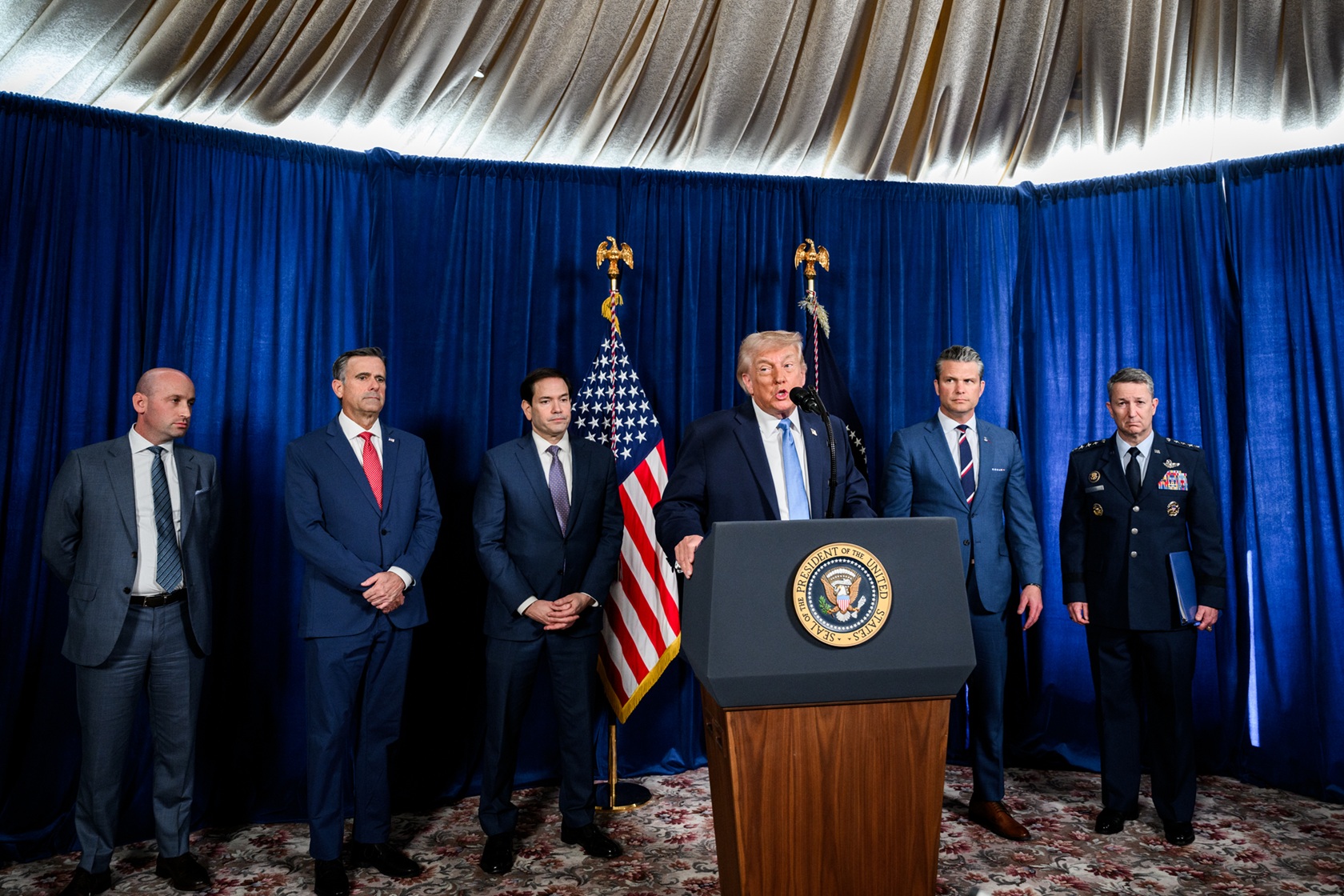
“We Will Dismantle the Networks”
Rubio emphasized that the fight requires international cooperation.
– We have no other choice than to confront this threat together. Either we cooperate across our borders, or the terrorists will continue to exploit the gaps between them.
He also promised that the USA will continue to strike at the networks. According to Rubio, it is not enough to arrest individual perpetrators. Funding, recruitment, communication channels, and international contacts must also be broken.
Stephen Miller: “A Deadly Cancer”
White House Deputy Chief of Staff Stephen Miller then gave an ideologically charged speech where he described left-wing extremism as an existential threat to the Western world.
– The left is fundamentally driven by envy, hatred, and jealousy, he said.
He called left-wing extremism “a deadly cancer for civilization.”
Miller claimed that many of today’s revolutionary movements see democratic institutions as obstacles rather than something to be defended, and said that authorities must be uncompromising against those he described as enemies of civilization.
Stephen Miller: "It's not a coincidence that when you look at these violent ANTIFA demonstrations… not one of the people that is demonstrating looks like a normal person"
"They're all deformed in some way in their appearance"
pic.twitter.com/z6EgOQ6SYf— Defiant L’s (@DefiantLs) July 17, 2026
Bessent Emphasized the Rule of Law
Treasury Secretary Scott Bessent simultaneously emphasized the importance of conducting the fight against terrorism within the framework of the US Constitution.
He stressed that there is a crucial difference between peaceful political activism and organized political violence.
The conference marks another step in the Trump administration’s changed approach to international terrorism. Whereas previous US governments mainly focused on Islamist terrorist organizations and, later, right-wing extremist terrorism, the current administration argues that organized left-wing extremism has become a growing international security threat requiring corresponding resources and international coordination.
Rejects Criticism
At the same time, the conference has been criticized by human rights organizations, researchers, and Democratic politicians who argue that the administration risks conflating violent extremism with broader leftist activism, and that the threat is described in a way not shared by all security experts.
The Trump administration rejects the criticism, arguing that left-wing extremist violent networks have long received insufficient attention for political and ideological reasons.
READ ALSO: Antifa designated as a terrorist group by several countries