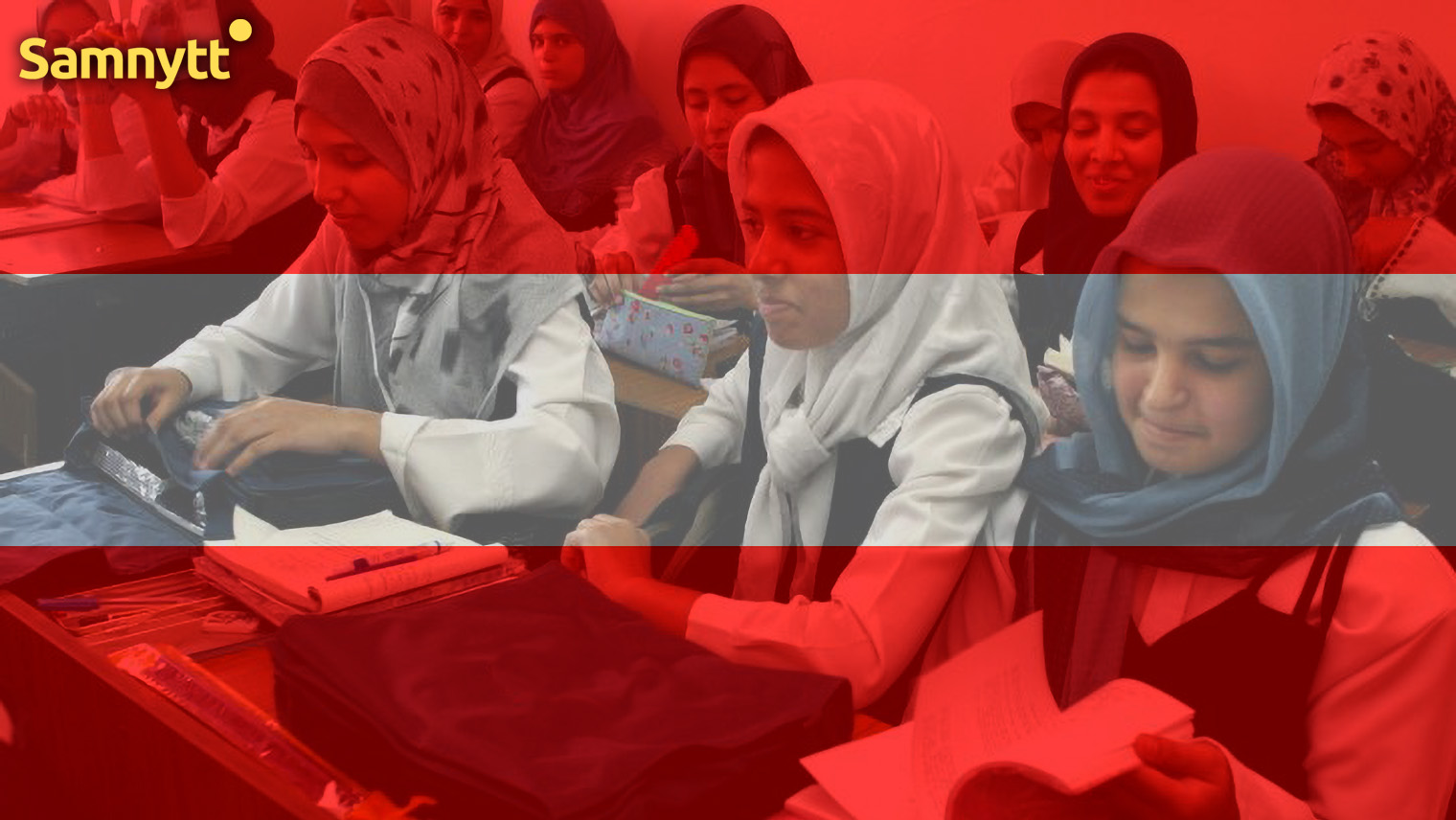
An increasing number of Austrian students are unable to complete their schooling without having to repeat a grade. Nearly one in five 15-year-olds has now had to repeat at least one school year – and among students with an immigrant background, the proportion is even higher. This development comes as Austrian schools undergo a rapid demographic change, with students of foreign background making up a growing part of the student population.
The latest results from the international PISA survey indicate a clear decline in the Austrian school system. Eighteen percent of the country’s 15-year-olds report that they have, at some point during their education, been forced to repeat a grade.
This is a significant increase compared to 2012, when the corresponding proportion was 12 percent. Furthermore, this trend runs counter to the overall trend in the OECD, where the proportion of students who repeated a grade actually dropped from 14 to just under 11 percent over the same period.
At schools facing what are termed “particularly significant social challenges”—in many cases synonymous with a high proportion of immigrant students—the situation is much worse. There, 36 percent of students have repeated at least one year. By comparison, the proportion is under five percent in high-achieving PISA countries like Estonia and Ireland.
Immigrant Students Overrepresented
The differences between student groups are large. Among students whose parents have low incomes and low educational levels, 28 percent have repeated a year. For students with an immigrant background, the corresponding figure is 30 percent.
Among young people from affluent academic families, as well as among students at private schools and in rural areas, the figure is only about one in ten.
The problems also start early. Already during the first school years, nine percent have had to repeat at least one year. The proportion is about the same in the following school years, while it is considerably less common at the upper secondary level.
Austria thus stands out internationally. Only a handful of European countries, including Germany, Spain, and the Benelux countries, show similar levels.
OECD education director Andreas Schleicher has long been critical of the system of having students repeat a year. According to him, it entails significant costs for the school system without necessarily ensuring that struggling students receive the help they need. He also highlights the risk of stigmatization, decreased motivation, and, ultimately, school dropouts.
Rapidly Changing Student Composition
At the same time, Austrian schools are experiencing a significant demographic transformation. In PISA 2022, 27 percent of Austria’s 15-year-olds had an immigrant background per the OECD definition—meaning both parents were born outside the country. Ten years earlier, that figure was 16 percent.
This trend has continued. OECD notes in PISA 2025 that the proportion of students with an immigrant background increased further in Austria between 2018 and 2025. The organization also notes that this group, on average, performs worse than students without an immigrant background.
READ ALSO: Students Continue to Decline – Worst PISA Results Ever
The growing proportion may therefore explain part of the decline in, for example, reading ability. At the same time, the OECD argues that changes in student composition alone do not fully explain the decline in results.
The differences also coincide to a large extent with socioeconomic and linguistic factors. In Austria, students with an immigrant background are far more often “economically vulnerable” than other students. OECD generally points out that both family economic situations and the language spoken at home are highly significant when comparing group results.
Muslims the Largest Student Group in Vienna
The change is especially evident in the capital, Vienna. In 2025, it was reported that for the first time, Muslim students became the largest religious group in the city’s primary and secondary schools. Of around 112,600 students included in the statistics, 41.2 percent were reported to be Muslim, compared to 39.4 percent the year before.
READ ALSO: Researcher: Speak Plainly About Immigrant Students’ School Results
Christian students together accounted for 34.5 percent, while 23 percent had no religious affiliation. Among the Christians, 17.5 percent were Catholic and 14.5 percent Orthodox.
The development has been rapid. Among Vienna’s primary school students, the proportion of Muslims was 28 percent in the 2016/2017 school year. By 2024, this had risen to 35 percent.
Immigration Not the Sole Explanation
PISA results also show that a large proportion of immigrant students does not necessarily lead to weak school results, though it often does. Some countries like Canada, Australia, New Zealand, and Singapore have managed to combine high proportions of students with immigrant backgrounds with high average achievements, but these are exceptions. Referring to these countries, the OECD does not support the idea that a greater share of immigrant students automatically leads to poorer school results worldwide.
For Austria, however, the combination of growing social disparities, language difficulties, and a rapidly changing ethnic composition among students poses a significant challenge. Already in PISA 2022, students with an immigrant background in Austria trailed by an average of 58 points behind other students in mathematics and 65 points behind in reading. These gaps decreased but did not disappear when the OECD adjusted for the students’ socioeconomic background.
The new PISA survey now highlights yet another clear symptom of the issues–while fewer and fewer students across the OECD have to repeat a year, Austria is moving in the opposite direction. Over thirteen years, the proportion of Austrian 15-year-olds who have had to repeat a school year at some point has increased by 50 percent—from 12 to 18 percent.