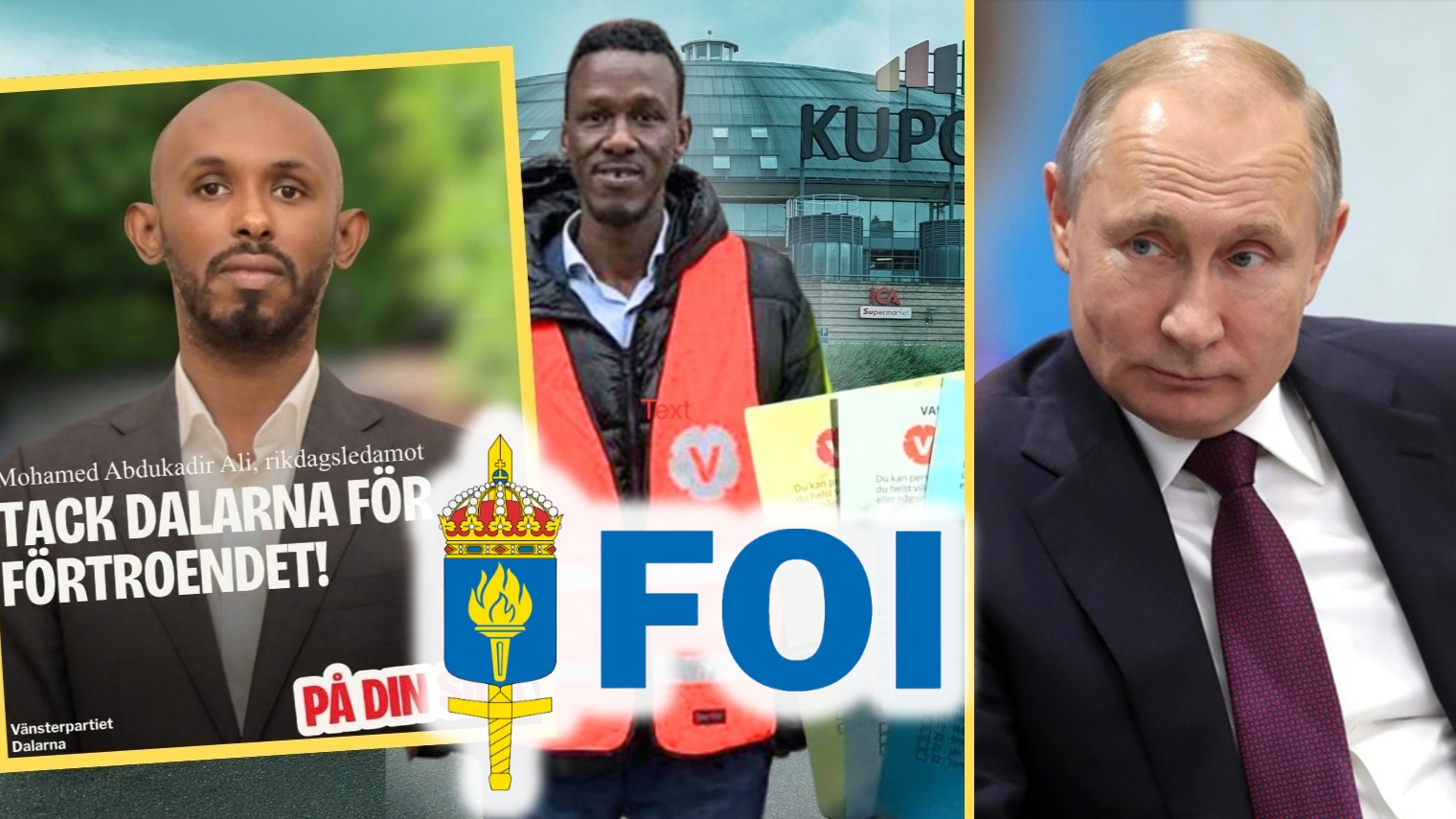
While police investigate suspected immigration-related election fraud in places like Borlänge—58 reports of undue influence during voting have been registered this year and nearly 10,000 appeals of the election have reached the Election Review Board—efforts are now being made to shift attention elsewhere. Analysts at the Swedish Defence Research Agency (FOI) warn that the debate on election fraud may be exploited by Russia and contribute to racism and distrust in the Swedish electoral system.
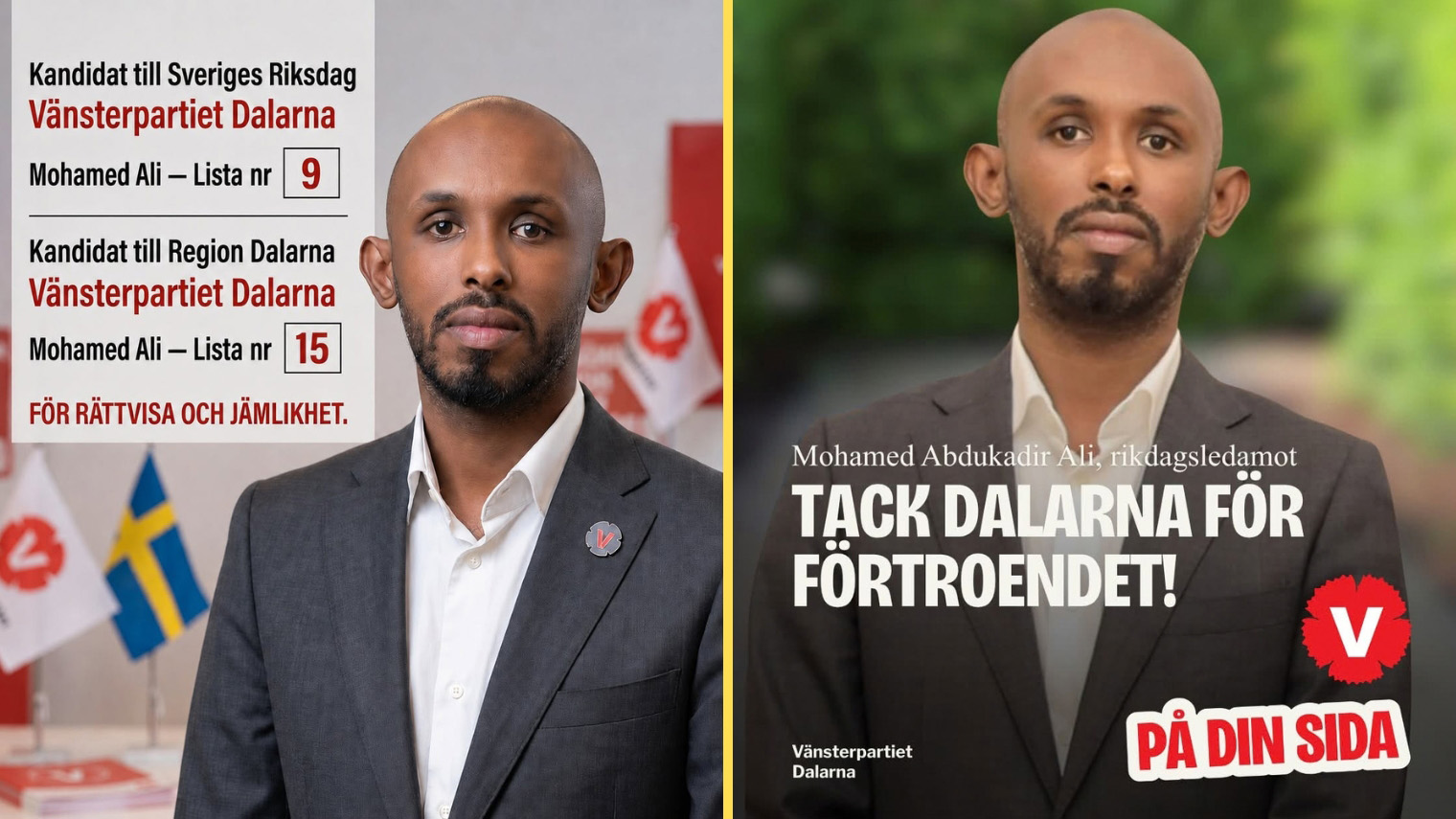
The post-election debate has intensified rapidly. At the center are suspicions in Borlänge, where a police investigation is ongoing into undue influence during voting as part of Somali Left Party member Mohamed Abdukardir Ali’s personal election campaign, as well as involving other individuals of non-Western background.
At the same time, the police’s national summary shows that in 2026 there have been a total of 58 reports of undue influence during voting. Most concern stolen or hidden ballots or ballots that have not been distributed.
There have also been reports of attempts to influence voters at polling stations and cases where votes were offered for sale or where someone wanted to buy a vote.
Warnings from Other Areas as Well
Extensive reports of suspected irregularities have also emerged from the vulnerable areas of Järvafältet in Stockholm. Experienced election officials in Rinkeby, Tensta, and Husby have described, as eyewitnesses, organized group voting, voters being instructed on how to vote, pre-marked ballots brought into polling stations, and voters receiving instructions via mobile phone behind the voting booth.
Examples include around one hundred Eritrean women who, according to witnesses, arrived with two priests and were instructed to vote for the same party and candidate; a man repeatedly handing out pre-marked ballots outside a polling station; and voters asking staff to quietly dispose of already sealed ballot envelopes.
Election officials have also described people trying to accompany others behind voting screens and how pre-marked ballots have been found among the ordinary ballots. Several reports and incident descriptions have concerned the Left Party and Ilyas Hassan’s personal election campaign. After the election, Hassan was elected to parliament for Stockholm Municipality.
In Landskrona, a municipal politician is also being investigated for suspected undue influence during voting. According to a police report, the politician distributed several ballots for the municipal council with their own name already marked. However, the distribution reportedly took place at a location other than the polling station.
ALSO READ: City of Stockholm Reports Suspected Election Fraud—Linked to Somali Left Party Candidate
The case is with the serious crimes unit of the police in Helsingborg, who will now determine whether the circumstances constitute a crime. The number of ballots involved is unknown, and neither the politician’s name nor party affiliation has been made public.
FOI: “Russia Will Exploit This”
When Dagens Nyheter highlights the development, the focus is largely on the debate itself about election fraud and its possible consequences.
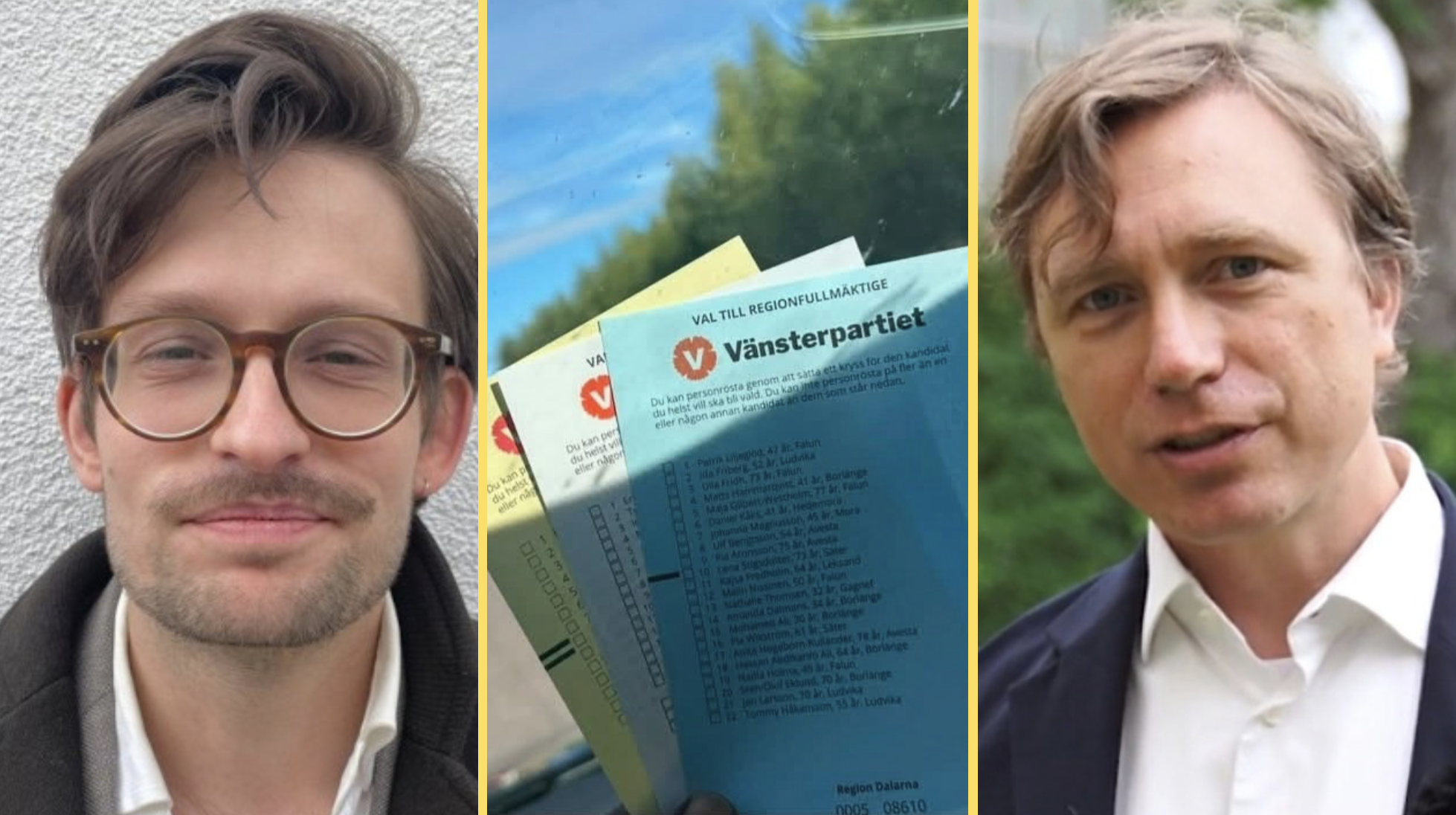
Ola Svenonius, who researches disinformation and psychological defense at FOI, describes how the subject spread explosively in social media after the revelations from Borlänge.
ALSO READ: Elected Somali Left Party Member Fooled Municipality for Half a Million and Convicted of Four Crimes
According to FOI, the discussion has mainly taken place on X, Facebook, and Flashback. Svenonius notes that language previously found only on these platforms has now started reaching broader groups. His colleague Johannes Lindgren goes further and brings Russia into the picture.
– We assume that Russia will exploit this, he speculates in a comment to DN.
FOI claims to have seen influence networks linked to Russia targeting the Swedish election. However, in the interview, Lindgren provides no evidence that the current debate about Borlänge has actually been subject to such an operation. But he “assumes” it has.
– We do not know what kind of accounts these are, and we cannot say anything for certain, he states according to DN, adding that he would be “extremely surprised” if Russian networks were not involved, since the issue is, in his view, a “jackpot” for them.

Blaming the “Nationalist Right”
Thus, the DN article focuses on distrust in the electoral system, rather than on the underlying flaws in the system that have led to this distrust. Svenonius judges that this distrust will not necessarily disappear even after the police investigation and the Election Review Board’s examination conclude.
– Distrust of the electoral system is linked to dissatisfaction with the election results, he says, referring to what he calls the “nationalist right.”
ALSO READ: Convicted Somali Drug Smuggler May Serve in Parliament for the Left Party
At the same time, concrete circumstances are being officially investigated this time that actually justify distrust. Police have recorded 58 reports this year, and the Election Review Board had, as of Thursday, received nearly 10,000 appeals—compared to the previous record of 767 after the 2018 election.
However, the Board wants to downplay the steady stream of cases, suggesting that online campaigns urging people to appeal is a reason for the exceptionally high figure, rather than a significant increase in actual irregularities.
The police also claim that the reports or appeals themselves are not evidence of widespread electoral fraud. Several of the reported behaviors may not even be crimes, they speculate. However, the figures also show that questions regarding the conduct of the election do not exist solely as a theme created by anonymous accounts on social media.
Demographic Change Labeled as “Conspiracy Theory”
FOI researchers also address the broader discussion around immigration and demography. According to DN, European commentators and alternative media use terms such as “takeover” and “invasion,” connecting these trends to what the newspaper describes as “the conspiracy theory of a population replacement.”
This refers to the belief in a secret or coordinated plan to replace a European population through migration. The demographic shift itself is, however, measurable and undisputed. That it results from coordinated political decisions is also a fact, as is the reality that the negative consequences of this policy have long largely been concealed by politicians and the media.
At the end of 2025, 2.94 million people in Sweden—equivalent to 28% of the population—had a foreign background by SCB’s definition, meaning they were either born abroad or born in Sweden with two foreign-born parents. SCB also notes that all population growth during 2025 consisted of people with a foreign background, while the number of people with a Swedish background decreased.
Migration has also changed the composition of the electorate. Ahead of the 2022 election, political science professor Henrik Ekengren Oscarsson noted that foreign-born voters have historically voted to a greater extent for left-wing parties, especially the Social Democrats and the Left Party.
SVT Focused on Perceptions of Somalis
A similar shift in perspective could be seen in SVT’s reporting from Borlänge earlier in the week. There, Centre Party local politician Nasteho Mohamed was interviewed about the consequences election fraud accusations might have for Swedish Somalis.
ALSO READ: SVT Intervenes in Election Fraud Scandal: Concerned About Image of Somalis
– In the next election, perhaps people will not dare to vote for a Somali candidate, she said.
SVT primarily highlighted concerns that Somalis in Sweden might be collectively suspected. This took precedence over the issue of actual undue influence having occurred and the electoral system’s inadequate protections against such conduct.
ALSO READ: Mona Walter on the Minnesota Scandal, Somali Culture, and Why Sweden Is Particularly Exposed
Nasteho Mohamed’s comments that media coverage and the debate risk undermining trust in the electoral system or a certain immigrant group contrast with her own public warning in 2020 about clan structures among parts of the Somali population in Borlänge. At that time, she described how demands for loyalty to one’s own group could conflict with individual freedom.
Russia as a Recurring Explanation
FOI’s warning comes amid a security policy climate where Russian hybrid warfare is repeatedly raised as a threat to Sweden and other European countries. SVT reported as recently as Thursday on warnings from Western intelligence agencies about sabotage and hybrid attacks.
Security reporter John Granlund claimed that Russia is trying to scare Europe and weaken support for Ukraine. At the same time, SVT noted that there is no concrete threat of an armed attack against Sweden.
Russia has documented interests in exploiting divisions and distrust in Western democracies. But in the current discussion about election fraud, FOI’s reasoning is limited to speculation about what Russian actors might do, with the agency’s analysts saying they “would be surprised” if they did not involve themselves. FOI has not been able to provide evidence that the Swedish debate about Borlänge has been created or driven by Russia.
ALSO READ: Far-Left Radicals Behind FOI’s Research on Nationalist Milieus and Hate Against Journalists
On the contrary, Lindgren admits that FOI does not know who stands behind the accounts they see as suspicious. It could just as well be ordinary Swedes who do not want their names shown on social media as Putin-controlled AI bots.
Meanwhile, the much more concrete issue continues to be investigated by Swedish authorities: What actually happened in Borlänge, to what extent does undue influence on voters occur, and how significant is its impact on the election result? These are questions that references to Russian influence or concerns about the debate’s effect on the image of Swedish Somalis cannot answer.
ALSO READ: NATO Figures Demand More Censorship of Social Media