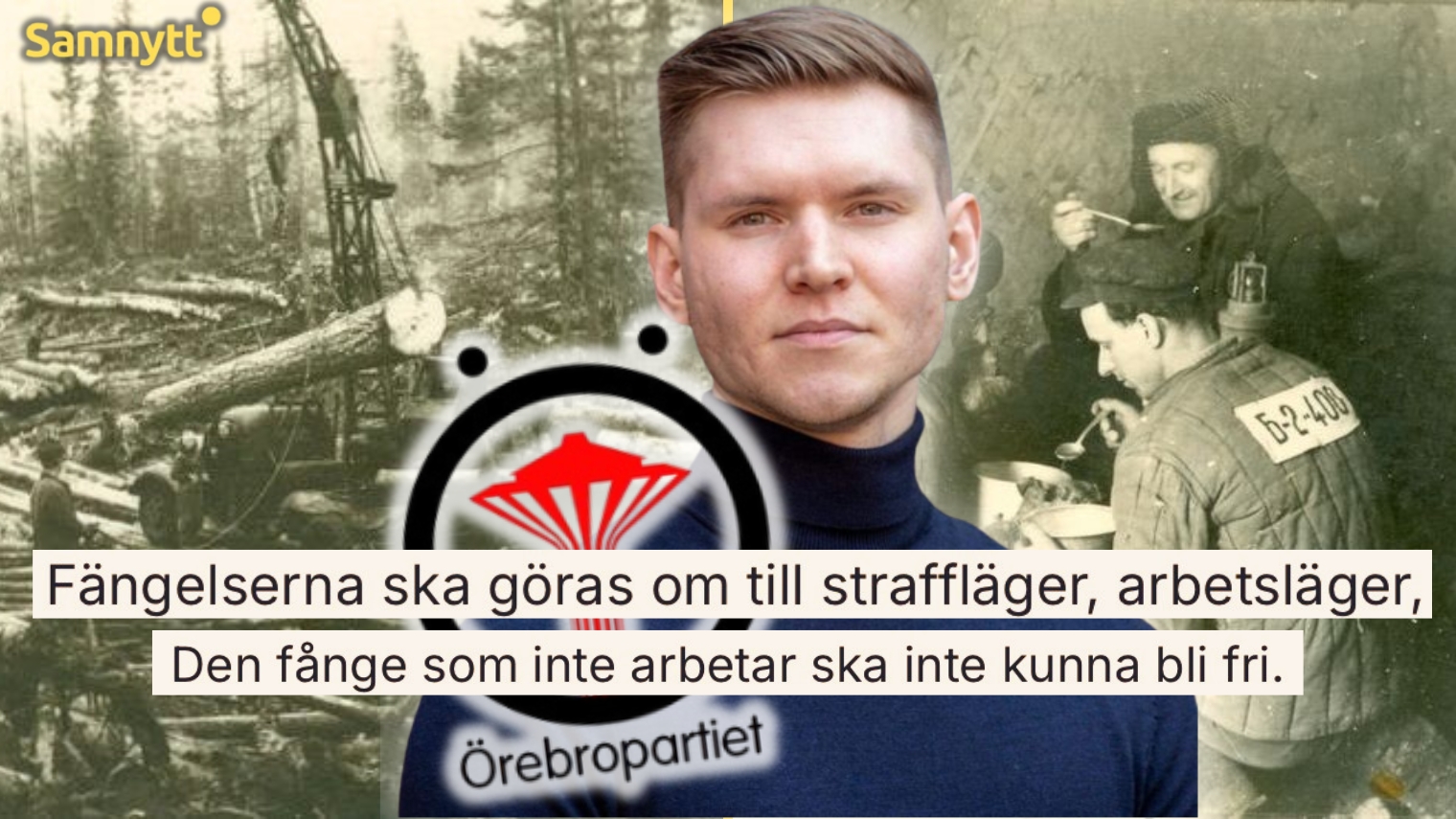
Örebropartiet has emerged as a party that could become one of the largest in Örebro and might also enter parliament if opinion polls reflect the voters’ will in September. In the party’s recently presented election platform, the proposal for an extensive reform of the prison system stands out. The party wants to replace the current prison system with labor camps, where convicts will work during their sentences — and where work is the only path to freedom.
Örebropartiet argues that today’s prisons function too much as mere storage facilities, while the operation costs society large sums of money. Instead, led by Markus Allard, the party wants inmates to contribute through their labor to cover the costs of the prison system.
The main idea is that a person should no longer be sentenced to a certain number of years in prison but rather to a specific amount of worked time in captivity. A standard 40-hour work week will be the baseline. According to the model, those who work more can serve a larger portion of their sentence, while those who work less will have to stay longer.
The party simultaneously wants to make work a requirement for release. Under the proposal, an inmate who refuses to work will not be able to be released simply because a given time period has passed.
Today’s prison system costs society billions every year. That is unreasonable. It’s not only that it costs us billions, but that it should cost us anything at all.
How is it even possible that we in today’s Sweden are not discussing the sheer absurdity of prisoners being a cost to society? It should be the opposite, they should generate money for society!
Örebropartiet wants to fundamentally reform the Swedish prison system.
Criminals should not be sentenced to time in prison, but rather to worked time in captivity.
An inmate who does not work should not be able to be released.
– From the election platform
Labor Camps as Production Units
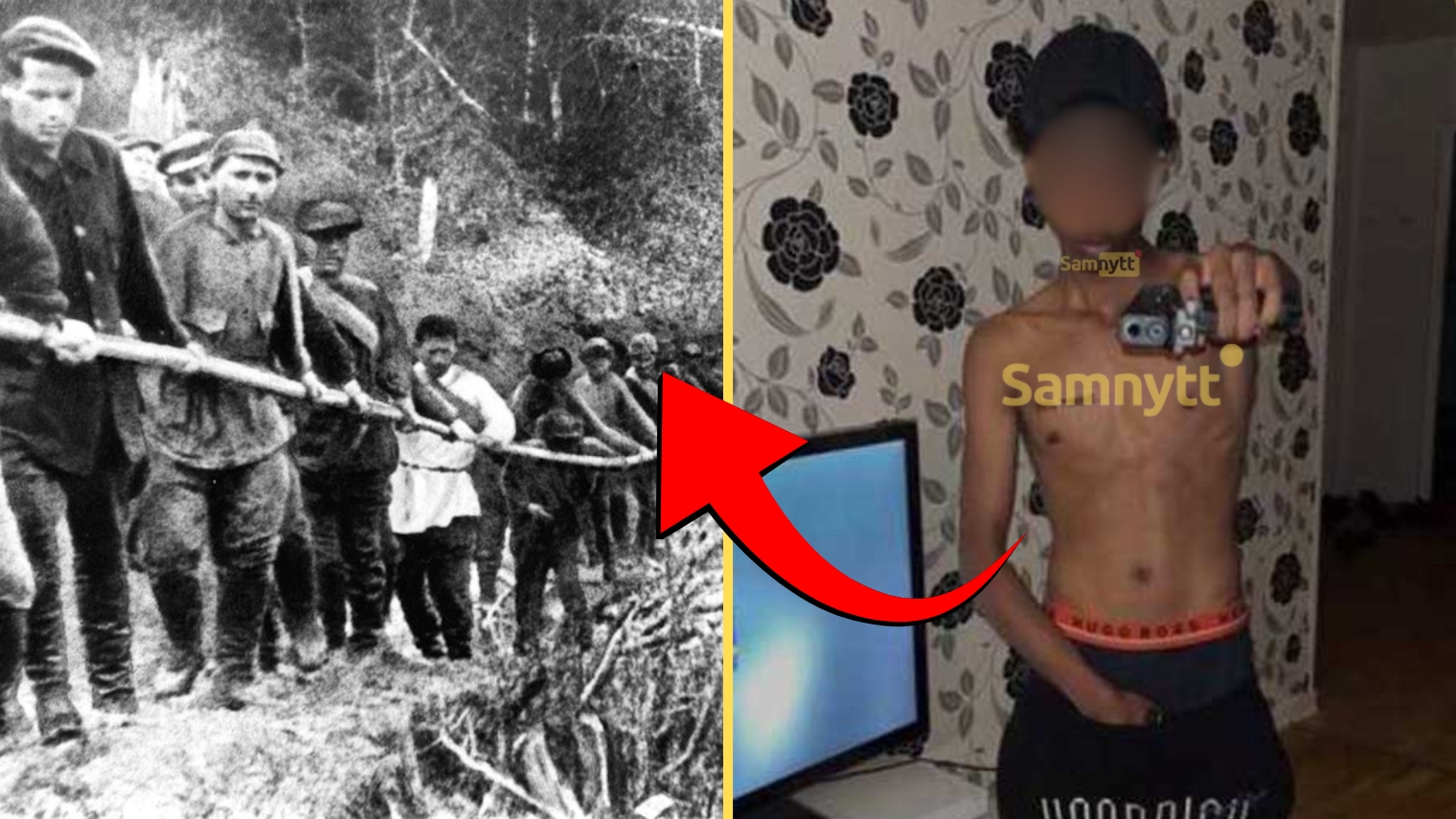
Örebropartiet goes further than simply proposing mandatory work. The party platform describes a future prison system as “penal camps, labor camps, production institutions,” where inmates will perform work that brings economic value to society.
The party also stresses that it is not about concentration camps or the Gulag, but about Swedish prison institutions where penal labor is the norm.
Among the mentioned activities are laundries, soldering, assembly, carpentry, as well as the production of firewood and wood chips, and various types of textile work. The party also points to the possibility of letting Swedish prisons take over production that has currently been moved abroad.
READ ALSO: Minister’s Attack on Allard: “Rude – a Trumpist of the worst kind”
The idea is for production to target sectors with significant labor immigration or where Swedish companies currently outsource production to other countries. Örebropartiet mentions, for example, furniture manufacturing as an area where parts of the production could take place within the Swedish prison system instead of in Eastern Europe.
The party also writes that inmates in lower-security prisons could work in other ways, for example while wearing ankle monitors, and thus provide workforce to industries where there is currently a great demand for personnel.
The goal is for the criminal justice system to cover its own costs as much as possible. Örebropartiet questions why taxpayers should finance people sitting in prison and argues that inmates should instead contribute economically through their labor.
Work Before Studies
The party also wants to change the perception of what should count as activity during a prison sentence. The party platform criticizes the current system, where inmates can, for example, study or participate in various courses.
Örebropartiet does not want to ban studies, but believes that education chosen by the inmate should take place outside the working hours that count toward serving their sentence. Those wishing to study should do so during their remaining time in captivity and, under the proposal, pay the costs for the courses they opt for themselves.
READ ALSO: Markus Allard’s plan for Sweden: Deport criminal immigrants — even those born in Sweden
The party also does not primarily describe the labor camps as a rehabilitation project. The aim is rather for inmates to produce, work and contribute to society during their sentences.
At the same time, Örebropartiet believes that work might have other effects. Fixed routines, duties, and requirements to contribute rather than receiving things for free could, according to the party, give inmates experiences they lack.
“Work Fosters”
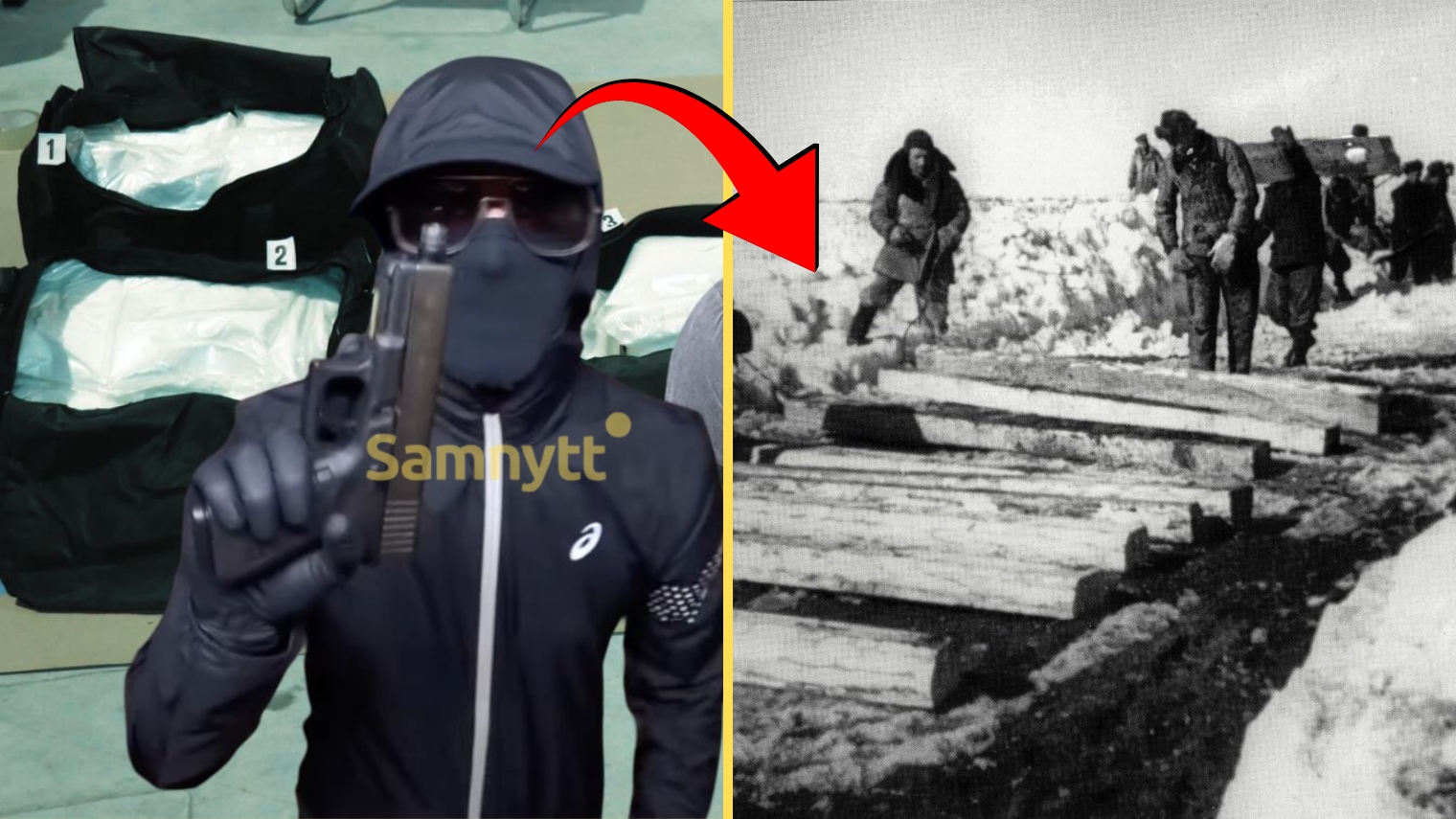
The party platform summarizes the idea under the headline “Work Fosters.” The proposal for labor camps is part of a much broader change in criminal policy that Örebropartiet advocates. In general, the party wants to tighten sentences and remove current sentence discounts, so that individuals committing several crimes will not receive a lower total sentence due to the discount system.
At the same time, the party wants to lessen penalties for some minor crimes. Personal cannabis use, for example, should not according to the proposal lead to imprisonment but to fines at most, while sales and distribution should be treated more harshly.
The purpose of reforming the prison system into production units is not mainly to rehabilitate and socialize the inmates. But it may still have that effect.
Routines, responsibilities, not getting things for free. Many of these hoodlums don’t understand such things, but through state prison oversight and the work ideal, these individuals could get a chance to learn their meaning.
– From the election platform
Deportation
Another central element of the party’s criminal policy is deportation. Örebropartiet wants foreign nationals who commit serious crimes to be deported to a greater extent, and those sentenced to prison and deportation should instead serve their sentences abroad.
But the core of the proposal for the prison system remains the same. Prison should no longer be a place where convicts only wait out their time, but the sentence should instead be measured in worked hours, and Swedish institutions should function much more as production units.
READ ALSO: Markus Allard in immigration debate: “Sweden is the land of the Swedes”