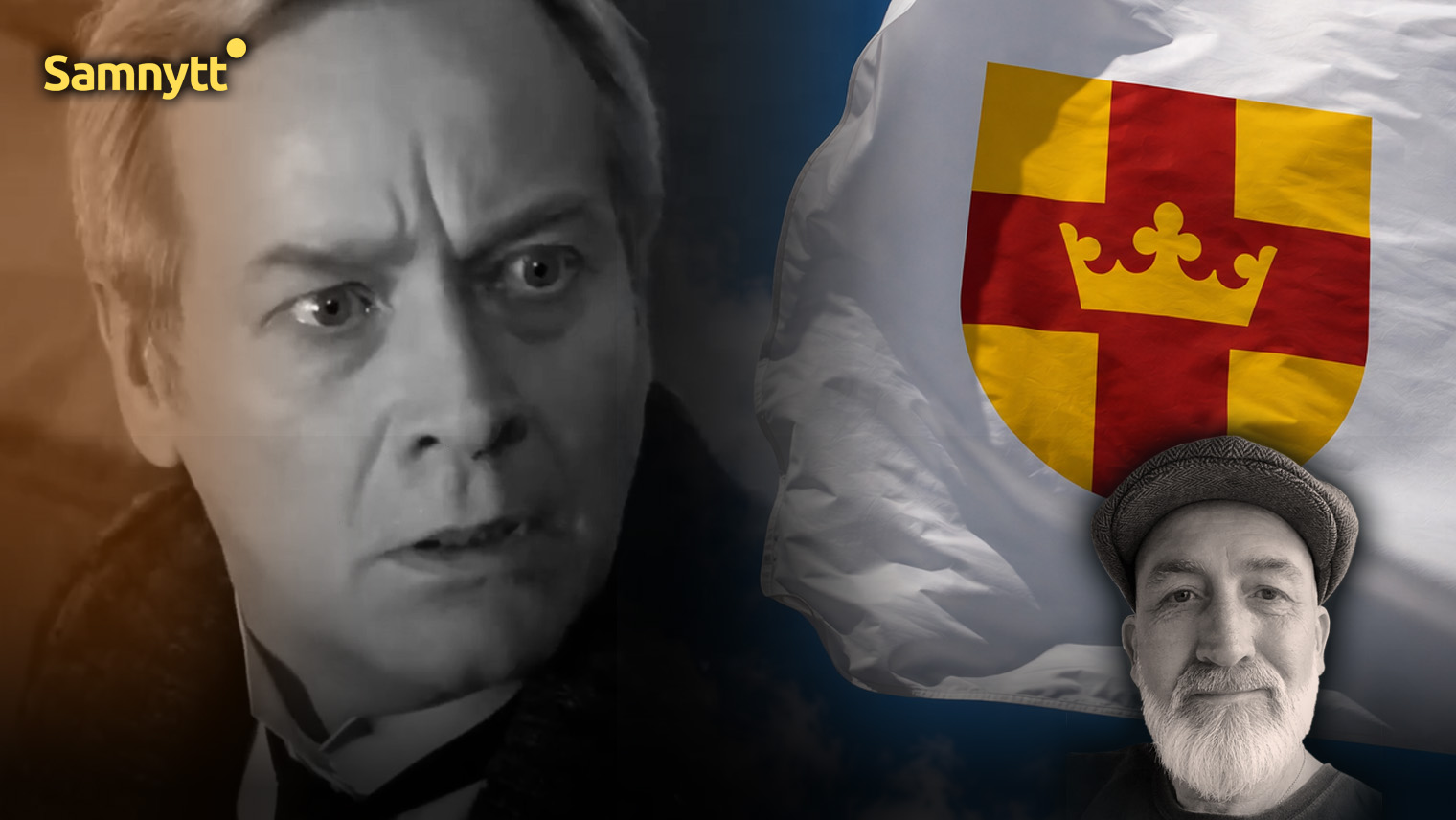
COLUMN • From Pride and trans issues to migration, Islamism, and party-political statements, the Church of Sweden has become increasingly ideologically radicalized. But behind all the talk about love, tolerance, and inclusion, there are also the small cruelties, barbs, and contempt for those who think incorrectly. Samnytt’s Jonas Andersson writes about self-appointed righteousness—and what happens when the conviction of one’s own moral superiority becomes a license to treat others badly.
There are few people you should be as wary of as those who are completely convinced of their own goodness. Not those who know they’re jerks—they’re at least understandable, and you know more or less where you stand with them.
No, the truly troublesome ones are those who have placed themselves on a moral pedestal and then gaze down at the rest of us. Those who claim to represent love, tolerance, compassion, diversity, and inclusion. The righteous.
For what happens when a person truly believes they represent the good? Something strange occurs—they can start to behave alarmingly badly.
The Bishop
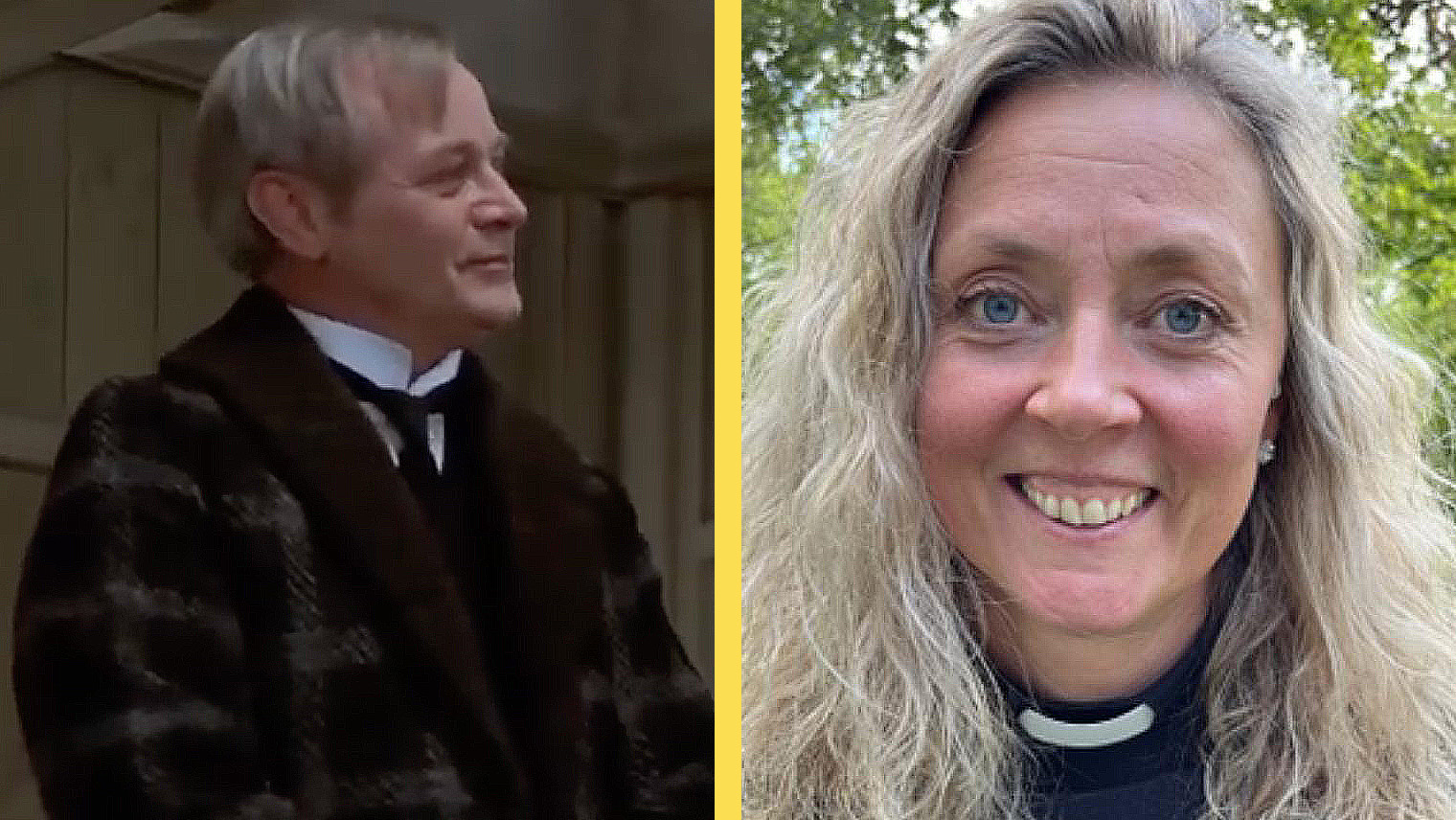
I’m thinking of Bishop Edvard Vergerus in Ingmar Bergman’s “Fanny and Alexander.” Jan Malmsjö’s brilliant portrayal of the strict Protestant bishop is still among the most disturbing things Swedish cinema has produced.
Not because Vergerus sees himself as evil. On the contrary. That’s the whole point—he’s convinced he’s doing the right thing.
When the widow Emilie Ekdahl marries him and moves with her children, Fanny and Alexander, into the bishop’s residence, life changes. The warmth, colors, laughter, and abundance of the Ekdahl family’s world are replaced by bare rooms, discipline, and submission.
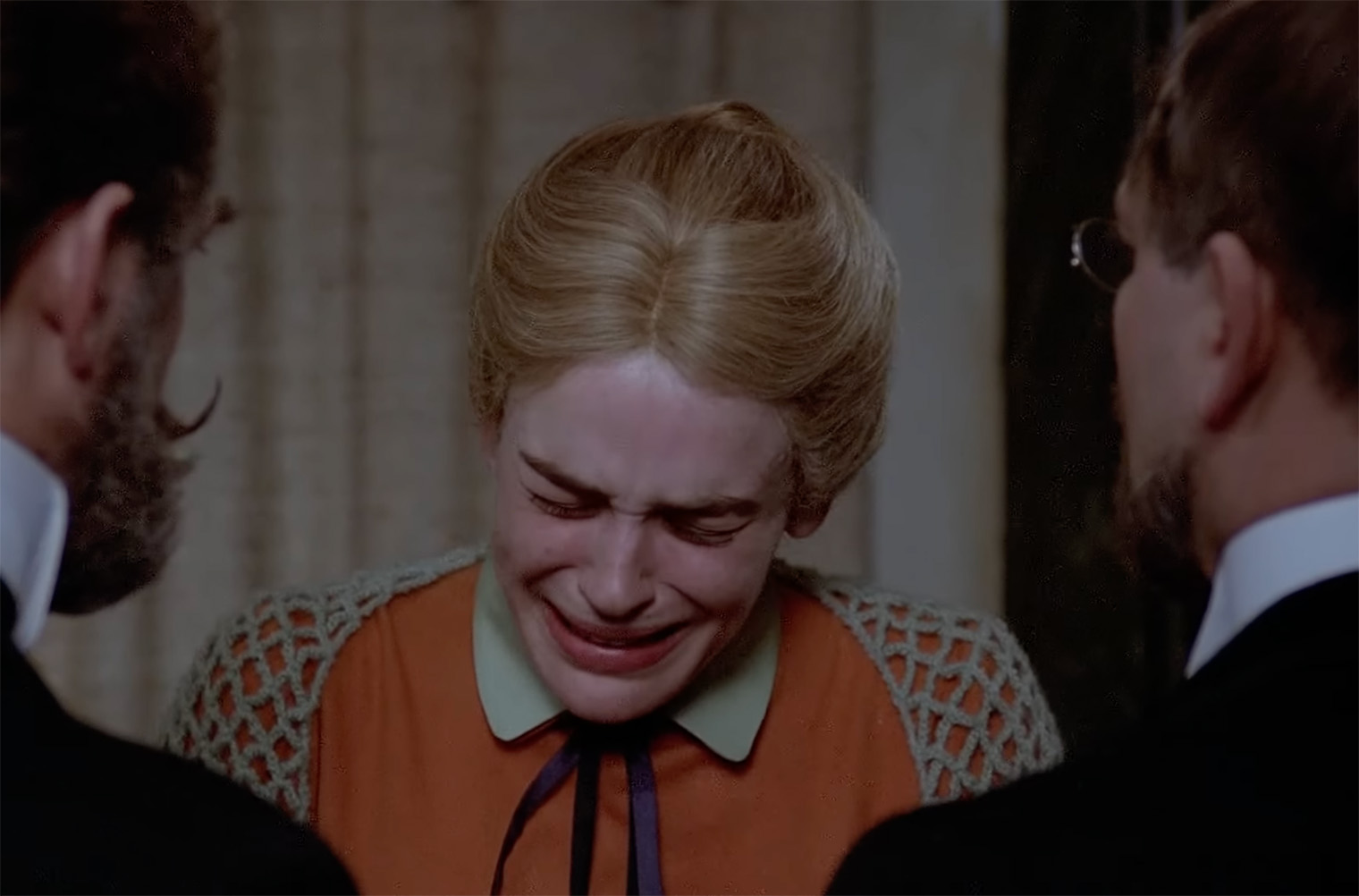
The bishop doesn’t need to hate the children to make their lives hell. He only needs to be convinced of his own righteousness. That’s what makes him so disturbing. He has God on his side—or so he says.
And there lies a timeless warning, reaching far beyond Bergman’s bishop’s residence. He who has convinced himself that he represents the good has also acquired an excellent defense against self-criticism.
If I am good—how could my actions be evil?
The Modern Church Has Its Own Creeds
This brings us to the Church of Sweden. An institution that long ago evolved into something much more than a Christian denomination, becoming a political actor, opinion shaper, and promoter of a set of values that almost always align with those of Sweden’s progressive left.
SEE ALSO: VIDEO: The Church of Sweden’s Trans Pastor Preaches in Pride Attire
The odd thing is that they simultaneously want to maintain the illusion that the church stands above ordinary politics. That can no longer be taken seriously.
Of course, you may think all this is excellent. But let’s at least stop pretending this is ideologically neutral. It’s politics—and above all, politics that almost always seems to move toward the radical left.
Jonas Andersson
The Church of Sweden admittedly uses the fancier term “nominating groups,” but even describes these as groups roughly equivalent to parties in general elections.
In the 2025 church election, the Social Democrats, Centre Party, Sweden Democrats in the Church of Sweden, and the Left in the Church of Sweden, among others, ran for the church assembly. The Social Democrats were also the largest nominating group.
SEE ALSO: Is the Church of Sweden Politicized? Here’s how MPs respond
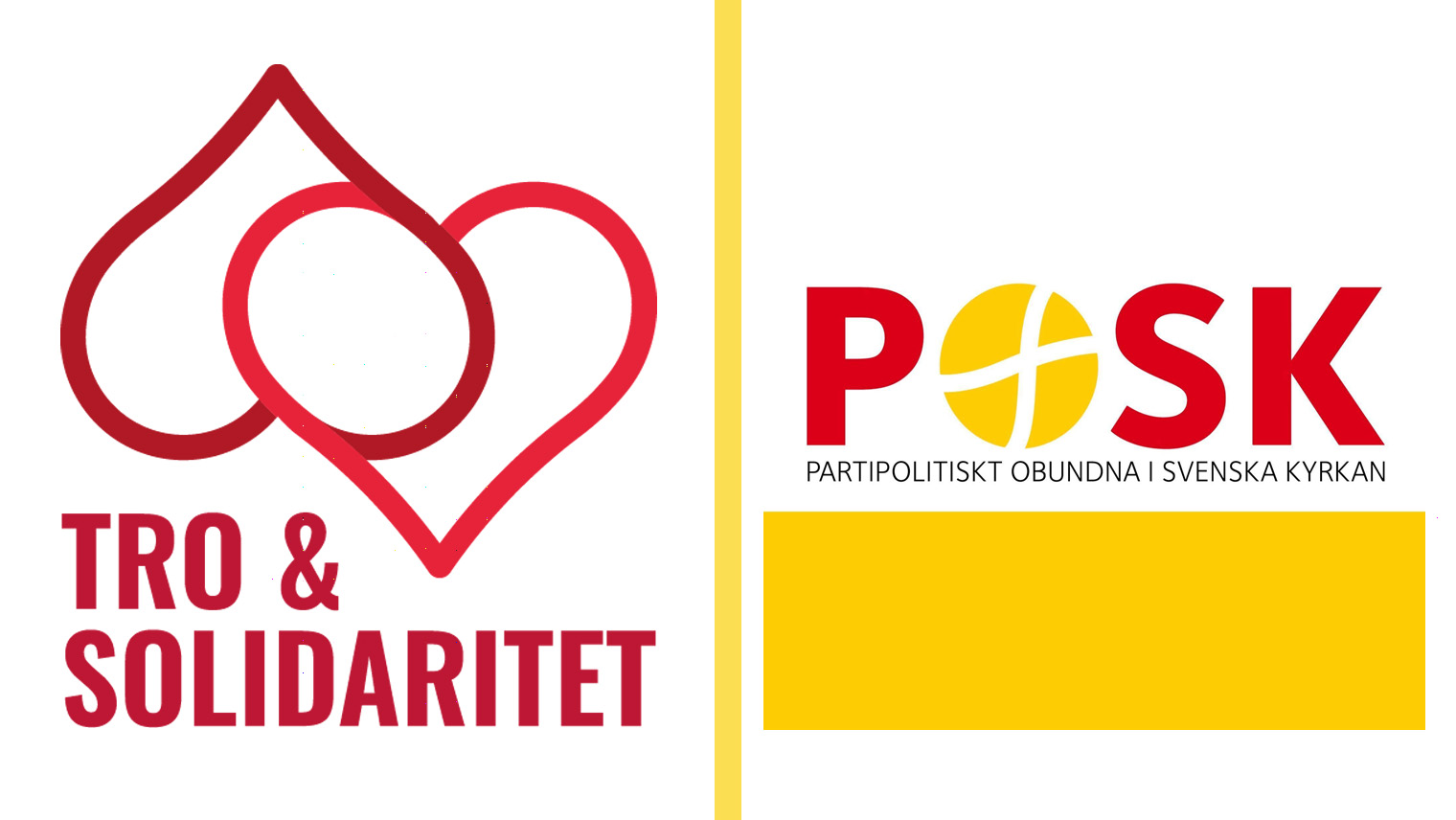
This is a rather strange kind of non-political stance. So strange that there is even a nominating group within the church whose very name is POSK, Politically Independent in the Church of Sweden.
You don’t need to be a theologian to spot the paradox—especially if you compare this group’s Christian agenda to the Social Democrats’ Islamism-friendly Faith and Solidarity.
But politicization is only part of it. In recent decades, the Church of Sweden has increasingly made the contemporary progressive worldview part of its identity.
LGBTQIA+, Pride, gender identity, climate, Islam, mass immigration, and an ever-expanding array of political and social issues have found a natural place in the church’s activities and communications.
SEE ALSO: Priests before Pride: Want to open the Church of Sweden to polygamy and group sex
On the Church of Sweden’s own website, it’s stated, for example, that the church is “actively working” for LGBTQIA+ inclusion and wants to be a “prophetic voice” on issues described as “the equal worth of all people.”
You may well think all this is great. But let’s at least stop pretending it’s ideologically neutral. It’s politics—and, above all, politics that almost always seems to move toward the radical left.
SEE ALSO: Church of Sweden Protests the Tidö Government: “Children Don’t Belong in Prison”
Tolerance—In the Right Direction
This is where the next interesting phenomenon arises. A church that preaches openness, tolerance, and inclusion almost nonstop sometimes finds it extraordinarily difficult to include people who think the wrong way.
The traditionally Christian, the conservative, the migration critic, and those who believe in two biological sexes easily end up on the wrong side of the new church value community.
Goodness has become an identity—and when goodness becomes an identity, evil is needed as a contrast. If we are tolerant, someone else must be intolerant. If we represent love, someone else must represent hate. If we are inclusive, someone else must be exclusive. And once the opponent has been placed in the latter category, there is no longer any obligation to treat them well.
Jonas Andersson
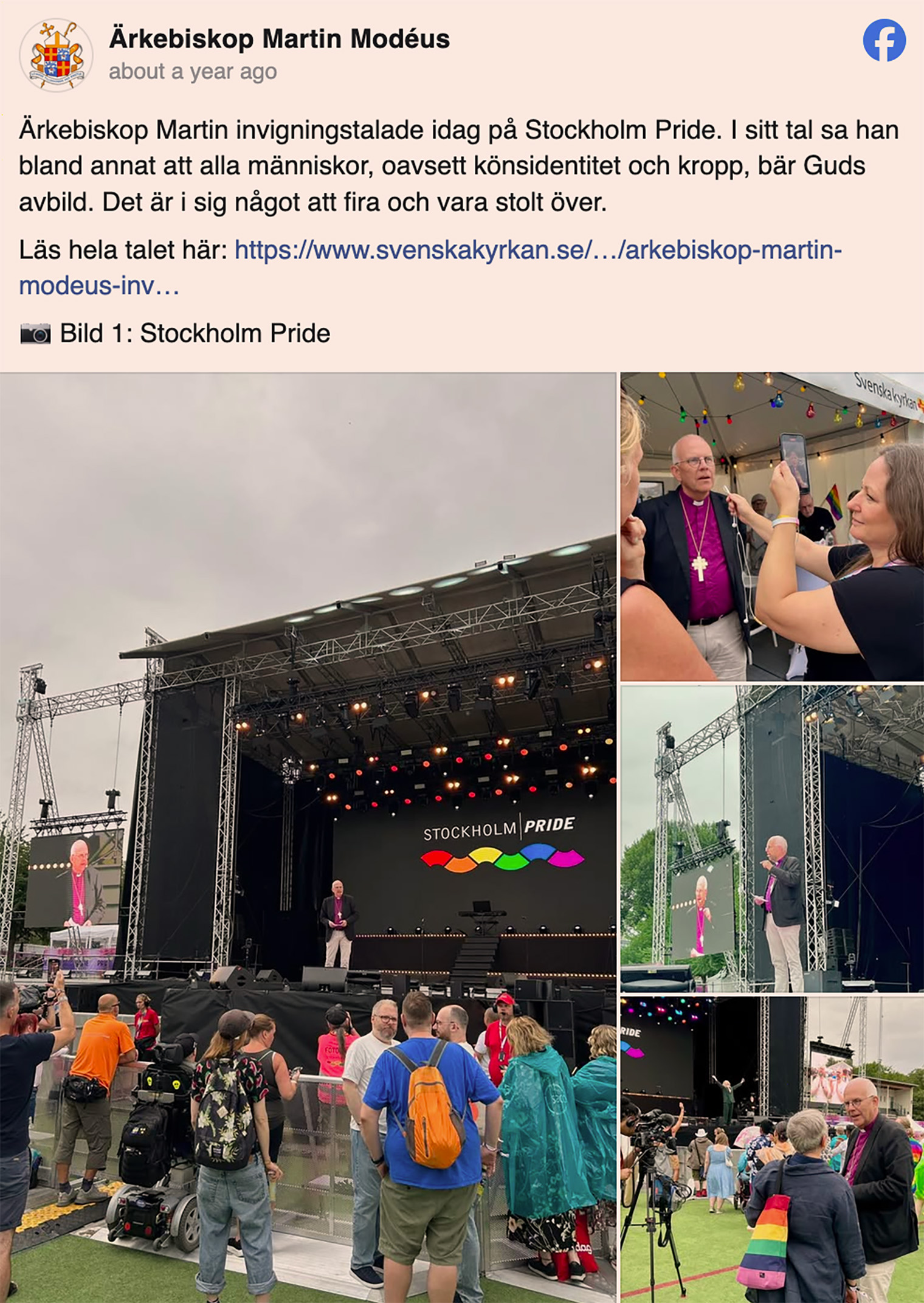
The same goes for anyone who doesn’t view the Pride flag as a church attribute or who thinks the Church should be more concerned with Christianity’s decline than finding new forms of dialogue with Islam.
Or those who wonder why the Church of Sweden doesn’t seem particularly concerned about the tens of thousands of Christians in Nigeria being murdered by Muslim warlords. Where are the protests?
And, of course, anyone who votes for the Sweden Democrats. Here, boundless tolerance suddenly becomes far more conditional. It’s here that I find the issue bigger than just the Church of Sweden—this is a phenomenon that characterizes much of the modern progressive movement.
SEE ALSO: Archbishop at Pride: “The Church Has Not Always Stood on the Right Side of History”
Goodness has become an identity—and when goodness becomes an identity, evil is needed as contrast. If we are tolerant, someone else must be intolerant. If we represent love, someone else must represent hate. If we are inclusive, someone else must be exclusive.
And once the opponent has been placed in the latter category, there is no longer any obligation to treat them well.
The Metastasis of Small Cruelties
This is what I actually find most fascinating. Not the grand political declarations, the Pride flags, the seminars, or the climate statements—but the small cruelties.
SEE ALSO: Church of Sweden Celebrates Pride with LGBTQ Theology and Drag Queens
The barbs. The little smirk, the pointed remark, the sharp comment, the public correction, and the implication that you are not only factually wrong, but that there’s something morally wrong with you because you think as you do.
I think many conservatives recognize the phenomenon. You can sit at a dinner table where someone expresses the most far-reaching left-wing opinions without anyone raising an eyebrow, but say something even slightly right of the Social Democrats and suddenly the atmosphere changes.
This is how small cruelties metastasize. From the smirk at the dinner table to ostracism at work, from the sharp comment to friendships breaking apart. In the worst case, families are shattered, parents and children turned against each other, and lifelong friendships transformed into bitterness and resentment. In the end, those who preach love have succeeded in creating hate. And they are still convinced they did it in the name of goodness.
Jonas Andersson
You have broken a social rule. The odd thing is that those who deliver these barbs are often the same people who most fervently talk about kindness, openness, and tolerance. For them, there is no contradiction—the cruelty simply isn’t registered as such, since the right person got hurt.
But the small cruelties can also have greater consequences. Being expelled from the community is something most people fear, perhaps because the need for group belonging is so deeply rooted in us.
Today, we use the term “cancel culture” for a modern variant of the same mechanism. People can lose their jobs, careers, friends, and livelihoods because they said the wrong thing, held the wrong opinion, or refused to conform to the currently unquestionable political and social doctrines.
SEE ALSO: Professor: More than Half Don’t Dare Stand by Their Opinions
And they are enforced not only between individuals. The progressive left has, over decades, acquired significant cultural and ideological influence over traditional media, authorities, universities, and other social institutions. I now also count the Church of Sweden among these.
This is how the small cruelties metastasize. From the smirk at the dinner table to exclusion at work, from the sharp remark to friendships that fall apart. In the worst case, families are broken, parents and children turned against each other, and lifelong friendships sour into bitterness and resentment.
In the end, those who preach love succeed in creating hate. And they are still convinced they did it in the name of goodness.
SEE ALSO: The Left’s Hatred Toward Young SD Women: “Shoot You in the Face with a Magnum 44”
The Pastor
And so we come to Pastor Jenny Ludvigson in Kafjärden parish outside Eskilstuna. Ludvigson isn’t just some private Facebook debater arguing about politics at her kitchen table. She is a vicar and a priest.
That means something. A vicar represents a congregation made up of people with diverse political opinions—Social Democrats, Moderates, Sweden Democrats, Left Party supporters, and people who would never dream of voting for any of them.
Yet Ludvigson has used the congregation’s official Facebook account, under the Church’s name and symbol, to launch a political attack against the Sweden Democrats.
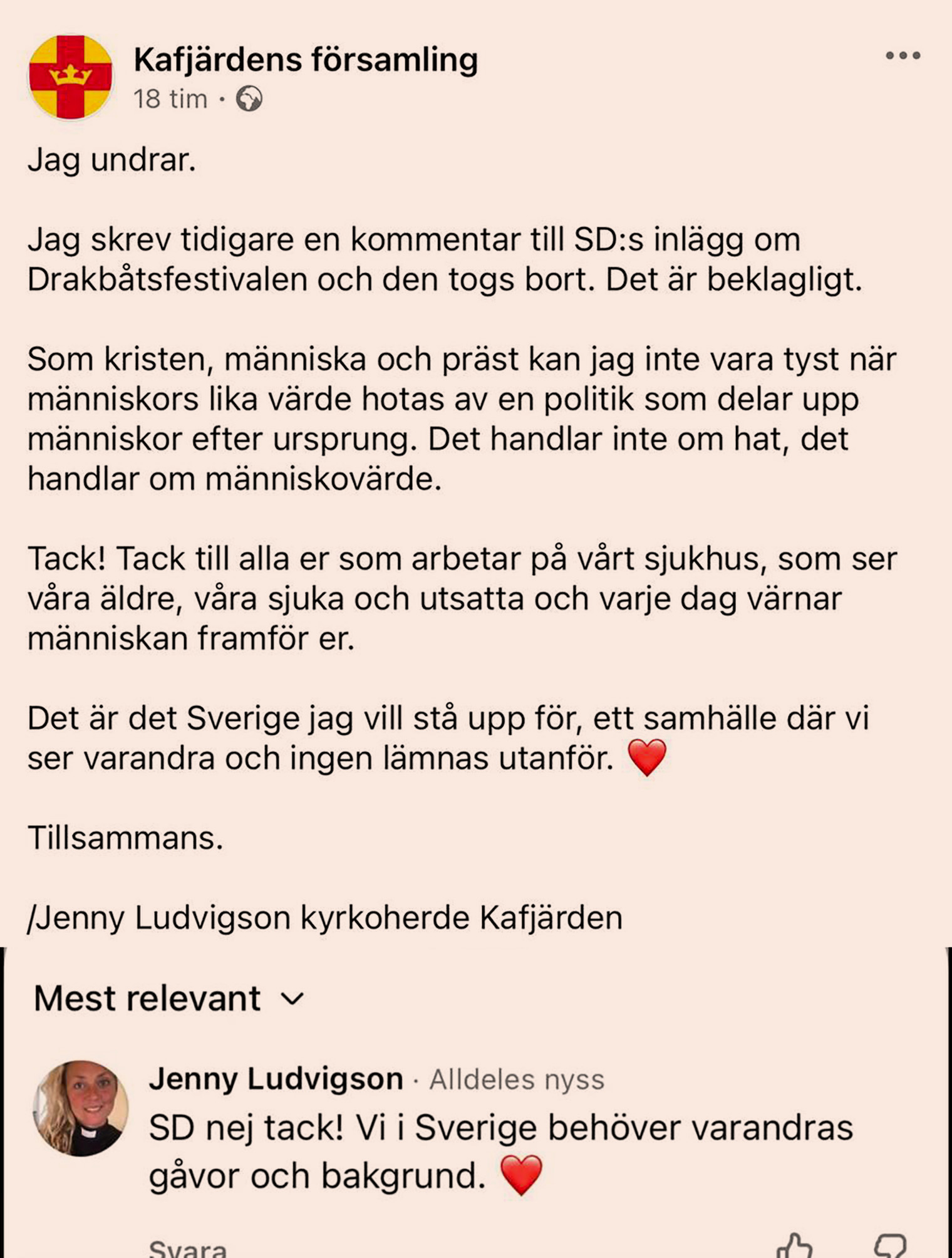
When I politely ask if she would answer questions about how this fits with her role as vicar in a Christian congregation whose parishioners may have different political views on secular matters, she replies:
– I will not answer any questions—not from you, anyway.
Apparently, you have to share the vicar’s views on trans issues, LGBTQ, left-wing activism, and Islam even to have the honor of speaking with her, let alone receive answers to important questions.
SEE ALSO: Pride is Not What You Think: The Lie, Obedience, and Power
But what’s truly interesting isn’t even what Jenny Ludvigson thinks about the Sweden Democrats. She’s free to detest them if she wants, and she can vote for the Left Party, Green Party, Social Democrats, or the Donald Duck Party.
Suddenly, every political opinion is a moral imperative and every opponent an obstacle to the good. Every boundary that one’s profession should impose becomes a barrier that must be overcome, and every objection is further proof of one’s own courage. It’s a tremendous construction. You simply can’t lose—if no one criticizes you, you’re good; if someone criticizes you, you’re brave. And anyone who criticizes is automatically a woman-hater. Or “Islamophobe”—or whatever bogus term you now manage to invent to reinforce your position of power.
Jonas Andersson
The problem arises when one’s political conviction is donned along with the clerical collar and channeled through the institution one is meant to represent. For what does that say to the parishioner who votes for the Sweden Democrats, Sweden’s second largest party?
Does the church also belong to him or her? Is the vicar theirs as well? Can they come to her in a life crisis and feel just as welcome as the parishioner whose worldview she shares?
I cannot help but think of the Jewish Swedes who today may have to seek medical care from doctors shouting “From the river to the sea” at work (that is, for the destruction of Israel and the Jewish people).
SEE ALSO: Now Region Stockholm Joins Palestine Demonstrations
It’s a thought that overlaps, as it’s not difficult to imagine where Ludvigson stands, even on this issue.
And these are not small matters. Kafjärden parish itself writes that the church should be there for people “in both joy and sorrow” and offers conversations with priests and deacons when life is tough.
That’s why it matters. The clerical collar brings a responsibility bigger than the opportunity to get a few likes on Facebook.
A Calling
There is also something in today’s public display of goodness that fascinates me—the word “calling.” It sounds so beautiful—I am called, I stand up, I cannot be silent, I must speak out, I take up the fight. Ludvigson herself once told Eskilstuna-Kuriren:
“I don’t back down. I take no crap. If you’ve worked with sex offenders and are a mom to four sons, there are no tough conversations. God put me here, so I’m going to take the assignment seriously. And I’m not called to smooth things over.”
All this can of course be true and honorable. But a “calling” can also be a very convenient construction for the person who loves the sound of their own moral voice.
The most dangerous thing about self-appointed righteousness is therefore not that it’s occasionally wrong. It’s that it gives the person who carries it a moral carte blanche.
Jonas Andersson
Suddenly, every political opinion is a moral imperative and every opponent an obstacle to the good. Every professional boundary becomes an obstacle to cross, and every objection is further proof of how courageous you are.
It’s an amazing construction. You simply can’t lose—if no one criticizes you, you’re good. If someone criticizes you, you’re brave. And anyone who criticizes you is automatically a woman-hater. Or “Islamophobe”—or whatever bogus term you happen to invent to solidify your power.
Bishop Vergerus Also Meant Well
That’s why I return to Edvard Vergerus. Certainly, I’m not comparing Jenny Ludvigson’s actions to the sadistic bishop’s treatment of Alexander—that would be absurd.
The resemblance I’m interested in lies elsewhere. It’s in the self-image and in the conviction that one’s own morals are higher than others’.
It’s the notion that your position isn’t really political because it represents something bigger: love, human dignity, decency—perhaps even God. That’s where the warning bells should start ringing.
For people do not need to be evil to harm others. On the contrary, history is full of people who were completely convinced they were making the world a better place.
The most dangerous aspect of self-appointed righteousness is therefore not that it is sometimes wrong. It is that it gives the person who carries it a moral license.
When I’m the good one, I no longer need to ask myself whether I’m behaving badly. I don’t need to examine my own arrogance, the little barbs, or why the people I claim to include feel increasingly less welcome. After all, I stand for love. And you’re on the wrong side.
Maybe that’s why these minor cruelties so often come from those who speak the most about goodness. The cruelty simply isn’t noticed as such—it affected the “right” person.
Yes, God save us from the righteous.