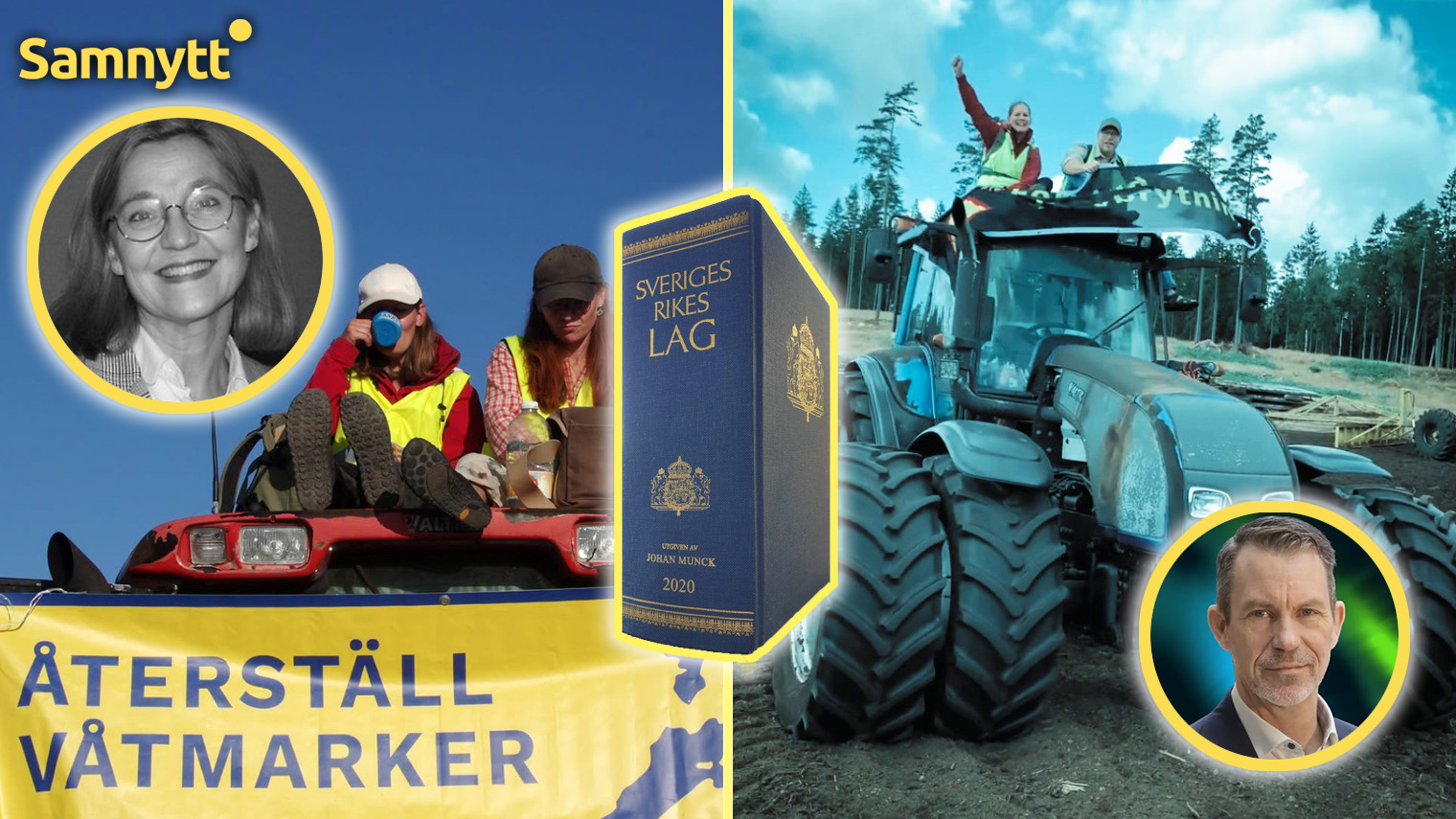
Acquittals and lenient verdicts against climate activists committing crimes during protest actions are sparking criticism. Karin Åhman, professor of constitutional law at Stockholm University, warns that freedom of demonstration has gained increasing influence in legal practice—while property protection risks being sidelined. Similar criticism is coming from the Swedish Transport Association following the Supreme Court’s much-discussed ruling on the E4 blockade.
Where is the line between legitimate activism and actions society must be able to intervene against?
The question has resurfaced after the climate actions at the peat extraction site in Grimsås, where activists from Restore Wetlands blocked operations for two weeks. This is one of several cases where climate activists have used blockades, trespassing, and other forms of civil disobedience to push their message.
Karin Åhman, professor of constitutional law at Stockholm University, notes in an interview with Tidningen Näringslivet that two fundamental rights are at odds in Grimsås: the freedom of demonstration and property protection.
Both mean that individuals should receive state protection against violations. But the freedom of demonstration does not exempt participants in protests from the criminal laws that otherwise apply.
— Freedom of expression and demonstration do not provide a free pass to commit crimes, says Karin Åhman to TN.
The Protection of Rights Has Advanced
At the same time, views on fundamental freedoms and rights have changed significantly in recent decades.
Åhman describes how Swedish law in the 1970s had a much narrower perspective. If an act was criminalized, it was not necessarily seen as a restriction of, for example, freedom of expression. In the following decades, European law contributed to making rights perspectives more significant.
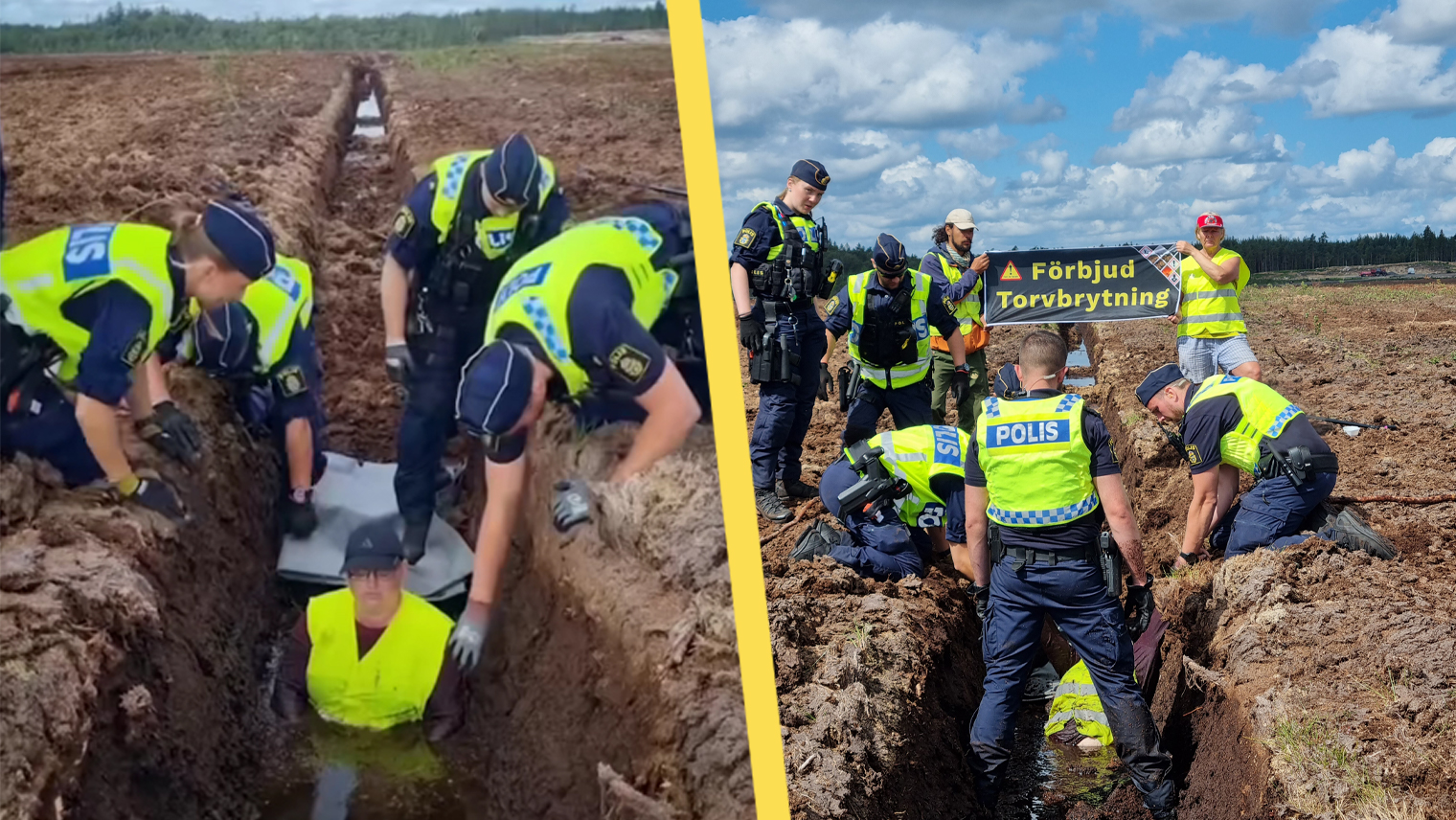
This means that freedom of expression and demonstration can today be factored in when courts assess acts that would otherwise be considered, for example, unlawful threats, vandalism, or other crimes. Even the Supreme Court has, in several cases, allowed rights protection to influence the criminal legal evaluation.
READ ALSO: Climate Extremists Sabotage Peat Mining – Climb on the Machines
A recent example is the climate activists’ blockade of the E4 in Stockholm in 2022. The Supreme Court ruled that the action was not serious enough to count as sabotage. The activists were thus acquitted of that charge, although the Court of Appeal’s convictions for disobedience to law enforcement stood.
Åhman sees the development as a sign of the changing perspective on the protection of rights. When people block a motorway or enter and disrupt a permitted business while citing freedom of demonstration, she says, these are issues that previously would not have been viewed as rights questions.
But the trend must have a boundary, she emphasizes. Otherwise, nearly any illegal act could be described as part of freedom of demonstration, as long as the perpetrator can link it to a political or ideological purpose.
Property Protection Risks Being Overlooked
While freedom of expression and demonstration have gained more weight in legal practice, Åhman argues that property protection is in a weaker position.
The problem is especially clear when private businesses face trespass or blockades. Legal interventions and compensation claims usually come only afterwards. Even if charges are brought, there is no guarantee that the affected landowner or entrepreneur will receive redress, for example if evidence is lacking.
— From a property protection perspective, the landowner, or here the peat extraction holder, is left holding the bag, says Åhman to TN.
In practice, private actors may therefore need to take their own preventive measures, such as fences and surveillance cameras.
Regarding Grimsås, Åhman assesses that the activists’ actions will likely be tried in court. She believes charges of vandalism or aggravated vandalism may be relevant, while much more would be required for the acts to rise to sabotage or industrial sabotage.
If politicians believe the legal system does not provide sufficient protection, she adds, there is also the option of changing legislation and toughening penalties for unlawful acts not protected by freedom of demonstration.
Swedish Transport Association: Supreme Court Ruling Could Be Abused
Similar criticism was previously raised by the Transport Association’s security chief Per Geijer after the Supreme Court’s decision on the E4 blockade.
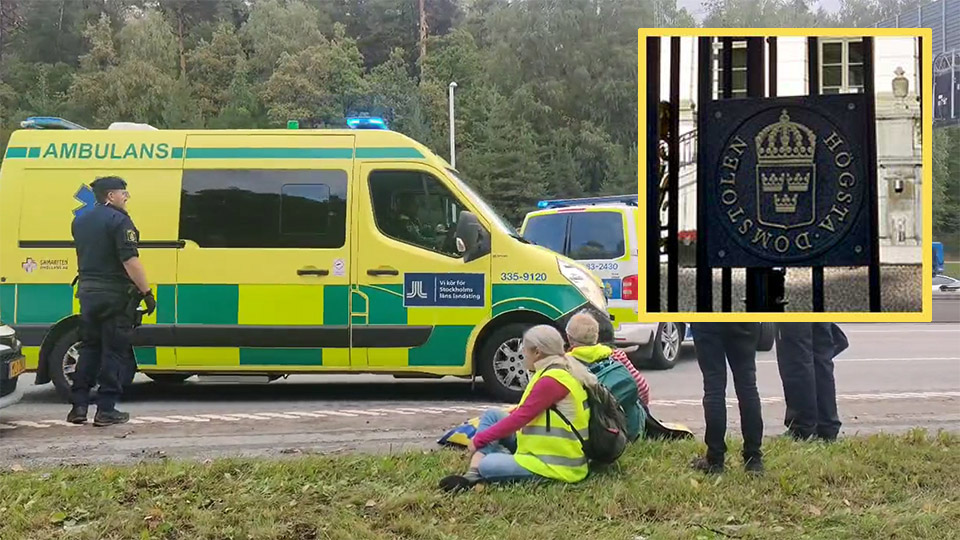
During the action, traffic near a hospital was blocked. According to police, four ambulances were among those caught in the queues, and at least one was driving with its siren on as a priority 1 case.
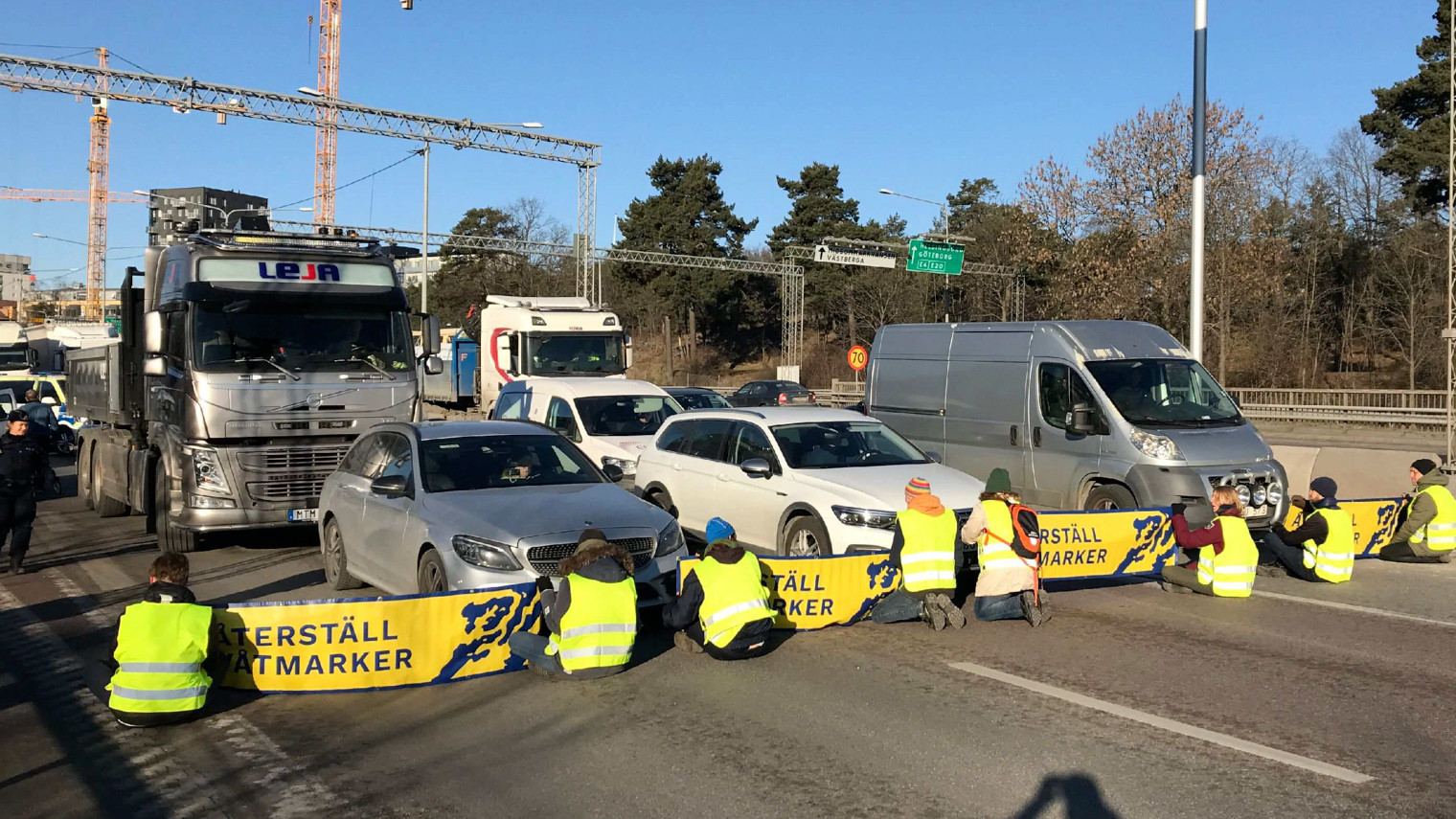
Despite this, the Supreme Court found that the disruption did not meet the requirements for sabotage. The court stressed, among other things, that a real freedom of demonstration requires society to accept certain disturbances.
READ ALSO: This Was the Punishment for the Climate Extremists Who Seized Fields – Celebrate Despite Convictions
Geijer emphasized after the ruling that the Supreme Court did not establish that road blockades are generally allowed. The court had judged the much narrower question of whether the specific act fulfilled all the elements of sabotage.
The problem, according to Geijer, is how the ruling may be interpreted and used by activist groups. He warned it could be seen as a green light for further blockades and that groups seeking to disrupt critical societal services might adapt their methods to loopholes in the law.
— The absence of a sabotage conviction is not the same as the action being justified, he told TN.
Warns of Attacks on Critical Societal Functions
The Transport Association’s criticism centers especially on the consequences when protest actions target transport infrastructure.
Gluing oneself to roads or blocking airports and ports cannot be seen, according to Geijer, as merely disruptive expressions of opinion. Such actions can affect critical societal functions and cause both safety risks and significant economic consequences.
Besides the risk of, for instance, an ambulance not getting through, he points to other effects that are hard to measure: people miss work, companies face delays, and tradespeople or deliveries can be prevented from arriving on time.
Geijer therefore calls for a review of the law. If the sabotage provision does not cover this kind of activism, he believes lawmakers need to consider changing the provision or introducing other legal tools that better protect critical societal functions.
He also wants to see a clearer legal mandate for police to promptly remove individuals blocking, for example, a road, and instead direct the demonstration to a place where it does not impede traffic.
According to Geijer, uncertainty about freedom of demonstration and expression risks making law enforcement too cautious. The result may be that serious disruptions are allowed to continue and that the justice system’s response comes much later, for example in the form of fines for disobeying law enforcement.
Calls for a Clearer Demarcation
Both Åhman’s and Geijer’s reasoning thus land in the same fundamental conflict: freedom of demonstration is a cornerstone of democracy, but the question is how far rights protection should extend when activism turns into trespass, vandalism, or blockades of other people’s businesses or critical social functions.
Åhman points to the risk that rights protections are abused if ideological motives are allowed to weigh too heavily in assessing criminal acts. Geijer, for his part, warns of the signals legal practice may send to other groups if the consequences of illegal protests are perceived as mild.
For both, lawmakers become a crucial part of the answer. If current rules do not mark the boundary where society thinks it should be, it ultimately becomes a political question to change them.
— We need to find a balance in this. The freedom of demonstration is self-evident. Not harming critical functions in society should also be self-evident, says Per Geijer to TN.