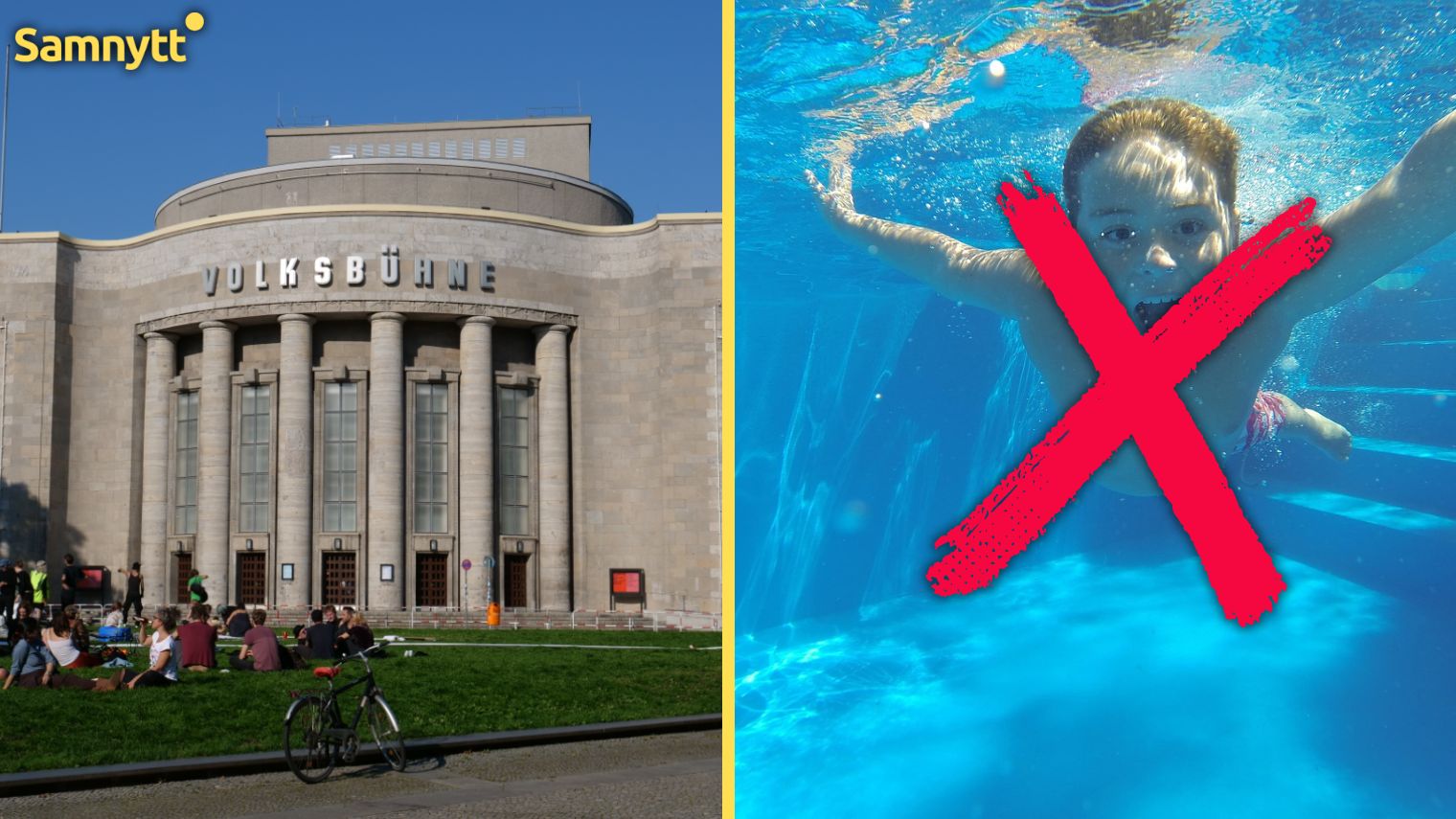
A temporary outdoor swimming pool in Berlin has found itself at the center of a heated debate about discrimination, public funding, and so-called protected spaces. After criticism that the pool would be exclusively reserved for Black people for six hours, the event has now been canceled, as the association behind it reported being subjected to alleged racist threats and threats of violence.
“Volksbad” opened on August 7 at Rosa-Luxemburg-Platz in front of the Volksbühne in central Berlin. It is a 25-meter-long and 1.3-meter-deep temporary pool that is scheduled to stay in place until early October. Entry is free, but visitors must book time slots.
The project costs about 300,000 euros and has been described by theater management as a political project addressing the dismantling of public infrastructure.
The outrage started when the Volksbühne program for Friday, August 14 stated that the pool would be “exclusively for Black groups” from 12 to 6 p.m. Visitors were also asked to respect this collective self-designation and the spaces associated with it. In practice, this meant the public pool, marketed as open to everyone, would be reserved for a specific group for six hours.
READ ALSO: Study: Black People Overrepresented in TV Advertising
The event was organized together with the association Each One Teach One, EOTO, which works on issues related to racism and strengthening the status of Black people. The association was to have exclusive use of the pool on Friday afternoon.
Volksbühne has argued that the arrangement complies with Berlin’s anti-discrimination law and that it’s about creating protected environments for groups who have experienced discrimination.
Political Criticism
The criticism came in part from leading Berlin politicians. CDU’s top candidate Stefan Evers said he personally dislikes dividing people by skin color and that he had understood Volksbad to be a pool for everyone.
FDP’s top candidate Christoph Meyer similarly criticized the principle, arguing that public spaces should bring people together, not separate them by skin color.
The issue of public funding has also become part of the debate. Volksbühne is a publicly funded cultural institution, and the pool project itself is said to cost about 300,000 euros. Reportedly, the theater receives around 20 million euros in public funding per year. Critics have thus questioned both the cost of the pool and the decision to use it for events where admission is restricted by skin color.

On the political left, however, the criticism has been dismissed. The Left Party’s top candidate Elif Eralp said an association had booked the pool for its members, thereby creating access to a place for people often affected by exclusion and racism. She argued it says something about the current debate that this is described as discrimination.
Volksbühne also changed the wording on its website. The text indicating the pool was exclusively for Black groups was removed and replaced with information that EOTO had booked the pool from 12 to 6 p.m. However, this did not change the fact that EOTO’s event was aimed at Black children and youths.
Canceled
The conflict then escalated. EOTO stated that the association received racist threat emails, threats of violence, and discriminatory comments on social media. According to the association, the physical and psychological safety of the children and youth could no longer be guaranteed—even with the help of security staff and police.
Volksbühne and EOTO therefore decided on Thursday to cancel Friday’s event. Theater director Matthias Lilienthal has at the same time said that cooperation with EOTO will continue and that they are planning a replacement activity for the Black children and youths who would have participated.
The conflict has thus evolved from a discussion about an unusual pool event to a larger political battle over the meaning of discrimination. Critics argue that a publicly funded project should not restrict access by skin color.
Proponents, on the other hand, contend that targeted events can be part of efforts to combat discrimination and provide vulnerable groups with specially protected environments.
READ ALSO: Researchers: Too Many White People in Advertising