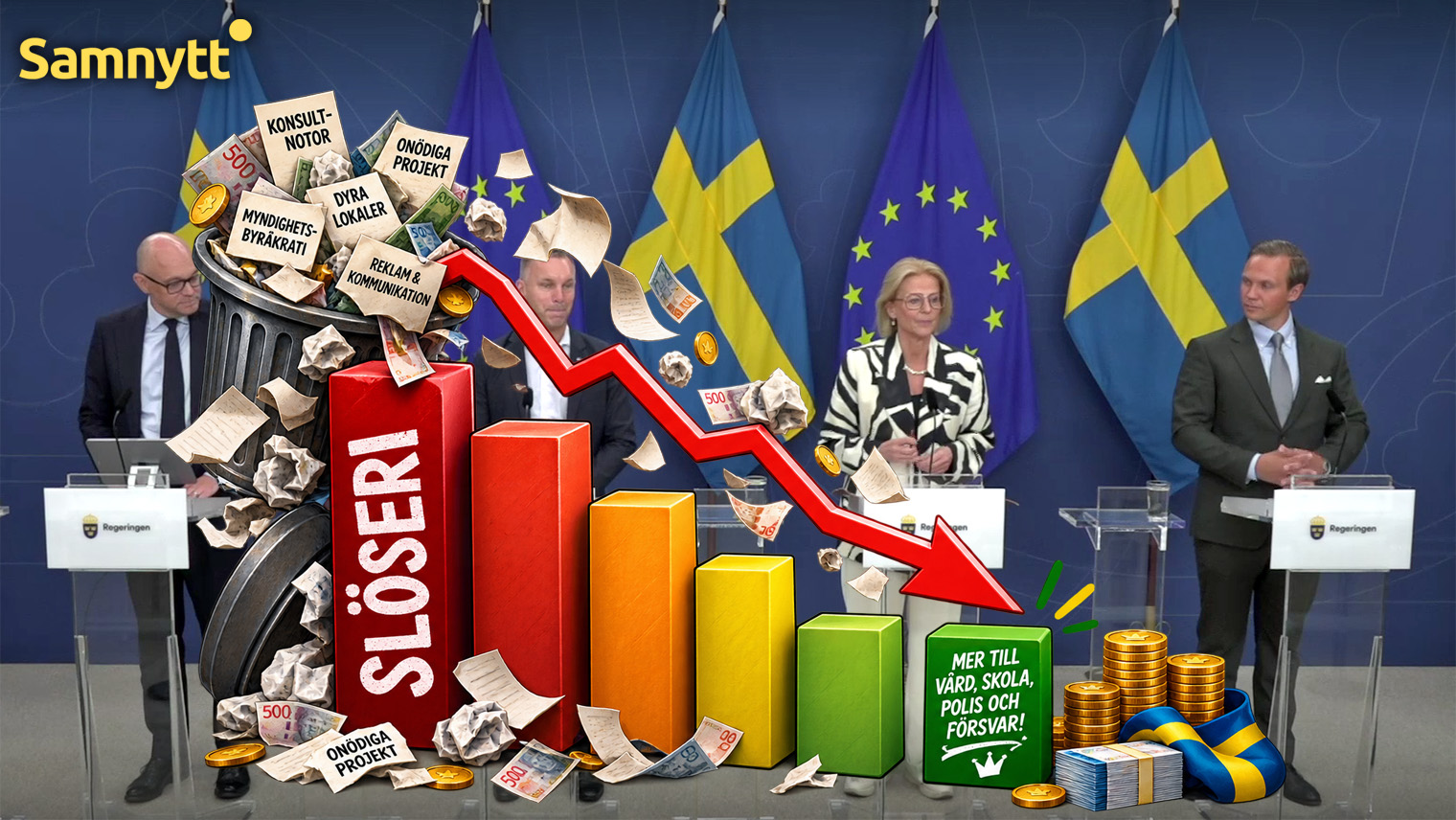
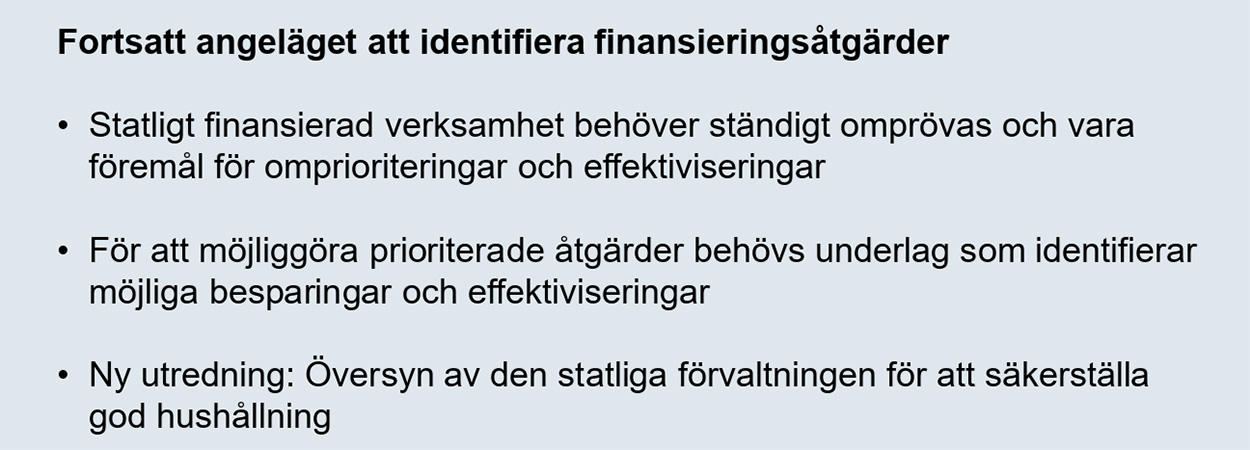
The Tidö parties are establishing a special waste commission to review state activities and propose savings, deprioritizations, and efficiencies. At a joint press conference on Friday, representatives from the four parties emphasized that future reforms should be financed to a greater extent through growth and reallocations – not by increasing taxes on work and savings.
The Waste Commission will be led by Åke Nordlander, former budget director at the Ministry of Finance and, since September 2025, Director General of the Export Credits Guarantee Board.
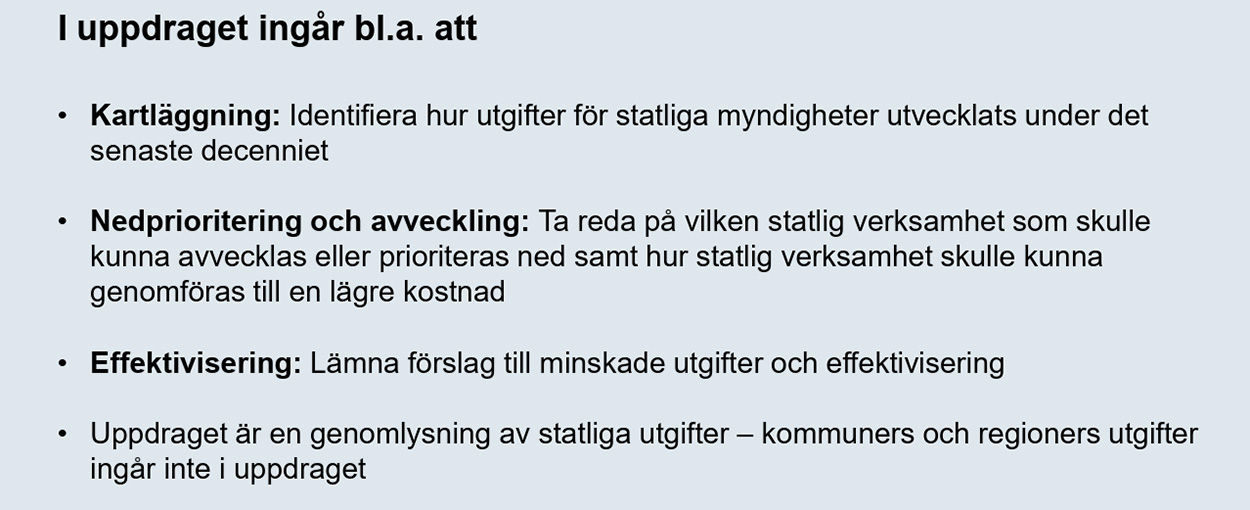
The assignment is to systematically review state operations and, among other things, map the development of activities and expenditures during the last decade. The investigation will also propose which activities and functions can be phased out or deprioritized, as well as measures that would allow government agencies to carry out their duties more cost-effectively.
Finance Minister Elisabeth Svantesson (M), Minister for Civil Affairs Erik Slottner (KD), Minister for Employment Johan Britz (L), and Chair of the Committee on Industry Tobias Andersson (SD) participated in the press conference.
Svantesson: Tax Money Should Be Used in the Best Way
Finance Minister Elisabeth Svantesson began by describing economics as the management of limited resources. According to her, it is therefore the state’s duty both not to collect more tax than necessary and to ensure that the money collected is used as efficiently as possible.
“We will work with taxpayers’ money responsibly and respectfully,” said Svantesson.
ALSO READ: SD: Establish an ‘Efficiency Minister’ – Will Stop Tax Waste
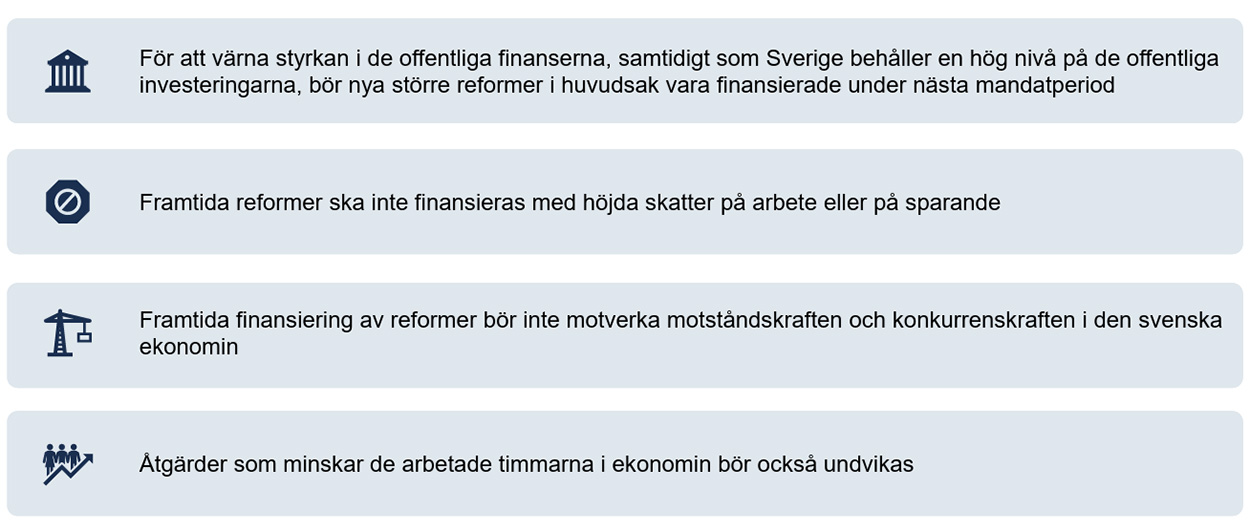
The background, according to the government, is the large expenditures expected for defense, the justice system, and infrastructure, among other areas. The government and the Sweden Democrats also assert that future reforms should not be financed through increased taxes on work or savings.
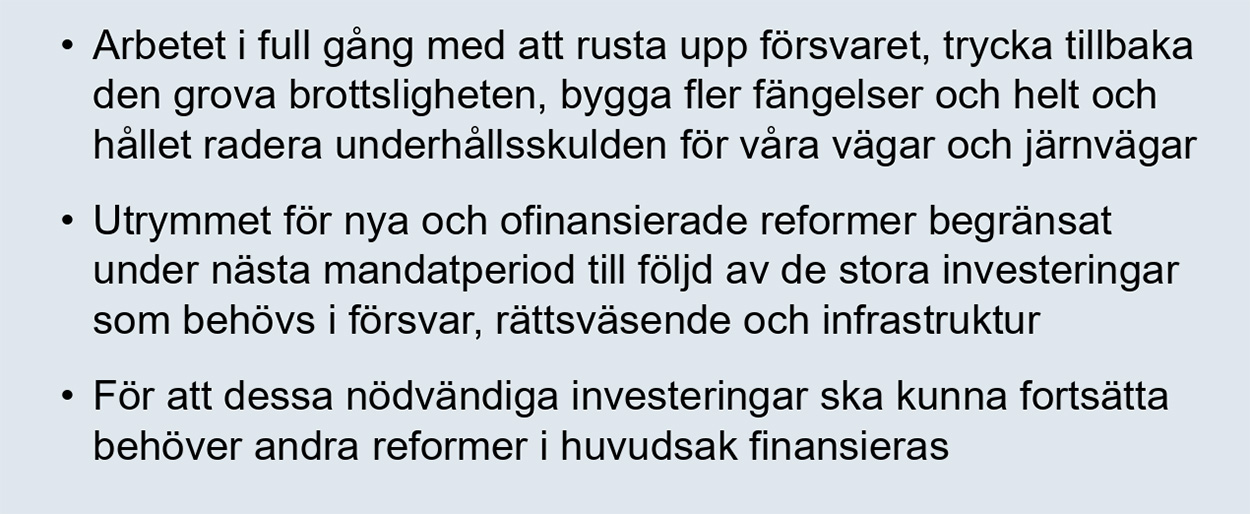
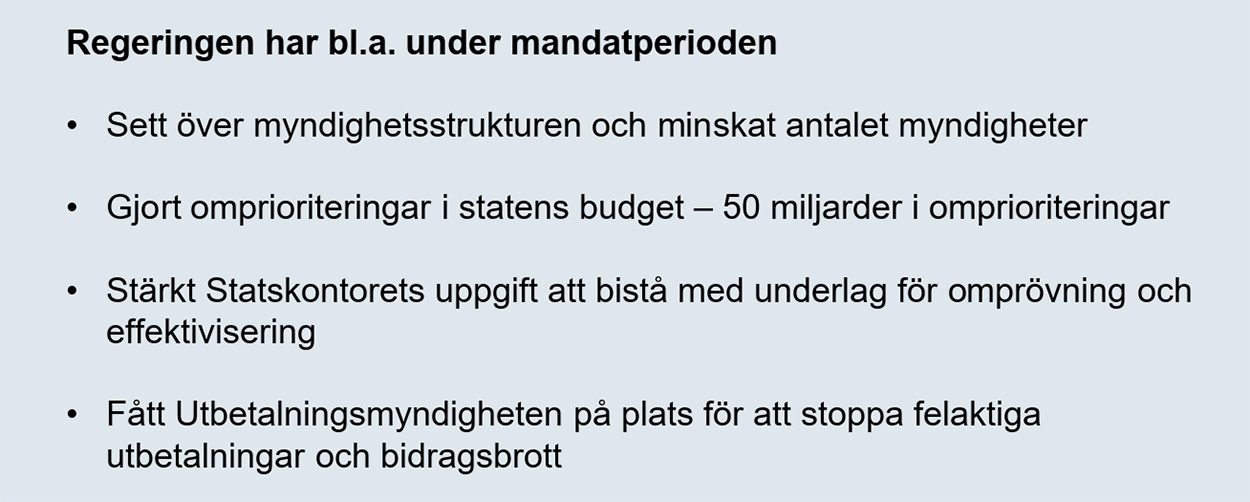
The funding should also not reduce the number of hours worked or impair Sweden’s competitiveness. Svantesson emphasized at the press conference that there is fiscal space for reforms but that a significant portion needs to go toward already identified investments. During the last parliamentary term, the government and SD state that about SEK 50 billion was reallocated in the 2026 state budget.
Slottner: The Pace Will Be Stepped Up
Minister for Civil Affairs Erik Slottner described the commission as the next step in an efficiency effort already underway during the mandate period. He pointed out that the government has decided to close down or merge about 15 agencies, and that initiatives affecting another 25 or so agencies have begun.
“Now you could say that we’re stepping up the pace and work even further through this commission,” said Slottner.
READ MORE: Taxpayers: Here is the ‘Worst Waste of the Year’
But the government does not see agency closures as the only way to reduce costs. Slottner also highlighted premises, communications, procurement, and digitalization.
According to him, the Swedish Agency for Public Management has estimated that up to SEK 4 billion could be saved through more efficient use of government premises and greater collaboration. He also pointed to the start of an “AI workshop,” which aims to quickly spread digital solutions within public operations.
Britz: The Money Should Go to Core Services
Minister for Employment Johan Britz emphasized that efficiencies should free resources for schools, healthcare, and the justice system. He also linked the issue to the need for higher economic growth, noting that one percentage point higher growth would mean about SEK 30 billion extra in annual fiscal space for reforms.
“It is important that taxpayers’ money goes to teachers, nurses, and police officers, not to a growing bureaucracy,” said Britz.
Britz also emphasized that the inquiry concerns state administration and does not include state transfers to individuals or government grants to welfare.
Andersson: “Clean Out What Previous Governments Let Grow”
Tobias Andersson welcomed the decision from the Sweden Democrats’ side and described efficiencies as the other side of a policy for economic growth. At the same time, he criticized the economic policies of left-wing parties and argued that the Tidö parties stand out by wanting both to grow the economy and to reallocate existing public resources.
ALSO READ: Government stopped waste – agency to lay off ten percent of its workforce
Andersson also linked the commission to the Sweden Democrats’ ambition to become part of the government for the first time after the next election.
“As a Sweden Democrat with the ambition and hope that our party will, for the first time, be part of the next government, we therefore view the government’s decision today very positively. It gives us an overview, insight, and a tool to reduce the mountain of costs that has been built up over decades,” said Andersson.
He described the commission’s mission as built around three parts – to map how agencies’ expenditures have developed, to propose activities and assignments that can be deprioritized or phased out, and to make concrete proposals for reduced spending and efficiencies.
For Andersson, however, the number of agencies itself is not the most important issue. Larger savings, according to him, may be found within the operations of existing agencies.
“It is perhaps even more about looking at what agencies are doing that in no way can be considered part of their core mission. I believe there is more money to save by streamlining assignments, increasing efficiency, digitalizing, and automating agency processes than simply trying to close as many as possible,” said Andersson.
When asked later whether the Sweden Democrats already have specific agencies in mind for closure, he echoed the same reasoning. Andersson said that even before the commission, the party had begun working on concrete proposals for efficiency, but that the new inquiry provides an overview and possibility for a complete review that a single party lacks. At the same time, he said that some measures can be implemented long before the investigation is complete.
He specifically highlighted administration and support functions as areas where, according to him, the public sector has fallen behind private enterprise. Private companies have used AI and digitalization to streamline communication, accounting, and HR, while Andersson argued that the public sector has instead continued to hire more communicators, support roles, and middle managers.
According to the SD representative, more money can therefore be found by increasing efficiency in existing agencies rather than through outright agency closures.
First Statement Expected Next Year
The government has appointed Åke Nordlander as the special investigator. Svantesson described the former budget director as highly suitable for the role, highlighting his in-depth knowledge of state operations, funding levels, and potential savings. She also noted that during his time at the Ministry of Finance, Nordlander regularly developed proposals for efficiencies and savings.
The inquiry is to present an interim report by March 12, 2027, and a final report no later than January 21, 2028.
The government does not, however, intend to wait for the final report before implementing additional measures. When this issue was raised at the press conference, Svantesson said that expenditure reductions would need to be discussed already in the next budget. Slottner emphasized along the same lines that the ongoing efficiency work should continue in parallel with the commission’s work.
ALSO READ: Swedish Aid to Terrorists Nominated for Tax Waste of the Year
The commission will therefore provide both a review of how state activities have grown over the past decade and a basis for the next parliamentary term’s fiscal priorities. The common line from the four Tidö parties at Friday’s press conference was that larger future expenditures should be met with a combination of higher growth, reallocations, and more efficient state operations – rather than higher taxes on work and savings.