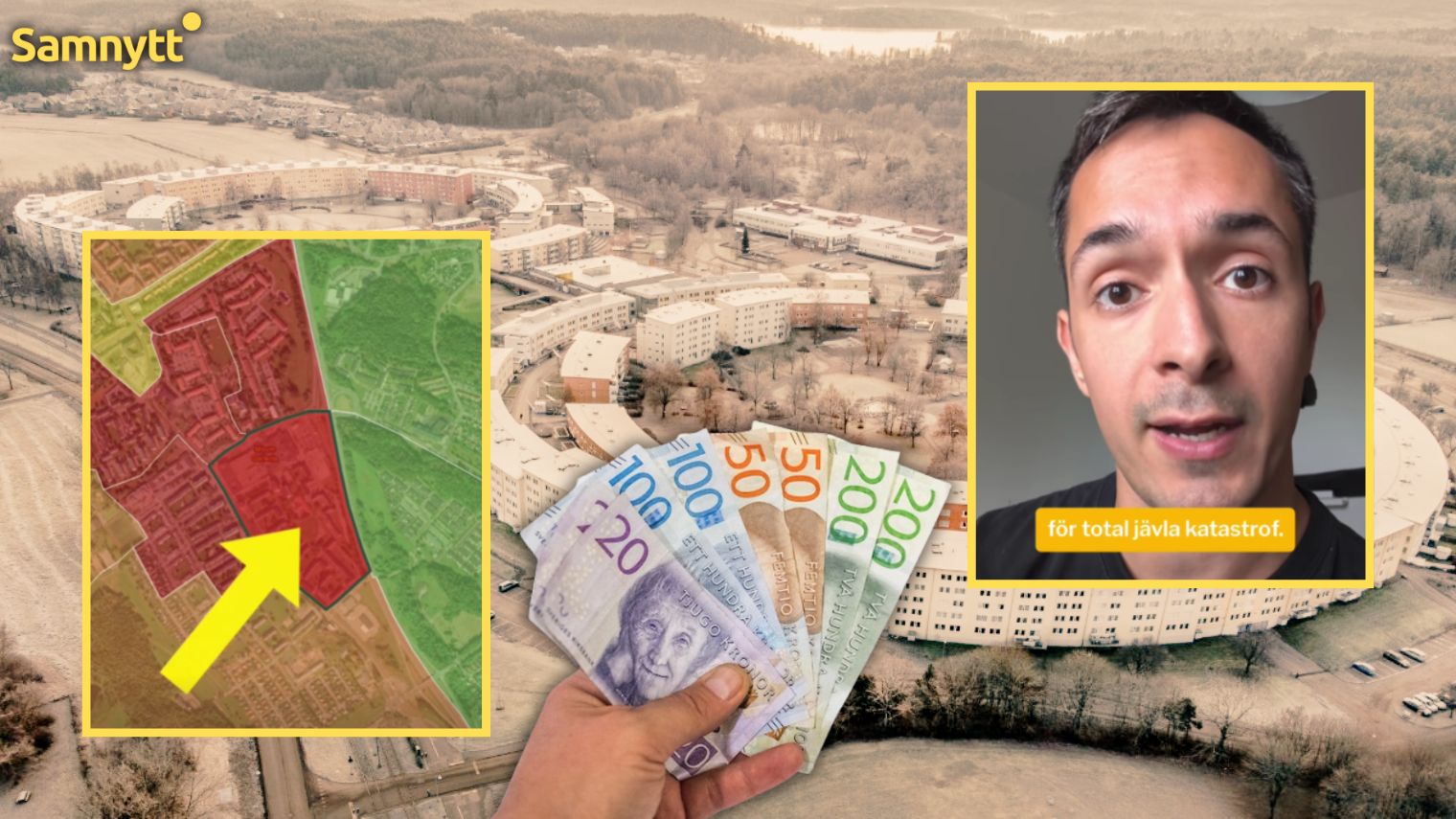
How is it that Swedish taxpayers are forced to support citizens from the Third World who have moved to Sweden, settled in so-called vulnerable areas, and year after year—even though many are of working age—live on welfare? That is the question posed by the Östgötapartiet in connection with the presentation of a thorough investigation into the realities of welfare dependency in Norrköping Municipality.
The number of people in Sweden who at some point during 2025 received income support, formerly known as social assistance, was 247,000. This is shown in the latest annual statistics from the National Board of Health and Welfare (Socialstyrelsen) published in June.
A total of approximately 142,000 households received financial assistance during the year, and municipalities paid out more than SEK 11.2 billion in total.
Of the approximately 247,000 recipients, 73,000 were children. Among the adult recipients, about 57 percent were foreign born—corresponding to around 99,000 adult foreign-born recipients, according to the rounded figures from the Socialstyrelsen.
READ ALSO: The government plans to lower social assistance for large families
This means foreign-born are clearly overrepresented among adult recipients, compared to their share of the adult population. The Socialstyrelsen reports statistics by, among other things, country of birth, and clearly distinguishes between natives and foreign born.
Locally, the differences are significant: municipalities with a higher share of immigrants also have more residents dependent on welfare. Malmö had the highest proportion in the country at 4.6 percent, while Vellinge had the lowest at 0.4 percent.
Local party investigates
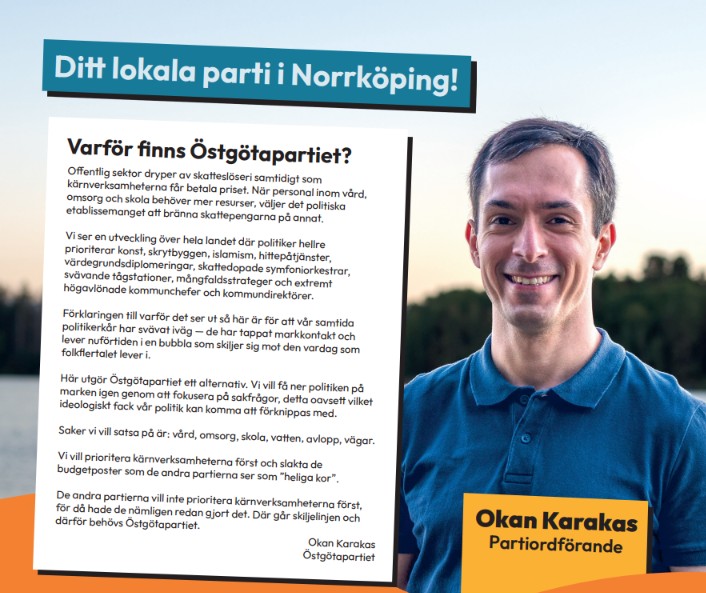
Since 2022, the local party Östgötapartiet has existed in Norrköping, focusing on prioritizing core municipal services by cutting back on things the municipality shouldn’t be involved with. The party positions itself as neither left nor right, instead choosing a pragmatic approach based on what they call common sense. They admit to having been inspired by Örebropartiet and its leader Markus Allard.
Östgötapartiet has previously investigated the situation regarding SFI (Swedish for Immigrants) in Norrköping and found it to be far from functioning well.
READ ALSO: Investigation reveals SFI fiasco: ‘Must return to their home countries’
Now the party has reviewed social welfare in the municipality and launched an interactive map where all details are presented, including demographics, incomes, contributions to the common pool, as well as withdrawals. The data is based on information from Statistics Sweden (SCB) and relates to 2024.
In a video clip, party leader Okan Karakas explains further details, stating that the real costs are much higher.
– However we look at this, it’s a recipe for total bloody catastrophe, says Karakas, adding that those immigrants who have settled into a life on welfare must return to their home countries.
Prioritizing tax money
Okan Karakas tells Samnytt that the idea for the map came about after internal discussions about wanting to understand the demographic composition of the municipality—and due to his own interest in statistics.
– The reason we want to understand the demographics is partly because people in the party, and many others in general, have long had the intuition that not everyone carries their own weight economically, especially immigrants of working age, he tells Samnytt.
– This naturally becomes a major problem when there are also testimonials from employees in Norrköping municipality saying that core services are systematically underfunded with the argument that ‘there is no money,’ in a municipality that actually brings in a lot of tax revenue every year. Clearly, there is a lot of money—but the question in the end is how it is prioritized.
READ ALSO: REVEALED: Granted over one hundred thousand kronor in social assistance in a single month
When the map was finished, it was initially an internal document, like much else the party works on and which never sees the light of day. But in this case, they eventually decided that there may be public interest in providing insight into the situation in different residential areas.
– And maybe this will also help our party by publishing something that does NOT come from academia, journalists, the municipality itself, or any of the big eight that govern Norrköping municipality—it comes from a local party without any mandate whatsoever, which, despite meager resources, manages to dig up information of great public interest about our municipality.
– Clearly, we’ve made the right call in making this public, given the reactions to the video.
What then does the party want to do about the problem?
Set language requirements for eligibility for benefits and allowances
– You must show a willingness to become part of Swedish society. Otherwise, there is no reason for Swedish society to spend tax money on you. We believe benefits and allowances should be conditional upon completing, or having completed, an approved SFI (Swedish for Immigrants) program.
– And you should, of course, make at least as much effort (if not more) after your SFI studies, by making yourself available to the labor market and doing everything possible to become employable or otherwise productive, thus carrying your own weight economically.
SFI should start documenting why participants drop out, not just that a dropout occurred
– This should be documented in the information system used for SFI here in Norrköping (which, I’ve been informed, is fully possible). Dropout reasons and notes should, of course, be reported directly to the municipality’s welfare caseworkers. This information could support decisions to deny welfare applications for those not taking language development seriously or not participating in assigned activities.
Encourage return migration
– Make it more difficult for those who have come to Sweden and systematized living on welfare year after year. We want to support the Swedish Migration Agency in future suitability assessments by voluntarily providing information that may reflect negatively on certain individuals.
– Possible scenarios include: immigrants long dependent on public benefits without trying to become part of society, those who cheat to obtain support, who systematically never complete SFI, are criminals, or in other ways have lifestyles that are detrimental to society.
Map out cheaters
– Norrköping municipality previously had municipal investigators who collected evidence of welfare fraud, but this was stopped when the Left Party in Norrköping reported the municipality to the police. Since we have free submission of evidence in Sweden, we want to reintroduce this and focus on those we suspect are cheating and who can be deported easily.
– In this way, we could address cases such as couples who divorce on paper to each apply for social assistance and access separate support and apartments, while in reality still living together and even subletting one apartment illegally to earn more money at taxpayers’ expense. This would also save Swedish taxpayers from having to support such fraudsters.
Other statistics: SCB must break down pension amounts in DeSO
– We need to see a more detailed breakdown of pension amounts in the DeSO tables. For example, it should be possible to see how much is earned pension and how much is guarantee pension, to get a better understanding of the guarantee pension withdrawals in different areas.
Other statistics: Individual data
– It would be interesting to be able to process individual data for residents in our most vulnerable areas—to compile much more information about residents, for example in Hageby, to gain an even clearer picture of the demographic composition.
– This would practically require legislation allowing authorities to be exempt from confidentiality when releasing data for processing related to residents in so-called vulnerable areas. This would make it possible to compile data from the social services, schools, SFI, and even from state authorities, to give us a better overall picture.
Vulnerable areas
The police describe a vulnerable area as a geographically defined space with low socioeconomic status and criminal influence on the local community. This may include open drug dealing, the recruitment of children and young people into crime, violence and threats, as well as a low tendency among residents to report crimes or participate in legal processes. Criminal influence in these areas can also make it more difficult for police to fulfill their duties without adapting their methods.
In the police’s latest national status report, published in December 2025, there are 65 vulnerable areas in Sweden. Of these, 46 are classified as vulnerable areas and 19 as particularly vulnerable, which is the highest degree in the police’s current classification. The previous category “risk area” has been removed. The increase from 59 areas in 2023 to 65 is largely due to the splitting of larger areas into smaller geographical units, rather than a sharp actual deterioration.
In Norrköping, there are two areas on the police’s list: Hageby and Navestad, both classified as vulnerable areas. No part of Norrköping is classified as particularly vulnerable. Klockaretorpet, which was previously included, is no longer designated as a vulnerable area.
READ ALSO: Red-green municipality defies parliamentary decision on social support