The Örebro Party hopes to achieve something no Swedish party has ever managed before – to enter the Riksdag using the 12-percent rule. When SVT visited Örebro to gauge the mood, they were met by both enthusiastic voters and harsh critics. Party leader Markus Allard himself held nothing back. SVT journalists were told they belonged to the ‘clique’, other politicians were called ‘mummies’, and a possible balance of power in parliament was summed up with the words: ‘Then things will kick off.’
There’s a buzz in Örebro ahead of the national election. At least, that’s the picture that emerges when SVT visits the city to examine the local Örebro Party’s attempt to make the leap from municipal and regional politics to the Swedish Parliament.
At the center is party leader Markus Allard, whose confrontational demeanor and often vulgar language have made him known far beyond his home municipality. Even before the interview properly begins, some friction arises. Allard wants to film the conversation with SVT himself.
– Yes, yes, absolutely, of course. And that’s because otherwise it’ll get cut and pasted. I don’t know you, I don’t know how you’ll handle this, but I’m prejudiced enough to think you’re not going to include everything, he explains to SVT.
Mistrust towards established media is a recurring theme with Allard. But he believes it’s not without reason.
READ ALSO: Markus Allard soon in the Riksdag: “Sweden must become a monoculture again”
Also present in Örebro were employees of the far-left magazine ETC. This worries Allard, especially in light of recent attention when the controversial magazine was used as a tool in SVT’s election interview with SD leader Jimmie Åkesson.
– Did you travel together? Allard asks the SVT journalist.
When the answer is no, Allard feels somewhat more relieved than before.
“Is he that angry guy?”
SVT also hit the streets of Örebro to ask residents what they think of when they hear the names Örebro Party and Markus Allard.
The responses reveal a marked split.
– Is he that angry guy? a young woman asks.
One man instead describes Allard as ‘a breath of fresh air,’ while an older woman thinks the Örebro Party is ‘skilled.’ Another woman concludes that the party is ‘very loud.’
– No, I don’t have much faith in him, another man says.
One of those interviewed is a man who immigrated to Sweden. He is considerably more positive.
– He sees what ordinary people dare not see, the man says.
READ ALSO: Allard to DN journalist: “Are you pretending to be stupid now or are you actually stupid?”
Some people SVT confronts at an outdoor café turn out to have just been discussing Allard.
– I’m rooting for him, I’m a big fan, but I get a lot of crap and dirt because of it.
The polarized image recurs throughout the report – for some, Allard is a politician who dares to say what others avoid, but what needs to be said. For others, his political style is a problem in itself and his views are too hardline.
The Road to the Riksdag Goes Through Örebro
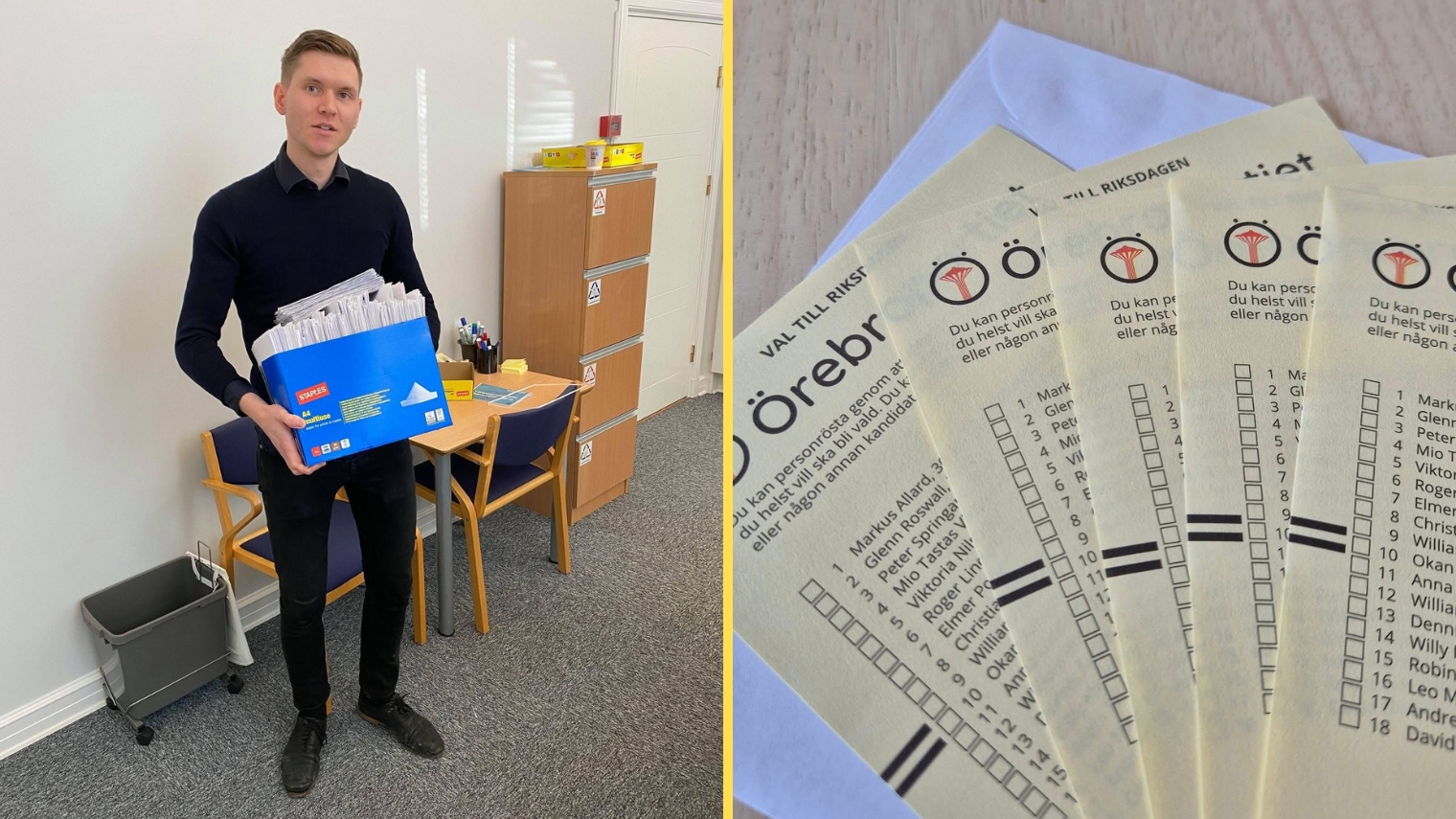
The Örebro Party’s national parliament bid is based on a provision in the Swedish electoral system that rarely receives much attention. Normally, a party must get at least four percent of the votes nationwide to participate in the allocation of parliamentary seats. But there is an alternative route. A party that gets at least twelve percent in an individual constituency is allowed to take part in the distribution of the fixed seats in that particular constituency.
For the Örebro Party, it is Örebro County that matters. No party has so far managed to enter the Riksdag in this manner. The Christian Democrats came close in 1988, when the party received 10.8 percent in Jönköping County.
SVT describes the Örebro Party’s chances as small, but also notes that support for the category ‘other parties’ stands out in Örebro County. Since the Örebro Party is reported together with other smaller parties it is impossible to determine exactly how large a share belongs to Allard’s party.
READ ALSO: Novus: Örebro Party SURGES in our poll
A poll from Novus/Nerikes Allehanda in May meanwhile suggested that Örebro Party would become the second-largest party in Örebro municipality if the elections were held then. In a previous interview with Samnytt, Allard was careful to downplay confidence in victory.
– I hardly want to even answer that question considering we have not succeeded yet. If we do, it will be really big. But we’re not there yet.
His concern is rather that high polling numbers will give the impression that the result is already decided.
– I constantly try to be prepared to fail. Because I know how much it would hurt if we miss out on the Riksdag.
Allard to SVT: “You Belong to the Clique”
However, it is mainly Allard’s way of expressing himself that stands at the center of SVT’s report. He has made curses, personal attacks and drastic metaphors something of his political trademark.
He himself believes his language is closer to how ordinary people actually speak than the language used in politics and established media. When SVT brings up the criticism of his tone, he attacks the journalists.
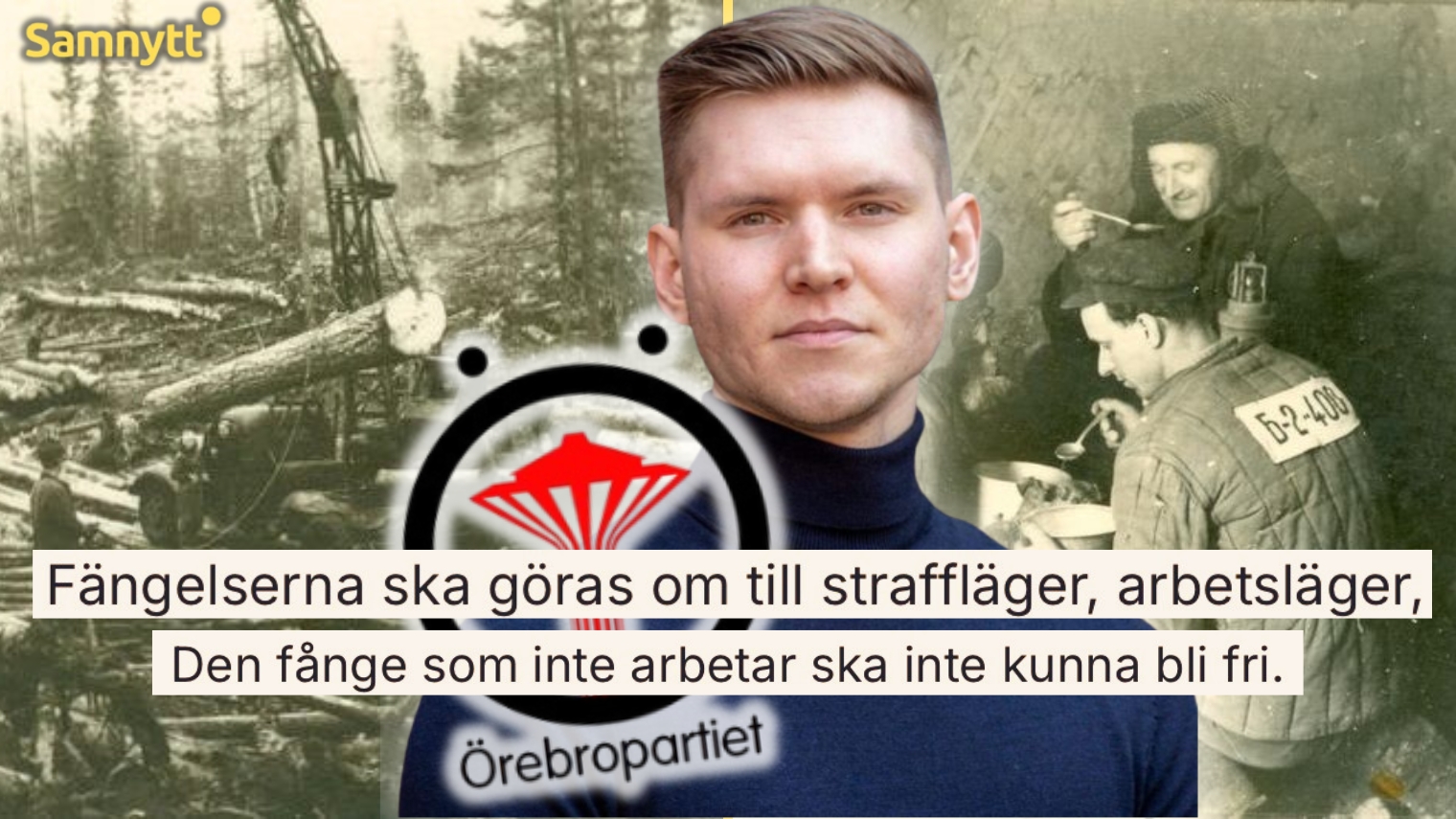
READ ALSO: Örebro Party: Introduce Labor Camps
– I think that the language you have in your damn narrow-minded SVT corridors in Stockholm is different from what it sounds like in the construction site barracks, in the break rooms. Of course it’s different.
Then comes the conclusion:
– Because you belong to the clique. You’re a minority and people speak differently.
Allard believes that the spread of his many clips from the podium is a sign that this approach serves a purpose.
– I think these clips go viral for a reason. I think there’s something there that attracts people.
He believes that some voters even find it almost liberating to hear someone speak like that.
– Finally, someone says what I feel and think. Unlike these damn mummies.
Closed Borders and Deportations
Behind the spotlight on Allard as an individual is a party that in recent years has undergone a significant political shift.
The Örebro Party was founded in 2014 after Allard was expelled from Young Left and the Left Party the previous year, and initially had a more clearly left-wing profile. Today, a restrictive migration policy is among the party’s most prominent issues. Among the proposals highlighted by SVT are closed borders, a halt to new citizenships, and the deportation of criminals.
READ ALSO: Markus Allard’s plan for Sweden: Deport criminal immigrants – even those born in Sweden
In its new party program, the Örebro Party goes further. The party advocates a total stop to immigration to Sweden, including the abolition of asylum immigration, and wants to abolish what it describes as the legal special rights of minorities. The party also proposes “forced labor as the norm” and uses the term ‘labor camps’ as an alternative to what it calls ‘detention prisons.’
In a previous interview with Samnytt, Allard described migration and demography as the most fundamental political issue. In this area, Örebro Party competes with the Sweden Democrats and has in several areas made the larger anti-immigration party look pale by comparison.
– The most important thing is to close the borders, start a remigration policy, and stop the population replacement.
At the same time, he does not want to reduce his politics to a single issue.
– Journalists love to ask which are the most important issues. I usually say that Sweden is the most important issue. Everything is connected.
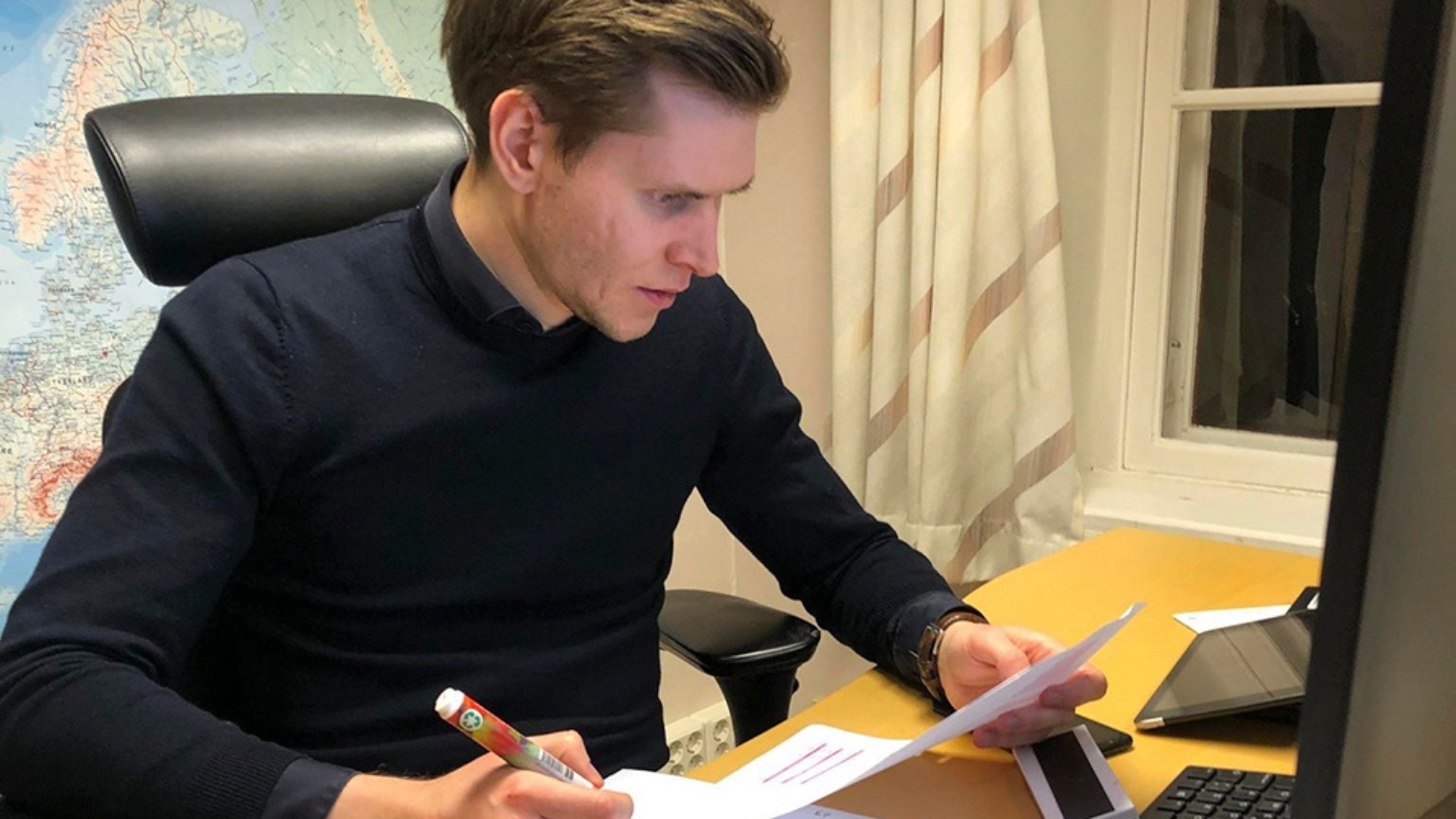
Compares Politics to a Leaking Sewer Pipe
At the same time, Allard emphasizes that the difference between the Örebro Party and other parties is not just in what decisions they want to make. Equally important, according to him, is how politics should be conducted.
SVT asks about organized crime. Allard’s answer is characteristically brief.
– It’s pretty easy to solve. It’s raw power. Jail and deport.
He then develops his reasoning and accuses the political establishment of making simple problems unnecessarily complicated.
– The problem is that our politicians have twisted themselves into knots and are doing their damn intellectual acrobatics to explain why it’s just impossible to get from A to B.
To illustrate what he means, Allard pulls out one of the report’s more drastic examples. He imagines a tradesman who discovers that sewage water is spraying out of a pipe.
Instead of fixing the pipe, Allard says, the political equivalent would be to first develop an action plan, then arrange a workshop, and finally hire consultants.
– And then it ends up that you don’t even seal the damn leak, but do something else. You put a little pink, no, a rainbow-colored bow at the bottom of the sewage pipe to make it LGBTQ-certified. This is how it goes down.
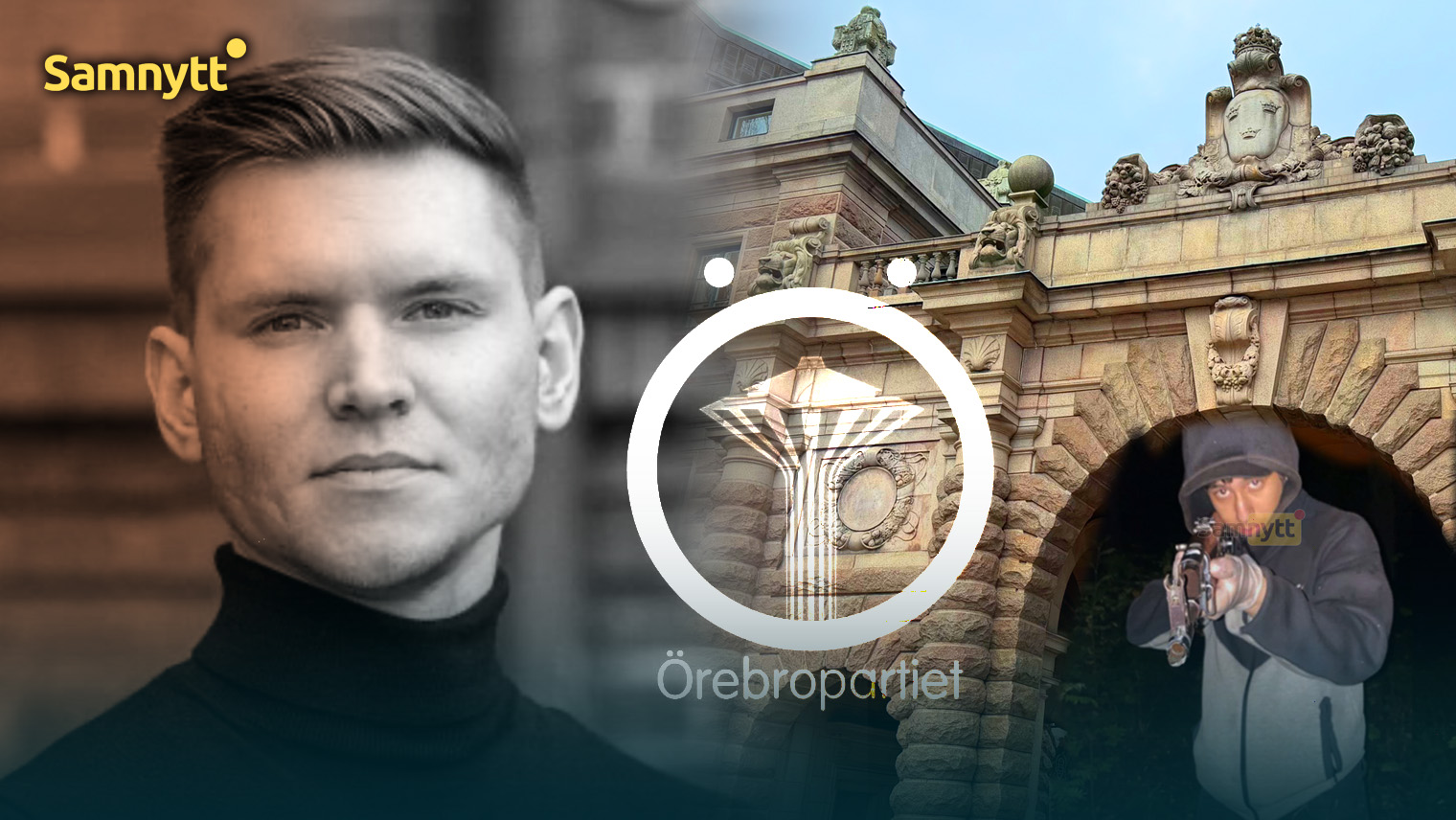
Other Politicians: ‘Usually Ends in Chaos’
It’s a political style that does not only divide voters. Even among Allard’s colleagues in Örebro, opinions are, to say the least, varied. When SVT asks Left Party’s Martha Wicklund what she thinks about Markus Allard, the answer is extremely brief:
– No, thanks.
The Centre Party’s Abdulrahman Ibrahim Muhammed observes:
– He’s not your classic politician, let’s put it that way.
Christer Johansson from the Sweden Democrats gives a more mixed opinion.
– He actually has good ideas when he starts out. But they usually end in chaos.
For Allard himself, poor relations with political colleagues is not an argument for changing his style.
– The main thing for me isn’t to be friends with people.
He instead describes the voters as his employers.
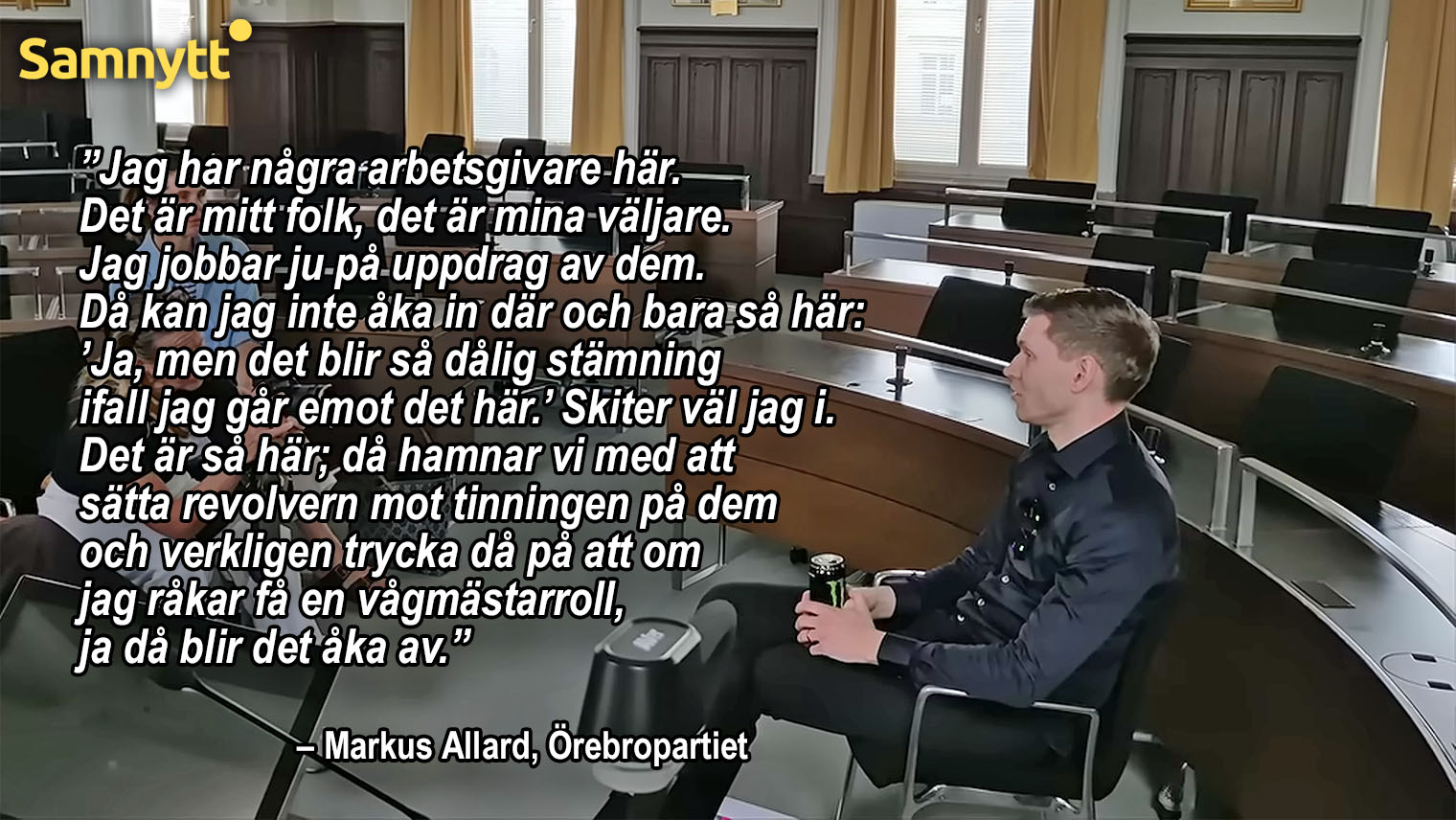
– I have a few employers here. They are my people, they are my voters. I work on their behalf.
That other politicians may be irritated or that the atmosphere may suffer is something he says he doesn’t care about.
– Then I can’t go in and just be like: “Oh no, it’s going to be awkward if I go against this.” Like I care.
Slams Sweden Democrats: ‘They Have Become Part of the Clique’
The Sweden Democrats are particularly interesting in this context. In many areas, the Örebro Party and SD have now converged on policy issues.
But when Samnytt previously interviewed Allard, he described the difference between the parties as much deeper than single issues. He accused SD of smoothing out their edges as the party moved closer to power.
– They think we’re too loud and too edgy. We haven’t dulled ourselves. They’ve been very interested in the Moderates looking at them and saying: “How dashing you are.” We’re more interested in taking down the Moderates and taking over.
Allard summarized the difference in view of political change:
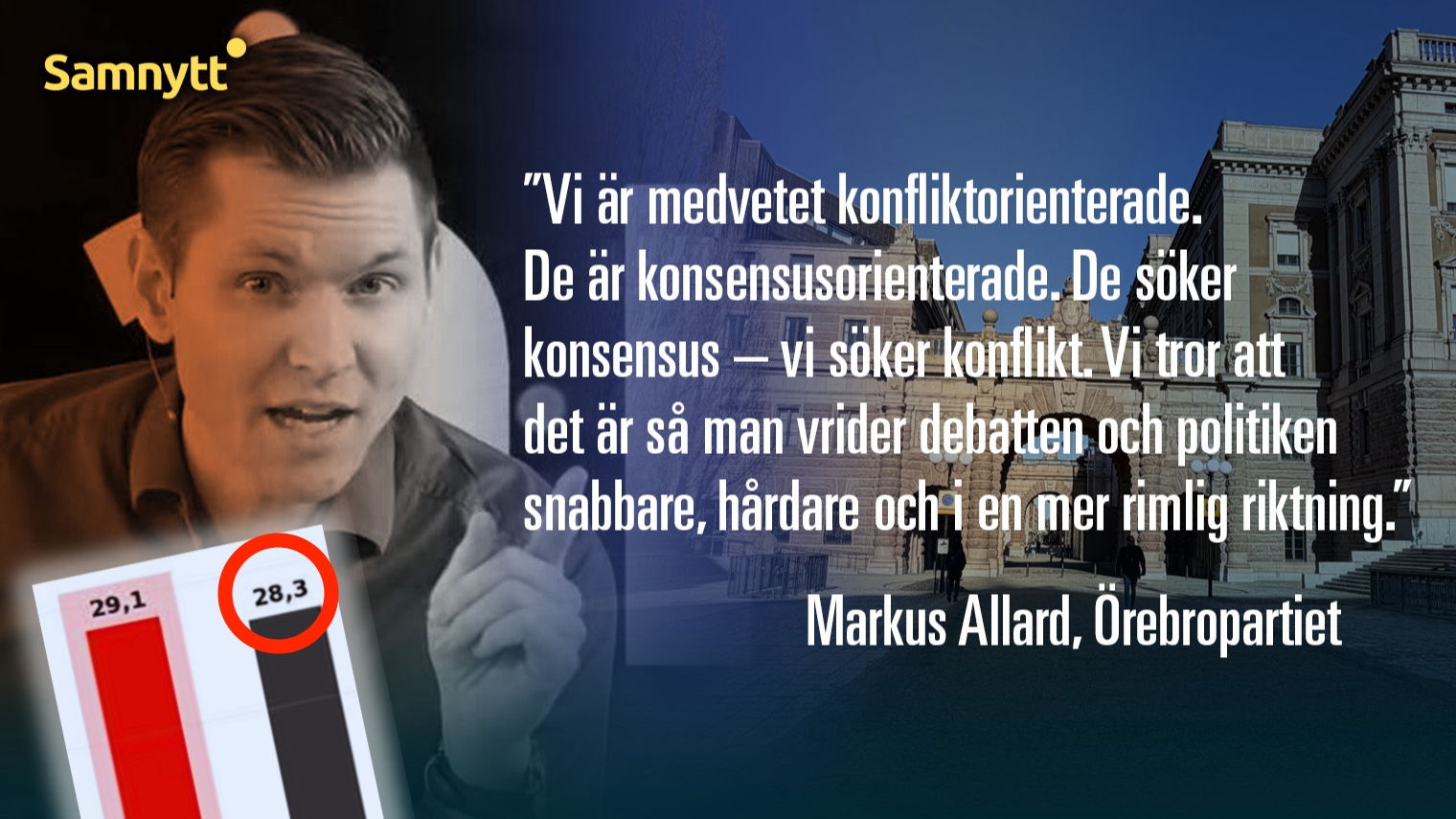
– We are deliberately conflict-oriented. They are consensus-oriented. They seek consensus – we seek conflict.
According to him, the Sweden Democrats were strongest when the party still acted as a challenger to the entire political system.
– The times SD benefited most in terms of public opinion was when they had the “give them hell” attitude. Then they were fighters. Now I think they’ve dropped their guard.
The verdict on today’s party was harsh:
– They’ve become part of the clique, and they want us to become part of the clique.
The criticism from leading Sweden Democrats – including party leader Jimmie Åkesson – of Allard has been at least as harsh.
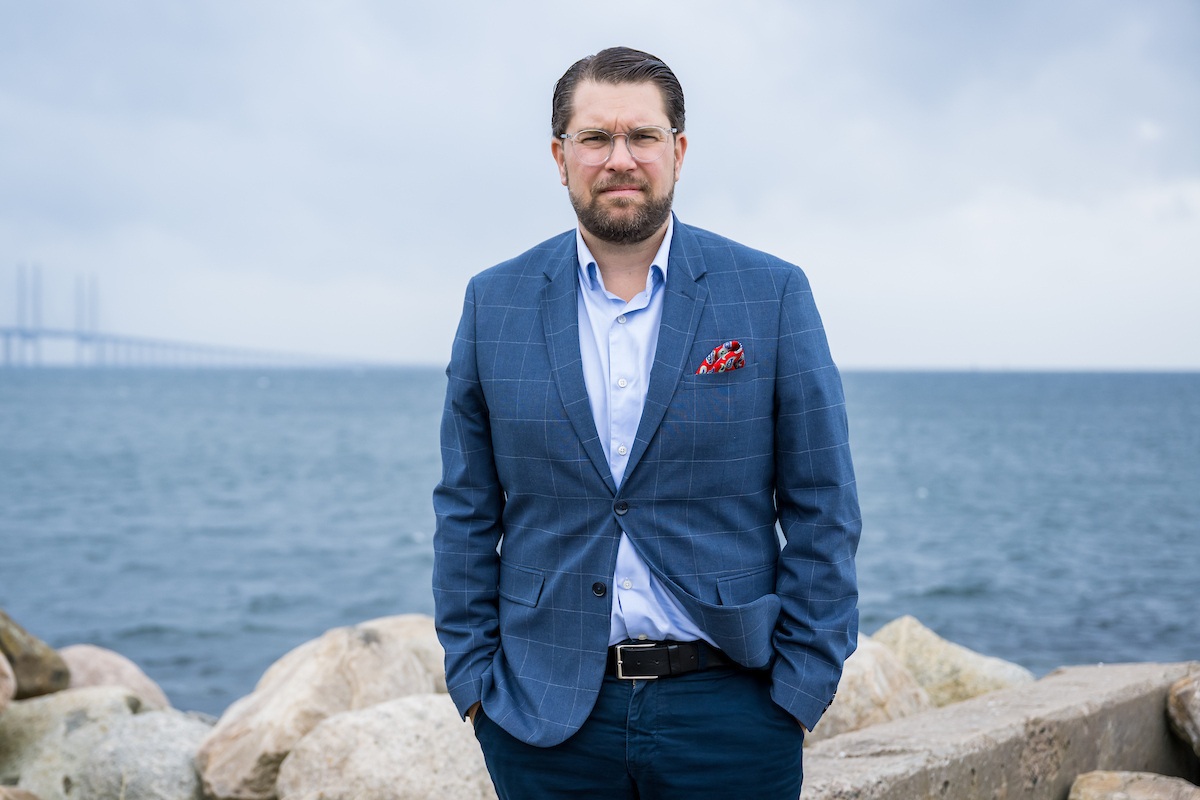
“Too little and too late”
The other parties in the Tidö Agreement governing coalition do not escape criticism either. Allard admits that the government has carried out some reforms he sees as steps in the right direction, including in criminal policy and regarding fuel taxes. But he considers the reforms inadequate.
– They’ve taken some baby steps in the right direction. They’ve introduced some things in criminal policy and some on fuel taxes. But again, it’s too little and too late.
READ ALSO: Markus Allard in Migration Debate: “Sweden belongs to the Swedes”
His argument is that Sweden has changed so much that incremental reforms are no longer enough.
– Societal development has gotten so far away from us that major leaps are needed to catch up.
Wants to Minimize Islam’s Influence
The Örebro Party’s attitude toward Islam also differs from many established parties. For Allard, freedom of religion is not the primary concern, but rather how Sweden is affected.
– We want to reduce Islam’s influence to an absolute minimum, Allard said in a previous Samnytt interview.
He describes Islam as more than just a religious belief.
– Islam is not just another religion. Islam is also a political expression.
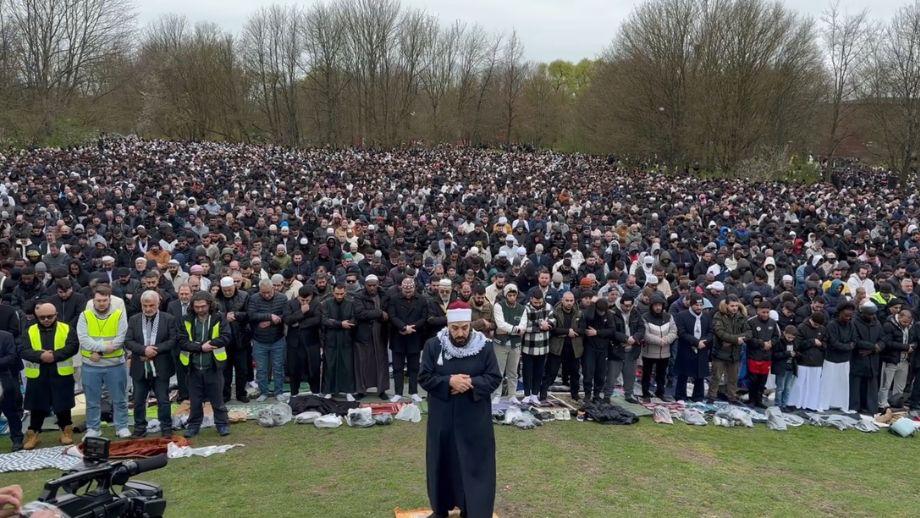
At the same time, Allard says he accepts Islam as a private religious practice.
– If you want to be a Muslim and have religious practices, you can have them at home. If religion is reduced to a private matter, there’s no problem.
What he opposes are demands for workplaces, authorities, or other public bodies to adapt to religious requirements.
– We should not adapt even a millimeter. Not in workplaces, not in public service, and not in legislation.
“We Shall Become the Largest”
Even though the immediate parliamentary strategy centers on trying to reach twelve percent in a single constituency, Allard describes much greater ambitions. He does not want the Örebro Party to become yet another minor parliamentary party.
– The Örebro Party is pointless as a party if we just become another useless little party hovering between five and ten percent.
He sums up his goal in four words:
– We shall become the largest.
At the same time, in an interview with Samnytt, Allard has emphasized that his remigration policy does not mean that all people with foreign backgrounds should leave Sweden. Instead, he makes assimilation a central dividing line.
– I don’t want to send out people just because they are not ethnic Swedes. If people have done everything they can to become culturally Swedish, then what’s the problem?
“Then Things Will Kick Off”
Whether the Örebro Party will make it into the Riksdag in September is difficult to answer. The twelve percent rule gives a theoretical possibility, but the bar is high and there is no historical precedent.
SVT’s numbers for the ‘other parties’ category also do not reveal how many of these voters actually intend to vote for the Örebro Party.
But if Allard were to succeed and the allocation of seats placed him in a balance-of-power role, there is hardly any doubt about how he intends to use it himself.
READ ALSO: Bookmaker: Here are the Örebro Party’s chances of reaching the Riksdag
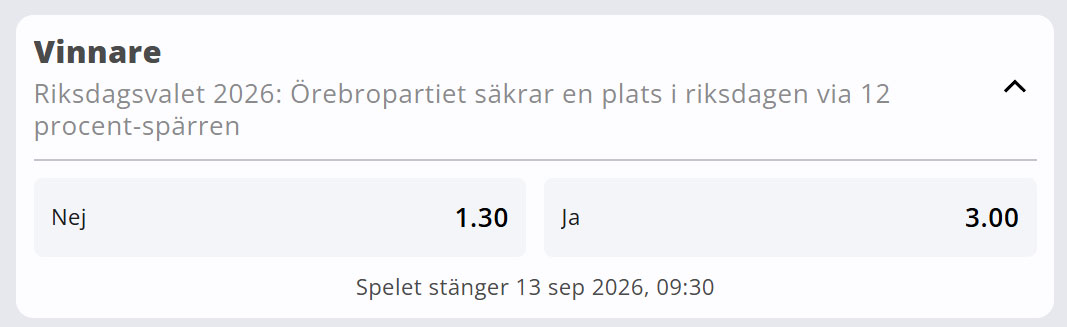
The bookmaker Betsson has cut the odds from 6 to 3 for those betting on success, meaning the chance has doubled.
At the end of the SVT report, he returns to his view of politics as an exercise of power, rather than relationship-building. He does not intend to enter the Riksdag to be liked by the other parties.
– Then we’ll be putting the gun to their temple and really pressing the point that if I end up with a balance-of-power role, yeah, then things will kick off.
READ ALSO: Allard orchestrated a Bonnier newspaper coup – accused of “troll factory”