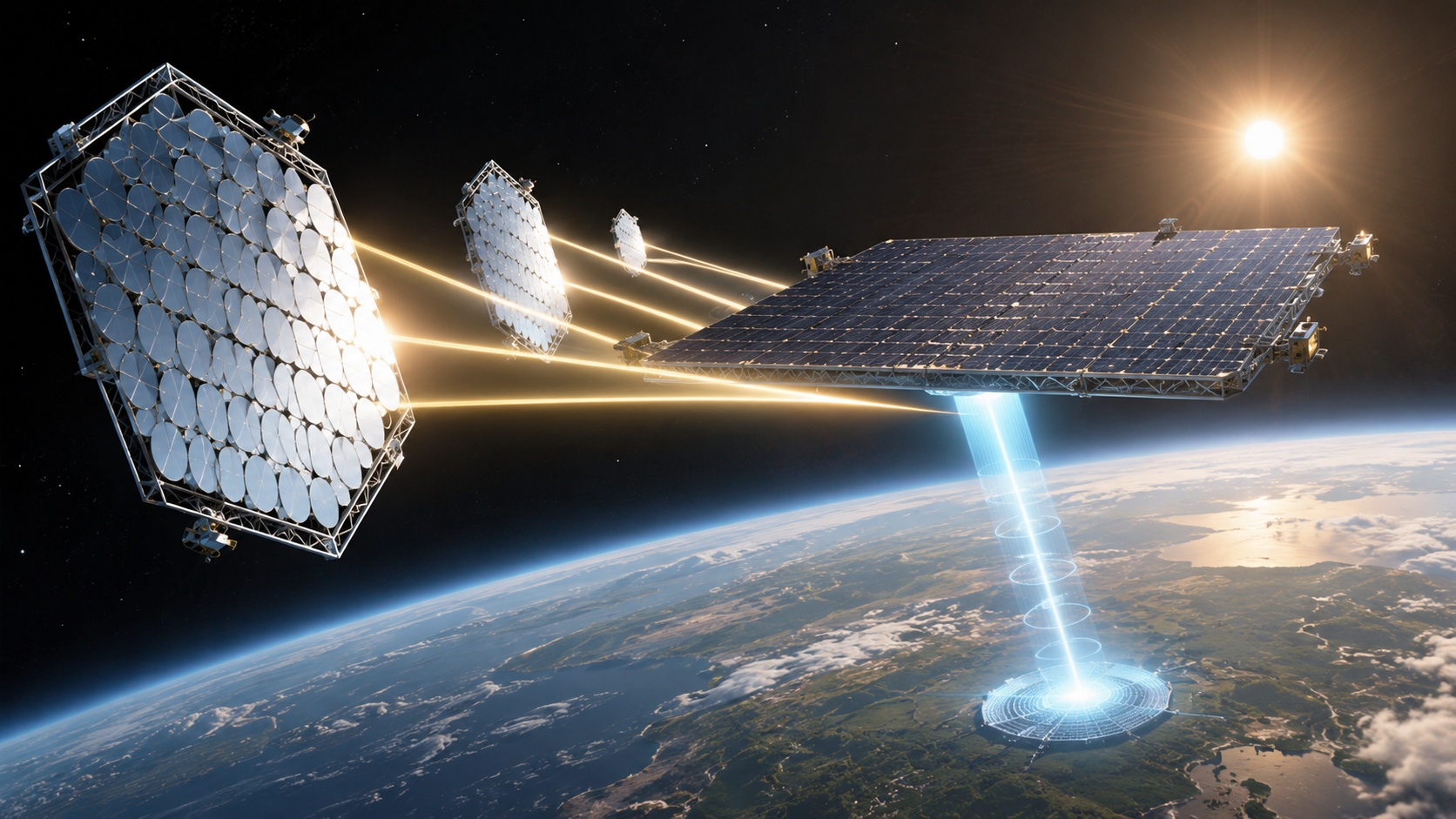
Japan is planning to conduct an experiment in which electricity generated by solar panels in space is transmitted to Earth via microwaves—something that could be a world first and may help address electricity shortages as well as support future lunar exploration.
The Japan Aerospace Exploration Agency (JAXA), Japan Space Systems, and other organizations plan to carry out the experiment within this fiscal year. The test involves launching a small satellite equipped with a solar panel that measures about two meters wide when deployed. The satellite will be placed in orbit at around 450 kilometers altitude, where it will convert electricity into microwaves and send them to a designated site in Japan.
The initiative has been named the Ohisama Project, after a Japanese word for the sun.
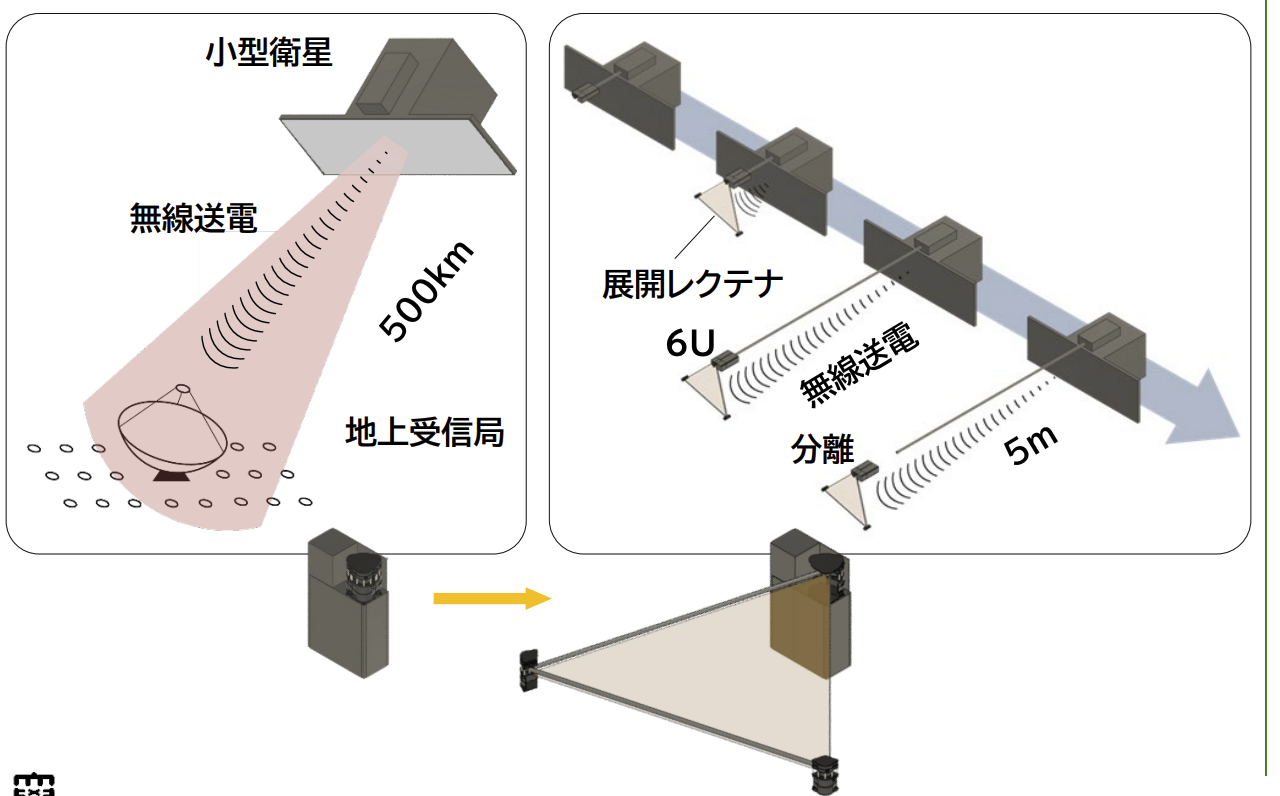
The experiment will test whether the satellite can transmit electricity as intended and determine how large an area ground-based microwave receivers need to cover. The transmitted energy could spread over an area of 20 to 40 kilometers. Receivers will be placed within a radius of 40 kilometers, centered in Saitama Prefecture near Tokyo. Several transmission tests will be conducted over several months.
World First
In 2023, the California Institute of Technology successfully transmitted microwaves from a satellite to the ground. The JAXA project aims to be the first in the world to extract electricity from microwaves received from space, even though the satellite’s electric production capacity is relatively small—up to 720 watts.
The project will also investigate the effects of microwaves on the ionosphere, the upper part of the atmosphere. The ionosphere contains plasma composed of electrons and ions. If this plasma is disturbed by the satellite’s energy transmissions, it could interfere with the radio waves used for GPS and wireless communication.
The test satellite will be launched using a small Kairos rocket developed by the Japanese startup Space One.
Harnessing the Sun
Space-based solar energy is not affected by weather and can take advantage of the intense solar radiation in space, enabling an electricity production efficiency roughly five times that of ground-based systems. Such a system could be used to transmit energy via microwaves to regions experiencing electricity shortages.
JAXA aims to launch a large power-generating satellite into geostationary orbit at around 36,000 kilometers altitude by 2050 at the latest. It could produce 1 gigawatt of electricity, equivalent to a nuclear power plant.
Even though the cost to construct such a satellite could reach 1.2 trillion yen, or about $7.5 billion, the project’s goal is to keep the electricity production cost at around 7–10 yen per kilowatt-hour, comparable to ground-based solar power plants.
2.5 Square Kilometers
To realize this vision, solar panels covering 2.5 square kilometers would need to be deployed. JAXA is planning experiments to try to unfold and assemble large structures in space.
Space-based solar power was first proposed in the USA in 1968, but has yet to be realized due to the large number of heavy rockets required to transport the equipment. When companies like SpaceX entered the rocket launch market in the 2010s, transport capacity increased and some barriers were lowered.
The technology for transmitting electricity from space could also be used in lunar exploration. The US-led Artemis program is considering building a base near the moon’s south pole, an area where producing electricity can be difficult due to limited sunlight.
By transmitting electricity from a power-generating satellite in orbit around the moon, robots and lunar rovers could be powered even near the south pole.
– The Ohisama Project will demonstrate technologies that can be used in lunar exploration, for example, satellite positioning and microwave control, said JAXA associate professor Koji Tanaka.
For space-based solar power to become a reality, legal frameworks must also be established.
– Regulations are needed to secure the microwave frequencies used for power transmission, said Hiroki Yanagawa, deputy director of the satellite observation division at Japan Space Systems.