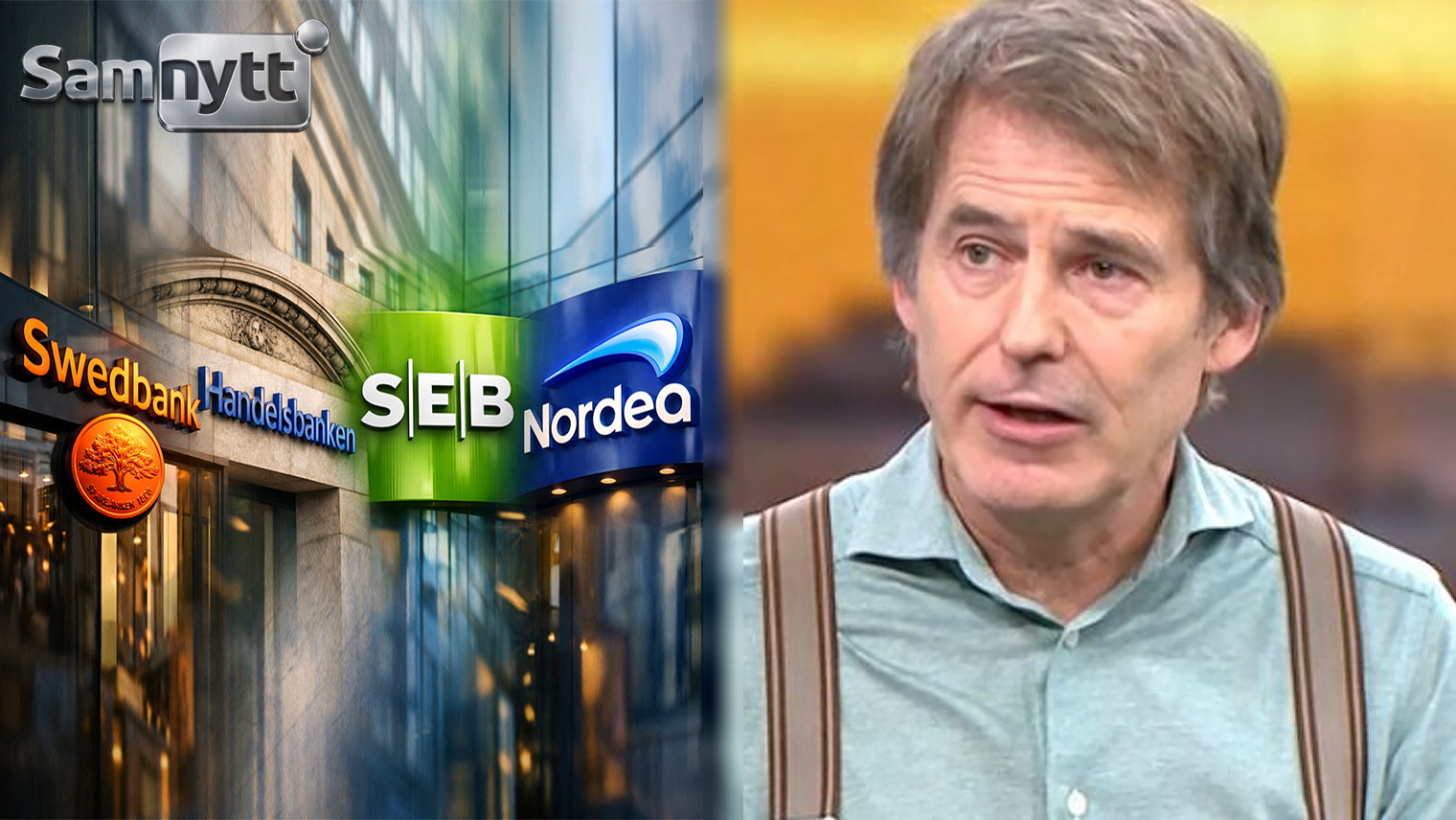
Earlier this spring, the major banks pointed to rising market interest rates and increased :censored:6:cdd6bbaa89: uncertainty as reasons for raising variable mortgage rates. Now that market interest rates have fallen back, the banks are still sticking with the higher mortgage rates. The criticism is fierce. Savings economist profile Claes Hemberg argues that the banks are using their dominant position to squeeze households and boost profits, while customers are also expected to bear the costs of future political taxes on the banking sector.
During March and April, several major banks opted to raise their variable mortgage rates. Their explanation was that market interest rates had risen as a result of :censored:6:cdd6bbaa89: uncertainty and the war in the Middle East, which, according to the banks, increased their financing costs.
Now, however, market interest rates have declined. Despite this, most banks have not lowered their variable mortgage rates. Only SEB has made a modest downward adjustment — and it was significantly smaller than the previous hike.
This has drawn criticism from many quarters. Financial journalist Frida Bratt has pointed out that the banks cited market rates as a reason for raising interest rates, so they should reasonably act in the opposite direction now that the situation has calmed.
Hemberg: ‘It Is Pure Greed’
The harshest criticism perhaps comes from Claes Hemberg, energy economist at Nibe and former savings economist in the banking industry. He argues that the banks are deliberately exploiting their dominant position.
– When interest rates rise, they are quick to hike, but when interest rates fall, they are not. When they raised mortgage rates, they should have also raised savings rates. They use their ‘big brother advantage,’ making it hard for consumers to resist. It is pure greed from the banks. It is greed that drives them, he told Expressen.
Hemberg believes banks know that many customers neither have the energy nor the courage to switch banks, even if it could mean substantial savings for households.
– These are profit-driven banks that have learned to make money. As consumers, we have to consider: Can I save a thousand kronor or more by switching banks? We shouldn’t expect charity from the banks. We should get angry and take action.
Central Bank Chief Dismisses Bank Arguments
Central Bank Governor Erik Thedéen has also sharply criticized the major banks. He argues that the banks’ logic doesn’t hold up when they cite market interest rates to justify raising mortgage rates but keep savings rates at low levels.
– You can’t say in one breath that you follow market interest rates and then forget you didn’t do the same on the other side. There should be some consistency here, he said in an interview with SVT 30 Minutes.
READ MORE: Thedéen warns of stagflation – and criticizes the banks’ interest rate hikes
Thedéen believes it would be more honest if the banks admitted the truth — that they want to increase profit margins because they can and want to make money.
Banks Defend Themselves
The banks themselves cite competition and their financing costs. Handelsbanken, Swedbank, and SBAB told Expressen that they continuously monitor market developments and adjust rates based on business considerations.
SBAB also points out that it raised savings rates at the same time as mortgage rates were adjusted earlier this spring. Nordea declined to answer questions from the newspaper.
Households Left to Foot the Bill
The debate over bank profits has also led to calls from the political left for new taxes on the banks. The Social Democrats, Left Party, and Green Party want tougher taxation of the banking sector.
However, several experts warn that such costs will ultimately be passed on to customers through higher mortgage rates and more expensive banking services.
READ MORE: New red-green tax will lead to higher mortgage rates
SEB, Nordea, and SBAB have all indicated that new bank taxes would likely impact interest rate setting. Finance Minister Elisabeth Svantesson has also warned that bank taxes risk being ‘passed on to customers.’
According to critics, this illustrates the power banks hold in the market. Whether costs come from rising market interest rates or new political taxes, it is ultimately households that are expected to pay.