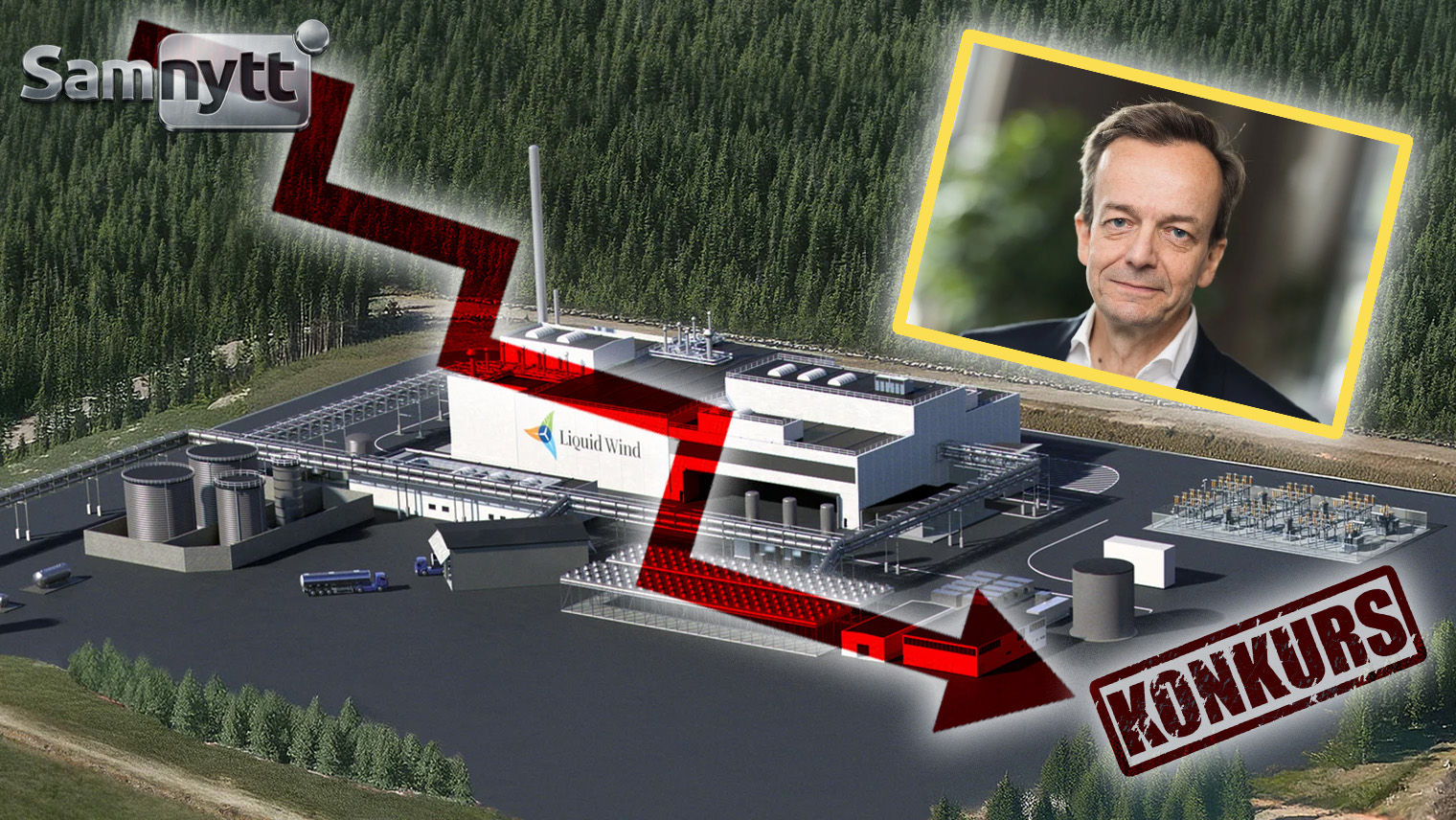
Just a few days ago, Liquid Wind’s founder Claes Fredriksson spoke about new partners, secured electricity, and optimism for the future. Only days later, a bankruptcy application was on the desk at the Gothenburg District Court. Thus, yet another highly hyped green industrial initiative collapsed – despite billion-krona promises, prestigious sustainability prizes, and extensive support from public institutions.
The story of Liquid Wind is a tale of how visions for a green industrial society once again seem to have outpaced economic realities. And of how taxpayers, municipal companies, and publicly backed financing systems repeatedly end up close to footing the bill when projects collapse.
From Future Hope to Bankruptcy Court
When Liquid Wind launched the FlagshipONE project in Örnsköldsvik, the venture was described as a European pioneer project. Next to the Hörneborg plant, Europe’s first large-scale e-methanol factory was to be built—a “green” shipping fuel produced using hydrogen, captured carbon dioxide, and enormous amounts of electricity.
The facility was set to produce 100,000 tons of e-methanol annually and quickly became a prestige project for the green transition. Behind the initiative were, among others, Danish energy giant Ørsted, municipal energy companies, and investors connected to Bill Gates’ climate fund.
READ ALSO: New report slams e-fuels – and Sweden has heard the promises before
The enthusiasm was monumental. Politicians spoke of an industrial revolution. Groundbreaking ceremonies were held. The visions were painted in international media.
In 2023, Liquid Wind also received Capgemini’s “Nordic Sustainability Tech Award”—a symbolic seal of quality that reinforced the image of the company as a cutting-edge player in the future economy.
But the sustainability distinction said nothing about financial sustainability. On the contrary.
“World-Leading” – Without a Viable Business Model
Affärsvärlden’s columnist and business economics researcher Christian Sandström argues that Liquid Wind displayed many of the classic characteristics of what he has described as recurring green industry fiascos.
The company described itself as a “world-leading project developer of electrofuel plants.” At the same time, awards, political praise, and public financing solutions poured in. But behind the rhetoric lurked a much tougher reality.
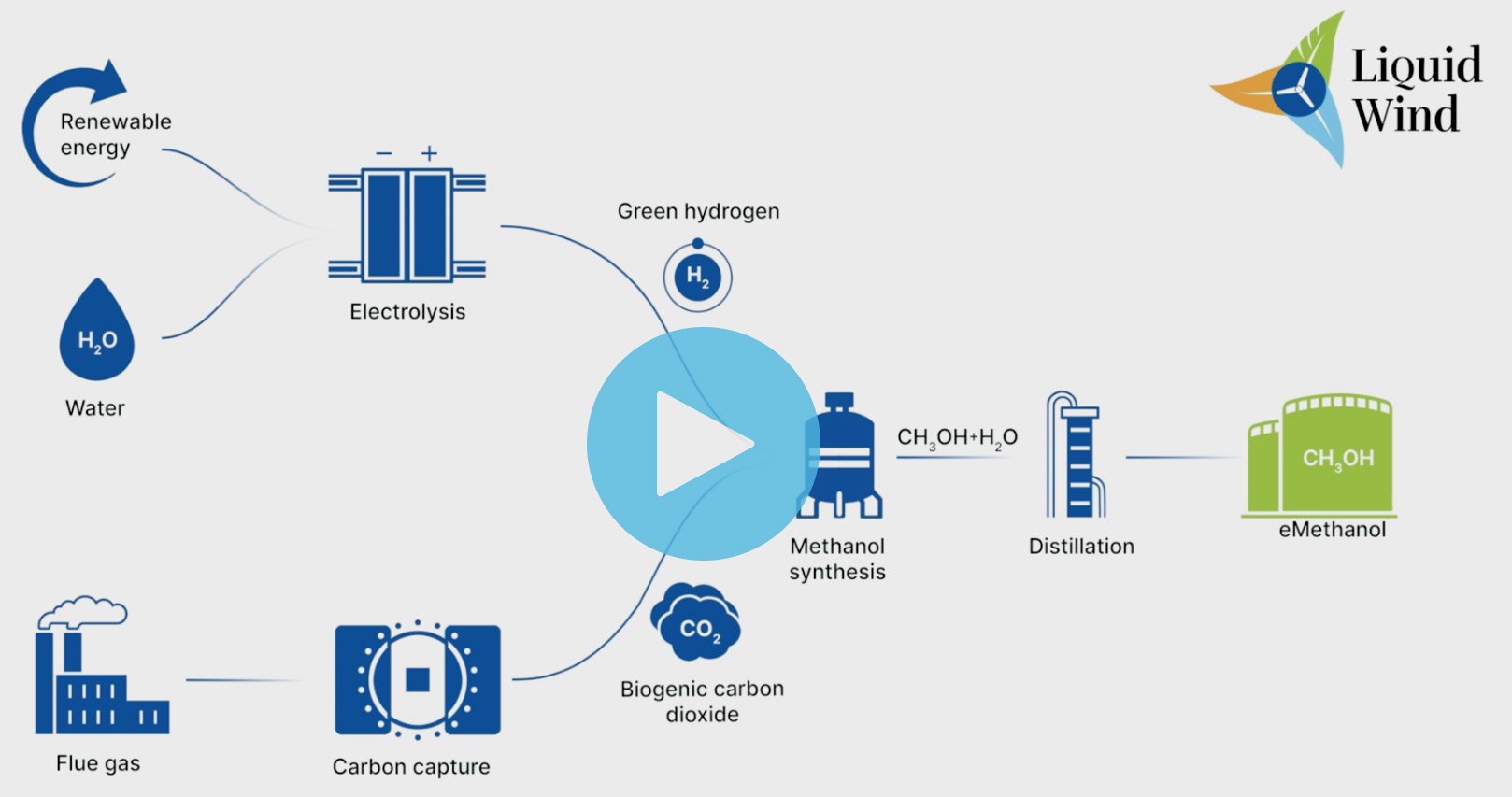
The production of e-methanol relies on several highly energy-intensive steps. First, large amounts of electricity must be used to produce hydrogen via electrolysis. The hydrogen is then combined with captured carbon dioxide to create methanol.
The problem is that nearly every step is expensive, technically complicated, and still far from commercially viable.
According to Sandström, many of the projects have relied on assumptions of rapidly falling costs for electrolyzers and cheap electricity—something that has not materialized. In practice, the calculations only became more difficult to make work.
In addition, a crucial question remains—why would customers want to pay significantly more for exactly the same molecular end product?
Ørsted Pulled the Emergency Brake
The first major warning sign came as early as 2024 when Ørsted abruptly withdrew from the FlagshipONE project.
It was a major blow. Ørsted had served as the project’s industrial backbone, and their withdrawal signaled that the risks had become too great even for one of Europe’s largest players in renewable energy.
Despite this, Liquid Wind continued to speak optimistically about new solutions and new partnerships. As recently as the Friday before the bankruptcy application, Claes Fredriksson told Örnsköldsviks Allehanda that talks with new partners were far along and both funding and electricity supply were within reach.
On Monday morning, the company had instead filed for bankruptcy. The contrast is striking.
The question many are now asking is how the company management could convey continued optimism when bankruptcy was clearly imminent. An extraordinary board meeting was also held over the weekend when the bankruptcy decision was taken.
Reasonably, observers argue, the company’s management must already have been fully aware of the seriousness of the situation.
Billions from Public Systems
Liquid Wind was far from a traditional private venture capital project. Behind the ventures was an extensive network of public institutions, municipal energy companies, and state-supported financing solutions.
According to Affärsvärlden, the project was linked to support and financing from, among others, the Swedish Energy Agency, the Swedish Environmental Protection Agency, the European Investment Bank, and the EU Commission.
READ ALSO: Hidden billion-krona subsidies keep wind power alive
In Sundsvall, the project FlagshipTWO was planned with an investment framework of between four and five billion kronor. There, the municipal Sundsvall Energi was to commit about two billion.
Municipal energy companies in Örnsköldsvik and other locations were also involved. This means that the risks were never borne solely by private investors.
Just as Christian Sandström has previously described in his reviews of the wind power sector, financing often takes place through a complicated system of loans, credit guarantees, public support, and pension capital—what he has called a “Russian doll” of financing.
As a result, the risks are step by step shifted away from private entrepreneurs and closer to taxpayers, electricity customers, and pension savers.
Bankruptcy Wave in the Green Industry
Liquid Wind’s collapse is not an isolated case. In recent years, a long line of prestigious green projects have been slowed, mothballed, or gone under.
Hydrogen ventures worldwide have been postponed as costs became clear and investors more cautious. Financial Times reported in December that some 60 major hydrogen projects internationally have already been stopped or significantly delayed.
In Sweden, similar problems have become visible in the wind power sector, where several projects have posted large losses despite record-high expansion.
In several analyses, Sandström has argued that many of these projects were never financially sustainable without extensive public support mechanisms. His conclusion is provocative but clear—if public money and guarantees disappeared, much of the expansion would likely cease immediately.
Bankruptcy May End Up Saving Even More Billions
Paradoxically, the bankruptcy may now turn out to be the least costly outcome. Sandström also maintains this, pointing out that a bad investment stopped in time is better than a project that continues to devour resources for years.
READ ALSO: Record production and record losses – researchers warn of a wind power crisis
In Östersund, energy giant Uniper had already previously broken with Liquid Wind and taken over the project independently. Other projects around the country now remain in limbo.
Questions remain—ones that more and more are beginning to ask. How many green billion-krona projects have been built on political visions rather than workable economics? And how much of the bill will ultimately fall to the general public?