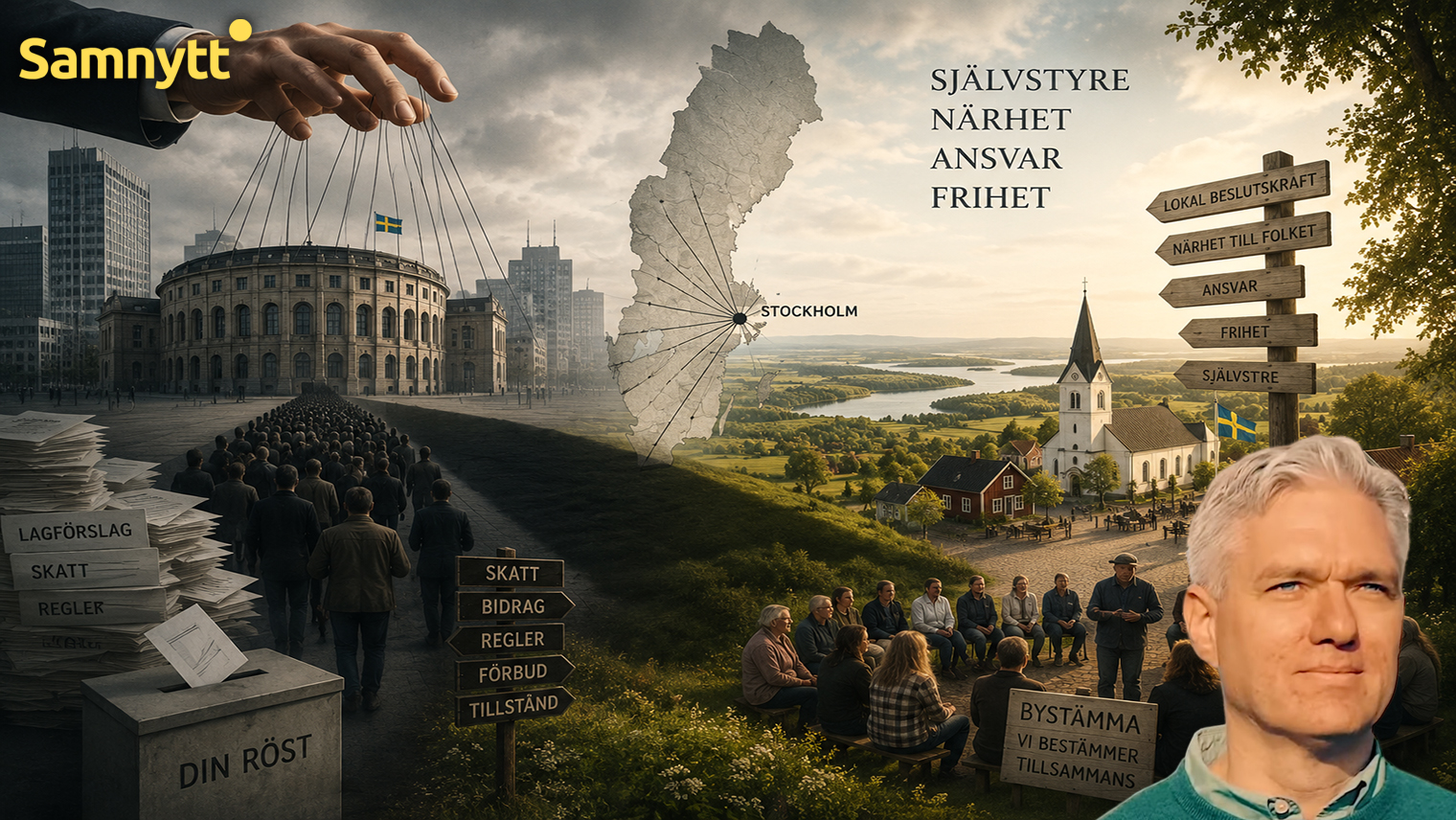
DEBATE • Why on earth would anyone want to limit democracy, a stickler for order might wonder. Wouldn’t limitations threaten democracy, much like it is threatened by freedom of speech, low taxes, private communication, and bank secrecy?
Aren’t all societal problems due to a lack of democracy, the so-called democracy deficit? Isn’t it better the more people vote, and the higher the voter turnout? Consequently, shouldn’t democracy rather be expanded, not limited?
All Power Corrupts
That power corrupts is so obvious it has become a saying. Why is that? Because opportunity makes the thief. Power brings plenty of opportunities. The powerful are courted by large companies that cannot compete and would rather pay well for protective laws against competitors.
He is courted by green entrepreneurs eager to save the climate in exchange for a few generous scoops from the treasury, by war profiteers wanting to sell equipment, and so on. There arises plenty of opportunities for the powerful to reward themselves when benefits are distributed. It takes almost superhuman moral strength and backbone to resist temptation when the opportunity presents itself.
Democratic Power Corrupts More
Democratic power is no exception—rather the opposite. The democrat’s term in office is limited to four years and after that, he risks having to look for an honest job. The goal is to grab and buy as many votes as possible in the meantime. The more democracy, the more areas fall under the democrat’s control, and the more opportunities arise.
If he gets power over pensions, he has the opportunity to shovel pension money into battery factories, in return for some kickbacks. If he gets power over medicine, he has the opportunity to steer large purchases from family-owned suppliers. Politics cannot create prosperity, only redistribute it. Every payout to someone is paid by everyone else.
Every New Law and Right Creates Coercion
But it’s not just about economic opportunities. For every democratically guaranteed right for A, there is an equal and opposite obligation for B. When the democrat guarantees protected groups the right not to be offended by words on the internet, we all become obliged to keep quiet.
And the democrat simultaneously has the opportunity to set up censorship tools to choke criticism of themselves. When the democrat guarantees the right to free school, others have to pay. And the democrat at the same time has the opportunity to make school and its values mandatory.
Law and Coercion Suffocate Society
All power—democracy as well as monarchy and dictatorship—spreads, corrupts, and kills society. It creates chaos, suffering, and war to justify its existence and the necessity of even higher taxes.
It suffocates business. This is the mechanism that drives the cycle of civilization. If one wants to prevent civilization’s collapse, power must be limited. Is it possible, and if so, how?
Constitutions Are Toothless Limitations
Throughout history, there have been various attempts to limit the ruler’s power. In the Middle Ages, the new king took an oath of kingship in which he swore before God not to exceed his statutory powers.
In democratic times, the constitution is supposed to serve that function. That’s why the constitution, as teachers often say, is “a law that is a little harder to change.” But it is supposed to be more than that: it is a law for the state, meant to bind the state’s hands and limit its power over subjects. There are still traces of this idea in constitutions in formulations like “Everyone is guaranteed, in relation to the state…”
Unfortunately, democracy can erode the constitution and still expand its power over its subjects. In this way, the constitution has become a veritable wish list for ideologues. It is today more concerned with the subjects’ sexual variations and carbon footprints than with protecting their right to property.
Smallness Is More Effective
Another way to limit democracy is to ensure that political units are so small that the rulers are kept at a manageable distance from the subjects. To quote G.K. Chesterton:
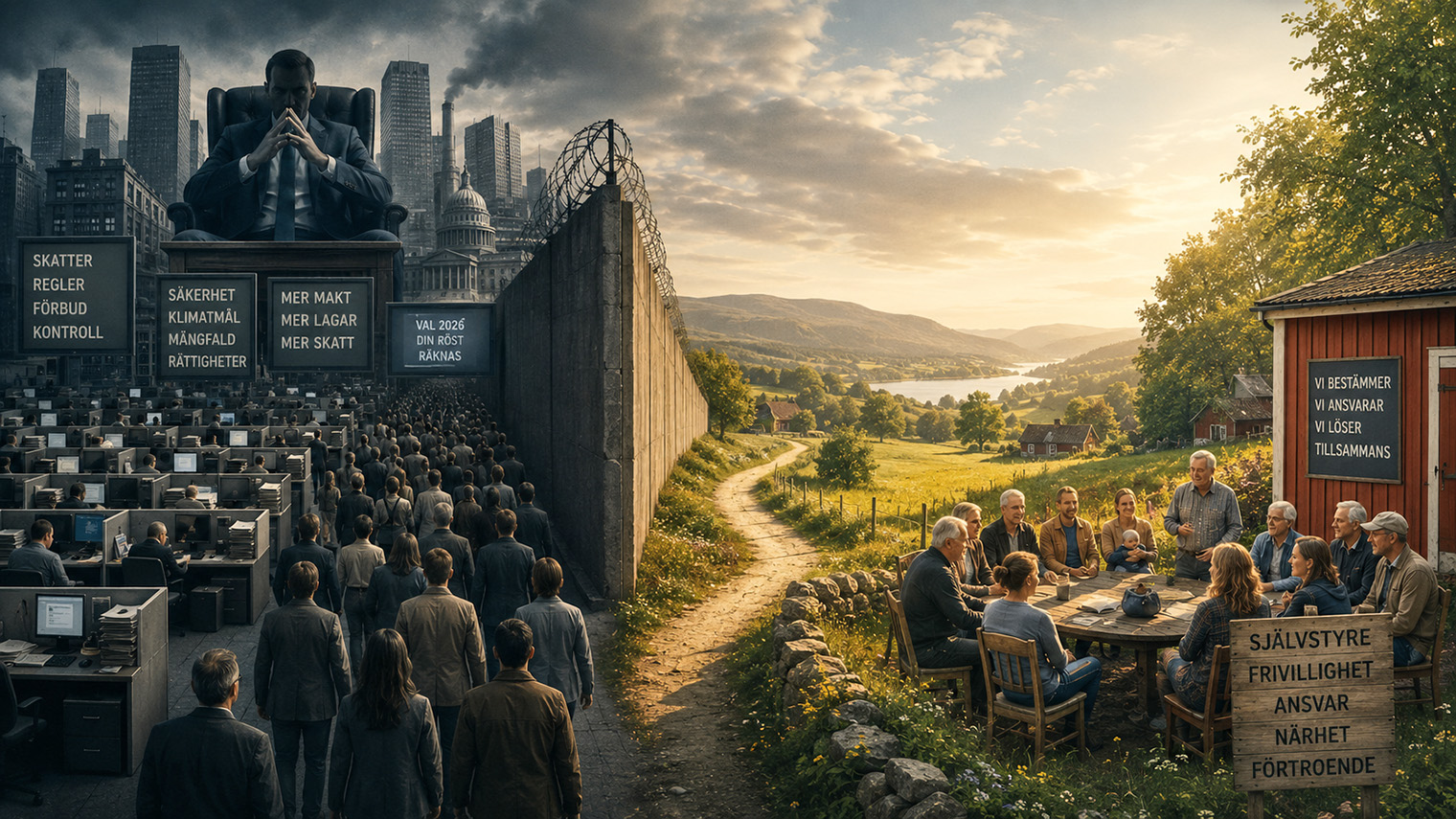
“The men whom the people ought to choose to represent them are too busy to take the jobs. But the politician is waiting for it. He’s the pestilence of modern times. What we should try to do is make politics as local as possible. Keep the politicians near enough to kick them. The villagers who met under the village tree could also hang their politicians to the tree. It is terrible to contemplate how few politicians are hanged.”
Large-Scale Democracy Is More Dangerous Than Small-Scale Dictatorship
Sweden is too big, the democrats are too far away and too protected for the people to be able to “kick them” when necessary. Distance creates many opportunities for democrats to expand their power. I advocate a return to the time when Sweden had 3,000 parishes, giving them self-government.
With such a manageable size, it doesn’t matter whether the parish is run by a local chief, king, mayor, dictator, or even a parish parliament. They will always be within arm’s reach and therefore relatively harmless. Conversely, one can imagine how disastrous it would be to have a :censored:6:cdd6bbaa89: monarch or a :censored:6:cdd6bbaa89: parliament. That would be the EU on steroids and would quickly degenerate into tyranny.
Mass Democracy Is the Final Stage in the Cycle of Civilization
The current stage of democracy can be called mass democracy. Everyone gets to participate. If the Greeks who invented democracy saw it, they would be horrified. The sacrament of voting has become more important than the goal of building well-functioning societies.
Democrats fish for votes at the very bottom of the barrel, among groups with no loyalty, short time horizons, no children, who do not support themselves, who are paid by taxpayers, among criminals, and so on. People are surprised by the results and demand EVEN MORE democracy. One can easily argue that low voter turnout is better than high, and that the fewer who have the right to vote, the better.
Self-Government Is True Democracy
Oaths of kingship and constitutions aside, they have proven ineffective as protection against politics. Above all, it is smallness, local self-government, that is the best protection. People from Norrland should not have power over schools in Skåne. People from Stockholm should not decide on reindeer industry in Norrland. People from Skåne should not decide on the environment in Stockholm. That is the best way to limit politics. That is how to ensure people govern their own lives. That people rule themselves, over their own lives, that is true self-rule, or in pure Greek: democracy.
Klaus Bernpaintner
Article originally published at Folkungen.